



Carphone Warehouse partners with Three to launch new network in the UK

Dixons Carphone, the owner of UK retailer Carphone Warehouse, has announced plans to launch a new mobile virtual network operator (MVNO). Partnering with Three, which may soon merge with O2 should purchase talks between Hutchison Whampoa and Telefonica go head, Dixons itself will offer branded tariffs alongside contracts from major mobile operators in the UK.
The news comes at a time when you thought the UK mobile industry couldn’t get any more confusing for the consumer with operator mergers and new network announcements occurring in the past few months. Dixons’ launch has been in the works for around 9 months, and has created a software platform to support offered services.
Carphone previously had a branded reseller deal with Vodafone that had about 700,000 customers under the Talk brand, but this will not be supported through Dixons Carphone stores in future. The deal with Three is the second big agreement in a week to bring a competitor to the mobile market following the decision by Sky to finally offer its own mobile services using O2 networks.
Dixons will join Sky, who recently announced plans to launch its own MVNO with O2.
Source: Financial Times
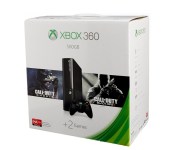
Xbox 360 500GB comes to India with price drops on existing models

Close on the heels of huge promotions for the Xbox One, Microsoft has announced the launch of the Xbox 360 500GB model in India at just INR 19,990 ($ 323). The special bundle for the launch includes two games – Call of Duty: Black Ops II and Call of Duty: Ghosts – as well as one month of Xbox Live Gold membership.

7 essential Windows Phone apps for traveling in Southeast Asia

In a few days, I’ll be returning back to New York after spending three weeks in Southeast Asia. To be more specific, I’ve spent time in Thailand, Malaysia, and the Philippines. I’ve had the Lumia Icon with me, which comes unlocked out of the box by Verizon.
I’ve noticed my usage is a bit different compared to how I use the Icon back in the United States. Here are 7 apps that have become really handy while traveling in Southeast Asia.
Dell Venue 8 7840 review


One of the more exciting pieces of consumer hardware to come out of CES 2015 wasn’t from the usual Android suspects. Not Samsung. Not HTC or Motorola or LG or even ASUS.
Nope. In 2015, we welcome Dell back to the Android stage with an awkwardly named but very-much-a-player Venue 8 7840 tablet — which you’ll also see referenced as the Venue 8 7000 Series.
The broad strokes — it’s an extremely thin, flat tablet running an Intel Atom chipset. It’s extremely compelling — and also not without some head-scratching moments.
So here, now, is our review of this sleek little newcomer, the Dell Venue 8 7840.
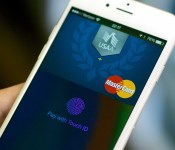
Switch to iPhone: For Touch ID and Apple Pay

There’s never been a better time to switch to iPhone. Whether you’re tempted for yourself or looking to help the Android user in your life, the all-new, all-better iPhone 6 and iPhone-6-plus make the move more compelling than ever — especially when you consider Touch ID and Apple Pay.
First to 64-bit

A decade ago, if you’d told anyone Apple would be designing the most advanced chipsets in any area or for anything, your’d have been laughed at you. Apple isn’t Intel. They’re not Qualcomm or Samsung. They’ve not been making chipsets for years, and they’re definitely not the company most people would think of when they think of chipsets. And that might just be why Apple got to 64-bit first in mobile.
Conventional “wisdom” held that 64-bit processors for phones and tablets were still years way. Conventional chipset companies were in no hurry to obsolete the 32-bit silicon they were still selling in droves, and conventional vendors were in no way imaginative enough to see any potential more pressing than addressable RAM.
Apple thought differently. They saw 64-bit as something that gave their chips the cleaner, faster ARMv8 instruction set and more registers. They also saw the encryption it supported as a way to increase security for new hardware features.
The result was Cyclone, and here’s what AnandTech had to say about it:
Looking at Cyclone makes one thing very clear: the rest of the players in the ultra mobile CPU space didn’t aim high enough. I wonder what happens next round.
This year came Cyclone 2. While competitors were struggling to get their first generation 64-bit chipsets out the door, Apple was already shipping their second. With two billion transistors, it still managed to be 50% more efficient, making it faster but also better on battery life.
Beyond specs, however, what both chipsets did was enable new features.
Fingerprint readers for real

One of the most important things that Apple’s 64-bit processors allowed for was Touch ID, a biometric fingerprint identify sensor. Fingerprint readers had been used on both computers and phones for years, but they relied on horrible, swipe-based technology that didn’t really work.
Touch ID relies on better technology, and it works really well. When a a capacitive ring around the Home button detects your finger, it activates the scanner. The scanner takes a high-resolution picture of your fingerprint that’s converted into a mathematical formula, encrypted, and carried over a hardware channel to the secure enclave on the chipset. If the fingerprint is recognized, a “yes” token is released.
Based on that token, your identity will be confirmed, your purchases will be authorize, or your credentials will be released. That way, you can unlock your phone, buy music, movies, and apps, securely access your bank account, or fill in your passwords, and more. Best of all — Touch ID fast. Lightning fast.
It’s also far ahead of anything else available. According to the Telegraph, Touch ID was so far ahead it caused Motorola to abandon plans to ship a fingerprint sensor of their own:
The secret behind [the dimple on the back of the Nexus 6] is that it was supposed to be fingerprint recognition, and Apple bought the best supplier. So the second best supplier was the only one available to everyone else in the industry and they weren’t there yet.
Security is often said to be at war with convenience. Touch ID, for the first time, gives you both.
Dawn of the digital wallet

Apple Pay lets you store your credit card data on a secure element on Apple’s chipset and access it with a passcode or, more easily and quickly, Touch ID. Apple Pay is currently supported by 750 banks and credit unions in the U.S. and can be used in one of two ways:
-
You can pay with it at hundreds of thousands of contactless payment terminals — i.e. NFC tap-to-pay registers — including retail stores, kiosks, vending machines, and other locations.
-
You can use it in any app that implements it to pay for any online purchases you make.
When you do, instead of handing over your actual credit card information, Apple Pay provides only a one-time number instead. That helps protect against fraud, both in-store and online.
Here’s what one of our readers, Rainforrest had to say:
Sold my HTC One M8 on ebay after I got my iPhone 6 Plus.. Touch ID and Apple Pay are really nice and apps are of better quality on iOS than on Android.
Reader Brad Littler added:
Apple pay makes me actually want to use my phone to pay for things where as it was a harder sell on on Android (Mostly because all my transactions were obfuscated under some mastercard charge).
Being able to leave your wallet — and your worried — at home and pay with your phone has always been the dream. With Apple Pay, it’s coming closer and closer to reality. More banks, retailers, and establishments are being added all the time, and it’s tough not to imagine it won’t go international as soon as possible.
Time to switch!
Apple can be conservative when it comes to things that can reduce battery life. When it comes to providing the most advanced technologies, however, especially when they improve performance, power efficiency, and security, Apple races ahead That’s great news for consumers, because it means you can get an iPhone 6 or iPhone 6 not only with an incredibly fast Apple A8 processor, but with Touch ID and Apple Pay as well. And those are just two of the benefits of switching to iPhone.
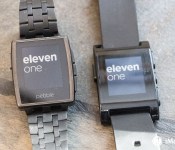
Pebble’s says new hardware, software coming in 2015

Pebble is planning new hardware and new software for 2015. That shouldn’t come as a surprise to anyone, but given the Apple Watch slated for April and Android Wear-based already in production, Pebble fans will be glad to know the plucky independent isn’t slowing down. Pebble CEO Eric Migicovsky, speaking to The Verge:
While Google and Apple’s smartwatches have been focused on app paradigms, similar to smartphones, Pebble’s new software will apparently be quite different. “We’ve found a new framework to use as an interaction model on the watch,” boasts Migicovsky, before adding that while apps will continue to exist on Pebble, they won’t be the main focus of the platform. “It doesn’t look like what we have today, and it doesn’t look like what’s on your smartphone,” added Migicovsky.
Migicovsky also revealed that Pebble’s existing smartwatches had shipped over a million units to date. The bad news? We’ll have to wait until later this year to find out the details of what’s next.
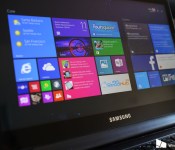
New OS data shows gains for Windows 8.1 while Windows XP still hangs around

The latest desktop operating system market share numbers for January 2015 show a gain for Windows 8.1 worldwide. However, it also shows that the 13 year old Windows XP is still the second most used PC OS in the world, several months after its official support was cut off by Microsoft.

See how the Nest Thermostat could pay for itself in just two years

Considering the Nest Thermostat, but aren’t entirely sure if it’s worth the investment? The company aims to help sway your decision by showing just how much money the home connected device can save you. Nest isn’t your average programmable thermostat, it’s a smart device that learns and adapts to your preferences.
The company found that consumers in the US with Nest installed saved between 10-12% on their heating bills.

Apple will reportedly open its first store in Queens, New York later in 2015

Apple is reportedly constructing its first retail store in the New York City borough of Queens, with plans to open the store sometime later in 2015. The location is reportedly at the Queens Center Mall and will be the largest such mall-based Apple Store in New York.
A few months ago, rumors hit that Apple would open its first store in Brooklyn soon but 9to5Mac now reports those plans have changed. It states:
News of the Brooklyn store first broke out in December with an opening date target of April 2015. Apparently unspecified delays mean that this target will be now be later in the year or even in early 2016. The Brooklyn store, earlier reports said, will be located in Williamsburg in a vintage looking building on Bedford Ave. and North 3rd Street.
The same report also says a new Manhattan-based Apple Store is in the works, to be located on 74th Street and Madison. However, it may not open until late in 2015.
Source: 9to5Mac
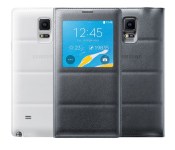
Save 40% on Samsung S-View Wireless Charging Covers for Note 4
 The S-View Flip Cover provides you with instant access to your Note 4 and its notifications all through the scratch-resistant window of this case. The polyurethane leather texture is comfortable to hold, not bulky and even adds a professional look to your device. Get yours in charcoal or white today for only $41.95

