


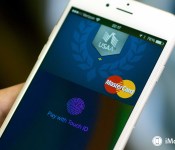
JetBlue to hit the clouds with Apple Pay starting next week

Passengers flying with JetBlue will soon be able to pay for food, drink, on-board entertainment and even upgrade to premium seating using Apple Pay. The program will start next week on select JetBlue flights, making it that much easier to make payments at 35,000 feet, and support for Apple Watch will also be available when launched later this year. According to USA Today:
The carrier is swapping older mobile payment terminals for specially outfitted iPad Minis with NFC-capable cases that are being issued to more than 3,500 inflight crewmembers. The Federal Aviation Administration had to approve the new iPads before they could be used onboard. The iPads can also accept conventional plastic credit cards to accommodate passengers without the latest iPhone or smartwatch.
These iPads also contain a wealth of data for crew members, as well as providing the tools to cater for customers who wish to make payment. Everything works as one would expect when making a payment through Apple Pay inside a store. The airline plans to bring Apple Pay to all JetBlue flights by June.
http://c.brightcove.com/services/viewer/federated_f9?isSlim=1
We’re sure it’ll be a much improved experience for passengers who will now be able to use their iPhone with Apple Pay, instead of hunting down their wallets and purses in stowed away luggage.
Source: USA Today
LG Y70 makes a quick stop on Indian import tracking site

The upcoming LG Y70 has made an appearance on Zauba. The Indian import tracking site registered the handset’s arrival on Thursday. And, surprisingly, the listing gives us some information about the Y70. It will have some version of Lollipop running behind a 4.7-inch display. The resolution of the display is unknown at this time but 720p seems likely.
The LG Y70 is said to be launching in South American and European markets.
Source: Zauba
Come comment on this article: LG Y70 makes a quick stop on Indian import tracking site

JetBlue to Become First Airline to Accept Apple Pay In-Flight
Passengers on select JetBlue Airways flights will be able to use Apple Pay to purchase things in-flight starting next week, according to USA Today. It will become the first airline to accept Apple Pay in-flight.

Starting next week, passengers on select JetBlue Airways flights can use Apple Pay on their iPhone 6 and 6 Plus handsets to buy food, drinks and certain onboard amenities when the plane reaches cruising altitude. You’ll be able to upgrade to available premium seats, too.
Eddy Cue, Apple’s VP for Internet software and services, told USA Today that “somebody else doing it always puts pressure on the other guy” and that other airlines could follow suit.
JetBlue’s flight attendants will have iPad minis outfitted with a special case that will accept both credit cards and Apple Pay. Starting next week, only intercontinental flights from JFK to Los Angeles and San Francisco will accept Apple Pay, with additional flights in March and plans for all JetBlue flights to accept the payment service in June. Like iPhone 6 and 6 Plus, the upcoming Apple Watch will also work with the system.
http://c.brightcove.com/services/viewer/federated_f9?isSlim=1
Cue notes that expanding Apple Pay into areas like travel is important. “Most people would prefer not to carry cash or worry about cash. There’s a lot of opportunity there,” Cue told USA Today. Apple would like to expand to subways and public transportation, but Cue said working with local governments and gaining funding for those initiatives moves slower than they would like. He says the eventual plan is to completely replace the wallet, and that Apple Pay is only the start.
Apple has continued to work with third parties to expand Apple Pay’s reach, most recently having ChowNow update nearly 700 food and restaurant apps with the payment service.
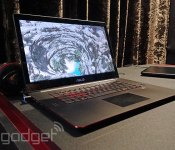
New video spec clears the way for 8K laptop screens

Think your 4K laptop or 5K iMac is hot stuff? If specification developers have their way, both will soon be old hat. The Video Electronics Standards Association has unveiled Embedded DisplayPort 1.4a, a new format that lets all-in-ones and laptops use 8K screens (7,680 x 4,320, if you want to be exact). The technology uses compression to squeeze more data into the video feed, and it can divide displays into two or four segments to help the pipeline cope with all those extra pixels.
There should be advantages to 1.4a even if you don’t crave razor-sharp visuals. Since PC makers won’t need as many data paths to drive lower resolutions, they can use thinner and more efficient displays. A laptop that “only” supports 4K could have longer battery life, for instance. The best part is that this is more than a theoretical exercise — VESA expects systems to ship with the new DisplayPort by 2016. You might not see an 8K computer all that quickly given that this capability hasn’t even reached shipping TVs, but the groundwork will at least be in place.

Filed under: Desktops, Displays, Laptops
Via: PCWorld
Source: DisplayPort
HTC One (M8) for T-Mobile to get Lollipop on February 10

The HTC One (M8) for T-Mobile was originally scheduled to receive Android 5.0 Lollipop in a software update sometime today. Unfortunately, that does not seem to be happening as there is an hour left in the day (on the east coast) and no such update has arrived. On T-Mobile’s support page for the HTC handset, February 10 is listed as the new date for Lollipop to start rolling out. The software update will be labeled as build 4.20.531.4 and the start of the roll out is tomorrow; therefore, it may take a few days for the update to reach all device owners.
Let us know in the comments when you receive the update.
Source: T-Mobile
Come comment on this article: HTC One (M8) for T-Mobile to get Lollipop on February 10

343 Industries cancels beta test for upcoming Halo: The Master Chief Collection update

Though 343 Industries had announced that it would conduct a beta test for its next major content update to Halo: The Master Chief Collection, it appears that the company took a step back from that today. The company said in a blog post that it will no longer carry out the beta test because the amount of extra time and work it would take would ultimately delay the final release.

Samsung and Microsoft come to terms over billion dollar license fee dispute

Microsoft has long been the recipient of license fees for patents related to each and every Android device sold. Samsung has long been the number one seller of Android devices sold around the globe, but have been refusing to pay said licensing fees for a while now.
This dispute hit the courts last year, with Microsoft looking to sue for damages estimated to be in excess of $1 billion. As most major cases go, many months have passed with no results, and little progress, until today. The two companies have come to terms in a private arrangement.
While the exact terms have not been disclosed, and there is a good chance they never will be, both companies took to their own blogs to post the same message:
“Samsung and Microsoft are pleased to announce that they have ended their contract dispute in U.S. court as well as the ICC arbitration. Terms of the agreement are confidential.” – Samsung’s Jaewan Chi, Executive Vice President and Global Legal Affairs & Compliance Team and Microsoft’s David Howard, Corporate Vice President and Deputy General Counsel.
It would be great to see what the terms of this agreement are. More importantly, we are eager to see what impact this will have for all of the other Android device manufacturers out there still paying their dues.
What do you think, for how long should Microsoft be able to collect license fees for patents relating to Android technology?
Qualcomm to Pay Record Fine to China
 Qualcomm is nearing the end of talks with the Chinese government over antitrust issues and is looking to cough up around $1 billion as soon as Monday. The issue arose over China’s 2008 anti-monopoly law, and if negotiations are reached, we will see Qualcomm lower its royalty rates by about 33% on patents used in China. Half of Qualcomm’s 26.5 revenue was earned in China last year, which means that the San Diego-based tech company will need to do whatever it takes to work out a deal with China.
The head of the NDRC’s antitrust division, Xu Kunlin, is responsible for the tough repercussions toward Qualcomm, and he is coming under fire for being too harsh and unfair with his legal actions. Even President Barack Obama has been talking with the Chinese President, Xi Jinping, about the commercial friction. Critics are saying that Xu is targeting only foreign companies, which he denies, despite both Samsung and Microsoft seeing some scrutiny from the Antitrust office. Source: Re/Code
Come comment on this article: Qualcomm to Pay Record Fine to China
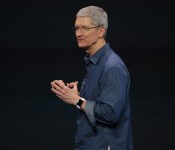
Tim Cook to speak at White House cybersecurity summit on February 13

Apple CEO Tim Cook is scheduled to speak at the White House cybersecurity summit, which is being held on Friday, February 13, at Stanford. The White House is expected to unveil a new cybersecurity “executive action” at the summit, with President Obama set to outline ways in which U.S. technology companies can cooperate better with government agencies when it comes to cybersecurity.
It is unclear as to the role Tim Cook will have in the proceedings, but it is likely the executive will share his views on how public and private sector organizations can collaborate to improve cybersecurity. Apple has often been at odds with the US government over its customers’ privacy, with the Deartment of Justice having to invoke an 18th-century law to compel Apple to bypass the encryption measures found on its devices.
The White House cybersecurity summit will also focus on new ways of authentication to improve security, with biometric authentication technologies like Apple Pay likely to be touched upon.
Source: The Hill
Qualcomm to pay $1 billion to settle China antitrust dispute

About a week ago, we reported that China was beginning to impose greater restrictions on companies like Qualcomm and other American manufacturers. The Chinese government has been meeting with Qualcomm to settle antitrust claims in hopes to slow down the US-based chipmaker in favor of state-run companies such as Semiconductor Manufacturing International Corp. and Spreadtrum Communications.
The settlement has finally been reached, according to Reuters, to the tune of $1 billion. This fine is the result of a 14-month government antitrust investigation, accusing Qualcomm of imposing anti-competitive licensing practices. Apparently, these conversations have been intensifying over the past weeks, resulting in talks between senior executives at Qualcomm and National Development and Reform Commission (NDRC) officials last Friday. The deal may also include Qualcomm lowering its royalty fees by about a third on patents used in the country. These lowered royalty rates could be announced as soon as Monday.
The $1 billion settlement may already seem like a lot of money, but to top it off, the chipmaker’s fine will be the largest paid by any company in China. Qualcomm has also agreed to alter its licensing practices, although they aren’t expected to alter the company’s business model. This is particularly detrimental to Qualcomm, as the company made roughly half of its global revenue of $26.5 billion in China alone last year.

