



OnePlus One Lollipop update delayed to March

Although you can run Android 5.0 Lollipop on your OnePlus One right now by flashing a nightly build of CyanogenMod 12S, those looking for a more stable verison have to wait until March. That’s according to OnePlus co-founder Carl Pei, who revealed on Twitter that the Lollipop update would be available for both the global variant, which would receive a stable build of CyanogenMod 12S, as well as the Indian model, which will get the vendor’s own OxygenOS.

AT&T Lumia 830 with Fitbit Flex is now available for free on-contract

The AT&T Lumia 830 bundle – which includes a Fitbit Flex activity tracker – is now free with a new two-year contract on the Microsoft Store. If you’re looking to purchase the bundle outright, you can do so for just $399, which is great value considering the Fitbit Flex in itself retails for $90.

Meet the Devs – DJantel Ware

Welcome back to our Meet the Devs segment! In this piece we take a little time to get to know the people who really make Android what it is today and that is the app developers. In this week’s developer interview, we are talking to Daniel and Janina Knittel of DJantel Ware.
Name: Daniel and Janina Knittel
Developer Name: DJantel Ware
Country: Germany
Website: Official website
Social Media Profile/Page: Google+
How many people on your team? 2

Apps
About your company?
We are a two man team from Germany. Actually we are a man and woman team, as me and my wife decided to try the life of indie game developers. We both studied at the University of Hamburg, where we gathered a lot of knowledge that comes to good use in our projects. We have several games in the making, and we released our first game (Nightmare Defender) several days ago.
What level of experience do you have with coding and development?
Both of us studied computer science at the University of Hamburg, we developed countless “traditional” desktop tools during our studies, for work and for my thesis. Plus we have several app projects in the making. So the coding part is very well covered.
What level of experience do you have with design?
Me (Daniel) is interested in art since I can hold a pencil. I have a long history of creating graphics for games and for flash movies.
What apps have you made?
We have several games that we still work on, the only finished project so far is Nightmare Defender. We have one very big project with the working title “Living in Hell”, where your objective is to survive in a zombie apocolypse not by simply killing everything that moves, but also thinking about gathering food, building up a home and keeping it zombie free. But this is something for the future.
How do you monetize your apps?
Our current approach is to show ads. We will see how this works out.
Do you consider yourself successful?
Nope, not by now. It is too soon to make conclusions like that.

How difficult is it to make money as a developer?
Pretty difficult. Getting visibility in the Google Play Store is very hard, and downloads are the only thing that can generate money for you.
What can Android do to improve?
This is hard to tell. One point would be to improve the synchronization frequency of the store. The numbers shown to the people and to the developer are horribly wrong. Sometimes it takes days so that the users can see the proper ratings the app got, ratings that may have conviced people who already left because of the lack of any download numbers or reviews.
Why did you choose Android? Do you develop for other platforms? What are the differences between them?
I developed for iOS as well during my studies and for a client I once had, but having no Apple device for my personal use (and you need apple to “be allowed to” develop for apple) this is not an option for us at the moment. But it is definitely a market we want to concer in the future. One of my side projects is an engine based on libgdx, which basically ports Cocos2D/AndEngine concepts over to the libgdx framework, enabling us to develop cross platform apps. But lacking any apple device (and the money to invest :D), this is also something for the “far away future”.
Android is something that we can do with our equippment and we both personally prefer android phones.

What are your thoughts on iOS and Windows 8?
Windows 8 is not an option and at the moment. Their market is just too small. Read the previous question to get my thoughts about iOS :).
What do you think of the Android design guidelines?
Not much.
What are your favorite apps?
WhatsApp is definitely an app I would miss.
What has been your experience been like working with Gooogle?
We have not that much experience with Google by now. They made the app available pretty fast, which is a good point. The developer console and the numbers in the store are horribly wrong, which is a bad point. In general we are grateful that Google made all of this possible in the first place.

What does the future of development look like?
Well, everything is getting faster and easier. It is already amazing that one or two man teams can produce pretty big and advanced games and apps. As the technology ripens, we can expect even greater things to come.
What tips do you have for aspiring developers?
If you do not like it, change it. Do not compromise. Every time I thought “oh, I will let it be like it is” I always had to come back later and change it anyway, having far more trouble than I would have if I changed it right away. If you have a clear goal in your mind, do not mess with it by compromising.
Anything else you’d like to share?
We would like to thank AndroidAuthority for this amazing opportunity to introduce ourselves and our game Nightmare Defender. Indie game development is really hard, getting visibility even harder. And thanks to anyone reading this. It would be really awesome if you gave our game a try.
Developer interview wrap up
We want to thank Daniel and Janina for chatting with us in this week’s developer interview! If you’re a developer and this looks like something you’d like to do, check out our Meet the Devs form! We look forward to hearing from you!

‘Diablo 3’ getting free-to-play features, but not in the US or Europe

Blizzard may have shut down the Real Money Auction House after contention from the community, but it’s opening up a new way to potentially use real money for in-game items. The difference here is that it’s doing it in territories that are pretty accustomed to this sort of thing already — most likely China. On the developer’s American and European forums, an employee writes that an upcoming patch will add a new currency (“platinum”), timed experience boosts, cosmetic items, character slots and a tweaked UI to handle all of the above. Basically, the type of microtransactions that are fairly common in free-to-play games. As Gamasutra notes, Blizzard already has a partnership with NetEase (a Chinese internet company that has a web portal and its own massively multiplayer role-playing game), which operates a version of Diablo 3 in the country. All that to say, this makes sense for Blizzard.
How’s it going to affect players stateside or in Europe, though? Well, Blizzard says they’ll benefit from the UI changes that are being implemented, and that’s about it. Forumgoers are worried, however, that the free-to-play elements will come to roost in their game, devaluing their progress (a complaint levied at the RMAH) and transforming the game into a pay-to-win scenario rather than skill or luck-based.
It’s a stark contrast to how we view gaming in the United States, and Blizzard’s upcoming additions to Diablo 3 reflect that.
But given how different the Chinese gaming market is from the domestic and European ones, the community’s initial worries are likely without warrant. Free-to-play games are bog standard in China because, as this VentureBeat story illustrates, internet cafes are more affordable than having computers at home, and that’s coupled of course, with the fact that video game consoles had been banned (soft of) for over a decade in the country. That’s to say nothing of China’s economy either (or how quickly microtransactions can add up), which makes shelling out a pretty sizable chunk of money up front for a console and games difficult for many.
It’s a stark contrast to how we view gaming in the United States, and Blizzard’s upcoming additions to Diablo 3 reflect that. The developer’s experimented with different business models in the past, including making World of Warcraft free to a point; the multiplayer portion of StarCraft 2 is largely gratis as well. It wouldn’t be the first time Activision Blizzard has tailored one of its games for the market, either — Call of Duty Online is a region-specific free-to-play version of the wildly popular shooter. Where the microtransactions will appear hasn’t been confirmed, but we’ve reached out to Blizzard for more detail and will update this post should we hear back.
Filed under: Gaming, Home Entertainment, Software, HD
Via: Gamasutra
Source: Battle.net (1), (2)

Huawei announces LTE-enabled Smartband, uses next-gen 4.5G radios
 Huawei has taken the wraps off of a new Smartband device that features two industry-leading features. It’s the first ever LTE-enabled device of its kind, and it will utilize the company’s 4.5G network, which is labeled as being somewhere between 4G and 5G in terms of speed. The 4.5G network isn’t set to go live until next year, but this band is jumping on board earlier.
Aside from the connectivity, the band shares many features with Huawei’s current Smartband, including tons of health tracking sensors, NFC, Bluetooth, and a 1.4-inch OLED screen.
Expect to hear more about this band at MWC this year.
source: The Inquirer
via: Phone Arena
Come comment on this article: Huawei announces LTE-enabled Smartband, uses next-gen 4.5G radios
Leaked Promo Video of the HTC One M9 Shows Us the Goods
If you haven’t checked any of your feeds today, you didn’t see the massive leak that was the HTC One M9. A new promo video, as well as renders of the new HTC flagship surfaced, and if you were looking forward to the HTC One M9, your mouth began to water. The video below is […]
The post Leaked Promo Video of the HTC One M9 Shows Us the Goods appeared first on AndroidSPIN.
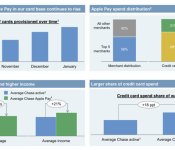
Chase: Over 1 Million Wallets Provisioned on Apple Pay
During its investor call today, Chase announced (via AppleInsider) that over 1 million customers have provisioned their credit and / or debit cards for use with Apple Pay. Additionally, the company provided a look at the demographics of its Apple Pay users.  Eileen Sierra, CEO of Chase Card Services, said that its customers who use Apple Pay tend to be young and have higher incomes, with 69 percent of their Chase card Apple Pay transactions credit based.
Sierra also revealed that the financial company has seen “good growth” in the number of its customers provisioning their cards on Apple Pay. Those customers have been using their Chase cards through Apple Pay at the top five merchants 58 percent of the time, with all remaining merchants making up the remaining 42 percent.
While Apple hasn’t provided adoption details on Apple Pay, CEO Tim Cook did announce in January that Apple Pay accounted for two of every three contactless dollars spent on American Express, Visa and MasterCard. Bank of America announced in January that nearly 800,000 of its customers were using Apple Pay, and point-of-sale suppliers have seen a massive increase in interest following Apple Pay’s launch last October.
Although Apple Pay is having early success in the United States, it has yet to expand past its borders. Reports indicate Apple is in talks with Canadian partners to launch Apple Pay in that country as soon as March, while Visa today announced it would launch tokenization in Europe in mid-April, paving the way for Apple Pay to expand into the continent.
Ting’s GSM network has now launched in open beta

Ting, the Sprint MVNO, has just launched an open beta test for its GSM network. In early December, the MVNO started testing its GSM network through an invite-only system, and the network has now come into fruition. In the past, Ting was only available as a CDMA carrier using Sprint as a network partner. But the decision to launch a GSM network was ultimately decided so that (mostly) all customers with an unlocked device could switch to the carrier.
Ting adds:
We’ve sent out invitations in the thousands with a majority of people taking us up on the offer. We’ve used the feedback we’ve received from our intrepid testers to further refine the activation process and the way we confirm that devices are compatible. Another thing we’ve been working on is making the switch from the CDMA to the GSM network easy for those that want to move their service or one of their active numbers from one to the other.
If you’d like to test out the new GSM Ting network, all you need to do is purchase a SIM card from the company and activate your device. If you’d like, Ting also mentions that you can have both CDMA and GSM phones activated on the same account.
Since this is an open beta, there are going to be a few issues with the network. Specifically, Ting warns that they’re having trouble with international roaming and international long distance. International roaming is only a problem if you’re traveling outside of North America, and that’s likely the same cause for international long distance issues. Also, Ting uses T-Mobile’s towers to power their GSM network, so if you don’t have service with T-Mobile, perhaps you want to sit this beta test out.

Best cases for the Nexus 6
brightcove.createExperiences();
If you’re looking for some cases to protect your shiny new Nexus 6 we’ve gone ahead and rounded up a few that we think are the best options out there for protecting your Nexus 6! Check them out down below!
Casemate Naked tough Case


We’re going to kick this list off with the two official cases for the Nexus 6 starting with the Naked tough case by Casemate. This case features a dual-layered design with a TPU bumper to protect those corners and sides and a plastic outer shell for extra reinforcement. As the name suggest this case is going to provide protection while still allowing you to show off the aesthetics of the Nexus 6 due to it’s clear design. It’s a slim and lightweight style case so it’s not the most protective case in the world but it should hold up just fine against the average drop. The case fits well and doesn’t add much to the Nexus 6 at all and all the openings for the camera and ports are very precisely cut. The metallic buttons for the power and volume keys mimic the real buttons for the Nexus 6 so you still get that ridged power button which is a really nice touch and they’re also very responsive and tactile. Another great feature on this case is the built in kickstand which is awesome for watching Youtube and movies. However, I did notice that the stand felt a little bit flimsy which can be concerning as to how well it’s going to hold up over time. Another thing that I will say with this case is how much dust and lint can get inside of it due to the large opening on the back for the camera and motorola logo and since this case is clear you’re going to notice it very easily. Directly from Google Play this case is pretty expensive coming in at 35 dollars so my recommendation is to go through Amazon where it’s going to cost you half that price.
Casemate Stand Folio
The second official case for the Nexus 6 is the Stand Folio case and this one is also by Casemate. This is a wallet style case for combining both your phone and wallet into one. There’s a hard plastic shell on the inside to hold and protect your phone and the cover is made of a faux leather material to give it that wallet like feel. The case fits well with openings for the front facing speakers and camera but nothing for the Motorola logo. The top and bottom are completely exposed so you should not have any problems fitting larger micro USB cables or headphone jacks but keep in mind there’s not a whole lot of protection in these areas. Just like the naked tough case the power and volumes keys mimic the real keys of the Nexus 6 with a metallic look and a ridged power button. The case also features sleep to wake functionality built into the cover and there are two slots on the inside to hold two credit cards, IDs, or whatever else you want to put in there. Just don’t get too carried away because the cover is not going to close all that well if you pack way too many cards inside and even having just a minimum of two cards will prevent sleep to wake from functioning. The cover can also be used to prop up the Nexus 6 for viewing media and it seems to hold itself up well despite not having anything to lock it in place. The case overall is pretty solid but the build quality is a little bit questionable as the gray lining on the inside separated almost immediately when I started using it. Again, just like the naked tough case the stand folio is very pricey at 40 dollars through Google play. It is cheaper at 30 dollars on Amazon but even at that price it’s still pretty expensive.
Spigen Neo Hybrid
The next few cases are made by Spigen, starting with the ever so popular and very stylish looking Neo Hybrid. As with most hybrid cases the Neo Hybrid features two materials that make up the case: A TPU housing for shock absorption and a plastic frame to give the case some extra flair and more protection on the corners and sides. The frame comes in several different colors but the one that I have is champagne gold. The case is very slim and form fitting and not only does it look good but it shows off the natural curves of the Nexus 6 very well making it one of my favorite cases at least when it comes to aesthetics. The cutouts for the camera, Motorola logo, 3.5 mm headset jack and micro USB port are all very precise as you would expect from a company like Spigen but what I really love is the metallic power and volume buttons. They look good and are very tactile and easy to press and I like how Spigen chose to give the volume key a different look by separating them into two buttons. In the hand the case feels fantastic with the frame providing plenty of rigidity and the TPU on the backsides helps out with the grip. For a price of 20 dollars or less depending on color this is one of the most well rounded cases you can buy for the Nexus 6. Available colors include champagne gold, dante red, gunmetal, and satin silver.
Spigen Slim Armor
A case that Spigen offers that is very similar to the Neo Hybrid is the Slim Armor case but instead of a plastic frame wrapping around the sides of the TPU housing you have a plastic shell that wraps around the entire back of the device. Also like the Neo Hybrid the shell on the Slim Armor comes in a few different colors but unlike the Neo Hybrid the Slim Armor features a built in kickstand. It’s not the sturdiest of kickstands and it can feel rather flimsy but it props up the Nexus 6 without much of a problem. In the hand the Slim Armor feels practically identical to the Neo Hybrid in terms of overall size and weight but the back is slightly thicker and you can definitely notice that by how recessed the camera and Motorola logo are. The coverings for the power and volume buttons are flat but they’re clearly labeled and very easy to press with a very satisfying click. All in all it’s another solid option from Spigen that’s very good looking and sturdy and for less than 20 dollars it’s very affordable. Available colors include metal slate, satin silver, and shimmery white.
Spigen Thin Fit
If you’re not into these thicker, more protective cases Spigen does offer their Thin Fit series that isn’t going to add much of anything to your Nexus 6 at all. This case is super slim and lightweight but like all cases designed to be this thin you’re not going to get much in terms of drop protection especially along the top and bottom which are completely exposed. The plus side of it being thin is that it preserves the overall size and shape of the Nexus 6 giving it a very sleek feel in the hand. All the cutouts are perfect including the power and volume which are spacious enough that you can still easily press them with your thumb. The best part about this case is the non-slip matte coating that gives it a ton of grip. I never felt like the Nexus 6 was going to slip out of my hand and it actually makes using the Nexus 6 in one hand a lot easier because of how grippy the back is. With a price ranging between 11 to 12 dollars depending on color this case is an absolute bargain. Available colors include clear, mint, shimmery white, and smooth black.
Supcase Unicorn Beetle Series
Next up is the Unicorn Beetle Series by Supcase and this is another hybrid style case with TPU wrapping around the sides for shock absorption and a hard plastic shell for the back. Unlike some other hybrid style cases the two materials have been fused into a single piece. The case hugs the Nexus 6 nice and tight and provides a pretty solid amount of drop protection without adding that much extra girth to the Nexus 6. It’s not the grippiest of cases because the back is smooth plastic but the textured TPU sides still make it a heck of a lot easier to hold onto than a bare naked Nexus 6. All the cutouts are very clean and spacious and the coverings for the power and volumes keys are very meaty and tactile, even more so than the raw buttons themselves. At a current price of 13.99 on Amazon it’s pretty inexpensive and is easily one of my favorite cases as far as overall aesthetics, protection, and feel in the hand is concerned. Available colors include black/black, frost clear, clear/black, clear/blue, and clear/red.
Caseology Bumper Style Case
And finally our last case for the Nexus 6 comes from Caseology. This particular case is very similar to the Neo Hybrid from Spigen in the sense that it is a two piece design with a tpu housing and a plastic colored frame wrapping around the sides to complete the look. The unique part about this case though is the backing which comes in several different materials and colors like carbon fiber, mesh, and leather. The one that I happen to have here is the leather version in burgundy red and if you happen to have some Motomaker envy these particular cases might be the perfect solution. I can’t speak for the other materials but the leather version does provide a nice amount of grip for the back but the plastic frame is a little bit on the slippery side. You will get a very solid amount of protection with this case without making the Nexus 6 feel overly bulky and the cutouts for the camera and ports are precise but one thing to note is this case does not feature a cutout for the Motorola logo like some of the previous cases we’ve mentioned. The only drawbacks to this case that I’ve found is the coverings on the power and volume keys are a little on the mushy side when it comes to the feedback and the plastic frame doesn’t fit quite as flush to the TPU housing as I would like but otherwise this is a very decent case for the price.
But that wraps it up for our list of top cases for the Nexus 6! What do you think of this list and are you currently using some of the cases we’ve mentioned? If not, what cases are you using? Please feel free to sound off in the comments!

Apple Pay now used by more than 1 million Chase Bank customers

It seems that Apple Pay has really, well, payed off for Chase Bank. The company announced today that over 1 million of its customers have started using their credit or debit cards with Apple’s payment platform since its launch last fall.
The numbers were released during Chase’s 2015 Investor Day earlier today. Along with the numbers, however, Chase also released some charts about how its customers are using the service. Perhaps most interesting bit is a chart that shows that Chase customers using Apple Pay are, on average, younger with higher incomes.

These numbers follow a similar statement given by Bank of America last month, in which it noted that 800,000 of its customers have used Apple Pay since its launch. In addition, the number of bank adding support for Apple Pay doesn’t seem to be slowing down, with the most recent expansion bringing the total up to 90.
Source: JPMorgan Chase; Via: Apple Insider
 AIVAnet