



Search apps, including Siri, Cortana, and Google Now may be saving recordings of your commands

A user on reddit has posted about his experience as a new employee with a company that has access to voice recordings that he claims are commands given to mobile devices. According to this individual, some of the recordings specifically refer to Siri, Apple’s voice-activated search and command app. The reddit poster also implicates Microsoft’s solution, Cortana, and other posters have pointed out that Google is also saving Google Now commands. Although this user has access to the recordings, the employer is none of these major companies.
It is not clear how the recordings ended up with a third party. Access to the recordings is supposedly for the purpose of listening to the sound bites and comparing that with the generated text to help improve the voice to text translation. It may be possible the company has been hired by the major companies to provide this service rather than having this work done in-house.
If you want to get an idea of what information Google is saving, you can login to your Google account and surf over to history.google.com/history/audio. According to that page only you can see the history of recordings and Google does not provide any indication on this page that they share the recordings with others. In all likelihood, the recordings that are being saved are mostly mundane attempts at commands or searches. As the reddit user pointed out though, there are users out there trying some interesting commands that could be embarrassing if they got into the hands of the wrong person.
The problems caused by the way voice activation works are not new. In the past, Facebook has had to deal with claims that their app was always listening to users and more recently Samsung acknowledged private conversations should not be held in front of some of their smart TVs that are listening for commands. Voice activation is a great convenience for users, but as we continue to see, the potential is there for a lot of devices in our world to be turned into monitoring devices and now we see, all that data may be getting saved as well.
Does the potential for others to listen in on what you say, either live or via recording, cause you to adjust your behavior any?
source: reddit
Come comment on this article: Search apps, including Siri, Cortana, and Google Now may be saving recordings of your commands

Ting launches open beta for its GSM network

Ting‘s GSM network, which it announced late last year, has officially entered into an open beta. Previously, customers could test the network out on an invite-only basis.
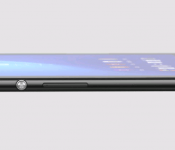
Sony Xperia Z4 Tablet leaks out ahead of MWC 2015

It’s been awhile since we’ve seen a full-sized tablet from Sony, but perhaps the company has plans to unveil a new one sometime soon. In a new leak from the official Xperia Lounge application, Sony outed their new Xperia Z4 Tablet, but only for a brief moment. We don’t know much about the tablet from the screenshots taken of the page, but we do know it will come with a 2K screen, and will feature “the latest ultra fast processor” and “industry leading battery performance”. The screenshot also reveals that the tablet will be launched on March 3rd, which suggests that it will be unveiled at MWC 2015.

When it comes to specifics, we don’t have any other information regarding official specs, hardware features or pricing. As far as aesthetics are concerned, the tablet seemingly takes design queues from the company’s most recent tablet, the Xperia Z3 Tablet Compact. Judging from the photos, it looks to feature the same build quality we all expect from Sony devices, all wrapped up in a very thin package.
We’ll be sure to keep you informed when the tablet is launched, or if any other details surface before its official unveiling. Android Authority will have a team on the floor at MWC 2015, so stay tuned for all of the latest news from Sony and all the other OEMs that will be in attendance at the trade show.
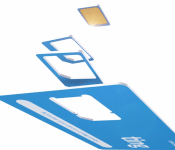
Ting launches open beta for its GSM network

Ting‘s GSM network, which it announced late last year, has officially entered into an open beta. Previously, customers could test the network out on an invite-only basis.
If an open beta for a network sounds odd, Ting explained the benefits of the tests it has done so far:
We’ve been hard at work on Ting on a GSM network. We’ve sent out invitations in the thousands with a majority of people taking us up on the offer. We’ve used the feedback we’ve received from our intrepid testers to further refine the activation process and the way we confirm that devices are compatible. Another thing we’ve been working on is making the switch from the CDMA to the GSM network easy for those that want to move their service or one of their active numbers from one to the other.
Previously, Ting was only available as a CDMA carrier that ran on Sprint’s network. The decision to launch a GSM network now allows customers using practically any phone, so long as it’s unlocked, to make a switch to the carrier.
To get started, you’ll need to have an already unlocked GSM phone. From there, you can purchase a Ting GSM X1 SIM card and activate it with your device. Just bear in mind that this is a beta, so you’re bound to experience some issues here and there.
Source: Ting

Kickstarter’s ‘Zach Braff’ problem gets worse with the Pebble Time

Whenever you talk about Kickstarter, it’s natural that the conversation will turn to Pebble. There may be more successful crowdfunding campaigns, but the smartwatch’s stratospheric success is inexorably tied to that of its partner. Earlier today, however, Pebble once again took to the site to launch its third product, the Pebble Time. It seems odd that a company would use a service designed to get startups off the ground when it’s clearly in no need of help — having raised $1 million in just 49 minutes. For me, it’s the moment where I’ve finally lost patience with Kickstarter.
When Allerta (the company we now know and love as Pebble) launched its original Kickstarter campaign, it was teetering on the edge of what you’d normally call a startup. After all, it had already produced a successful hardware product (the inPulse) and had around $400,000 in venture capital funding in its back pocket.
Since then, it has become the most popular smartwatch in the world; hell some see it as the gold standard by which all wearables are judged. The company already has an online store, and I have no doubt that its employees are capable of making sure its servers would be up to demand. So, why did it run pre-orders via Kickstarter instead of on its own service? Because it’s great PR.
“A CEO openly admitted they had the cash to bankroll its first production run, but was using Kickstarter to generate more attention.”
Pebble knew that it had a blockbuster product and it’ll enjoy a thousand column inches with people talking about its success. Even though it had no need to come to Kickstarter, and I’m sure that the commission the site takes will sting just a little, the free publicity will more than compensate for that.
Kickstarter has become a machine for established businesses to generate as much unpaid advertising as possible. It’s anecdotal evidence, sure, but last week I had a phone call with a startup (I won’t name names) where the CEO openly admitted that they had the cash necessary to bankroll its first production run, but was using the site to generate more attention.
Ever since Zach Braff, with his reported net worth of $22 million, raised $3.1 million on Kickstarter, there’s been a tension about the “right way” to use the service. When Kickstarter responded, it said that high-profile projects like Wish I Was Here and Veronica Mars encouraged people to get involved. Maybe, it added, they’d stick around and back other projects, too. There’s never been any proof that such efforts have resulted in more frequent pitches, and Tim Heidecker already made the point more eloquently (and, you know, more swearily) than I can.
I’m not saying that successful people can’t use Kickstarter but, to me, their cap-in-hand use of the platform has always felt fraudulent. It’d be like watching Bill Gates, Mark Cuban and Warren Buffett panhandling on the streets of Seattle. This is why it’s easy to rail against Silicon Valley venture capitalists who use the site purely as a means of reducing the risk of their investments. James Proud raised $2 million for a “smart sleep sensor” on the site, but he neglected to mention that venture capitalists had already kicked in a bucketload of cash already.
Kickstarter actually railed against this sort of behavior back in 2012, when its co-founders declared “Kickstarter Is Not A Store” — each word capitalized for emphasis. It was magnificent, because the site took a stand against those people who were simply using it as a pre-ordering platform. The rules were also changed to mandate that products had to have a working prototype and banned flashy renders and outrageous marketing claims.
Kickstarter actually railed against this sort of behavior back in 2012, when its co-founders declared “Kickstarter Is Not A Store.”
A couple of years later, however, the site’s founders had changed their tune: rolling back those rules and allowing creators to launch products without the projects being vetted by staff first. Here’s what I think happened: Indiegogo emerged as the crowdfunding platform du jour, with its entirely hands-off stance on product development. It may be technology’s equivalent of the Wild West, but it was a Wild West that was taking money away from Kickstarter, so the rules were relaxed to keep creators on its side.
It’s a romantic notion, but I always saw Kickstarter as a way to empower inventors (and creatives) who couldn’t get backing any other way. In 1991, a retired engineer named Trevor Baylis saw a documentary showing how radio was used to educate Africans about preventing the spread of AIDS — but very few people had radios at the time. Baylis retired to his garage and developed a hand-cranked radio that was both cheap and required no batteries, but it took years before an investor would take a gamble on the invention. Wouldn’t it be great if Kickstarter were famous for empowering future Baylises rather than simply supporting the status quo?
Sony debuts Xperia E4g, an LTE variant of its latest budget device
For the fans of the Xperia E4 – Sony’s excellent budget device – the company have just announced an LTE variant of the device called the Xperia E4g.
With the an improved 1.5Ghz quad-core processor, 1GB of RAM, and 5-Megapixel camera, the E4g is almost identical to the E4 but with the addition of LTE.
The Sony Xperia E4g will be available starting April, with a price tag of 129€ and will be offered in a dual-SIM variant.
The post Sony debuts Xperia E4g, an LTE variant of its latest budget device appeared first on AndroidGuys.

HTC One (M9) leaks in three promotional videos, leaves nothing to the imagination

Well look at what we have here. Here’s the HTC One (M9) on video leaving nothing to the imagination. These three promotional videos, were leaked by @upleaks, but the you know what has hit the fan since their Twitter account is down. Thankfully we were able to pull the YouTube links before that happened.
The videos show off a two-toned metal finish, Dolby Audio BoomSound, the camera software, and various other software enhancements. For example, they show you some new customizations for your home screen and BlinkFeed now shows you meal suggestions. The home widget will also display different apps depending on your location.
The camera is confirmed to be 20 MP and boasts a lot of new features like being able to combine images or add geometric shapes such as bubbles and flowers to your existing images.
Check out all three videos below, but hurry because they are likely to get pulled soon.
Click here to view the embedded video.
Click here to view the embedded video.
Click here to view the embedded video.
Come comment on this article: HTC One (M9) leaks in three promotional videos, leaves nothing to the imagination

One M9 won’t see many aesthetic changes, new videos and images prove it

Over the weekend new press renders arrived to the web, showing off the HTC One M9 in what allegedly was its final form. For those that had been hoping that Evleaks’ claim of a true redesign was right, the latest images certainly made the idea less likely. Still hoping that the One M9 doesn’t end up looking near-identical to its predecessor? Unfortunately, the latest batch of news is here to dash all your dreams.
Earlier today, Upleaks brought a few new images that helped further cement the idea that the One M9 will be a pretty minor update in terms of aesthetics. If images above aren’t enough for you, the leaker has now introduced three videos that should destroy any shred of doubt that remained. The new videos show off Sense’s new location-based app widget, the Sense theme engine and give us a clear look at the phone’s design. If this really is the M9 – as all signs now point to – that means the phone won’t be ugly by any means, but it won’t exactly see a major jump forward in design either.
Is there any chance that this phone isn’t the M9? Rumors have swirled around the idea of an upgraded M8 that offer a better camera and will fit into the mid-range segment, but considering the leaked images have “M9” on them, we’d say it’s pretty much guaranteed that the latest version of the HTC One really is sticking closely to the M8’s looks. That or HTC is doing the best trolling job the Internet has ever seen.
What do you think? Okay with HTC pulling a Samsung-like move of sorts, or does HTC’s lack of changes make you less excited for HTC’s latest flagship? As a curious side note, it seems that @upleaks is currenly not on Twitter anymore, though we have no clue as to why the page has seemingly been removed.
Toshiba Canvio AeroCast; The portable wireless hard drive with Chromecast support
Toshiba Canvio AeroCast; The portable wireless hard drive with Chromecast supportBuild QualityEase of UseBattery lifeSoftware / AppPacks plenty of storage1 TB of storage space Includes cable and wall charger connects to multiple devicesApp ruins the esperiencePoorly designed appHard to navigate UISlower than expected speeds3.5Overall ScoreReader Rating: (0 Votes) I am a self proclaimed storage junkie. […]
The post Toshiba Canvio AeroCast; The portable wireless hard drive with Chromecast support appeared first on AndroidSPIN.

Top 10 tips and tricks for Google Maps on Android

Google Maps is a powerful tool, so make it work for you with some of these clever tips and tricks.

If you haven’t noticed by now, we’re lined up a pretty great series of getting to know Google Maps. We’ve covered everything from the basics down to more intricate uses, and now we wanted to round up the top tips and tricks for using Google Maps on your Android.
Some of these are big time savers, while others simply give you more options in configuring Maps to work the way you want it — in any case they’ll help you be a master of mapping on your Android.
 AIVAnet