


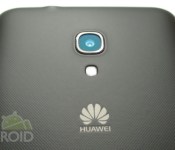
Huawei P8 potentially shows up in benchmarks with Kirin 930 processor
 Huawei’s upcoming flagship device, the P8, may have shown up in benchmarks, confirming some of the specs of the device. The benchmark came from a device with a model number of ML100-UL00, and it scored fairly highly, giving credibility to the rumors.
The processor in question was an unnamed octa-core CPU clocked at 1.5 GHz. The benchmark score was higher than the older Kirin 620, and it’s fairly close to the Kirin 925 in the Ascend Mate 7. If this does end up being the P8 with this particular chipset, it will be the first Kirin 930 device on the market.
Other specs of the device include Android Lollipop and 3 GB of RAM, but for everything else, we’re just going to have to wait for Huawei to make something official.
source: Geekbench
via: GizmoChina
Come comment on this article: Huawei P8 potentially shows up in benchmarks with Kirin 930 processor

Download the LG G Flex 2 wallpapers for your Android
Ready for a new batch of gorgeous, high-resolution images to use for your Android’s wallpaper? Check out these 10 photos that stem from the forthcoming LG G Flex 2; there’s a little something for everybody. We’re really loving the direction LG has taken with its last few smartphones, and the wallpapers are part of that. So, if you can’t afford a new handset just yet, or just like new wallpapers, grab them1


The post Download the LG G Flex 2 wallpapers for your Android appeared first on AndroidGuys.

China to impose more restrictions on companies like Qualcomm

As EETAsia reports, China’s antitrust regulators are about to impose additional restrictions on foreign companies operating inside the country within the semiconductor industry. This means that companies such as Qualcomm and other American companies will be dealing with China’s antitrust regulators on an even greater scale. China’s semiconductor market is currently the world’s largest.
The Chinese government is likely trying to slow down companies such as Qualcomm (US) and MediaTek (Taiwan) in favor of state-run companies such as Semiconductor Manufacturing International Corp. (SMIC) and Spreadtrum Communications. Combine that with the fact that China is already probing Qualcomm over antitrust concerns and it isn’t hard to see why Qualcomm has been forced to cut sales and profit expectations for the year.
As the Financial Times notes, the investigation into Qualcomm by the Chinese government is being done by a powerful state central planning body, with a fearsome reputation and a win rate “which if it is not 100 per cent, it’s pretty close.”

Qualcomm is not alone in dealing with China’s regulators. Whether it is Apple, IBM or Microsoft, China has “been counselling, cajoling and sometimes banning state companies and government agencies from buying US high-tech goods.”
“China seeks to strengthen such [state] companies through the anti-monopoly law and, in apparent disregard of the AML, encourages them to consolidate market power, though this is contrary to the normal purpose of competition law.” – US Chamber of Commerce, Financial Times
Considering that China owns the largest three domestic telecom service providers in China (China Mobile, China Unicom and China Telecom) and that all of them are moving to chips that are supported by Chinese vendors, many in the US continue to be skeptical of the motives of the Chinese government in their investigation of Qualcomm and other foreign corporations operating inside China.
It should also be noted that Qualcomm is far from an angel. The company was hit with a $20 million fine in South Korea in 2009 and was forced to renegotiate licensing agreements with Nokia and others by the European Commission in 2007.
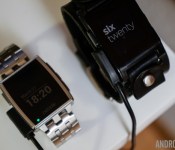
Pebble has sold over 1 million smartwatches, plans new software this year

There may be many big smartwatch brands on sale these days, but Pebble, one of the early start-ups to the market, continues to shift units. Pebble’s CEO Eric Migicovsky has revealed that the company surpassed the one million units sold mark on December 31st 2014.
This announcement means that Pebble has managed to double its sales since March last year, most likely due to a combination of new products and price cuts for its first generation hardware. Unfortunately we don’t know how this figure stacks up with other smartwatch competitors, as Google and other OEMs have not announced any figures recently.
Looking forward, Pebble has big plans for new products and an entirely new software platform in 2015. The company has found a new framework with which consumers will use to interact with future smartwatches, which moves focus away from the typical app-based model used in current devices. While apps will continue to exist on Pebble, the new software is apparently quite different from what people are used to with current smartwatches and smartphones.
In preparation, Pebble has been bulking up its staff count over the past year, expanding its team from 30 to 100 members and bringing designers from LG’s webOS TV platform on board. The company also launched a web-based emulator this month, which allows developers build and test apps via a browser and is designed to help swell Pebble’s app base in excess of the current 6,000 total.
With LG potentially moving away from Google’s Android Wear platform to its own WebOS smartwatch and Samsung renewing its efforts with Tizen, perhaps Pebble’s new software platform is the right move that will help the company stand out from the competition later this year.
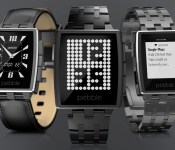
Pebble Unfazed by Apple Watch, Plans New Hardware and Software in 2015 [iOS Blog]
While much of the wearables focus remains on the upcoming Apple Watch launch, Pebble continues to push forward with its own smartwatch platform that began as a record-setting Kickstarter project and has blossomed into a successful company. Pebble CEO Eric Migicovsky recently discussed the company’s extensive plans for new hardware in the upcoming year, along with a few details of Pebble’s prosperous 2014, in an interview with The Verge.
Reaching a milestone for the company, Pebble shipped its one millionth Pebble smartwatch on December 31, 2014, undoubtedly thanks to a few major price drops to its flagship products and the introduction of noteworthy apps onto the device last year. As The Verge points out, Pebble’s biggest competitor in 2014 was Google’s Android Wear device range, but both will be facing significant competition come this April when the Apple Watch launches to the public.

Migicovsky is unfazed by the imminent release of the Apple Watch, however, outlining how Pebble’s line of devices planned for release this year will deal less with the app-obsessed world most devices focus on, instead offering something dramatically different than any smartwatch on the market.
“We’ve found a new framework to use as an interaction model on the watch,” boasts Migicovsky, before adding that while apps will continue to exist on Pebble, they won’t be the main focus of the platform. “It doesn’t look like what we have today, and it doesn’t look like what’s on your smartphone.”
Migicovsky sticks mostly to pointing out Pebble’s successful year – such as the company more than doubling by year’s end its 400,000 units sold as of March – than providing meaningful details on new products coming out of the company. He tells The Verge fans will have to wait until “later this year” for more details on the company’s upcoming devices.
Pebble’s unflinching attitude towards its upcoming war with the Apple Watch falls in line with previous actions the company has taken when it comes to Apple’s new wearable. When Apple announced the Apple Watch last September, Pebble updated its website with a few related zingers – targeting battery life, price, and over-enthusiastic responses – aimed at its competitors, namely Apple.

‘Doctor Who’ coding game for kids arrives on tablets

You no longer have to fire up your computer just to give your children some programming lessons from Doctor Who. The BBC’s educational coding game, The Doctor and the Dalek, is now available on iPads and Android tablets (both through Amazon and soon Google Play). You’ll get largely the same instruction-based Boolean logic puzzles as before, but with a few new levels and new abilities for your one-of-a-kind Dalek companion. The catch? While the game is still free, it’s only available in the UK for now — here’s hoping that the BBC makes it available worldwide so that more kids can help their favorite Gallifreyan.
New HTC Desire phone revealed with a 64-bit octa-core and 2560 x 1440 display

We are told this one isn’t a flagship, but it sure sounds like one based on the specs. The HTC A55 is a Desire phone that seems a lot like the upcoming One (M9) Plus. Perhaps it will be a plastic version of it with a slightly toned down processor
The specs include a 5.5-inch Quad HD (2560 x 1440) display, a 2.0 GHz 64-bit octa-core MediaTek MT6795 (as opposed to a Snapdragon 810) processor, 3 GB of RAM, 20 MP rear camera, 13 MP or 4 MP Ultra Pixel front camera, BoomSound, less than 3,000 mAh battery, Bluetooth 4.1, Android 5.0, and Sense 7.0.
The launch date is February 2015, which is even before the March 1st unveiling of the One (M9) and One (M9) Plus.
The Desire brand is usually reserved for the economical devices, but this one appears to be at the upper echelon of that category. We should see it at Mobile World, Congress so stay tuned.
source: Upleaks
Come comment on this article: New HTC Desire phone revealed with a 64-bit octa-core and 2560 x 1440 display
What is fragmentation and how does it affect me?
Many of you may have read the report by OpenSignal that came out this past August. In it OpenSignal gives a frightening view on just how fragmented the Android ecosystem truly is. As of the published date of the report, there were 18,796 distinct Android devices up from 11,868 of the previous year with not all of them being on the same version of Android. That equates to a 58.38% jump in just over a year. Now you might be thinking “Okay Juan, so what? You just threw a few scary numbers at me but I just got a shiny new Samsung phone for the holidays. Why should I care how many unique Android devices there are?” While there are many ways that fragmentation can affect the user, let’s touch on the two big ways that we experience its effects in our daily lives.
Android Updates

You may have noticed that when Google releases a new version of Android you do not immediately see an update notification on your phone to upgrade to it. It usually takes a few months for users to see the update hit their devices and some users may not get to see it at all. This boils down to the open source nature that is Android. When Google releases a new version of their OS, they are only releasing the core system. Since Google does not manufacture actual devices to run Android and instead depends on other OEMs like Samsung, HTC, and Motorola to create them, they cannot really develop something that is going to meet everyone’s needs. So it is then up to the OEM’s to use the source code and modify and make adjustments so that it runs smoothly on their specific devices. Many OEM’s like to add their own twist on Android phones such as customized UI’s, different sensors, and various hardware specifications and it would be impossible for Google to be able to create something that cater to so many different configurations. This is where fragmentation begins to occur.
Let’s take Samsung’s line of Galaxy S5 phone for instance. What we see as just the Galaxy S5 is actually just one of many models that have been released around the world. This in turn means that when an update comes out Samsung has to modify the code that Google releases for not just one model but many and that is just for the Galaxy S5 alone. Now imagine all the lines of phones that Samsung has and then each one of those having different models and you begin to see why it might take a while for updates to hit your phone. Samsung would have had to prioritize and seen which devices were actually going to get the update and how fast. You might see their latest flagship, in this case the Galaxy S5, get the update within a few short months and other devices it could take up to year. If Samsung deems the devices to be too old and not worth the update, then they will keep it at the current version and only releases critical updates if they are needed. From just one OEM alone now you have a line of phone each one with a different version of Android and different capabilities and you begin to see the fragmentation take place. Samsung would not have been able to just get the source code and make something that would run on all their devices due to the nature that each model and line of devices is different and has different capabilities. So with all that said now you have an idea on why it takes so long for your devices to get an update and how fragmentation plays a part in it. Having so many different devices configurations makes it quite difficult to create something that will run on everything and so instead we are depending on the OEM to modify the code and must wait for them to deem our device worthy of an update.
Android Apps

You may have caught your friends talking about that awesome new app that just hit the Play Store only to find that your phone is not capable of running it and you are left out. This occurs just due to the nature of how Android works. We already touched on how Android is an open source project and is available all around the world. Well that not only affects how updates are handled but also the very way nature of the apps that are installed on it. You see, when a developer comes up with a great idea for an app it’s not just program and go. He has to decide where his target audience is and program from there. Since there are so many distinct android devices with each one running a different version of android and having different hardware configurations, it is impossible to create an app that is going to run 100% on all devices. The developer has to decide which version of android he is wanting to target and focus on that one group.
Using the social giant’s latest release as an example, Facebook Lite, we can see how this process works. When Facebook first came out with its app on the Play Store one of the biggest complaints was that the app would lag and was not very smooth to use. The issue was due to the fact that the Facebook App can be quite taxing on phones as it requires quite a lot of resources to run smoothly. For most recent phones that is not an issue and they will never have to really worry about the phone lagging. It does start to become an issue though when you have low level phones in emerging markets such as India where the phone is just not capable of running the app smoothly or at all. This is due to the hardware configurations of the various devices and the version of Android that they are running. So what did Facebook do? They had to create an entirely new app that was toned down to be able to run on lower level phones and did not require so much power from the phone itself. For a giant tech company like Facebook having to create a completely separate app to accommodate other markets is not a big deal but for smaller companies and single developers who cannot spare the resources or the time they have to just pick one market and go with it. So fragmentation limits the apps that are able to run on devices and in turn makes it so that just because you have an android phone it does not mean you are going to be able to run every app that is made for the OS.
Final Thoughts
You may now be second guessing having gone with the Android ecosystem of devices but that should definitely not be the case. I stated earlier that Android being open source is one of its greatest strengths and I firmly stand by that belief. Though fragmentation does have some drawbacks it is also what makes Android such a huge success. Instead of having just one company making all the decisions and shaping what Android is going to look like in its next iteration you have a consortium making these decisions all with the consumer in mind. So if you enjoy using that shiny new Samsung device just remember that if it were not for fragmentation your experience might have been completely different.
Sources: OpenSignal
The post What is fragmentation and how does it affect me? appeared first on AndroidGuys.

Samsung Unpacked teaser hints at curved Galaxy S6 variant

A new teaser for Samsung’s March 1st Unpacked Event is starting to make its way to the media, showing off an image with a curved line that is most certainly a hint at what to expect from Samsung when it comes to the company’s latest Galaxy S flagship.
There’s no denying that 2014 wasn’t the best year for Samsung, at least when it comes to mobile devices. In a hopes of returning to a greater state of profitability, Samsung has been talking big recently about how the Galaxy S6 will be a major departure from the GS5 in terms of design. One of the more persistent rumors is that Samsung will deploy a dual edge/curve design at least for one variant of the Galaxy S6, said to be named the Galaxy S Edge. The new Unpacked teaser could very well be confirmation of this.
In fact, an image from the German site All About Samsung further drives home the point that this is likely a look at the side of the Galaxy S6’s edge variant. As you can see, the image in the teaser looks very similar to the side of the Galaxy Note Edge:

Of course, the design isn’t the exact same as the Note Edge, but it still seems pretty likely that this is a hint of the curved/edge Galaxy S, though that’s just speculation for now. We really can’t say for sure what Samsung is teasing, only that it’s just enough to have our curiosity piqued. One thing is for sure, regardless of what Samsung brings, Android Authority will be on the scene bringing you all the latest coverage from MWC and Samsung’s Unpacked Event next month.
Looking to know more about the Galaxy S6? All the latest rumors can be found in one place through our GS6 rumor roundup post.
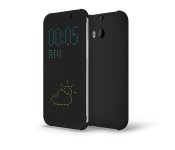
We’re taking 50% off these popular HTC Dot View Cases for One M8 today!

This custom HTC One (M8) flip case has an interactive front panel that allows you to respond to calls, access your calendar, alarms and even view notifications without even opening the case! The back snaps easily around the device and leaves complete access to all features. Get yours in black, blue, red or orange for just $24.95


