


Motorola’s Turbo Charger is coming soon to the UK for £24.99

Remember when charging our smartphones was the only way of ensuring that we had a full battery to start the day with? Those days are getting further and further behind us thanks to Qualcomm’s Quick Charge 2.0 technology. A great example of this is Motorola’s Turbo Charger that is listed as coming soon to the UK with a £24.99 price tag. The charger can deliver up to 6 hours of battery life in just 15 mins if you have a compatible handset such as the Droid Turbo, Nexus 6 or HTC One M8.
The Turbo Charger is optimised for Motorola phones, but that doesn’t mean that you can’t use it if you own a phone made by a different brand. To get the most out of the charger though, your handset should be powered by at least the Qualcomm Snapdragon 800 processor with Quick Charge 2.0 enabled. If your phone has a different CPU the device will instead receive a lower voltage, resulting in slower charging. The Motorola Charger is believed to become available in mid-March.
Source: Motorola
Via: AndroidCentral
Come comment on this article: Motorola’s Turbo Charger is coming soon to the UK for £24.99

Micromax Yu Yureka review: A new benchmark for budget smartphones?
This phone has been making waves since the day its specifications were leaked. Running on the much talked about CyanogenMod OS, Micromax’s budget smartphone comes packed with hardware that can send many mid-rangers running for cover. But is the performance of the Yu Yureka worth its hype, let’s find out.
Design

At the first glance, I didn’t find anything extraordinary about its design. In fact, it is difficult to differentiate it from hundreds of other smartphones available in the market. But if you take a look at its back panel, you can see its uncanny resemblance with the OnePlus One’s sandstone finish. Micromax has decided to call it ‘moonstone finish,’ which doesn’t feel the same if you ask me but makes it easier to hold than many slippery smartphones. Despite it being a 5.5-inch phablet, the phone is lightweight and easy to operate with a single hand. It features textured volume buttons on its right, the 3.5mm headphone jack is on the top, and the microUSB port has been placed at the bottom. The camera lens and LED flash have been positioned on the back along with the loudspeaker as it has become a standard now a days. Beneath its back panel, you can see a removable battery, two SIM card slots and a microSD card slot.
The device features a 5.5-inch IPS LCD display with a 720p resolution, which is a reasonably sharp for its price. The viewing angles are pretty good even under direct sunlight, its color output is quite accurate and vibrant and the touch screen is responsive enough.
Performance
And it runs CyanogenMod! Do I need to say more? In case you have been living under a rock, CyanogenMod looks like stock Android and comes with countless customization options including theme change, root access, bootloading and hardware tweaks such as overclocking. There is also an option to limit applications from getting access to your personal data, which is awesome if you ask me. Adding the Android KitKat based custom ROM in the Yureka was a good move by Micromax especially since it is now trying to compete with the likes of Xiaomi, Huawei and OnePlus. What can be considered as the cherry on the top, users of the Yu Yureka has been promised Android updates for a span of two years – something that even many high-end phones can’t assure you of.
The Yu Yureka again scores brownie points with its hardware. How many phones under 150 dollar or even mid-range segment can boast featuring a 64-bit octa-core Snapdragon 615 processor and 2GB RAM? Qualcomm’s MSM8939 comprises of a quad-core Cortex A53 CPU clocked at 1.5 GHz and a 1 GHz quad-core Cortex A53 based CPU. The hardware performance is quite impressive and inter-switching between apps was very smooth. There was no frame drop or lag even while playing heavy duty games such as Asphalt 8 – something that can be attributed to Adreno 405 GPU. However, I faced some heating issues while playing games and browsing the web.

The audio quality of the Yu Yureka, however, proved to be a dampener of sorts. While playing music, its loudspeaker was quite silent and I even missed some calls due to its low audio output. The audio quality improved significantly after using a headphone and manually adjust the equalizer.
Battery
It houses a 2500mAh battery that kept going for 26 hours on full charge. Before you think that all mobile phones last that long on moderate usage, let me tell you that I ran four social networking apps, six email accounts and indulged in some serious gaming – taking the screen on time to a total of five hours. And yes my device was always connected to Wi-Fi.
In terms of connectivity, the handset comes packed with plenty of options, including LTE – again something that we don’t often see in many low-cost devices. It also supports data with other standard options such as WLAN (Wi-Fi b/g/n), Wi-Fi Direct, Bluetooth 4.0 and a microUSB 2.0 port.
Camera
The Yureka sports a whopping 13-megapixel primary snapper with autofocus and single-LED flash as well as a 5-megapixel front camera. While I was not expecting this dirt-cheap phone to be a imaging marvel as the Samsung Galaxy S6 is expected to be, it still took some good images. The camera focuses swiftly, captures adequate details but the colors tone is slightly the warmer side that can be improved by adjusting the white balance. You can change exposure, ISO value and use various camera modes by going to settings menu of the default camera app. The rear camera is also capable of recording full HD videos and slow-motion 720p. The selfie camera gives above average results and frankly speaking it won’t be fair to expect a budget device to take wide angle self-portraits.
Final Thought: The Micromax Yu Yureka is currently the best smartphone available under 150 dollars hands down. The only glitch is its availability. To buy one, you are required to participate in its weekly online flash sales which is held once every week. Hopefully, Micromax takes its high demand into consideration and starts producing more units. Considering its performance in all aspects, I am giving it an overall rating of 9 out of 10.
Specifications
- Operating System: Android 4.4.4, KitKat
- Processor: Snapdragon 615 octa-core
- RAM: 2GB
- Storage: 16 GB
- Camera: Rear 13 MP, Front 5MP
- Display: 5.5″ IPS
The post Micromax Yu Yureka review: A new benchmark for budget smartphones? appeared first on AndroidGuys.

Google is bringing sponsored app search results to the Play Store

Google is making a lot of money from its bread and butter business, showing ads against search results. Now the tech giant is bringing ads for apps to the Play Store.
Here’s how it works – search for a term like “travel apps” or “fitness” and the first app shown in the search results page could be a paid listing by Expedia or Endomondo. Just like on Google.com, the Play Store will show you relevant results from developers who are willing to pay for the privilege.
“Search ads on Google Play will enable developers to drive more awareness of their apps and provide consumers new ways to discover apps that they otherwise might have missed,” said Michael Siliski, Product Management Director for Google Play.

Google will pilot the new feature with a select number of users over the following weeks. The first developers to gain access to paid app listings will be those who are already paying for ads for their apps on Google.com. Google has not specified it, but it looks likely that both the app and the web version of the Play Store will display the new ads.
The addition of paid search results in the Play Store could be a good way for developers to raise awareness of their applications, especially for new products. With that said, deep-pocketed developers could use ads to gain an advantage over smaller competitors, so it remains to be seen how beneficial the feature will be overall.
In general, Google could do much more to improve the quality of its search results. For a company that has so much expertise in search, the results shown in the Play Store are often a mess, with spam or unrelated results drowning out legitimate results. Our Joe Hindy will surely touch on the issue on a future installment of his series dedicated to the Play Store. Check out the first part here.

Google’s bringing sponsored app placements to the Play Store

Google is about to allow software companies to promote their apps on the Android Play Store, a space that was previously off-limits for advertising. That means alongside regular search results, you’ll soon see apps from companies with the biggest marketing budgets. The search giant has pitched it as a way to “provide consumers new ways to discover apps that they otherwise might have missed” while letting vendors raise the profile of apps that’d normally get buried. As the WSJ put it, however, the new tactic is also a way for Google to sell more advertising in the face of slowing sales.
The feature will launch to a “limited set of users… from a pilot group of advertisers” in order to gauge feedback from the ads. Promoted apps will be clearly labeled as such, just as they are in regular search results. So far, Google Play’s apps search has only used algorithms and human intervention, so the changes could have a substantial impact on results.
Google may have decided to monetize Play with ads since Facebook now vacuums in a large amount of ad revenue for apps from the likes of King — which spent almost $400 million marketing Candy Crush Saga and other games. Google took in around $10 billion in revenue from Play last year, and paid nearly $7 billion of that to developers.

Filed under: Cellphones, Tablets, Software, Google
Source: Google

Samsung Galaxy S6 wallpaper leaks

Talk Android has been covering the wallpaper leaks from HTC for the past month, but now we’re getting a look at a wallpaper that will be arriving with the Samsung Galaxy S6.
One of the big design elements we’re expecting from Samsung‘s “Project Zero” smartphone is a metal chassis, and this wallpaper really emphasizes that aesthetic approach.

According to the source of the wallpaper, it will be found on both the Galaxy S6 as well as its Galaxy S6 Edge variant.
Source: SamMobile
Come comment on this article: Samsung Galaxy S6 wallpaper leaks
Samson Meteorite review: a classy USB mic
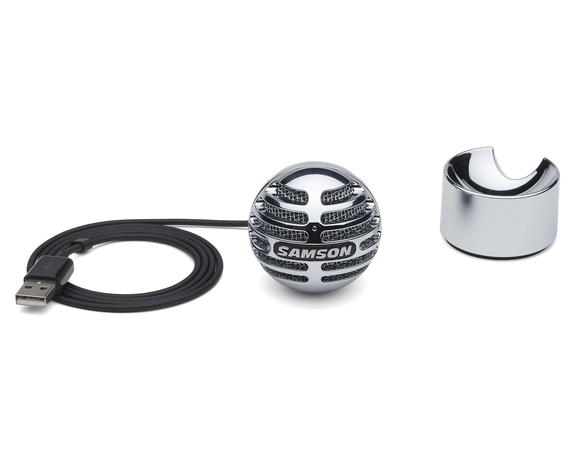
Fresh out of Samson’s portable USB microphone category is their golf ball sized Meteorite, which rests on a small magnetic podium.
When plugged into a computer, the Meteorite gives you a blue light when it’s ready to go. I used the microphone with Samson’s companion recording software, and was quite pleased with the results. Like the Go Mic Direct, this microphone records with a 16-bit, 44.1/48kHz resolution and a frequency response of 20Hz–20kHz.
When using the Meteorite, compared to the Go Mic Direct and my Dell’s built-in mic, I ended up preferring the Meteorite in terms of sound quality. The Go Mic Direct captured a deeper sound than the other two, but the sharpness and audio clarity of the Meteorite was slightly better. Here are the audio clips to compare:
Convenience and portability are the strong points of the Samson Meteorite, and audio quality proves fairly well for a microphone this size. Whether it be for YouTube recording, Skype, Facetime on the iPad or anything else, you can’t go wrong with this microphone. The price of $39.99 might be a little high considering other options, but I definitely recommend this to the traveling audio recorder.
Check out the Meteorite on Samson’s page or at its Amazon page
The post Samson Meteorite review: a classy USB mic appeared first on AndroidGuys.
Samson Go Mic Direct review: bite-size recording
Coming from the audio company Samson, we’ve got their Go Mic Direct, a bite-size microphone perfect for traveling and more than small enough to fit in your skinny jeans pocket.
The Go Mic Direct is a little USB microphone that suits all of your audio recording needs, whether that be for creating YouTube videos on the go, Skype, Facetime or any voice recognition software. The microphone is almost two inches length and width, and comes with a convenient little carrying case that’s small enough for any type of travel.
The actual microphone can rotate for better audio capture, and a green light shows up when connected to a computer. Samson has their own recording software that goes perfect with the Mic Direct, and allows for noise cancelling, which I found to be quite nice. I noticed when recording a clip on my Dell’s built-in mic that I could hear the air conditioner in the background, but not with the Go Mic Direct. Test the recordings for yourself below.
Samson’s little microphone did a great job capturing the audio I wanted it to rather than the echo “inside a room” sound with my laptop’s microphone. The 16-bit, 44.1kHz resolution with a response of 20Hz–20kHz does an adequate job of keeping the sound you want. Just don’t expect anything professional here.
The asking price for the Go Mic Direct is $39.99, which a little steap for a microphone this size. But portability is the mic’s selling point, and I’m a big fan of its convenience.
Check out Samson’s site for the product or its Amazon page
The post Samson Go Mic Direct review: bite-size recording appeared first on AndroidGuys.
iOS Extends Lead on Android in Enterprise on Strength of iPhone 6 and 6 Plus [iOS Blog]
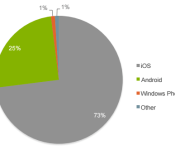
The latest Mobility Index Report from Good Technology reveals that iOS increased its lead over Android in the enterprise market during the fourth quarter on the strength of the iPhone 6 and iPhone 6 Plus. iOS accounted for 73% of total activations during the three-month period ending December, up from 69% in the previous quarter and equal to the year-ago quarter.

Specifically, the iPhone 6 and iPhone 6 Plus made up 30% of all activations during the fourth quarter, with the iPhone 6 to iPhone 6 Plus split being 77% and 23% respectively. Android activations dropped from 29% during the third quarter to 25% in the fourth quarter, while both Windows Phone and all other mobile platforms each represented a 1% share of activations.

Google’s newest AI can beat your Atari high-scores

Most people’s anxieties about AI concern computers realizing they don’t need humans and wiping us out. It probably never occurred to anyone that, as soon as they discovered beer, Netflix and video games, that computers would ditch plans for world domination, drop out and get a job at the local gas station. It’s a lesson that Google-owned startup DeepMind has learned the hard way after it got its thinking computer hooked on retro computer games.
The London-based startup, founded by Theme Park programmer Demis Hassabis, wondered if an AI could learn how to play computer games all on its own. It hooked the AI up to a series of Atari 2600 titles, but provided it with no specific instructions on what it should do. The team was looking into “reinforcement learning,” whereby you get a little reward whenever you do something good. When the computer started earning points, it received the digital equivalent of a dog treat. After a while, it stopped stumbling around and started to get pretty good at beating the arcade classics of yesteryear.
It’s a big departure from rigid games like Chess, since it’s a lot harder to “solve” a game like Pong with brute-force calculations. Here, the AI has to adapt, learn on its feet and device a rudimentary strategy in order to be successful and earn its little jolt of praise. The team admits that it’s not yet at the point where the system can beat more strategic titles like Ms. Pac-Man or Private Eye, but DeepMind is hoping that it won’t be long before it can. After that, the team is planning to turn its thinking computer into a StarCraft expert — and if it gets hooked on that, there’s no way it’s ever going to take out the garbage, or develop a way to subjugate humanity.
Filed under: Science, Software
Via: The New Yorker
Source: Nature

Samsung Galaxy S6 struts its stuff next to the Galaxy S6 Edge in latest leak
Not interested in seeing what the Samsung Galaxy S6 and Galaxy S6 Edge look like prior to their official unveiling? Look away right now as the two Android smartphones have been leaked side-by-side.

 AIVAnet