


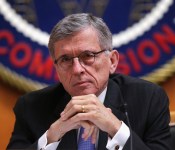
FCC Chairman states outright: they plan to classify internet access as a utility

It’s official, Federal Communications Commission Chairman Tom Wheeler wants to reclassify internet service providers as utility providers under the FCC’s Title II authority. The move aims to preserve the principles of net neutrality in law, barring ISPs from blocking, throttling, or prioritizing traffic.
Said FCC Chairman Tom Wheeler:
“I am submitting to my colleagues the strongest open internet protections ever proposed by the FCC. These enforceable, bright-line rules will ban paid prioritization, and the blocking and throttling of lawful content and services. I propose to fully apply—for the first time ever—those bright-line rules to mobile broadband. My proposal assures the rights of internet users to go where they want, when they want, and the rights of innovators to introduce new products without asking anyone’s permission.”
We can expect the ISPs to fight tooth-and-nail to derail the FCC’s effort — expect particularly vociferous objections from the likes of Comcast and Time Warner. They’ll claim that this will stifle competition (when the two don’t compete at all) and investment (when they’ve been investing in upgrading their networks for decades without using any of the potentially-violating tactics they seek to employ). They’ll say that this is bad for the internet, when the internet has flourished under the blanket assumption of these very same rules. What the FCC is proposing is to set the current operating conditions of the internet as the standard operating conditions, to enshrine into regulation that this is how the internet should work going forward.
In a surprise twist, the FCC even plans to apply these rules to mobile network operators. Previously the FCC had taken a more hands-off approach to cellular networks, but it appears they’re poised to enforce net neutrality principles onto wireless carriers that have played fast-and-loose with the idea.
We’ve been watching this fight unfold for months now, and things are about to get very real.
Source: Wired
FCC Chairman states outright: they plan to classify internet access as a utility

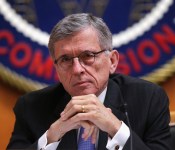
It’s official, Federal Communications Commission Chairman Tom Wheeler wants to reclassify internet service providers as utility providers under the FCC’s Title II authority. The move aims to preserve the principles of net neutrality in law, barring ISPs from blocking, throttling, or prioritizing traffic.

FCC Chairman states outright: they plan to classify internet access as a utility

It’s official, Federal Communications Commission Chairman Tom Wheeler wants to reclassify internet service providers as utility providers under the FCC’s Title II authority. The move aims to preserve the principles of net neutrality in law, barring ISPs from blocking, throttling, or prioritizing traffic.
FCC Chairman states outright: they plan to classify internet access as a utility

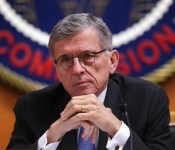
It’s official, Federal Communications Commission Chairman Tom Wheeler wants to reclassify internet service providers as utility providers under the FCC’s Title II authority. The move aims to preserve the principles of net neutrality in law, barring ISPs from blocking, throttling, or prioritizing traffic.

10 million Chromecasts found their way into homes across the world in 2014

Google sold about 10 million units of its Chromecast streaming TV dongle worldwide in 2014. This is the first time that hard sales numbers have been released for the product. Last week, Google stated that the Chromecast was the number one selling streaming device in the US in 2014 but did not give out specific sales figures.
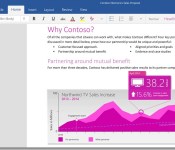
Touch-based Word, Excel and PowerPoint apps now available for Windows 10 preview users

Windows 10 Technical Preview users can now download the long-awaited touch-based versions of Word, Excel and PowerPoint from the beta version of the Windows Store.

Dead Synchronicity: Tomorrow Comes Today brings the undead to the Mac April 10

Dead Synchronicity: Tomorrow Comes Today, the first game from Spain-based Fictiorama Studios, will be released via digital download for the Mac, PC and Linux platforms on April 10 for the price of $19.99.
Here’s the rather morbid storyline summary for the 2D adventure game:
In Dead Synchronicity, you play as Michael, a man with no past, who must recover his identity and decode the two events that brought the world to the edge of collapse: the so-called Great Wave, an inexplicable chain of natural disasters, and a pandemic that turned humans into the “Dissolved”, infected beings whose sick bodies will eventually dissolve into blood. However, before they die their gruesome death, the Dissolved gain special cognitive powers. If Michael doesn’t hurry, he won’t be able to avoid the impending moment of “dead synchronicity”, when Time itself starts to dissolve.
Fictiorama Studios received much of its funding to make the game from a successful Kickstarter campaign in 2014. It will be published by Daedalic Entertainment.

Spoilers vs. spoiled: On Apple beta screenshots and expectational debt

A few weeks ago, code-divers found the Apple Watch companion app for iPhone lurking within the iOS 8.2 beta. Work-in-progress screenshots were shown off and potential new features revealed. Today, a deeper dive was posted. The two pertinent bits of information there: “work in progress” and “potential”.
Here’s the thing: When it comes to spoilers, we need to make sure we’re not the ones who get spoiled.
At WWDC 2013, Apple altered the way the iOS beta non-disclosure agreement worked: Traditionally, the NDA slammed a black curtain around its beta testers, from which no light nor sound was allowed to escape. Two years ago, however, Apple lifted many of the restrictions from that agreement, asking only that people refrain from publishing screenshots or video.
My suspicion is that, at least in part, Apple understands that betas change, and if people see something in a beta and then don’t see it in a release, they’ll wonder why. They may even get upset. Either way, the story becomes about the change, or perceived loss, and not the final product.
That’s even more likely when it comes to pre-beta software. Take last year’s Health app as a primary example: It was shown off, pre-beta, in its card metaphor form; at some point, however, Apple realized the app was going to have more data than could comfortably fit a card stack, and switched Health to a list view accordingly. When the beta came out, initial conversations didn’t focus on the Health app or its design, but on how and why it had changed. Expectations had been set for Apple rather than by Apple.
Technology is far from the only place this happens. Spoilers are everywhere in the entertainment industry: One actor is rumored, then another is cast. A script is leaked, and the final production is different. Comparisons inevitably get made and, instead of focusing on who and what we saw, we end up wondering about what might have been.
It’s why some people love spoilers and seek them out while others avoid them at all costs. What happens to beloved characters or beloved products can be equally stressful, equally scary, equally intriguing, and equally delightful.
Apple is still protecting future products the way Disney is protecting future Star Wars movies, but they’ve relaxed about coverage once announcements have been made. The company has even started doing public betas for OS X. They’re okay with shooting scripts, teasers, and trailers getting out, so to speak, just not the early drafts and not the final film, not until all the edits and FX are done. They still very much want that keynote to be filled an opening day event. After that, they’re more open to more discussion from more people than ever.
Historically, I’ve agreed to NDAs and stuck by those agreements. First, if Apple can’t trust me, why should any developer? Second, it affords me the time to really get to know the final products we’ll be using and ultimately write about them in an informed if far too long-winded manner. Other outlets avoid NDAs or make other choices. It’s what makes the internet diverse.
So, if you want to look at some screenshots extracted from the latest iOS 8 beta, or you want to find out what crazy Force powers might be in Episode VIII, you can take a look. Just keep reminding yourself that nothing is set in stone until it ships. That way, even if you’re into spoilers, your expectations and enjoyment aren’t what’s getting spoiled.

The new Honor Holly will launch with a price decided by its buyers

A new budget device with an intriguing pricing scheme
We’re live in London where Huawei’s Honor brand has launched its latest device, the Holly. In keeping with the tradition of previous Honor devices the Holly promises a mix of an affordable price and good hardware for it.
Honor’s European adventure is now 100 days old and the latest challenge to conventional pricing is the Pricehacker, a scheme where Honor will lower the launch price based upon how many customers pre-register their interest in buying it.

Whats the difference between Android malware, spyware, adware and a virus?

These are all very different bad things that we hate equally

The terms malware, spyware and virus get thrown around a lot on the Internet. Usually, you’ll find they get used interchangeably, and we all just nod in agreement because we understand that we’re talking about things we don’t want and would like to never see again. But the reality is that they are all very different animals.
We’re talking a bit about Android antivirus apps (which really are designed to prevent malware and not viruses) this week, so we wanted to take a few minutes and talk about what each of these nasties really is.

