


Accessory of the Day: Belkin 12 outlet surge protector, $19.58
Protect your valuables and ensure every piece of equipment has power with a high-quality surge protector. This Belkin 12-outlet surge protector features a 6-foot cord, safety covers, detachable cord-management clip, and a lifetime warranty. Grab one for just $19.58 and you’ll have it within two days (Prime customers). Great buy!
Join Prime and get this deal with FREE two-day shipping!
(function() var script = document.createElement(‘script’);script.src = ‘https://stacksocial.com/widget.js?publisher=androidguys&type=editorial_post_widget_preferences’;script.async = true;var entry = document.getElementsByTagName(‘script’)[0];entry.parentNode.insertBefore(script, entry);)();
http://www.androidguys.com/pubgalaxy/728×90.html
The post Accessory of the Day: Belkin 12 outlet surge protector, $19.58 appeared first on AndroidGuys.

Stable version of VLC now available on the Play Store

VLC has finally released a stable version of its media player app on Android. The app was available in a Beta for quite some time now, so it’s relieving to know that the stable version is out as well. However, VLC has still kept the Beta version of the app intact for those who would like to play around with it.
The release of a stable version essentially means that the app will not have a lot of bugs and will be as functional as you’ve ever seen it. The app is competing with the likes of MXPlayer and KMPlayer on Android, so it has some competition going around.
VLC for Android comes with support for a wide range of codecs such as avi, mkv, mp4, mov, mp3, flac etc, so you can throw a wide range of video and audio files at it. It is a free download from the Google Play Store, so hit the link below to download the app.
Come comment on this article: Stable version of VLC now available on the Play Store
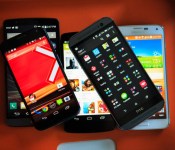
Study reveals that teens who use smartphones and computers excessively are less likely to fall asleep

A new study found on the BMJ Open Journal suggests that teenagers who use smartphones, computers and other electronic gadgets excessively prior to sleeping are likely to harm their sleep schedule. This isn’t exactly the revelation of the millennium, but the findings shed light on how it could impact the future of the teenagers.
It is said that people who use computers or smartphones an hour before going to sleep are 53% and 35% less likely to fall asleep, while missing at least 2 hours of sleep. This particular research was conducted among 10,000 teenagers (ages 16-19) in Norway.
Although the researchers haven’t been able to pinpoint the actual cause, it can be accredited to the bright display panels we see on modern electronics. The concerning aspect of this study is the fact that scientists have managed to correlate teenage sleep issues with future trouble such as drug abuse, obesity etc.
So if you happen to find trouble falling asleep, you might want to cut down on smartphone or PC usage prior to sleeping.
Source: BMJ Open Journal
Via: BGR
Come comment on this article: Study reveals that teens who use smartphones and computers excessively are less likely to fall asleep
New leak reveals HTC One M9 in the latest Dot View case

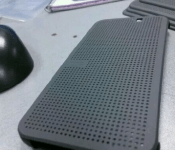
A report from last week suggested that HTC would introduce new color variants with the Dot View case for the One M9 smartphone. Today, we’re getting our very first look of the cover (in black) thanks to a new leak. This comes after we stumbled across the back panel of the One M9 yesterday, revealing the camera and LED flash placement on the handset.
At first glance, there’s nothing new with this case compared to the Dot View case from last year. But we’re certain that HTC has some new tricks up its sleeve to show us with the newest iteration of the Dot View case. Nothing more can be ascertained from these leaked images, although we hope to learn more over the coming days.

The One M9 is expected to be packing a Quad HD display, a Snapdragon 810 octa core chip, 32/64GB of storage, 3GB of RAM and Android 5.0 Lollipop with Sense 7.0 UI. The launch of the flagship has been scheduled for the 1st of March in Barcelona.
Source: Weibo
Via: Phone Arena
Come comment on this article: New leak reveals HTC One M9 in the latest Dot View case
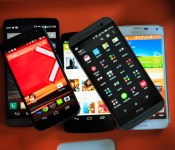
Study reveals that teens who use smartphones and computers excessively are less likely to fall asleep
A new study found on the BMJ Open Journal suggests that teenagers who use smartphones, computers and other electronic gadgets excessively prior to sleeping are likely to harm their sleep schedule. This isn’t exactly the revelation of the millennium, but the findings shed light on how it could impact the future of the teenagers.
It is said that people who use computers or smartphones an hour before going to sleep are 53% and 35% less likely to fall asleep, while missing at least 2 hours of sleep. This particular research was conducted among 10,000 teenagers (ages 16-19) in Norway.
Although the researchers haven’t been able to pinpoint the actual cause, it can be accredited to the bright display panels we see on modern electronics. The concerning aspect of this study is the fact that scientists have managed to correlate teenage sleep issues with future trouble such as drug abuse, obesity etc.
So if you happen to find trouble falling asleep, you might want to cut down on smartphone or PC usage prior to sleeping.
Source: BMJ Open Journal
Via: BGR
Come comment on this article: Study reveals that teens who use smartphones and computers excessively are less likely to fall asleep

Stable version of VLC now available on the Play Store
VLC has finally released a stable version of its media player app on Android. The app was available in a Beta for quite some time now, so it’s relieving to know that the stable version is out as well. However, VLC has still kept the Beta version of the app intact for those who would like to play around with it.
The release of a stable version essentially means that the app will not have a lot of bugs and will be as functional as you’ve ever seen it. The app is competing with the likes of MXPlayer and KMPlayer on Android, so it has some competition going around.
VLC for Android comes with support for a wide range of codecs such as avi, mkv, mp4, mov, mp3, flac etc, so you can throw a wide range of video and audio files at it. It is a free download from the Google Play Store, so hit the link below to download the app.
Come comment on this article: Stable version of VLC now available on the Play Store

Apple’s HealthKit takes the early lead over Google Fit in U.S. Hospitals

Apple and Google might battle for supremacy when it comes to smartphones and tablets, but the healthcare sector is going to be another big battleground. It’s still early in the game, but Apple is already winning.
Reuters contacted 23 top U.S. hospitals and 14 of them are conducting a pilot program using Apple’s HealthKit. Google offers Google Fit, which isn’t as advanced at HealthKit, but they have started discussions with a few hospitals. Another player is Samsung, but just like Google, they barely have a foot in the door.
Hospitals hope to use these services to help physicians monitor patients for chronic conditions like diabetes and hypertension. They could provide the information necessary to prevent repeat admissions or to prevent more acute issues.
Probably the biggest reason HealthKit is kicking ass is because there are over 600 developers working with it. Google Fit only has a handful. HealtKit can already detect glucose measurements as well as monitor blood pressure. This is on top of the exercise-tracking apps that both Samsung and Google offer. The Apple Watch will bring even more data to both users and health professionals.
It seems like Apple will always have the edge when it comes to development. Developers flock to their products first. Is this early lead an indication of the future or will Google make a comeback? Once a hospital chooses one service, it’s unlikely to switch that easily.
source: Reuters
Come comment on this article: Apple’s HealthKit takes the early lead over Google Fit in U.S. Hospitals
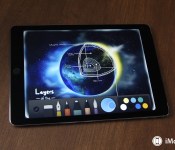
FiftyThree’s Paper tools are now free — draw to your heart’s content

There are a ton of veritable sketching, drawing, and handwriting apps out and about on the App Store, but the one that holds a special place in my dock is FiftyThree’s Paper. The app’s won many a convert for its excellent drawing tools, previously encumbered by an $8 in-app purchase; as of Thursday, however, those tools are now completely free for everyone and anyone to scribble to their heart’s content.
FiftyThree doesn’t give detailed reasoning behind its decision, published in a blog post earlier this morning, though the company does note that it hopes to grow its Mix platform and overall usage of the app:
At FiftyThree, we built Paper to remove barriers to creativity by putting simple, powerful tools into people’s hands. By making Paper accessible to all, we hope to see more great ideas come to life – on Mix and everywhere.
I also wouldn’t be surprised if the company did this in hopes to gain more users of its $60 Pencil stylus, one of FiftyThree’s remaining paid products. The other, a $25 Moleskine print of any of your virtual Paper sketchbooks, may be equally appealing to users who now have to pay nothing to play with the app.
This move may not particularly please the legions of Paper fans who already paid for their tools, but as one of those people, I’m not particularly perturbed: Because of those in-app purchases, I’ve gotten to use the app in full for several years now; if I’d waited until the tools were free, I wouldn’t have had any of that time to sketch, create, or paint what I’d liked.
Despite the move to a fully free app, I’m hoping this doesn’t hinder or otherwise hold up Paper’s development; I’ve been wanting a Procreate Pocket-style iPhone app for years, and there are still plenty of other little quibbles and bug fixes the company could undertake.

ARM’s latest IP could be another boon for China

ARM’s newly announced Cortex-A72 CPU and Mali-T800 GPU IPs are clearly exciting prospects for us consumers, but new technologies also create plenty of business opportunities.
At the top of the list of likely beneficiaries is TSMC, the Chinese chip fabrication company that ARM has been optimising its new physical IP with. TSMC’s 16nm FinFET+ process will be the first foundry to support these new IPs, which will give TSMC a head start over its rivals. Even over those with smaller manufacturing nodes on the way. Support for other foundries will come in time, but the first batch of smartphones powered by these chips will likely contain parts produced by TSMC and are expected to arrive sometime in 2016. Even further into the future, ARM and TSMC have already announced a roadmap to reach 10nm optimized designs.
ARM has hinted that “more than ten partners” are already licensing the Cortex-A72 processor design, three of which are China-based HiSilicon and Rockchip, as well as Taiwan’s MediaTek. Each of these companies will likely be using the new IP for their own line-up of mobile application processors. While Apple, Samsung and Qualcomm leverage ARM’s IP for their own custom SoC designs, Huawei’s HiSilicon and MediaTek traditionally stick closers to ARM’s reference designs, which may allow them to ship products to market in a shorter time frame.

HiSilicon leverages ARM’s IP and TSMC’s foundry to produce a range of SoCs.
Importantly, it is these local SoC designers and manufacturers which power a large percentage of China’s gigantic smartphone and tablet market. Although Western markets still make use of PCs for some of their internet access, a large percentage of China’s growing online population are connecting to the internet entirely through mobile. A Chinese government report counted 649 million internet users by the end of 2014, with 557 million using handsets to go online.
Part of ARM’s approach with this latest generation is too scale performance between low and high power devices. In China, where mobile is much larger market than the West, ARM’s new IP will enable local development and production of more powerful mobile devices, to fill in existing gaps in the market. There are a lot of potential consumers, and the first to market with new and improved technologies will likely secure significant sales figures.

ARM’s Ian Ferguson expects that smartphones will move closer to becoming “primary computing platforms” in 2016, and China’s consumer and manufacturing bases are likely to be at the forefront this movement.
Microsoft acquires Sunrise Calendar for $100 million

Maker of popular Windows products, Microsoft has reportedly shelled out the big bucks to acquire start-up Sunrise Calendar for a hefty $100 million. Precise details regarding the acquisition haven’t been disclosed by either party, but the report seems to be coming from legitimate sources in the industry.
Sunrise Calendar is a cross platform application which can sync calendar data from Google, iCloud and even Microsoft Exchange. There are Windows and Mac variants of the app as well, so it’s one of those apps which practically anybody can access.
This is a strategic move by Microsoft in acquiring one of the popular calendar applications going around. It is being said that Microsoft might keep Sunrise independent, although it goes without saying that some of its technology will be used by the Redmond giant.
Given that Microsoft is touting its new Office products as an entire package rather than individual apps, acquisition of Sunrise (and Acompli recently for $200 million) certainly makes logical sense.
Via: Tech Crunch
Come comment on this article: Microsoft acquires Sunrise Calendar for $100 million

