


DJI’s drone safety upgrade rolled back after ‘flight behavior’ issues

DJI was the unfortunate drone brand of choice to pay an unplanned visit to the White House. The company responded days later with an update that added some new safety features, including GPS geofencing that stops the drone flying about near sensitive places: like the White House. However, it has paused the roll-out of the update after a few reports that “unanticipated flight behavior after updating” to Phantom firmware v3.10. For now, the company advises that Phantom pilots stick to older versions for now until those safety upgrades are completely, well, safe. As Wired recently reported, it’s in the best interests of DJI to ensure its drones aren’t flying where they shouldn’t be…
Presentations included an exercise where a wave of drones won out against a convoy of armored vehicles.
Less than two weeks earlier, officials from the FAA, US military and the Department of Homeland Security reportedly attended a conference outlining the potential terror uses of drones — using the same models that Joe Normal can buy right now. Presentations included hobbyist drones firing semi-automatic weapons, and (incredibly) an exercise where a wave of drones won out against a convoy of armored vehicles. A DJI Phantom 2 was also one of several drones loaded with inert explosive: that’s the latest iteration of the drone that landed at the White House days later. DJI’s latest update not only included forced landings if its drones were frolicking near buildings important to national security and airports, but also the ability to access mobile data services while using the WiFi range extender, as well as a warning to not take off if the drone / pilot doesn’t have sufficient GPS signal — another effort to avoid unwanted crashes and incidents.
Filed under: Robots
Watch how DARPA plans to launch small rockets from flying jets

Small satellites are usually launched to space as secondary payloads aboard big rockets, but DARPA’s Airborne Launch Assist Space Access (ALASA) program could change that. Folks under that project have been working on small rockets that can carry 100-pound satellites into orbit since 2011, but now DARPA has released a video showing how the takeoff process works. As you’ll see in the animation below the fold, those rockets have to be light, because they’re designed to be carried by unmodified jets into the air, before they’re released to make their way into space. Since the planes will serve as the “first stage,” (hence, reusable) the government/military/companies with access to the technology will be able save money.
In fact, each launch will only cost $1 million (a SpaceX launch costs around $55 million, but that’s already cheap for a big rocket), and rockets can be deployed within 24 hours of being commissioned. But enough about the project’s details: you should seriously watch the video below to see how a jet-small rocket combo can take a satellite to space.
Filed under: Misc
Source: Youtube



Satya Nadella talks about cricket, Microsoft Band and Windows Phone in latest interview

On the occasion of his first-year anniversary as the CEO of Microsoft, Satya Nadella sat down with ABC News to talk about a wide range of subjects, including his passion for cricket, Microsoft’s work in the wearable segment, and of course Windows Phone.
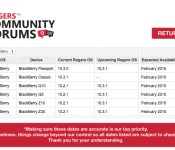
Rogers notes BlackBerry 10.3.1 updates coming this month

Although this one likely won’t come as much of a surprise to anyone who has been paying attention, it might help ease some minds of those waiting. Rogers has now updated their upcoming OS release form that gets posted to their community forums and according to the list, all BlackBerry 10 devices they sell or have sold will be updated at some point in time this month.
Regulators looking at possible stock manipulation in Samsung buying BlackBerry rumors

When it was rumored that Samsung was in talks to purchase BlackBerry last month, one of the major side-effects was that BlackBerry‘s stock price skyrocketed. Now, regulators from both the U.S. and Canada are reportedly investigating trading activity around the time of the rumor in order to ascertain whether it was started to profit from the resulting surge in BlackBerry’s stock price.

Leaked image claims to show Galaxy S6 and dual-edge Galaxy S6 Edge

An image of what is alleged to be Samsung’s Galaxy S6 and Galaxy S6 Edge has been leaked to CNET Korea. The publication mentioned that the leak came from a South Korean electronics distributor, with the image itself featuring a render of both the Galaxy S6 and a Note Edge-style variant of the device.

Samsung to add more Galaxy Tablets to Lineup in 2015

Although some analysts had predicted (and recommended) Samsung reducing its breadth of devices available to the consumer this year, it seems that Samsung still has some surprises up its sleeve.According to GalaxyClub, Samsung has applied for three new trademarks with the Korean IPO: the Samsung Galaxy Tabs A, E and J. These are obviously names for new tablets, which will most likely join the ranks of the Galaxy Tab and Galaxy Tab S in the coming tech release season.
The new names follow Samsung’s current trend of using other letters besides ‘S’ for devices, like the Galaxies A5, A7, E5, E7, and J1. The move to letters instead of longer, heavily-worded names is a good move for simplicity, as well as a good move for showing some sense of progress as a company, which, in a world of rehashes and Galaxy S16s, and Note 11s, may be a good move for the company altogether.
Source: Galaxy Club
Via: Phone Arena
Come comment on this article: Samsung to add more Galaxy Tablets to Lineup in 2015
Chrome OS lets you lock lost or stolen computers

Losing a gadget sucks, but having to change all your passwords to make sure no thief gets to your bank accounts is much worse for some people. That’s why it’s awesome that Chrome OS devices can now be locked when stolen or lost — if they’re Enterprise/Business or Education computers, that is. Google has introduced the feature as an update to the admin console, and according to Google employee François Beaufort, there’s no way to do it for personal devices yet. That’s unfortunate, but seeing as Chromebooks are doing especially well in the education sector, we’re not entirely surprised. Those who do use a school/work-issued Chromebook only have to ask their IT admin to lock it remotely from the web-based control system. After that, people who switch the device on will only see a lock screen with the company’s or school’s address and phone number, in an attempt to guilt them into finding the rightful owner.

Via: François Beaufort (Google+)
Source: Chrome Releases
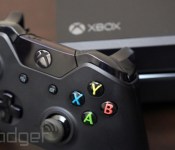
Xbox One’s first update of the year adds hubs for your favorite games

Green with envy about folks having access to Xbox One’s Game Hubs and transparent dashboard tiles? Well, now everyone has access to ‘em — not just people in the Dashboard Preview Program. That means relevant content related to every Xbox One game (like people currently broadcasting it, game clips, leaderboards) now ties into neat and friendly individual cards on the dashboard. The February update also brings in tweaks to controller connection time and party chat improvements for those operating on different NAT settings. Also in store is some absurdly specific stuff for folks across the pond. We’re talking live streaming TV via SmartGlass to Android and Windows devices in Europe, and expanded Trending TV in Brazil, France, Germany and Mexico. America is apparently too passé for Redmond these days. Regardless, if you’re feeling impatient you can force the update from the system settings menu starting now.
https://www.youtube-nocookie.com/embed/1QxV0xzY4YI?rel=0
Filed under: Gaming, HD, Microsoft
Source: Xbox Wire
 AIVAnet