


YouTube experiments with new non-stop music with YouTube Radio
Looks like YouTube is continuing its evolving nature and with a new experiment into YouTube Radio. This expands on the current YouTube Mix and YouTube Music Key. YouTube Mix is the nifty little playlist function that creates a mix of music videos based on the video that is currently playing. It is pretty cool and […]
The post YouTube experiments with new non-stop music with YouTube Radio appeared first on AndroidSPIN.

Weekly photo contest: Patterns

Last week’s photo contest was inspired by our current busy season of travel. This week, it’s the same source of inspiration that provided me an idea for a much different theme. Patterns. The image up top I took at London King’s Cross station on my Lumia 830 – with a little Photoshop tweaking after – of the roof. It’s the same pattern repeated across the main concourse and when lit up at night is quite striking.
So, that’s what we’re looking at this week. Patterns are present in so many different areas of day-to-day life that it’s easy to come up with an idea. Yet still leaves plenty of scope to be extra creative. But, first, some housekeeping. And that means announcing who won last week’s competition.
The BLU Studio Energy is now on sale at Amazon for only $149

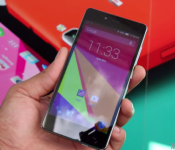
BLU Products recently announced a huge amount smartphones at CES 2015. Perhaps the most intriguing out of the bunch, the BLU Studio Energy, is now on sale through Amazon for only $149. The Studio Energy is a bit thicker than the others, but that’s thanks in part to the massive 5,000mAh battery. BLU quotes that this device can last up to four days on a single charge, or up to 45 days of standby time.
Aside from the huge battery, the Studio Energy has a 5-inch IPS LCD display with 720 x 1280 resolution, a quad-core 1.3GHz Cortex-A7 processor backed by 1GB of RAM, an 8MP rear-facing camera and a 2MP front-facing camera. While this device only has 8GB of internal storage, it supports MicroSD expansion up to 64GB. The device is running Android 4.4 KitKat, but BLU assures us that the phone will be updated to Android 5.0 Lollipop sometime in the future. Oh, and this smartphone can charge other electronic devices using the included USB OTG cable.
Considering this phone has a big battery, a decent processor, a nice screen and support for 64GB of external storage, this is a steal at $149. We went hands-on with the device at CES last month, and it was one of the more interesting devices we saw at the trade show. Take a look at our hands-on video below, and be sure to head to the Amazon link to grab one for yourself.
Buy the BLU Studio Energy from Amazon for only $149

The BLU Studio Energy is now on sale at Amazon for only $149
BLU Products recently announced a huge amount smartphones at CES 2015. Perhaps the most intriguing out of the bunch, the BLU Studio Energy, is now on sale through Amazon for only $149. The Studio Energy is a bit thicker than the others, but that’s thanks in part to the massive 5,000mAh battery. BLU quotes that this device can last up to four days on a single charge, or up to 45 days of standby time.
Aside from the huge battery, the Studio Energy has a 5-inch IPS LCD display with 720 x 1280 resolution, a quad-core 1.3GHz Cortex-A7 processor backed by 1GB of RAM, an 8MP rear-facing camera and a 2MP front-facing camera. While this device only has 8GB of internal storage, it supports MicroSD expansion up to 64GB. The device is running Android 4.4 KitKat, but BLU assures us that the phone will be updated to Android 5.0 Lollipop sometime in the future. Oh, and this smartphone can charge other electronic devices using the included USB OTG cable.
Considering this phone has a big battery, a decent processor, a nice screen and support for 64GB of external storage, this is a steal at $149. We went hands-on with the device at CES last month, and it was one of the more interesting devices we saw at the trade show. Take a look at our hands-on video below, and be sure to head to the Amazon link to grab one for yourself.
Buy the BLU Studio Energy from Amazon for only $149

Tesla built 35,000 cars last year, preps for Model X launch

While Elon Musk keeps his eye on a SpaceX rocket launch this evening, his car company just released its financial data for the last year. Tesla met its goal of building 35,000 cars in 2014, but says some shipments were held back as a result of launching the shockingly-fast AWD P85D Model S. Beyond the numbers, the company is raising its goal for next year to 55,000 vehicles, including the Model X SUV it says is still on track to arrive in Q3. There are about 30 Model X vehicles in testing now, while Release Candidates are slated for March. The bad news? Its $1.1 billion in revenue for the quarter was lower than analysts expected, and operating expenses double from the same period last year.
Developing…
Filed under: Transportation
Source: Tesla

Award-Winning Dystopian Adventure Game ‘République’ Coming to Mac and PC [Mac Blog]
Indie studio Camouflaj today announced its hit episodic stealth game République is being ported to PC and Mac and will be available to download on February 26 via Steam, GOG, and the Humble Store.
The team says the new edition of the game has been “rebuilt from the ground up” to access the power of the Unity 5 gaming engine. They also tout that the Remastered edition is the first commercial game to “fully utilize” the power and functionality of the Unity 5 engine, allowing for a deeper, more vividly realized world with physically based shading, real-time global illumination, and reflection probes.

“Ever since we committed to doing a desktop version of République, we’ve been haunted by the task for delivering something truly special for PC players,” says Ryan Payton, designer at Camouflaj. “When we got a glimpse at the next iteration of Unity we realized that this was the answer — beyond redesigning the game’s controls and UI for desktop, we’ve completely gutted all the game’s art, rebuilding everything using Unity 5’s cutting-edge graphical features. The result is something you have to see to believe.”
The game follows the story of Hope, a young woman attempting to evade capture from a mysterious, overbearing sect of the government intent on capturing her. Putting the player directly into the game, Hope tasks gamers to hack cameras and survelliance systems to safely guide her through the byzantine levels she finds herself trapped in. The game has garnered much attention since its release on iOS in late 2013, with our sister site Touch Arcade commenting that, after the first episode, the game was “shaping up to be a masterpiece.”

The new Remastered edition will come with the first three episodes of the game – “Episode 1: Exordium,” “Episode 2: Metamorphosis” and “Episode 3: Ones and Zeroes” – and include a Standard and Deluxe Edition.
The Standard Edition will retail for $24.99 and will include pre-purchase codes for the final two episodes of the story: “Episode 4: God’s Acre” and “Episode 5: Terminus.” The Deluxe Edition includes all of this plus the complete soundtrack, an hour-long “making of” documentary, and two early prototypes (exclusive to the desktop version) for $34.99. Each will receive a 20 percent discount during the game’s initial launch week.
The République Remastered edition has already shown up on Steam and GOG ahead of its February 26 launch date, but isn’t yet available for pre-order.
Upwards of 720,000 Android Wear devices shipped in 2014

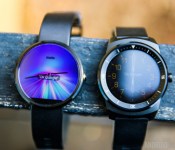
Android Wear became available to the masses last year after Google released the LG G Watch and the Samsung Gear Live at Google I/O last year. According to a new report from Canalys, Google’s wearable platform has been getting off to somewhat of a rough start. The report states that a little over 720,000 Wear devices shipped in the year 2014, which accounts for around 16% of the 4.6 million “smart wearable bands” sold last year.
While we don’t have any specific numbers, the report states that the Motorola Moto 360 was the “clear leader” among Android Wear vendors, despite the watch’s supply constraints in Q4. Additionally, LG’s G Watch R performed better than the original LG G Watch. We also saw the launch of the ASUS ZenWatch and the Sony SmartWatch 3, but again, no numbers were given on individual sales.
A spokeswoman for Google told The Wall Street Journal:
With six unique watches on the market (round and square), a growing collection of watch faces, and thousands of apps created specifically for Android Wear, our team and developers are helping users wear what they want.
Perhaps the problem with Android Wear isn’t with the OS itself, but that consumers just don’t know why they need a smartwatch. If that message can get through to shoppers, we could see a huge growth in the platform through 2015.
Read more: Failure to launch: a few reasons why smartwatches haven’t caught on
For comparison, the biggest wearable competitor for Android Wear is Pebble, which has shipped upwards of one million units of the original Pebble and Pebble Steel since its launch back in 2013. With the upcoming Apple Watch launch in April and wearable announcements from HTC and other major OEMs, there’s no telling how many Android Wear devices will be sold this year.
Do you have an Android Wear device? What do you think of it so far?

Announcing the ‘Weekly Photo Contest: Construction’ winners!

This week’s photo contest was following the prompt “construction,” and more than a few of you were able to build a great photo to submit for a chance to win. You filled up a forum thread with wonderful and interesting pictures, but in the end we had to narrow it down to just three that were worthy of taking home a prize.

Galaxy Note Edge review: Super cool, but is it useful?

The Galaxy Note Edge was introduced alongside the Galaxy Note 4. It’s essentially the same exact phone except the right edge is curved and it serves as a secondary display. On the surface, it looks kind of cool, but when it comes to technology, cool stuff isn’t always useful or worth your money. If it cost the same as other flagship phones, it might be an easy decision, but at $399 on contract, this thing is either the next best thing or something to stay clear away from. Let’s find out which after the break.
Since the Galaxy Note Edge’s main differences from Note 4 are the edge display and the battery, I am only going to concentrate on those features. I am not going to spend too much time on performance, the overall software, and the camera since the experience is exactly the same. If you want to find out about those features, see my Galaxy Note 4 review, but for now, I will concentrate on the design, the battery life, and how the edge display operates.
Design
I loved the build of the Note 4, and since the Note Edge has the same materials, it’s no surprise that I was also pleased. However the curved right edge does change things a lot in terms of holding the phone and operation.
Normally when you hold your phone, you probably have your thumb at one edge and your fingers at the opposite edge. Depending on the type of build, you will normally have a decent grip on the device. The edge changes things a lot. No more do you have a side panel to grab. Instead, you get a very small lip at the bottom. The right edge is curved so you won’t get the same feel. You can certainly rest your fingers on the curved glass, but it doesn’t give you that “good grip” feeling that you get from a normal edge. It will also cause issues with the display’s contents as you will find out later on in the review. It’s a matter of getting used to, but your best bet will be to keep your fingers at the small bottom lip. Now don’t get me wrong. It’s not so different that’s impossible to get used to, but you will need some time to adjust.

Because of this edge, Samsung had to make some other adjustments. Since the right side cannot house any buttons or ports, they moved the power button to the top. If you’re familiar with Samsung phones, this will take a little getting used to since Samsung has always tried to stay consistent with their products. They opted to place the power button on the top right side and moved the IR blaster to left, next to the microphone jack. The volume button on the left side is also different. I am not sure why, but they opted for a cleaner button, instead of the dimpled feel that is on the Note 4. The indentation to remove the back cover was also moved from the side to the top.


The only other difference is that the Note Edge is actually thinner than the Note 4. It’s also slightly shorter, but a little wider. The Note Edge comes in at 151.3 x 82.4 x 8.3 mm, while the Note 4 comes in at 153.5 x 78.6 x 8.5 mm. Because of this, the main display comes in a 5.6-inches on the Edge vs 5.7-inches on the Note 4. All of this is barely noticeable however.
All in all the Note Edge feels just as nice as the Note 4 that we loved, but the grip just isn’t the same. This isn’t a defect by any means. Samsung did a fantastic job with keeping things pretty solid with the curved edge. All I can say is that some people might not like the grip. You’re best bet is to try it at the store before you do anything.
Hardware
The Galaxy Note Edge features a 5.6-inch Quad HD (2560 x 1600) Super AMOLED display at 524 ppi and Corning Gorilla Glass 3, a 2.7 GHz quad-core Snapdragon 805, an Adreno 420 GPU, 3 GB of RAM, 32 GB of internal storage, microSD slot for up to an additional 128 GB of extra storage, 16 MP rear camera with f/2.2 aperture along with OIS, HDR, and 4K video capture, 3.7 MP front-facing camera with f/1.9 aperture, IR blaster, Wi-Fi 802.11 a/b/g/n/ac (2X2 MIMO), Download Booster, NFC, Bluetooth 4.1, USB2.0, MHL 3.0, Micro-SIM, and a 3,000 mAh battery.
Radios:
GSM 850 / 900 / 1800 / 1900, 3G Network HSDPA 850 / 900 / 1900 / 2100, 4G Network LTE 800 / 850 / 900 / 1800 / 1900/ 2100 / 2600
Display
It should be noted that although the Note Edge’s display has the same QHD resolution as the Note 4, it’s OLED instead of AMOLED. OLED was utilized because they cannot curve a Super AMOLED display. In my experience with both devices, I could not tell a difference between the two. Just like the Note 4, it’s an amazing display, and you will have a hard time finding anything better than either device.
The other thing to mention is that the Note Edge has one panel with a resolution of 2560 x 1660. The main part of the display comes in at 2560 x 1440, while the edge comes in at 2560 x 160. The edge is also about 0.30-inches wide.
Battery
Since the Galaxy Note Edge has a slightly smaller battery than the Galaxy Note 4 (3000 mAh vs 3220 mAh), you would expect a little less battery life. That was confirmed in my video rundown test. I was able to get 10 hours and 37 minutes on the Note Edge versus 12 hours and 16 minutes on the Note 4. The Note 4 will get you through an entire day with about 20 to 30% left over, but the Edge won’t leave you much leftover. You still should make it through a full day with moderate use, but you might find yourself using Ultra Power Saving Mode once in a while a few hours before bed.
Edge Display and Software

Other than the design, this is the other important part of this review. It’s the curved edge that is the selling feature of this device so it’s time to find out all about it. I put together a video showing you everything that it can do and how it all works. You can see it below, but in a nutshell, it acts as a quick way to launch apps as well as read notifications, the weather, and the news. It can be customized to an extent and there is some developer support for third party apps. You can even set it up for left handers. Before I move on, check out the video below.
Click here to view the embedded video.
Using the edge display is pretty simple and straightforward, but I never felt like it was a game changer. Looking at the curve and showing it off is kind of cool, but when I switched to a “regular” phone, I didn’t feel lost. As far as the quick app launcher, there are a ton of apps just like it in the Play Store that can do something similar. Now they might take up some of your screen real estate, but does that matter when you’re looking at displays 5-inches and over? There is also the issue with reading notifications when the main display is off. It’s cool, but the display times out before you can read it all, so you have to keep tapping to prevent it from sleeping. Then there is the gesture that you use to turn on just the edge display. You have to swipe your finger back and forth. Not too bad, but if you’re doing it with one hand while the phone is sitting on the desk, it moves a little. That’s not a big deal, but it’s another minor nuisance. Last but not least, when holding the phone, your fingers will sometimes accidentally swipe the edge causing things that you didn’t intend to happen.
Probably the coolest feature of the edge display is the night clock, which is perfect for your nightstand. I don’t have a clock on my side of the bed, and I loved the Moto 360′s adaption when I used it. The Edge gives a very nice and clean display. The only real problem is how it lays on your stand. I am on the right side of the bed and the charging wire comes from the back of the nightstand. If I lay the Edge with the cable to the back of the stand, then I cannot see the edge display. So I have to wrap the cable across the front of my nightstand. Good news!! Samsung will implement a dual curved edge display version of the Galaxy S 6 to solve this problem. Actually it’s unlikely they are making it for that reason, but it will be one of the pros of a dual curved edge display. With all that said, the night clock is great and all, but it’s hardly a reason to spend the extra dough on this phone.

Conclusion
The Galaxy Note Edge is a little ahead of its time. It’s a proof of concept if you will. I have no doubt that curved displays are in the future, but for now they don’t really offer a whole hell of a lot. If the Note Edge was the Note 4 and priced the same as the Note 4, I would be all over it, but paying a premium isn’t worth it until it matures. Even the G Flex 2, which is a completely different curve, can be considered in the same boat as not all that useful, but it will be priced the same as other phones sitting next to it. So you don’t mind dropping your money on it. The Galaxy Note Edge is strictly for those that just have to own something different and newer than everyone else, not to mention a little extra money to burn. And at this point in the game, unless you need the S Pen capability, it’s probably better to wait and see what the Galaxy S 6 Edge offers.
Come comment on this article: Galaxy Note Edge review: Super cool, but is it useful?

Gionee Elife S7 built to hold thinnest smartphone title

Chinese smartphone manufacturer, Gionee, recently sent out press invites to its Mobile World Congress 2015 (MWC) release event. In the invite, a picture of its newest device, the Elife S7, shows off an incredibly slim width.
Gionee, which is in the process of re-branding its company as Kazam, has offered the world’s thinnest smartphones for several years now. So what is the Elife S7 coming in at? Well, recent photos of the device have surfaced and the leaker is claiming that the width is 4.6mm.
Coming by way of Anzhuo.cn, these photos possibly show us the Elife S7 in the wild.


We’ll have to wait until MWC 2015 to see if Gionee retains its record-setting title of thinnest smartphone manufacturer in the world.
Personally, I don’t see the point in ultra-thin smartphones. But what are your thoughts?
Source: Anzhuo.cn via G For Games
Come comment on this article: Gionee Elife S7 built to hold thinnest smartphone title

