Adobe Certified Training: Lifetime access to expert tutorials, 84% off

In today’s world it’s almost a social prerequisite to have a fundamental understanding of Adobe’s suite of products. Whether you’re a journalist that needs to superimpose …


Panasonic is the latest company to throw its real hat into the virtual reality fray, after showing off a prototype headset that will compete with rival products from Samsung and LG. The goggles were shown at a press event in Japan this week, and house an OLED display with a 90-degree viewing angle, capable of video unto 75 frames per second. The glasses use ear-hooks to support themselves, and were demonstrated alongside an omnidirectional camera, similar to Samsung’s Project Beyond. Of course, this doesn’t rule out gaming use (which is mostly where Oculus and Sony are duking it out), but given Panasonic’s heritage in displays and image capture, it’s not hard to imagine that immersive content will be the primary use case (no word on what inputs there are etc.). The company reportedly said that the camera-part is being built with the 2020 Tokyo Olympics in mind. While that’s still a few years away, we’re hoping all the signs are suggesting we won’t have to wait quite so long for more details on the when this headset might become reality.

Filed under: Gaming, Home Entertainment
Via: SlashGear
Source: Techon

Apple CEO Tim Cook is at the White House Summit on Cybersecurity and Consumer Protection which is occurring now, and he is expected to speak for approximately 10 minutes beginning at 11 a.m. Pacific Time, ahead of a presidential address set to take place at 11:15.
The summit is being streamed live on YouTube and can be watched below.
The White House is expected to unveil its next executive action on cybersecurity at today’s summit. The event includes tech executives, academics, government officials, with several panels on topics like payment security, and improving cybersecurity practices at consumer oriented businesses.
Cook, who is one of the few top executives at the summit, is expected to speak on the importance of user privacy. Cook has been a major voice calling for government surveillance reform, asking for limitations on government authority to collect users’ information and transparency about data demands. MacRumors will update this post with highlights on what Cook has to say.
Note: Due to the political nature of the discussion regarding this topic, the discussion thread is located in our Politics, Religion, Social Issues forum. All forum members and site visitors are welcome to read and follow the thread, but posting is limited to forum members with at least 100 posts.


For years now, companies have been claiming that wearables will be the “next big thing”. It’s 2015 and wearable devices are still niche at best. With Apple, HTC and likely many other players entering into the game this year, it’s clear that OEMs want wearables to be successful. The problem is that consumer reception is still fairly lukewarm.
For this week’s Friday Debate we talk about what it will take for smartwatches to go mainstream. What features would make you buy one? Or do you think they will always remain niche? Additionally, why do you feel the first generation of wearables (Android Wear, Gear, etc) haven’t taken off in a bigger way?
This week there wasn’t a lot of community responses, though you can check out the official forum thread to read all the responses we received. We will showcase one response this week, however, from the well known community member MasterMuffin.
I believe that smartwatches will always remain niche, or at least for a very long time. Personally, absolutely nothing realistic could make me buy a smartwatch as I don’t find anything in them that could justify spending any money whatsoever. Heck, I’m not sure if I’d use one should I get one for free! I do not represent the majority of people though, so why isn’t this new product category gathering more attention?
Part of the reason why smartwatches haven’t caught on is, of course, the one we always like to talk about: Apple. They did a smart thing by announcing their watch so early, because I’m certain it ate the sales of the others by quite a bit. There are plenty of articles that mention Apple Watch when talking about smartwatches and how we should wait and see before making any buying decisions. There’s nothing other manufacturers can do about this. Still, I wonder if even Apple can pull this off. Will their fans really buy anything with an Apple logo?
Another thing that manufacturers simply can’t do is make the hardware good. The technology needed to make a “truly” smart smartwatch just isn’t there yet, at least if you want a reasonably sized watch, and magic is unreliable. And I’m not talking about better batteries as battery life might not be an actual problem, because everyone that I’ve talked with who has a smartwatch has said that you can just charge it at night and all is fine and dandy. What I’m talking about is technology that allows for independent smartwatches with functions like those in sci-fi movies. The current smartwatches feel like feature phones on your wrist!
One feature that could help the sales is compatibility with phones with different operating systems. Samsung’s Tizen-powered watches only work with a handful of Samsung’s own devices, Android Wear only works with Android and the Apple Watch will only work with iOS. Sadly, cross-compatibility is not going to happen in a million years.
My amazing, never-before heard tips for Samsung, HTC, LG etc. are the following: design, advertise, advertise and advertise. You need to make regular folks want to use something they’ve never needed before (and something that’s 110% useless in this writer’s opinion), so the easiest solution is either to make smartwatches fashion items or just to imprint them deep into everyone’s subconsciousness. Better start working on your mind controlling techniques!
Robert Triggs
I believe that usefulness is still the big issue for smartwatches. The benefits are few and difficult to sell to consumers, while the costs are relatively high for, what is essentially, a smartphone accessory.
Currently, Android Wear’s design, which steers watches more towards a notification hub, isn’t providing the substantial boost in functionality that would make a smartwatch truly useful. I’m going to speculate that this may have something to do with why some smartwatch developers, such as HTC and LG, are said to be working on their own smartwatch platforms.
If smartwatches are to become a successful mainstream technology, companies are going to have move beyond fitness gimmicks and smartphone extensions into making watches viable products on their own. SIM-enabled watches will help with this a little, but they’re also going to need better technology in areas such as memory and connectivity. For example, I’d be more inclined to grab a smartwatch and ditch my phone if I could wirelessly listen to music from it or use it as a storage space to carry documents and media around with that I could then beam to other devices.
If I concentrate really hard, I can maybe see smartwatches taking on the role of the social platform, for calls, messaging, email, calendar appointments, etc, while the smartphones take a backseat to provide video and gaming content, if only smartwatches were more flexible in terms of features. But I haven’t seen a company indicate that their product is capable of much more than tracking your steps and duplicating information already available on your phone.
So I’ll continue to pass, for now.
Matthew Benson
Several weeks ago I wrote an opinion piece on why I prefer Samsung’s Tizen over Android Wear smartwatches. Among the various reasons: Gear products, the Gear S especially, have more native functionality and features than Android Wear. This includes everything from a telephone to a contact list to an email application to a calculator, etc.
When I saw the report of Android Wear device sales, the low number shocked me. Considering the platform is compatible with any Android device running Kitkat or higher, that’s a ton of potential users. It’s far different than say, the Gear line, which requires not only a Samsung device, but a compatible Samsung device no less.
Android Wear has the ability to be very successful, but isn’t. Heck, even our readers seem to prefer phone or tablet posts over wearables. Is it the fact that the hardware selection is so limited? Perhaps. Is it because the hardware itself is rather expensive for such a fledgling platform? Certainly a possibility. In reality I think it’s actually a combination of the two, as well as perhaps something more.
While this could be totally wrong, I expect the Apple Watch to sell over a million units the launch weekend. Heck I wouldn’t be surprised if 5 million are sold within the first few months. Does the Apple Watch look fantastic? Not really, though I am quite fond of the Digital Crown and the navigational prowess it claims to possess. No, I believe that the Apple Watch will sell simply because (1) it’s made by Apple, and (2) Apple users are willing to spend more money than those who prefer Android: see any comparison of App Store vs. Play Store sales, or say… Apple’s Q4 2014 earnings report.
I am not trying to characterize Android users as “cheap”, nor am I even implying frugality is bad. One could easily shake their head at Apple customers, who continue to buy products that lack the same hardware capabilities and features as Android. Still, while Android devices have been on a race to the bottom/commodity path, Apple’s prices have remained expensive and exorbitant. Heck just look at the backlash Google received with respect to its Nexus 6 pricing; as if the first three Nexus phones weren’t also expensive. Look at the big winners in 2014: Chinese companies with very low profit margins.
I feel a large part of the problem with Android Wear is that the (relatively) high cost of entry is just too much for consumers. Perhaps they literally don’t have that money to spend, or that Google has failed to substantiate why they should. This goes back to the marketing problem I touched upon with last week’s question. Either the hardware itself needs to get cheaper (and considering Android Wear specs, the existing hardware is seemingly priced way too high just because its new and there isn’t much competition) or else Google needs to do some real promoting and pushing of the platform. Google needs to sell customers on the the idea of a wearable before the hardware will take off.
Andrew Grush
I will start by echoing both Mastermufin and Matthew Benson, in saying that I think that the arrival of the Apple Watch will be a boon for the smartwatch industry. While I’m not so sure that the watch will be as big of a hit as Apple hopes, I think it will get the wearable conversation going. Right now, there are probably a fair number of “regular folks” that know very little about the smartwatch market and what these devices do. Public exposure is important for smartwatches, and something they currently lack. While advertising exists, it’s pretty limited at this stage and I think that’s a big part of why smartwatch sales are still slow going.
Most of the comments from other writers and Mastermuffin were pretty negative, calling out smartwatches (and Android Wear in particular) as useless and very limited. I agree that for some consumers this may be the case, though personally I love my Moto 360 and use it regularly. Does it do anything my phone couldn’t? Technically, no. In reality, I can check emails and other notifications in situations where I otherwise wouldn’t — while jogging, biking, in church, in a meeting, during dinner, etc. It allows me to stay constantly connected without my phone. Glancing quickly at a watch is arguably less rude in circumstances like a movie, meeting or church than pulling out a phone would be.
As for whether or not smartwatches can ever be truly mainstream? I’m not so sure. For now, they will remain niche, and that’s not necessarily a bad thing. Long-term, I think that smartwatches mainstream potential depends on how much OEMs invest on either design (making watches a fashion accessory) or functionality (making watches more stand-alone and not just for augmenting the smartphone experience).
You’ve heard from both Mastermuffin and Team AA, now it’s your turn. How do you about the current crop of smartwatches? Do you feel that smartwatches will ever go beyond their current niche? We welcome you to leave your responses in the comments below, or you can get even more detailed in the forums.

In today’s world it’s almost a social prerequisite to have a fundamental understanding of Adobe’s suite of products. Whether you’re a journalist that needs to superimpose your publication’s logo into your article’s featured image, a restaurateur that needs a gripping logo design for his/her franchise, an exciting skateboarder who needs a sizzling video reel to go pro, or just about ANY position you can think of — Adobe is THE software developer for the modern creative professional. Don’t know a pen tool from Pinterest? Couldn’t adjust kerning if your life depended on it? Don’t sweat it. The Adobe Certified Training Course will bring you up to speed with the hottest technology and help give you the competitive artistic edge in the workplace.
This package includes over 5,000 design courses in video format from an award-winning trainer, Train Simple. You’ll learn Photoshop, Illustrator, InDesign, Lightroom, Dreamweaver, Flash, ColdFusion, Edge Products, Muse, CSS3, HTML5, JQuery, WordPress, JavaScript, Premiere , Audition, and more! Whether you’re a beginner or a a seasoned vet, these courses are primed and ready to be devoured at your own pace. Regularly priced at $500, AndroidGuys readers get LIFETIME access for just $79! This sale is for an extremely limited time, so grab this bargain while you still can.
See more at deals.androidguys.com
In today’s world it’s almost a social prerequisite to have a fundamental understanding of Adobe’s suite of products. Whether you’re a journalist that needs to superimpose …

Motorola last not shot out emails advising that its Valentine’s Day weekend promotion will be extended a few more days. Indeed, you can now save a sizable chunk of money on products through …

Imagine the horror of a bricked or water-damaged phone and the sudden realization that all of your valuable photos, contacts, and sensitive information are drifting away in the digital wind. We …

We’re heading into a holiday weekend here in the United States so you know what that typically means. That’s right, Amazon is giving away a bunch of free apps and games. For the next …
(function() var script = document.createElement(‘script’);script.src = ‘https://stacksocial.com/widget.js?publisher=androidguys&type=editorial_post_widget_preferences’;script.async = true;var entry = document.getElementsByTagName(‘script’)[0];entry.parentNode.insertBefore(script, entry);)();
http://www.androidguys.com/pubgalaxy/728×90.html
The post Adobe Certified Training: Lifetime access to expert tutorials, 84% off appeared first on AndroidGuys.
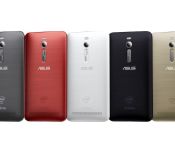

According to news out of Taiwan today, Asustek is readying new variants of the ZenFone 2. These new variants will be powered by Qualcomm and MediaTek. The reason for this diversification is Asus‘ goal to double its smartphone shipments this year and to top 17 million units by year’s end.
The lower-priced Qualcomm variant will debut sometime in the second quarter with a target for the mainstream audience. The MediaTek version will debut in India where 3G phones are popular. That version is set to debut sometime in teh second half of 2015 as a direct-successor to the Intel version.
source: Focus Taiwan
via: G for Games
Come comment on this article: Asus will introduce new ZenFone 2 models


Microsoft will be hosting a special presentation March 4 at the 2015 Game Developers Conference in San Francisco. The company’s Xbox head Phil Spencer will offer some new information on Microsoft’s future plans for gaming on both the Xbox One and Windows 10 platforms during the event.

Google has been busy marketing Android with a series of TV ads, including some very entertaining ones with cute animals doing naturally cute things with each other. The latest Android commercial takes a different tack, with lots of handshakes, high-fives, fist bumps and more between two or more people


Richard Branson’s not just into space tourism — there’s also LauncherOne, which delivers satellites into orbit after being dropped from a “mothership” aircraft. Virgin Galactic says that the rocket will be built a mere 30 minutes from Los Angeles at a 150,000 square foot ex-Boeing facility near Long Beach Airport (below). The space outfit will design and mass produce the LauncherOne rocket there and use the airport as a mission base. Like the SpaceShip Two manned craft, the LauncherOne rocket and payload doesn’t need a launchpad — it’s released from an altitude of 50,000 feet by the WhiteKnight Two aircraft. That enables it to heft satellites up to 500 pounds into low-earth orbit for as little as $10 million, a subtantitally cheaper price than (already inexpensive) competitors like SpaceX.

At least, that’s the theory. So far, LauncherOne hasn’t put anything into space yet, though it does have a major launch order with a company called OneWeb. Co-owned in part by Virgin and Qualcomm, OneWeb intends to launch 648 “microsatellites” to supply internet to underserved areas. Unfortunately, the Virgin Galactic program suffered a major setback with the crash of SpaceShip Two during a test flight, which killed one of the pilots. That’s unlikely to affect the LauncherOne program much, however, since it’s unmanned and substantially less risky. Branson is confident that once it’s up to speed, the system could deliver several payloads into space every day.
Filed under: Transportation
Via: The Verge
Source: Virgin Galactic
The barrage of rumors, leaks and chatter around exactly what is going on with the next flagship device from Samsung, the Samsung Galaxy S6, is rather interesting to follow. Various reports first started off saying the Samsung would be dropping the Qualcomm Snapdragon 810 processor due to overheating issues. From there we heard that Samsung […]
The post Signs point to Samsung Galaxy S6 getting pre-loaded with Microsoft apps while losing many Samsung apps appeared first on AndroidSPIN.
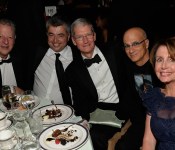
While the Grammy Awards happened last weekend, information on a few Apple-related conversations happening at and around Clive Davis’ pre-Grammy party are just now beginning to emerge, reports Billboard. Representing Apple at the gala were Tim Cook, Eddy Cue, Jimmy Iovine and iTunes VP Robert Kondrk, with the Apple executives chatting with a number of music industry representatives during the event.
The party came as Iovine has reportedly been meeting with senior executives from many record labels in recent weeks, and while Billboard reports “a nondisclosure agreement preceded every sit-down,” details on some of the discussions are beginning to trickle out. One of the main takeaways appears to be a targeted spring/summer launch window for the revamped Beats Music streaming service the company is said to be integrating with iOS and OS X.
 Left to right: Al Gore, Eddy Cue, Tim Cook, Jimmy Iovine, Nancy Pelosi at Clive Davis’ pre-Grammy party (Photo via Mashable)
An insider speaking to Billboard claims the Cupertino-based company isn’t content just to be in the music business but “to be the music business; it’s not to compete with Spotify.” Billboard points out that, with new iOS updates in development possibly bringing Beats Music support and the booming popularity of streaming services, the company appears to already be lining up to deal with its digital music problems head-on.
The proof is in the 800 million credit cards it already has on file — comparably, Spotify has 15 million subscriptions and 60 million monthly users, although the service is growing, headed to an initial public offering.
In fact, integration has begun. Apple TV features a Beats logo, an update to Apple’s iOS will include streaming and creative is in the works for new ads starring artists recruited by Iovine. But that may be the extent of Beats’ involvement as Kondrk takes the lead on music. Like the Apple-centric design of its offices, the look and feel of Beats is likely to mirror Apple’s aesthetic, not the other way around.
Other news out of the talks points to a bit of housecleaning in dealing with iTunes itself, with Apple supposedly planning to rid the store of many covers, soundalikes, and re-recordings. Billboard also reports that the featured ticker seen on the iTunes storefront may lose its editorial-chosen feature and become more sales-based.
Additionally, featured-artist sliders, previously chosen editorially, may now be determined by sales velocity, leaving some to wonder if iTunes is becoming less like a Tower Records and more of a Target — limited selection and a focus on hit titles. “Until now, iTunes has been good to the indies,” contends one vet. Conversely, an Apple source says such case-by-case house-cleaning to eliminate duplicative and deceptive versions is routine.
Despite Apple’s challenges in a market where third-party music services can operate fairly freely on Apple’s platforms, insiders remain optimistic about Apple’s plans, with Davis’ son Doug pointing out the company’s already hugely popular ecosystem of devices and operating systems helping to launch the new service with a bang. “Their streaming service will see a seamless integration that’s cross-platform and convenient, as Spotify has become,” Davis said. “As a fan of all-you-can-eat, the industry in general is excited to have more market players.”
 AIVAnet