



Sundar Pichai discusses Google’s future with Google Wallet, Google Plus, and the Chinese market
 Sundar Pichai, Google’s senior VP of products, was recently interviewed by Forbes about the direction the company is taking in key areas. He discussed Google Wallet, how Google plans to utilize Android in the Chinese market, and where Google’s own social network was heading. It was a pretty interesting interview that shed some light on some of Google’s intentions and more or less confirmed some rumors we’ve been hearing.
When it came to Google Wallet, Pichai said he was pleased with Google Wallet, but he said that the company needed to figure out how to get those mobile payments functional on as many points of sale as possible. This definitely suggests that Android Pay will make an appearance at Google I/O this year, as that’s exactly what it’s designed to do.
When asked about Google+, Pichai noted that Google had already split G+ up using Hangouts and Photos, but Google was looking into bringing the Google+ Stream into its own, further splitting up the different products. That’s a departure from how the social network started, but it keeps in line with how the company has handled it recently.
China is an odd topic for Google, mainly because of how hard it is for the company to remain successful there. Android is already fairly prevalent, but Google misses a big chunk of revenue from China because of the distinct lack of Google services on many Android handsets sold in the country. Pichai didn’t have any concrete answers on how to turn that around, but he did say Google sees China as a huge opportunity for growth and it was something they were very serious about staying on top of.
To check out the full interview, hit the link below.
source: Forbes
Come comment on this article: Sundar Pichai discusses Google’s future with Google Wallet, Google Plus, and the Chinese market
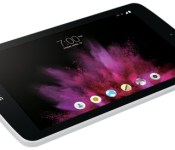
Sprint to off the LG G Pad F 7.0 for free on two-year contract on March 13th
 If you’ve been considering adding a tablet to your monthly cellular plan, Sprint will soon be selling LG’s G Pad F 7.0 on a two-year contract. The tablet comes equipped with LTE radios for Sprint’s network and is the first LG tablet that the carrier has offered. The tab is free on a two-year contract, and it runs just $10 a month on Sprint EasyPay.
The G Pad F sports a Snapdragon 410 CPU and a 7-inch IPS display, so while it’s not a top-of-the-line device, it’s not a bad deal for what it costs. With LG’s Q Pair, you can even sync the tablet with any Android phone to mirror notifications like texts and calls to the tablet, so you can effectively replace your phone with this in a pinch.
For the full press release from LG, hit the link below. You’ll be able to order the tablet beginning on March 13th.
source: LG Mobile
Come comment on this article: Sprint to off the LG G Pad F 7.0 for free on two-year contract on March 13th
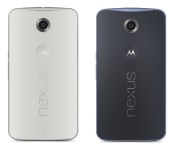
Verizon will finally sell the Nexus 6 on March 12th with Android 5.1 and VoLTE
 Verizon hasn’t been in any kind of a rush to release the Nexus 6 on their network, but it looks like the wait is almost over. Most Verizon stores are getting promotional materials for the device that are slated to go up on March 11th with a March 12th launch date, which means we’re about two weeks out from seeing the phone officially active on Verizon’s network.
To make up for such a long wait, rumors are pointing at the Nexus 6 running Android 5.1 out of the box, plus it’ll be able to take advantage of Verizon’s VoLTE services. Of course, other models of the device are certainly going to be updated to 5.1, but Verizon’s variant may get the honor of saying it was the first.
If these rumors hold up, expect to be able to purchase a Nexus 6 next month. Are you still excited about the phone, or has waiting for months changed your mind?
source: Phandroid
Come comment on this article: Verizon will finally sell the Nexus 6 on March 12th with Android 5.1 and VoLTE

Microsoft Lumia 435 now on sale in the UK

Having gone on sale in various markets around the world, Microsoft’s new Lumia 435 has now officially gone on sale in the UK. The single SIM version can be had via Amazon UK right now for a pretty reasonable £66.92 with free delivery.

Apple’s Expanded Presence in Israel Focused on Chip Design
 Following Apple CEO Tim Cook’s visit to Israel this week, the company’s increasing interest in the country is said to relate to chip design, according to The Wall Street Journal.
Apple recently opened new research and development offices in Israel north of Tel Aviv, with the facilities serving as the iPhone maker’s second-largest R&D operations outside of the United States.
“Apple’s Israeli acquisitions and its expanding local workforce show that the company is becoming more and more independent on the chip level, where it once had to rely on external suppliers,” said Shlomo Gradman, chairman of the Israeli Semiconductor Club.
Apple may be looking to increase development of chips internally to the costs associated with relying on third-party suppliers, although it still relies heavily on vendors such as Samsung to produce chips for iPhones. Apple has acquired two Israel-based microprocessor chip design firms in Anobit Technologies and PrimeSense in recent years, and also hired several Texas Instrument engineers in Israel after the company announced some 250 job cuts at its Ra’anana offices.
Apple vice president of hardware technologies Johny Srouji is an Israeli Arab that grew up in Haifa and earned both a bachelor’s and master’s degree in Computer Science from Technion, Israel’s Institute of Technology. Srouji joined Apple in 2008 and oversees custom silicon architecture and development covering several devices and technologies. Apple has over 700 other employees working directly for the company in Israel.
“We’ve hired our first individual in Israel in 2011 and we now have over 700 people working in Israel directly for us,” said Apple CEO Tim Cook in the meeting with Israeli president Reuven Rivlin on Wednesday. “Israel and Apple have gotten much closer together over the last three years than ever before, and we see that as just the beginning,” he added.
Apple has job listings in Israel for a number of chip-related positions in the fields of silicon and semiconductor design, testing and engineering. The company has also been hiring staff to work at its chip design center in Haifa over the past three years. Google, Facebook, IBM, HP and hundreds of other international companies have also setup R&D centers in Israel, often following acquisitions of local companies.

The net neutrality war of words wages on

While you may have been doing a victory lap around your cubicle in the last few hours, not everyone is so enthused about the FCC’s decision today. The commission voted to officially classify broadband internet as a Title II public utility, and it’s already prepared for lawsuits from service providers. While court proceedings will take time to hash out, a war of words wages on in the immediate aftermath, so we’ve compiled comments from both sides on the matter.
The opposition

Let’s start with Verizon, shall we? Big Red said it wouldn’t sue if the FCC passed new neutrality regulations, but the wireless company was one of the first to react. The company posted its statement in Morse code, calling the decision a “Throwback Thursday” that “imposes 1930s rules on the internet.” Thankfully, it also included “a 21st century” version for those of us unable to translate. Even then, the press release was set in a typewriter font to make sure we all got the point. Keep this in mind: Verizon already sued the FCC over net neutrality once.
“The FCC had targeted tools available to preserve an open internet, but instead chose to use this order as an excuse to adopt 300-plus pages of broad and open-ended regulatory arcana that will have unintended negative consequences for consumers and various parts of the internet ecosystem for years to come.”
– from Verizon’s statement on The FCC’s Title II regulations
As you might expect, AT&T wasn’t too thrilled either. Senior EVP Jim Cicconi took to the company’s Public Policy Blog to state its case, explaining that today’s vote indicates that these net neutrality rules are yet another partisan rift within the US government. Cicconi maintains that AT&T fully supported the 2010 ruling on the matter — one that was eventually struck down in court — warning that we’ll likely be debating the issue again in a few years.
“Instead of a clear set of rules moving forward, with a broad set of agreement behind them, we once again face the uncertainty of litigation, and the very real potential of having to start over — again — in the future.”
–AT&T’s Jim Cicconi
Industry organizations voiced displeasure with the ruling too, with the likes of the Consumer Electronics Association, CTIA, USTelecom and others chiming in. The CEA’s CEO Gary Shapiro reiterated that it supports an open internet, but added that today’s decision points things in the “wrong direction.” “Rushing to regulate the internet threatens to slow down broadband investment, and reduces competition among providers, which helps keep broadband costs low,” Shapiro explained.
“We hope the FCC and Congress will now work together to take a U-turn and reach a balanced and bipartisan compromise that includes deploying additional spectrum and ensuring Americans have open and robust internet access.”
–CEA CEO Gary Shapiro

And then there’s Comcast. The service provider has been a vocal opponent of the FCC’s plans for quite some time, and today is no different. Like other companies and organizations, it pledges that it’s all for an open internet, but doesn’t support broadband being classified as a utility. Executive Vice President David L. Cohen urged Congress to respond, moving toward a solution that acts “in a bipartisan manner with a consensus approach that accomplishes the common goals of stakeholders on all sides of the open internet debate.”
“We fully embrace the open internet principles that have been laid out by President Obama and Chairman Wheeler and that now have been adopted by the FCC. We just don’t believe statutory provisions designed for the telephone industry and adopted when Franklin D. Roosevelt was president should be stretched to govern the 21st century internet.”
–Comcast EVP David L. Cohen
Republicans were also quick to criticize the ruling. Senator John McCain questioned how allowing the government to regulate an effort being hailed as net neutrality would be effective using similar rules meant to discourage telephone monopolies. “This is a matter for Congress to carefully consider and correct,” McCain argued, sharing that sentiment with many others.
“It upends the longstanding hands-off approach to the internet that has been taken since its advent — one that has encouraged innovation and allowed the internet to become what it is today.”
–Senator John McCain
Support from within

It’s no secret that the White House is on board with the FCC’s net neutrality leanings, and President Barack Obama cited today’s events as yet another example of the US government responding to millions of people clamoring for change, thanking everyone that participated in the effort.
“I ran for office because I believed that nothing can stand in the way of millions of voices calling for change. That’s the backbone of our democracy — and you’ve proven that this timeless principle is alive and well in our digital age.”
–President Barack Obama
Democratic Senators Al Franken and Cory Booker both applauded the FCC vote as well. Booker called the decision “a landmark day in the history of the internet,” and while Franken is well aware of the Republican efforts to stall the work that been done, he pledged to “continue to make sure everyone understands what’s at stake.”
“Net neutrality is important for consumers, for small businesses and startups trying to compete with the big guys, and ultimately, for the innovation that has helped drive our economy for the past several decades.”
–Senator Al Franken
The FCC decision was made without the blessing of Congress, so that legislative body could indeed vote to strike it down. And just like the fate of the last net neutrality agreement, the regulations may meet the same fate in court. For now, though, it’s unclear when lawsuits will challenge today’s ruling, or if Congress will take matters into its own hands. The opposition might not be as strong as we predict, because as The New Yorker’s Tim Wu points out, everyone was wrong about this whole net neutrality thing anyway.
If you’re still looking for more info, the folks at Public Knowledge are holding an AMA tomorrow at 2:30 ET.
[Image credits: Pete Marovich/Bloomberg via Getty Images, Andrew Harrer/Bloomberg via Getty Images, Jared C. Tilton/NASCAR via Getty Images, Mark Wilson/Getty Images]

The net neutrality war of words wages on
While you may have been doing a victory lap around your cubicle in the last few hours, not everyone is so enthused about the FCC’s decision today. The commission voted to officially classify broadband internet as a Title II public utility, and it’s already prepared for lawsuits from service providers. While court proceedings will take time to hash out, a war of words wages on in the immediate aftermath, so we’ve compiled comments from both sides on the matter.
The opposition
Let’s start with Verizon, shall we? Big Red said it wouldn’t sue if the FCC passed new neutrality regulations, but the wireless company was one of the first to react. The company posted its statement in Morse code, calling the decision a “Throwback Thursday” that “imposes 1930s rules on the internet.” Thankfully, it also included “a 21st century” version for those of us unable to translate. Even then, the press release was set in a typewriter font to make sure we all got the point. Keep this in mind: Verizon already sued the FCC over net neutrality once.
“The FCC had targeted tools available to preserve an open internet, but instead chose to use this order as an excuse to adopt 300-plus pages of broad and open-ended regulatory arcana that will have unintended negative consequences for consumers and various parts of the internet ecosystem for years to come.”
– from Verizon’s statement on The FCC’s Title II regulations
As you might expect, AT&T wasn’t too thrilled either. Senior EVP Jim Cicconi took to the company’s Public Policy Blog to state its case, explaining that today’s vote indicates that these net neutrality rules are yet another partisan rift within the US government. Cicconi maintains that AT&T fully supported the 2010 ruling on the matter — one that was eventually struck down in court — warning that we’ll likely be debating the issue again in a few years.
“Instead of a clear set of rules moving forward, with a broad set of agreement behind them, we once again face the uncertainty of litigation, and the very real potential of having to start over — again — in the future.”
–AT&T’s Jim Cicconi
Industry organizations voiced displeasure with the ruling too, with the likes of the Consumer Electronics Association, CTIA, USTelecom and others chiming in. The CEA’s CEO Gary Shapiro reiterated that it supports an open internet, but added that today’s decision points things in the “wrong direction.” “Rushing to regulate the internet threatens to slow down broadband investment, and reduces competition among providers, which helps keep broadband costs low,” Shapiro explained.
“We hope the FCC and Congress will now work together to take a U-turn and reach a balanced and bipartisan compromise that includes deploying additional spectrum and ensuring Americans have open and robust internet access.”
–CEA CEO Gary Shapiro
And then there’s Comcast. The service provider has been a vocal opponent of the FCC’s plans for quite some time, and today is no different. Like other companies and organizations, it pledges that it’s all for an open internet, but doesn’t support broadband being classified as a utility. Executive Vice President David L. Cohen urged Congress to respond, moving toward a solution that acts “in a bipartisan manner with a consensus approach that accomplishes the common goals of stakeholders on all sides of the open internet debate.”
“We fully embrace the open internet principles that have been laid out by President Obama and Chairman Wheeler and that now have been adopted by the FCC. We just don’t believe statutory provisions designed for the telephone industry and adopted when Franklin D. Roosevelt was president should be stretched to govern the 21st century internet.”
–Comcast EVP David L. Cohen
Republicans were also quick to criticize the ruling. Senator John McCain questioned how allowing the government to regulate an effort being hailed as net neutrality would be effective using similar rules meant to discourage telephone monopolies. “This is a matter for Congress to carefully consider and correct,” McCain argued, sharing that sentiment with many others.
“It upends the longstanding hands-off approach to the internet that has been taken since its advent — one that has encouraged innovation and allowed the internet to become what it is today.”
–Senator John McCain
Support from within
It’s no secret that the White House is on board with the FCC’s net neutrality leanings, and President Barack Obama cited today’s events as yet another example of the US government responding to millions of people clamoring for change, thanking everyone that participated in the effort.
“I ran for office because I believed that nothing can stand in the way of millions of voices calling for change. That’s the backbone of our democracy — and you’ve proven that this timeless principle is alive and well in our digital age.”
–President Barack Obama
Democratic Senators Al Franken and Cory Booker both applauded the FCC vote as well. Booker called the decision “a landmark day in the history of the internet,” and while Franken is well aware of the Republican efforts to stall the work that been done, he pledged to “continue to make sure everyone understands what’s at stake.”
“Net neutrality is important for consumers, for small businesses and startups trying to compete with the big guys, and ultimately, for the innovation that has helped drive our economy for the past several decades.”
–Senator Al Franken
The FCC decision was made without the blessing of Congress, so that legislative body could indeed vote to strike it down. And just like the fate of the last net neutrality agreement, the regulations may meet the same fate in court. For now, though, it’s unclear when lawsuits will challenge today’s ruling, or if Congress will take matters into its own hands. The opposition might not be as strong as we predict, because as The New Yorker’s Tim Wu points out, everyone was wrong about this whole net neutrality thing anyway.
If you’re still looking for more info, the folks at Public Knowledge are holding an AMA tomorrow at 2:30 ET.
[Image credits: Pete Marovich/Bloomberg via Getty Images, Andrew Harrer/Bloomberg via Getty Images, Jared C. Tilton/NASCAR via Getty Images, Mark Wilson/Getty Images]

Apple Begins Animating Landmarks in Maps, Starting With London Eye and Big Ben’s Clock
Apple yesterday updated its 3D “Flyover” map of London, adding animated images onto popular London-based attractions that result in real-time moving pictures right inside of the Maps app (via The Daily Mail).
The update causes the current time to be showcased on the face of Big Ben’s clock tower, and the popular giant London Eye to constantly rotate when users find each structure in the London Flyover map. The feature, according to The Daily Mail, is expected to hit other big cities “within weeks.”
Though a straightforward and purely aesthetic update, the addition of real-time animated effects in the Maps app brings a more immersive experience to Apple’s mobile map service and could give it a slight edge on competing map apps.

Thanks to hefty amount of criticism following the rocky launch of Maps, even resulting in a public letter of apology by Tim Cook, Apple has been steadily attempting to straighten the app’s course and win back the users that migrated to services like Google Maps in the intervening years.
Apple has steadily improved the accuracy of its maps, increased the number of points of interest displayed, and improved the quality of its Flyover imagery, while also reportedly working to add new features such as transit directions and indoor mapping information. Apple-leased minivans with equipment rigs on top have also been seen in a number of U.S. cities in recent months, suggesting the company may be collecting street-level imagery to compete with Google’s Street View.

Apple Targeting Early April Launch Date for Apple Watch
Apple has not provided details on when the Apple Watch might begin shipping to customers beyond the broad “April” launch date shared by CEO Tim Cook, but new information provided to MacRumors suggests the Apple Watch could see a release more towards the beginning of April rather than the end of the month.
According to a reliable source that spoke with MacRumors, Apple is planning to begin moving Apple Watches to centralized distribution points in the U.S. during the first few days of the month, with an Apple Watch release possibly coming during the first full week of April, between April 6 and April 10.

A launch date around this time would see the Apple Watch shipping approximately one month after the company’s planned March 9 media event, where it is expected to unveil new details about the Apple Watch. There are many details about the device that the company has kept under wraps, including its prospective battery life and full pricing details on the middle tier Apple Watch and higher-end Apple Watch Edition.
Apple will likely share a specific Apple Watch release date during the March 9 event, and we’re also likely to find out whether the company will be accepting pre-orders. With an early April launch timeline, Apple could begin accepting pre-orders during the last week of March.
Apple will be live streaming its March 9 media event, and MacRumors will also be providing live coverage of the information the company unveils about the Apple Watch.
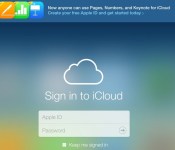
Apple Opens Up ‘iWork for iCloud’ to Everyone, No Apple Device Required
Following a short beta testing period, Apple’s iCloud.com website has been updated to make its iWork suite of apps accessible to all users, even those without an Apple device.

As of today, anyone can sign up for an Apple ID to access Pages, Numbers, and Keynote for free. The software suite lets users create and edit text documents, presentations, and spreadsheets from their browsers. Signing up for a free Apple ID account entitles users to 1GB of complimentary iCloud storage to be used with the apps for storing documents.

Previously, access to Apple’s iWork suite of apps was limited to users who owned an iOS device or a Mac, but with Apple’s new web-only iCloud access, the company can draw new users to its platform and compete with more universal software offerings like Microsoft’s Office Suite.
iCloud.com’s web-only apps can be accessed from recent versions of Safari, Firefox, Chrome, and Internet Explorer. Free accounts are limited to 1GB of storage and users will need an iOS device or Mac to acquire more storage or access iCloud’s full set of features.
 AIVAnet