
Swiss Watchmakers Showcase Varied Approaches to Smartwatch Technology [iOS Blog]
Following Apple’s unveiling of a March 9 media event that will most likely focus on the pricing and launch date for the Apple Watch, Swiss watchmakers Swatch, Frédérique Constant and Alpina have recently released more details regarding products that will be residing in the same smart wearable space as the Apple Watch (via Watch Insider).
Swatch yesterday announced the Swatch Touch Zero One, a new smartwatch with a dedicated touch screen and a focus on durability and outdoor activity. The sports-heavy focus comes thanks to the company’s partnership with the Beach Major Company, which specializes in organizing and putting on Beach Volleyball competitions.

Besides volleyball specific functions like counting “power hits” and “power claps”, the Touch Zero One will apparently compete most directly with the Apple Watch Sport, thanks to its enhanced durability, lightweight frame, and sweat-proof band.
“Beach Volleyball is a wonderful sport, a thrill for the players and very exciting for the fans,” said Swatch Group CEO Nick Hayek. “We’ve had great fun in the past and now we want to push it further with the new Major Series in collaboration with the FIVB. With the players we share a passion for this great, young sport and look forward to the upcoming tournaments.”
Lacking from the Touch Zero One, however, is any mention of non-fitness related content such as phone, text, and e-mail notifications, even though the company confirmed the device will sync with a smartphone app. Swatch says the Swatch Touch Zero One will be “available this beach volleyball summer season” and cost those interested around $159.
Watch Insider also reported on the partnership between Swiss luxury watchmakers Alpina and Frédérique Constant, who have taken a different approach to the smartwatch business and introduced “smart” components into otherwise traditional timepieces instead of crafting an entirely new smartwatch line.

The created platform, called Manufacture Modules Technologies (MMT), powers the new line of Swiss Horological Smartwatches and allows for a device that tracks sleep and activity in real time and syncs automatically with a smartphone app and allows users to break down the information into daily, weekly, or monthly categories.
“The Swiss Horological Smartwatch is the synthesis of high-tech innovation and traditional Swiss watch craftsmanship; it is the link (no pun intended) between modern and classic, and the bridge between Silicon Valley and Switzerland,” said co-founder and CEO of the Frédérique Constant group Peter Stas. “There is no digital screen on our Swiss Horological Smartwatch. Instead, the beautiful laser cut hands on the watch dial display information in analog form.”
A few companies who have been in the watch business for a while have reversed course – including Swatch itself – on dismissing the trend of smartwatches, announcing new products to be released around the launch window of the Apple Watch or sometime later in the year. More and more companies are announcing their own product additions to the smart wearable trend almost every week in preparation for the Apple Watch, which new rumors suggest could launch within the first week of April.

Data caps are back for Telus customers in as arbitrary fashion as you would expect

Telus Mobility announced last week that internet users would soon be charged if they exceed their monthly data allowance. Previously, Telus had data caps but never enforced them. Now, they will be enforcing them.
Starting March 30, the company will automatically bill customers for additional 50 gigabyte “data buckets” if they slip past their allowance, according to its website. The first “bucket” will cost $5, subsequent pails of data will go for $10 apiece up to a monthly maximum fee of $75, and any unused data will expire at the end of the month. – Vancouver Sun
According to Telus, internet data has gone up in the last year and they were forced to “re-examine” its policy against data caps. Telus also made the point to note how “internet capacity is not infinite.” Then there is Telus in the past describing such data caps as “customer friendly” with nothing actually “customer friendly” about it.
All of these excuses are utter garbage. Telus wanted more money from the same revenue stream. That is it. As one writer told the Vancouver Sun, some of the Telus data caps for heavy video gamers may not even last them a week if they need to download game patches that are around 10GB-15GB each. Of course, this is what Telus is hoping for as now those people will need to switch to higher plans, with higher monthly fees and still a chance for Telus to net some overage fees from some of these customers.

One would think that at a time when fixed-line bandwidth is cheaper than ever to provide, Telus capacity would continue to grow. Instead, Telus has for years been going in the opposite direction with customers seeing their data caps reduced rather than increased.
As Karl Bode has pointed out for years, the broadband and cable industry can’t seem to keep their story straight as to why they implement data caps. First, we heard that companies such as Time Warner Cable, AT&T and others needed to implement data caps or else the internet would slow down on massive proportions. Unless, of course, if the companies could raise rates, impose caps and eliminate regulation. Then, multiple people began researching the congestion issues and noticed that “well-run fixed line networks don’t have serious capacity issues, and that looming video growth was easily handled by even modest network investment.”
Years later and we had former Federal Communications Commission (FCC) Chairman and now top cable lobbyist Michael Brown admit during a speech that data caps had nothing to do with “congestion” and everything to do with “fairness.”
National Cable and Telecommunications Association president Michael Powell told a Minority Media and Telecommunications Association audience that cable’s interest in usage-based pricing was not principally about network congestion, but instead about pricing fairness…Asked by MMTC president David Honig to weigh in on data caps, Powell said that while a lot of people had tried to label the cable industry’s interest in the issue as about congestion management. “That’s wrong,” he said. “Our principal purpose is how to fairly monetize a high fixed cost.” – DSLReports
Fairness? Is that why customers who want but rarely use their cable and broadband packages are still charged massive amounts per month, even though they visit the Weather Channel several times a month? What about the elderly who likely use a fraction of their package every month, are they allowed to purchase cheap and inexpensive packages that accurately reflect their minimal at best usage?

Then there is the “fairness” of the laughably low data caps, high overages, multiple yearly rate increases for all even though many of the telecom companies see 90% profit margins. I am sure it was “fair” when Telus announced in 2013 that they would be raising rates and reducing their data caps from 150 GB a month to 100 GB, while customers on the company’s Telus High Speed Turbo 25 tier saw their data caps cut in half from 500 GB to 250 GB.
I am curious, what will the next excuse be when they are forced to find new ways to squeeze consumers for even more money from the exact same network?
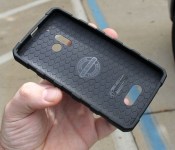
Why settle for a cheaply made case? Grab this rugged Lumia 928 skin for only $12.95 today!

This Lumia 928 case is tough. Not just in a protection standpoint, either. We’re talking looks, too. It has reinforced corners with a custom shock dissipation system that absorbs nasty impacts. While the screen is left unprotected, the case’s edges elevate your display so it doesn’t rub against surfaces while faced down.
Samsung might limit Unpacked to just the Galaxy S 6 and Galaxy S 6 Edge

When you think of this Sunday’s Samsung Unpacked Event, the Galaxy S 6 and Galaxy S 6 Edge come to mind, but they do have other rumored devices. We know they have other tablets in the pipeline, namely the Tab S 2, but there is also that round smartwatch (Orbis) that seems close to release. In fact, it was already reported that the Orbis would be unveiled at the same time as the new phones.
Now a new report from Korea Economic Daily says that Samsung will concentrate their efforts on the new phones and not show anything else. That’s exactly how they did it with the Galaxy S 4. This is a crucial year for Samsung and a smartwatch isn’t going to affect their numbers like the S6 will, so it’s not a surprise that Samsung wants to put all their efforts into the S6.
Are you disappointed with this news? Did you really want to see a Tizen-based smartwatch from Samsung? I didn’t think so.
source: Korea Economic Daily
via: G4Games
Come comment on this article: Samsung might limit Unpacked to just the Galaxy S 6 and Galaxy S 6 Edge
Mobile Printing App ‘Printer Pro’ Named Apple’s Free App of the Week [iOS Blog]
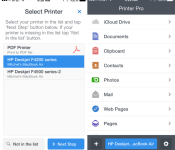
Mobile printing app Printer Pro, by developer Readdle, has been named by Apple as this week’s App of the Week. Known for their knack at developing productivity-based apps, Readdle says Printer Pro will allow users to “print just about anything” from an iPhone or iPad.

Normally priced at $6.99, the app gives users the ability to print a wide array of documents – from pictures in the Photos app to documents found in iCloud or Mail – to any Wi-Fi or USB-enabled printer. Readdle also provides a free-to-download desktop utility for the service that helps users with USB printers through an initial set-up and allows everyone using it to “print more document types and with better quality.”
The company notes that to print a Safari page, users can change “http” to “phttp” in the address bar and hit go, immediately bringing up the desired web page within the Printer Pro app. Most other apps, like Dropbox, Mail, and Readdle’s own PDF Expert, allow for a more streamlined process of accessing the app from a third-party app’s “Open In” list.
Once installed, Printer Pro appears in the “Open In…” list on your device. This lets you print documents from Mail, PDF Expert and many other applications on your iPad that supports this function.
Using “Open In…” approach you can print files from many popular online storages: Dropbox and Google Drive. It just a matter of several taps to download your file via free Dropbox or Google Drive application and send it to printer.
The app has garnered a 4 star rating on the App Store, with one review calling it “indispensable” and many others praising its ease-of-use and high quality. Relied on by “over 2 million people”, according to Readdle, Printer Pro [Direct Link] will remain free as the App of the Week for the next week.

Microsoft made an Android keyboard especially for Excel

Because we do spreadsheets on the move. Because we simply need numpad. Because we didn’t buy a Surface. Microsoft has launched a new keyboard on Android, expressly made for Excel, with the main keyboard being truncated to make space for an unassumingly simple number pad, although there’s no pluses or minuses. Alas, it’s built for tablets, meaning it’s incompatible with ‘mere’ 5-inch Android smartphones — even if those devices, too, are aching to do expenses in transit.
Filed under: Tablets, Software, Microsoft, Google
Via: Android Police

Two Nexus phones on tap for this year and one of them could be made by Huawei

Yesterday it was leaked that the next Nexus phone would be made by a Chinese manufacturer, and today we might know who that is. Not only that, it appears that there might actually be two Nexus phones launched this year.
The same leaker is now saying there will be two Nexus phones, one produced by the said Chinese manufacturer, and the other by LG. This isn’t something that Google has done in the past, but it doesn’t sound so far fetched since we already have both the Nexus 5 and Nexus 6 available at the same time. If you take into account that Google cannot call the next Nexus phone the Nexus 7 for obvious reasons, it’s likely they will make new versions of both the Nexus 5 and the Nexus 6. This would keep most customers happy since not everyone wants a 6-inch phone. It would also solve the issue of having just one expensive Nexus phone. The Nexus 5 could be more budget-friendly and the Nexus 6 would be the premium-priced version.
The next question is who is that Chinese manufacturer? Well the leaker didn’t say, but he did divulge that the said manufacturer might use their own processor. As of right now, there is only one manufacturer that it could be. Huawei has their own Hisilcon Kirin chip.
So there you have it. LG and Huawei will make the next Nexus phones. I say that with a little chuckle because we are very early in the game so I wouldn’t bet a lot of money on it just yet, but it doesn’t sound all that crazy does it?
source: Weibo
via: GizmoChina
Come comment on this article: Two Nexus phones on tap for this year and one of them could be made by Huawei

Here’s our best look yet at the Galaxy S 6 and Galaxy S 6 Edge thanks to Sprint

We already have a pretty good idea of what the Galaxy S 6 and Galaxy S 6 Edge will look like, but we have probably the best image yet thanks to an employee at Sprint. This image is for a pre-registration page and contest that probably wasn’t supposed to launch until after this Sunday’s Unpacked event.
Unfortunately the leak didn’t provide any other details, but at least you have an even better idea of how both phones will look. I actually can’t wait until this Sunday since we can finally put an end to all these leaks. It’s starting to get just a tad boring, don’t you think?
source; Pocket-Lint
Come comment on this article: Here’s our best look yet at the Galaxy S 6 and Galaxy S 6 Edge thanks to Sprint

Apple seeking hardware engineers to work on virtual reality
Apple has published new job listings that show an interest in developing virtual reality hardware – though the company has already made moves with the acquisition of PrimeSense back in 2013. As spotted by 9to5Mac, the first of the two new job openings for senior display software engineers would see applicants:
- Specify and test novel display systems for virtual environments.
- Work with vendors to develop custom display solutions.
- Design and select appropriate hardware and software components to optimize fidelity in a variety of VR environments
- Develop software to support displaying rendered image sequences on the display hardware.
- Work closely with software, electrical and mechanical engineers during testing and integration.
More specifically, the company is after someone with monitor and projection technologies experience to support VR environments. The second job listing, also published this week, too seeks a senior display software engineer to support and work on VR systems. Experience with motion capture systems is required, which would fit in with the company’s recent patent.

Seeking two senior display systems engineers, the company isn’t wanting to be left behind when it comes to VR advancements, especially given Microsoft’s HoloLens announcement during its Windows 10 keynote. We’ll have to see wait and see what Apple’s plans are for virtual reality experiences.
Ericsson escalates Apple patent dispute, seeks iPhone sales ban in US
Just when you thought there would be the possibility of patent battles being a thing of the past, Apple has found itself caught up in a suit with Ericsson. The latter company has filed seven new lawsuits in a US court and is seeking the International Trade Commission to block sales of Apple products in the US market.
Ericsson claims Apple is infringing on as many as 41 patents. According to the Bloomberg report:
Together, the complaints accuse Apple of infringing as many as 41 patents for some of the fundamental ways mobile devices communicate and for related technology such as user interfaces, battery saving and the operating system.
Ericsson states they offered a license, which was turned down by Apple. With the court battle kicking off last month, Ericsson has opted to take the dispute to another level to put pressure on Apple, seeking assistance from the ITC to block products from being sold in the region.
Apple had been paying royalties to Stockholm-based Ericsson before a license expired in mid-January. When talks over renewal failed, the companies sued each other, seeking court rulings on whether Ericsson’s royalty demands on fundamental technology were fair and reasonable.
The issue around patents covering fundamental technology has caused a split between companies who created and developed basic ways mobile phones operate and parties who utilize said tech in more complex hardware. We’ll have to hold off until the courts and ITC come to a conclusion on the matter.
Source: Bloomberg
 AIVAnet