


Barclays Pingit will allow you to send money using your Twitter handle

Barclays has announced that Pingit users in the UK will be able to use their smartphones to send money using Twitter handles, which would remove the requirement for mobile numbers and bank account details to be exchanged. The new feature will go live on March 10.
All that will be required is your Twitter handle, which will need to be added to the Pingit profile settings. The recipient will also need to be signed up through Twitter for the feature to work. The best part about Pingit is you don’t need to own an account with Barclays, and the apps are available for everyone.
- Free – Download Now
Source: The Next Web

HTC announces special edition UEFA football One M8, engraved with every league winner

HTC has today announced a new smartphone in its UEFA Collectors Edition range, called the Champions. It’s the HTC One M8 with every UEFA Champions League winner engraved on the aluminium back. A perfect choice for European football fans looking for a new premium smartphone.
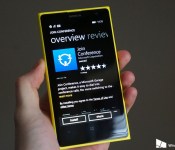
Newest Microsoft Garage apps include conference calls, China weather, and Visual Studio management

Microsoft has announced a new wave of Windows Phone apps from its Microsoft Garage division, but a few of them have already been released on their own. One of them is Join Conference, which Microsoft rebranded earlier in February after previously calling it Nokia Conference.
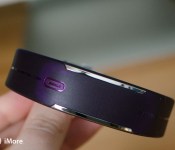
Polar Loop fitness tracker review

The Polar Loop has a great hardware design, tracks motion and sleep, and can be worn while swimming and bathing. Unfortunately, the software side needs some serious work.
Worn like a traditional watch band with a clasp, the Polar Loop is comfortable and stylish all in one. But does function match form? How accurate is the step count? How well does goal-setting work? How good is the battery life? How effective is the waterproofing? Let’s find out!
The Polar Loop’s actual design is great. It comes with a tape to measure your wrist. Try it on and cut excess material off before fitting the clasps. The process was painless and took me less than 20 minutes. Just remember to cut little pieces at a time. You can always take more, but you can’t put material back.
Once fitted, the Polar Loop is easy to put on and take off. My only issue was that sometimes it’d get snagged on a tighter sweater sleeve and the clasp would come undone. It didn’t happen enough to make it a deal-breaker, but it’s something to be aware of. It was also fine with water. While I didn’t swim with it on — it’s winter here — I did shower with it. The display goes nuts, due to the touch sensitive button, but other than that, it resisted admirably, as advertised.
It takes about 90 minutes to fully charge the Polar Loop and it lasts about 6 days. That’s if you wear the band consistently, night and day.
All the data syncs to the Polar Flow app or the Flow desktop software on your computer. Setup, unfortunately, is cumbersome. When I open a fitness band, I shouldn’t have to have access to a computer to use it. Unfortunately, my Polar Loop didn’t want to do anything until I plugged it in and updated the firmware and created an account. Not a great experience out of the gate. Most other fitness bands I’ve used I could pair with my iPhone, update, and get going in minutes.

The Polar Loop only has one button and it’s touch sensitive. Tap it to switch through the different display modes. They show time, activity remaining, calories, and steps.
Polar doesn’t let you set a step count goal, but instead focuses on an overall activity goal. You can reach that by performing about an hour of intense movement such as running.
Daily activities are tracked at five intensity levels: resting, sitting, low, medium and high. For regular day to day activity, I managed to reach 100% of my goal by getting in around 11,000 steps or burning 2,200 calories. The days I hit 100% I only spent about 30-45 minutes at the gym and took a few short walks with the dogs throughout the rest of the day. While this system may work for some, particularly active individuals may find the inability to set higher goals a deal breaker.

Last year when I did a fitness band roundup, I found the Jawbone UP24 to be the most accurate when it came to measuring calories burned and step count. I used this as a base line while reviewing all trackers this year. The Polar Loop was always within 200 steps and about 50 calories of my UP24. To me, that makes it one of the more accurate trackers I’ve tested to date, and that’s an important consideration.
The Polar Flow app is a different story: It holds the hardware back.
It looks outdated, especially for a band that’s otherwise high end. It hasn’t been updated for the iPhone 6 and iPhone 6 Plus screen sizes yet, and while the breakdown of data is easy to read, there’s not much you can do with it.
The main portion of the app is a circular graph that measures your activity. Tap on any section to see other details. You can tap the info button on the bottom of each day to see how you can reach your goal based on where you’re currently at. You can break down data on a weekly or monthly basis. You can also receive inactivity alerts when you stand idle too long.
You can’t add in workout data like you can with other fitness trackers, however, and you can’t adjust sleep or set custom goals. And if you want to use the journal and diary entry feature, you have to use the Flow app on the desktop.
Unfortunately, a lot of people on the App Store are complaining of data loss in the Polar Flow app. This is something I experienced as well. For some reason, after a few weeks, data seems to just drop off out of existence. That’s not good.

The Polar Loop also supports external heart rate sensors. Polar sells their own variant, or you can opt for another external sensor of your choice. Polar can’t guarantee compatibility, and it’s another component to manage. So, it’d be nice to see Polar come out with an updated model that integrated a heart rate sensor on the back side. Otherwise you can’t use training sessions with the current Loop unless you buy a sensor.
The good
- Great watch-style design that is easy to put on and remove
- Water resistant up to 20m, which means you can swim and shower without removing it
- Supports external heart rate sensors, although an internal sensor would be even better
- Step count and calories burned are much more accurate than they are with other trackers
The bad
- Can’t use training session feature without buying a heart rate sensor
- Polar Flow app suffers from severe data loss issues
- App itself is clunky and needs serious updates
- Poor initial signup and setup process since you actually need a computer
- Clasp on Loop can come undone easily if it gets caught on a shirt or sweater
The bottom line

The setup and software issues are major, and hopefully will be addressed soon. Otherwise, the Polar Loop hardware is excellent. if you’re looking for a modest fitness tracker that’s comfortable to wear, looks good, and doesn’t break the bank, the Polar Loop is still an excellent choice.
- Polar Loop – $75 – Buy Now
Waze for Windows Phone gets its first update in a year

It’s been a long, long time since the popular navigation app Waze has received an update in the Windows Phone Store, but today it got one. It’s a minor update, but it does show that some development has continued on the Windows Phone version.
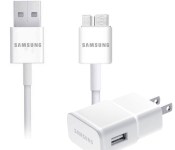
Save 58% today on the Samsung 2A USB 3.0 Travel Charger/Sync Cable
 This all-white cable measures 3ft in length and has a USB 3.0 plug on one end, and a 21-pin plug on the other. You can easily plug into your computer to charge or sync your movies, pictures or data at any time. Included with the cable is a travel adapter that plugs into a standard wall outlet. Get yours today for only $16.95!
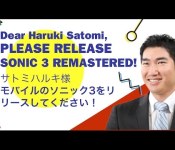
Developers launch campaign for remastered edition of Sonic the Hedgehog 3
The developers behind Sega’s remastered editions of Sonic the Hedgehog 1 and 2 are hoping that Sega will allow them to complete the trilogy by releasing their version of Sonic 3 & Knuckles for iPhone. Developers Christian Whitehead and Simon Thomley, also known as Taxman and Stealth, respectively, have launched a petition campaign to demonstrate interest in the project. The pair has previously developed remastered versions of Sonic CD, Sonic the Hedgehog, and Sonic the Hedgehog 2, all of which were published by Sega.
A prototype version of the game is already up and running, according to the Sonic 3 Remastered campaign site:
The duo now have an initial working version of a remastered Sonic the Hedgehog 3. The purpose of this site is to show Sega Networks that there is demand for this to be completed and released.
While a lack of interest on Sega’s part my be preventing the release, it appears that there might also be a legal issue with part of the game’s soundtrack. You can find more details about the campaign from the developers themselves at the links below.
Source: Sonic 3 Remastered, Simon Thomley
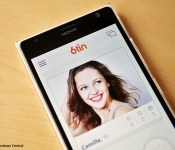
PSA: 6tin will return to the Windows Phone Store as soon as error is fixed

For the last few days, many tips have been rolling in about 6tin, Rudy Huyn’s Tinder client. Huyn’s apps have had a hit and miss record with some companies who’s IP is involved with his creations. This is why when 6tin went missing recently, people started to fear the worst.
Luckily, in this case at least, 6tin is missing merely due to some Store problem.

Only eight Formula E teams will compete next season as custom cars hit the track

The inaugural Formula E season is well underway, but already organisers are preparing for the next championship. At the moment, all 10 teams are using identical electric vehicles (EVs), but the plan is to let them tinker with the design from the 2015/16 season. Now, thanks to the Federation Internationale de l’Automobile (FIA), we know the eight manufacturers that’ll be on the starting grid later this year: ABT Sportsline, Andretti, Mahindra, Renault Sport, Venturi Automobiles and Virgin Racing Engineering are set to return, while newcomers Motomatica and NEXTEV TCR fill out the rest of the field.
Missing from that list are Amlin Aguri, China Racing, Dragon Racing and Trulli, all of which are competing for the current title. It’s unclear whether they’ve chosen to drop out, or the FIA deemed they weren’t up to the challenge of developing bespoke parts next season. Sponsoring one of the identical Spark-Renault racers is a little easier than developing a custom car, after all. The drop in participation could be short-lived, however, as the FIA says it expects more manufacturers to join from the 2016/17 season onwards.
Once the 2014/15 championship wraps up in London, manufacturers will be able to experiment with the car’s powertrain, which includes the e-motor, inverter, gearbox and cooling system. The teams are being restricted to a specific portion of the vehicle, but that’s intentional: the FIA wants them to focus on technologies that will benefit the larger EV industry, rather than car aerodynamics. In the third season, those freedoms will be extended to the batteries, in the hope that drivers will be able to use a single car for an entire race from year five. Notably, competing teams must also be willing to sell their components to rival manufacturers. The FIA will set a maximum cost so engineers can learn from one another and to ensure no manufacturer is priced out of the championship. Although it could lead to short-lived advantages on the track, the FIA hopes it will accelerate new EV breakthroughs that can be passed on to consumer vehicles.
[Image Credit: AP Photo/Rodrigo Abd]
Filed under: Transportation
Source: FIA

Down memory lane: the biggest moments in MWC history

It’s that time of the year again when thousands of mobile manufacturers, app developers, service providers, and the tech press descend on Barcelona for a week. There’s likely to be more than 80,000 people at Mobile World Congress this year and many millions will read about what’s unveiled. We thought it might be a good time to take a look back at the history of MWC and some of the highlights of years past.
A very brief history of MWC
The show is officially called the GSMA Mobile World Congress. It’s organized by the Groupe Speciale Mobile Association, which is basically a trade association for mobile operators and the wider industry. It started out as the GSM way back in the 80’s, aiming to establish an agreement for a digital cellular standard that would span Europe.
The first official GSM World Congress was held in Rome in 1990 with just a few hundred attendees. For the first few years it moved to a new city each time, passing through Nice, Berlin, Lisbon, Athens, and Madrid before settling in Cannes in 1996 where it stayed for a decade.

MWC in Cannes
In 2006 the 3GSM World Congress, as it was called then, was held in Barcelona and around 50,000 people attended. The show settled there and became MWC in 2008. Barcelona was named the GSMA Mobile World Capital in 2011 and it’s set to host MWC until 2018 at least. Last year’s show attracted more than 85,000 people.
3GSM 2006 and 2007 When Nokia ruled the world
Back in 2006 there were a few sliders and candy bars, but the clam shell design reigned supreme. The biggest names in attendance were Sony Ericsson, Samsung, Nokia, and Motorola. Award winners at the show were the Nokia 8800 (best GSM handset) and the Motorola RAZR V3x (best 3G handset).

Sony Ericsson K800 Cyber-Shot… good times
In 2007 there was a lot of buzz about video on mobile, whether it was video calls, movies or TV. Motorola was still spinning off the Razr brand, BlackBerry showed off the 8800, you could lay hands on the LG Prada, and HTC showed a handful of Windows Mobile handsets. The Samsung SGH-D900 won best GSM handset and the Sony Ericsson K800 Cyber-Shot was named best 3G handset.
MWC 2008 and 2009 Do you remember Inq?
The 2008 show was dominated by Sony Ericsson and the W910 Walkman Phone won the best handset award. It was also the debut for the Xperia line with the X1 which ran Windows Mobile 6.1 and was actually designed and manufactured by HTC. Nokia was also still riding high and showed off the N96, but a lot of people were looking for a better answer to the iPhone.

The N96 was Nokia’s best hope against the iPhone
Have you ever heard of Inq Mobile? Well, believe it or not, the Inq1 won the best handset award in 2009 by combining affordability with integrated social networking features like Facebook, Skype, and Windows Live Messenger. The company closed last year. Things were looking decidedly ropy for Motorola in 2009, but Sony Ericsson showed off the first 12MP camera in a phone, the Palm Pre was at the show, and Vodafone unveiled the HTC Magic which was the first Android phone to make its debut at MWC. It certainly wouldn’t be the last.
MWC 2010 Android really arrives
The Android landslide that had been expected in 2009 arrived at 2010’s show. The HTC Hero deservedly won best handset and there were lots of new Android phones on display from the likes of Garmin, Sony Ericsson, Motorola, Acer, and LG. But it was HTC that took the spotlight with the Legend and the Desire. The HTC Desire was essentially a better version of the Nexus One and it was to be a smash hit for the company.

The Desire was HTC’s smash hit at MWC 2010
Amid all the Android noise you could almost miss the three new operating systems that launched – Microsoft’s Windows Phone 7, Nokia and Intel’s MeeGo, and Samsung’s Bada.
MWC 2011 Samsung hits its stride
The preceding 12 months really belonged to HTC and it duly scooped up manufacturer of the year. But it’s new releases at the show in 2011 included the ill-advised Facebook phones, the Salsa and ChaCha, and a host of confusing updates that tagged the letter S onto the Incredible, the Desire, and the Wildfire.
In his keynote Eric Schmidt talked about re-uniting tablet (Honeycomb) and smartphone (Gingerbread) in the next version of Android. Sony Ericsson showed off the long-awaited PlayStation phone, the Xperia Play, but it failed to live up to expectations.

The phone that started it all for Samsung
The talk of an iPhone killer still attended every new release, but Apple’s iPhone 4 won the best mobile device award. It’s dominance was about to be seriously challenged for the first time by a new Android phone launched at the show. The slim, powerful, impressive Samsung Galaxy S2 won plaudits all-round.
MWC 2012 A reminder from Nokia and HTC
No prizes for guessing manufacturer and smartphone of the year for 2012. The S2 had received universally glowing reviews, and Samsung had managed to edge ahead of Apple for a few months of the year. It held fire on the hotly anticipated Galaxy S3 preferring to show off a couple of new tablets and some cheaper Galaxy phones.
A whole hall was dedicated to apps, called the App Planet, and there was lots of excitement about HTML5, NFC, and mobile payments.
In devices, all the talk was about quad-core processors and larger screens. Sony was still shaking off the Ericsson name, but failed to impress with the Xperia U and P. LG had a range of Android handsets on display including the Optimus 4X HD and the incredibly square Optimus Vu. HTC was trying to return to form with the One X, S, and V.

Remember these guys?
For the first time in a few years Nokia scooped up some headlines with the 41MP camera-toting Nokia 808 Pureview. There were also a lot of budget releases running both Android and Windows Phone from ZTE, and Huawei made an appearance with the Ascend D quad.
MWC 2013 Nothing to write home about
There were some impressive new Android phones on display at MWC 2013, but most of them, including the Sony Xperia Z, HTC One, and LG Optimus G Pro had already been announced before the show. Samsung contented itself with the Galaxy Note 8, ZTE launched the Grand Memo, and there was the Asus Padfone Infinity, but the most exciting release was probably the Sony Xperia Z Tablet. The slim, sexy Android tablet that you can take into the bath definitely caused a splash.

The Xperia Tablet Z was one of the highlight of MWC 2013
No one was surprised when the Samsung Galaxy S3 won smartphone of the year, and the best tablet award went to Google’s Asus-manufactured Nexus 7.
MWC 2014 A big, big show
Concerns that MWC might be past its prime with a poor showing in 2013 were soon put to bed because MWC 2014 saw a flurry of big name releases and a new wave of wearables. The Samsung Galaxy S5 was the headliner, but Sony impressed with the Xperia Z2 and Z2 Tablet. LG released the G Pro 2, HTC had the mid-range Desire 816, and Nokia made its Android debut with the ill-fated X and X+. ZTE, Huawei, Lenovo, and Alcatel showed off loads of Android devices.

Samsung made a big push into wearables in 2014
The biggest trend at the show was definitely wearables. The Samsung Gear Fit probably won the most attention, but there were loads of other wearables on display, most of them from Samsung, but also Huawei, and there was news about Motorola and HTC working on their own new smartwatches.
The HTC One beat the LG G2, iPhone 5S, Galaxy Note 3, and the Lumia 1020 to claim the best smartphone title. The iPad Air scooped the best tablet prize.
MWC 2015 ???
Samsung looks likely to grab the headlines at MWC this year, but we’re expecting new devices from HTC, Lenovo, Huawei, and others before the week is out. Check out the MWC 2015 preview to find out more.
 AIVAnet
