


Five laptops built for travel

We’ve collected our favorite light and travel-friendly laptops here for your consideration.
There are some excellent Windows-powered ultrabooks available for those that need to get serious work done while on the road. Given the booming popularity of these light, powerful laptops, it can be hard to separate the wheat from the chaff, but we’ve found five that we’re really enjoying right now. Keep in mind that you may end up paying a bit of a premium for portability, but sometimes a tablet just isn’t enough to get things done. On the flip side, you may also take a hit in horsepower for the sake of saving battery, as in the case with the (still entirely capable) Core M processors.
Enough yap, let’s dig into some great laptops built to move.
Yo launches the Yo Store, now gives you curated push notifications from different channels

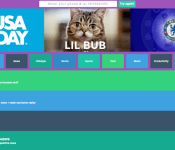
When the Yo app launched last summer, it didn’t offer any more functionality than simply allowing you to ping your friends with a quick “Yo” message. So, what was the point of the app? What could Yo accomplish that a simple text message couldn’t? Today, we have that answer, as Yo has just unveiled a pretty big feature that may actually make the app worth downloading. It’s called the Yo Store, and it lets you subscribe to a number of curated channels, allowing you to receive push notifications if something important happens. It will let you choose different triggers that set off notifications, which gives you more control over normal tasks that another app would already allow you to do.
Yo explains:
Users can subscribe to USA Today for their Daily Top 5 Things To Know Now news update, or Huffington Post’s daily good news Yo, for some upbeat news. But it doesn’t stop there! Like music? Subscribe to Capitol Records to discover new music videos from their top up and coming hit artists. And your favorite TV shows! Get a Yo with a quick trailer from Shameless as a heads up that a new episode is about to air on Showtime.
Sure, individual apps will already give you notifications for some of the things you want. Users can already check Instagram to see if their favorite user has posted anything. But the Yo Store aims to notify you if that happens, eliminating the need to open the app and check every few hours. The Yo Store features 150 channels in all, including Funny Or Die, Instagram, Twitter, IFTTT, Comedy Central, BBC News and Craigslist, just to name a few. Yo says that more channels will be added every week, so you may want to check back in a few days if you don’t see anything worth while right now.
If you’ve never tried Yo, now may be a good time to start. Head to the Google Play link below to download the app, and follow this link to start signing up for channels in the Yo Store.

Copyright concerns hit Kickstarter campaign for wood turntable

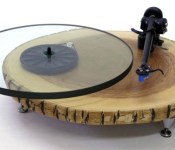
Raise your hand if you remember the Kickstarter campaign for Silvan Audio Workshop’s wood turntable. It’s a sleek, ornamental design featuring a slab of wood, a glass platter, supporting spikes and high-end parts from UK audio manufacturer Rega. It struck a chord with some of our readers yesterday, and especially with Joel Scilley, a longtime turntable and audio gear manufacturer operating under the name Audiowood. He’s been selling “Barky,” a turntable just like Silvan Audio Workshop’s, since 2009. Scilley claims that the Kickstarter design infringes on his copyright, and he’s asked the campaign’s owner, Kent Walter, to halt all crowdfunding. He’s also filed a DMCA notice with Kickstarter, so far to no avail.
Scilley’s issue with the Silvan Audio Workshop campaign isn’t its use of Rega parts or slabs of wood — it’s all about the design similarities.
“The Silvan Audio turntable is identical to my design in every way but two: a change of wood types (which I too have done), and a different brand of spike feet (which, importantly, from a visual design perspective, are still spikes),” Scilley says. “The parts kit is the same, including the glass platter which allows tree rings to be seen, and the overall concept is identical.”
The Barky turntable has been featured in more than 20 major international print publications and dozens of online outlets since 2009, which Scilley says lends him protection under US copyright law. He offers the following quote from the US Copyright Office as support of this claim: “A work is automatically protected by copyright when it is created, that is, ‘fixed’ in a copy or phonorecord for the first time. Neither registration in the Copyright Office nor publication is required for copyright protection.”
 Kent Walter’s Silvan Audio Workshop design
Walter doesn’t see his Silvan Audio Workshop turntable as an infringement or copycat art, and he says he has nothing but respect for Scilley and his work. Walter thinks that Scilley’s outrage stems from the fact that, now, he has competition.
“Really, the very last things I want are a bunch of drama or any harm to Audiowood,” Walter says. “Legal stuff aside, if there was any intention to copy anything, then on an ethical and creative level, I wouldn’t want to do it. We had a similar idea, Rega is far and away the best parts for making it a reality (due to the way they build their products), and I would love to be able to coexist.”
Scilley first asked Walter to voluntarily halt the campaign, and he noted that if it were successful, confusion over the design would hurt his own brand and business. Walter says in these messages — and on the Vinyl Collective forum — that he conceived of the design without any outside influence in 2011, and later made a wood turntable as a wedding present for a friend. Response to that present pushed Walter to consider expanding production via Kickstarter. In September, someone on a message board sent Walter a link to Audiowood.
After checking out Scilley’s site, Walter decided to go ahead with the Kickstarter campaign, with the belief that they were both simply trading in custom parts for factory ones. Considering potential copyright protection and the popularity of the Barky turntable model, this isn’t how Scilley sees it.
“Barky is my signature design,” he says. “It is on my business cards, the cover page of my website, and it is the most published of my designs to date. In copying this model, Silvan chose the most successful of my designs.”
 Joel Scilley’s Audiowood “Barky” design
Scilley eventually sent off a DMCA notice to Kickstarter, but that probably won’t lead to any action, legal or otherwise.
“Thanks for writing in,” Kickstarter wrote to Scilley. “Unfortunately, this is a matter that falls outside our Copyright and Trademark policies, and is not one that we are equipped to assess or act upon. If you’d like to pursue this further, you will have to do so directly with the project creator.”
In a separate message to Engadget, a Kickstarter representative offered the following note: “It’s our policy to not comment on legal issues or complaints along those lines. In general we follow a detailed procedure for copyright complaints we receive, as outlined by the DMCA.”
Scilley remains in contact with Walter, and the Silvan Audio Workshop Kickstarter now includes an update and an FAQ entry addressing the issue.
“In any case, my priority is to be really open and transparent with everyone, and if anyone would rather go to Audiowood than participate in what I’m doing, I completely respect that and wish Joel absolutely the best,” Walter says.

Search apps, including Siri, Cortana, and Google Now may be saving recordings of your commands

A user on reddit has posted about his experience as a new employee with a company that has access to voice recordings that he claims are commands given to mobile devices. According to this individual, some of the recordings specifically refer to Siri, Apple’s voice-activated search and command app. The reddit poster also implicates Microsoft’s solution, Cortana, and other posters have pointed out that Google is also saving Google Now commands. Although this user has access to the recordings, the employer is none of these major companies.
It is not clear how the recordings ended up with a third party. Access to the recordings is supposedly for the purpose of listening to the sound bites and comparing that with the generated text to help improve the voice to text translation. It may be possible the company has been hired by the major companies to provide this service rather than having this work done in-house.
If you want to get an idea of what information Google is saving, you can login to your Google account and surf over to history.google.com/history/audio. According to that page only you can see the history of recordings and Google does not provide any indication on this page that they share the recordings with others. In all likelihood, the recordings that are being saved are mostly mundane attempts at commands or searches. As the reddit user pointed out though, there are users out there trying some interesting commands that could be embarrassing if they got into the hands of the wrong person.
The problems caused by the way voice activation works are not new. In the past, Facebook has had to deal with claims that their app was always listening to users and more recently Samsung acknowledged private conversations should not be held in front of some of their smart TVs that are listening for commands. Voice activation is a great convenience for users, but as we continue to see, the potential is there for a lot of devices in our world to be turned into monitoring devices and now we see, all that data may be getting saved as well.
Does the potential for others to listen in on what you say, either live or via recording, cause you to adjust your behavior any?
source: reddit
Come comment on this article: Search apps, including Siri, Cortana, and Google Now may be saving recordings of your commands

Ting launches open beta for its GSM network

Ting‘s GSM network, which it announced late last year, has officially entered into an open beta. Previously, customers could test the network out on an invite-only basis.
Sony Xperia Z4 Tablet leaks out ahead of MWC 2015

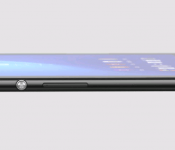
It’s been awhile since we’ve seen a full-sized tablet from Sony, but perhaps the company has plans to unveil a new one sometime soon. In a new leak from the official Xperia Lounge application, Sony outed their new Xperia Z4 Tablet, but only for a brief moment. We don’t know much about the tablet from the screenshots taken of the page, but we do know it will come with a 2K screen, and will feature “the latest ultra fast processor” and “industry leading battery performance”. The screenshot also reveals that the tablet will be launched on March 3rd, which suggests that it will be unveiled at MWC 2015.

When it comes to specifics, we don’t have any other information regarding official specs, hardware features or pricing. As far as aesthetics are concerned, the tablet seemingly takes design queues from the company’s most recent tablet, the Xperia Z3 Tablet Compact. Judging from the photos, it looks to feature the same build quality we all expect from Sony devices, all wrapped up in a very thin package.
We’ll be sure to keep you informed when the tablet is launched, or if any other details surface before its official unveiling. Android Authority will have a team on the floor at MWC 2015, so stay tuned for all of the latest news from Sony and all the other OEMs that will be in attendance at the trade show.
Ting launches open beta for its GSM network

Ting‘s GSM network, which it announced late last year, has officially entered into an open beta. Previously, customers could test the network out on an invite-only basis.
If an open beta for a network sounds odd, Ting explained the benefits of the tests it has done so far:
We’ve been hard at work on Ting on a GSM network. We’ve sent out invitations in the thousands with a majority of people taking us up on the offer. We’ve used the feedback we’ve received from our intrepid testers to further refine the activation process and the way we confirm that devices are compatible. Another thing we’ve been working on is making the switch from the CDMA to the GSM network easy for those that want to move their service or one of their active numbers from one to the other.
Previously, Ting was only available as a CDMA carrier that ran on Sprint’s network. The decision to launch a GSM network now allows customers using practically any phone, so long as it’s unlocked, to make a switch to the carrier.
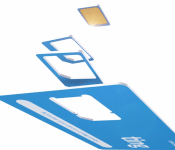
To get started, you’ll need to have an already unlocked GSM phone. From there, you can purchase a Ting GSM X1 SIM card and activate it with your device. Just bear in mind that this is a beta, so you’re bound to experience some issues here and there.
Source: Ting

Kickstarter’s ‘Zach Braff’ problem gets worse with the Pebble Time

Whenever you talk about Kickstarter, it’s natural that the conversation will turn to Pebble. There may be more successful crowdfunding campaigns, but the smartwatch’s stratospheric success is inexorably tied to that of its partner. Earlier today, however, Pebble once again took to the site to launch its third product, the Pebble Time. It seems odd that a company would use a service designed to get startups off the ground when it’s clearly in no need of help — having raised $1 million in just 49 minutes. For me, it’s the moment where I’ve finally lost patience with Kickstarter.
When Allerta (the company we now know and love as Pebble) launched its original Kickstarter campaign, it was teetering on the edge of what you’d normally call a startup. After all, it had already produced a successful hardware product (the inPulse) and had around $400,000 in venture capital funding in its back pocket.
Since then, it has become the most popular smartwatch in the world; hell some see it as the gold standard by which all wearables are judged. The company already has an online store, and I have no doubt that its employees are capable of making sure its servers would be up to demand. So, why did it run pre-orders via Kickstarter instead of on its own service? Because it’s great PR.
“A CEO openly admitted they had the cash to bankroll its first production run, but was using Kickstarter to generate more attention.”
Pebble knew that it had a blockbuster product and it’ll enjoy a thousand column inches with people talking about its success. Even though it had no need to come to Kickstarter, and I’m sure that the commission the site takes will sting just a little, the free publicity will more than compensate for that.
Kickstarter has become a machine for established businesses to generate as much unpaid advertising as possible. It’s anecdotal evidence, sure, but last week I had a phone call with a startup (I won’t name names) where the CEO openly admitted that they had the cash necessary to bankroll its first production run, but was using the site to generate more attention.
Ever since Zach Braff, with his reported net worth of $22 million, raised $3.1 million on Kickstarter, there’s been a tension about the “right way” to use the service. When Kickstarter responded, it said that high-profile projects like Wish I Was Here and Veronica Mars encouraged people to get involved. Maybe, it added, they’d stick around and back other projects, too. There’s never been any proof that such efforts have resulted in more frequent pitches, and Tim Heidecker already made the point more eloquently (and, you know, more swearily) than I can.
I’m not saying that successful people can’t use Kickstarter but, to me, their cap-in-hand use of the platform has always felt fraudulent. It’d be like watching Bill Gates, Mark Cuban and Warren Buffett panhandling on the streets of Seattle. This is why it’s easy to rail against Silicon Valley venture capitalists who use the site purely as a means of reducing the risk of their investments. James Proud raised $2 million for a “smart sleep sensor” on the site, but he neglected to mention that venture capitalists had already kicked in a bucketload of cash already.
Kickstarter actually railed against this sort of behavior back in 2012, when its co-founders declared “Kickstarter Is Not A Store” — each word capitalized for emphasis. It was magnificent, because the site took a stand against those people who were simply using it as a pre-ordering platform. The rules were also changed to mandate that products had to have a working prototype and banned flashy renders and outrageous marketing claims.
Kickstarter actually railed against this sort of behavior back in 2012, when its co-founders declared “Kickstarter Is Not A Store.”
A couple of years later, however, the site’s founders had changed their tune: rolling back those rules and allowing creators to launch products without the projects being vetted by staff first. Here’s what I think happened: Indiegogo emerged as the crowdfunding platform du jour, with its entirely hands-off stance on product development. It may be technology’s equivalent of the Wild West, but it was a Wild West that was taking money away from Kickstarter, so the rules were relaxed to keep creators on its side.
It’s a romantic notion, but I always saw Kickstarter as a way to empower inventors (and creatives) who couldn’t get backing any other way. In 1991, a retired engineer named Trevor Baylis saw a documentary showing how radio was used to educate Africans about preventing the spread of AIDS — but very few people had radios at the time. Baylis retired to his garage and developed a hand-cranked radio that was both cheap and required no batteries, but it took years before an investor would take a gamble on the invention. Wouldn’t it be great if Kickstarter were famous for empowering future Baylises rather than simply supporting the status quo?
Sony debuts Xperia E4g, an LTE variant of its latest budget device
For the fans of the Xperia E4 – Sony’s excellent budget device – the company have just announced an LTE variant of the device called the Xperia E4g.
With the an improved 1.5Ghz quad-core processor, 1GB of RAM, and 5-Megapixel camera, the E4g is almost identical to the E4 but with the addition of LTE.
The Sony Xperia E4g will be available starting April, with a price tag of 129€ and will be offered in a dual-SIM variant.
The post Sony debuts Xperia E4g, an LTE variant of its latest budget device appeared first on AndroidGuys.

HTC One (M9) leaks in three promotional videos, leaves nothing to the imagination

Well look at what we have here. Here’s the HTC One (M9) on video leaving nothing to the imagination. These three promotional videos, were leaked by @upleaks, but the you know what has hit the fan since their Twitter account is down. Thankfully we were able to pull the YouTube links before that happened.
The videos show off a two-toned metal finish, Dolby Audio BoomSound, the camera software, and various other software enhancements. For example, they show you some new customizations for your home screen and BlinkFeed now shows you meal suggestions. The home widget will also display different apps depending on your location.
The camera is confirmed to be 20 MP and boasts a lot of new features like being able to combine images or add geometric shapes such as bubbles and flowers to your existing images.
Check out all three videos below, but hurry because they are likely to get pulled soon.
Click here to view the embedded video.
Click here to view the embedded video.
Click here to view the embedded video.
Come comment on this article: HTC One (M9) leaks in three promotional videos, leaves nothing to the imagination
 AIVAnet