


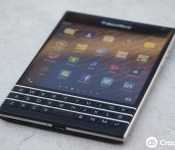
BlackBerry testing screen flickering fix for the BlackBerry Passport

If you’re used to using leaks, then chances are you’re fully aware of the ‘screen flickering’ issue that was present in early builds of BlackBerry 10.3.1 for the BlackBerry Passport. The bug, while random, would cause the screen to flicker off and on with no real pattern to it. When BlackBerry OS 10.3.1 started rolling out, that bug remained in the OS and since then, many folks have reported having the issue.
BlackBerry has spent the past few days looking into the matter, trying to pinpoint the exact cause and now according to BlackBerry Product Manager, Michael Clewley, BlackBerry may have a fix for it and they’re currently testing it to ensure it actually fixes the issue. While there’s no ETA for the fix to be sent out to customers, it’s at least in the works and hopefully will be resolved soon. In the meantime, he shared a suggested workaround as well.
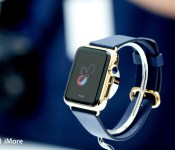
The Apple Watch Edition’s upgrade dilemma

Apple Watch anticipation has reached a fever pitch, with folks speculating on costs, crown and band pairings, the Watch’s health sensors, and when the thing will actually reach our wrists.
As such, it’s no surprise the Watch has been on my brain, as well — specifically the Edition model. There’s been a lot of speculation on pricing and whether Apple will legitimately charge $10,000 (or more) for the gold models. To compete in the high-end watchmaker’s space, that kind of cost isn’t out of the question, but I do wonder: Can the company get away with selling a five-figure Apple Watch that’s obsolescent in two years?
The $10,000 Watch
I should preface this by saying I’ve never purchased, owned, or been given a piece of jewelry over $5000, and I don’t claim to speak for those who regularly seek out $15,000 watches and other jewelry items. But in my mind, when you eliminate the 1 percent of folks who have the capital to buy such a watch for everyday wear, you’re left with a very different subsection of customers: those who may not have the money to buy such an item every year, but save for a special present or to pass it down through the family.
Maybe the Edition isn’t designed to serve that market: At its core, it is technology, and as a society, we’ve become accustomed to regifting or recycling iPhone models every year or two for the next greatest thing. Maybe the people buying a five-figure Apple Watch are of a tier where they don’t mind dropping that kind of cash every 18 months. Maybe the old Apple Watches get thrown into a bin in a safe in the back of the Apple Store and get shipped off somewhere to be reduced to component parts, the gold melted and reformed for Apple Watch 2.0.
Maybe I’m naive. But the whole concept just rubs me the wrong way.
The cost-per-year of Apple Watch ownership
I understand the justification of replacing an iPhone or a Mac when they’ve become too slow or outdated for their task — at most, I’ve spent $2000-$3000 on such a device, and its cost-per-year averages out to something where I don’t feel wasteful in replacing the machine.
Watches are different. They’re jewelry. They’re as much a fashion accessory as they are a device. And watches can have a long lifespan, if treated properly. Watches have people trained in the art of repair, keeping someone’s $20,000 timepiece from becoming a useless paperweight.
Once Apple jumps into that price point and that industry, should it expect that users will pay $10,000 again 18-30 months down the line to replace their watch? Does the advent of digital mean we’re expected to replace our heirlooms now, rather than pass them down? I really don’t know. Maybe the Edition is truly just meant for those who look at $5000 cost-per-year of ownership as no big deal on their bank account. Companies like Vertu have made a living off those customers; why shouldn’t Apple?
But I’d like to believe Apple is better than that. If they truly want to command the watch industry, they might take another page from watch-makers: repairability.
A replaceable core
I doubt Apple will ever let you take an Edition to a third party repair shop, but if they offered Apple Store-replaceable cores in their Edition watches, that could potentially be a way around the upgrade process. When Apple Watch 2.0 comes out, instead of paying another $10,000 for a brand-new watch, you pay $500-$1000 at an Apple Store, and a Watch Genius replaces the S1 chip with an S2 chip.
For the lower-end Sport and Apple Watch models, it makes sense to upgrade to the newest model and recycle the old. For the Edition, an “update” price point allows you to keep your beautiful piece of jewelry without sacrificing speed or technology.
Unfortunately, I don’t know how practical such an idea actually is: Replacing RAM on a computer is one thing; replacing its entire chip is another thing entirely, especially one “encapsulated in resin” during the building process. And then there’s the question of screen resolution upgrades and additional sensors: It’s a bit hard to “update” those with a quick back-of-house fix. A trade-in program with heavy discounts isn’t out of the question, either, though you’d essentially be getting a new watch in lieu of updating your old one.
It’s a hard nut to crack. Apple has built their entire industry on devices that — while they last longer than their competition — are designed to eventually be succeeded by better devices. In contrast, I sense technology plays little role in convincing customers to buy a new Rolex for their collection: If you’re picking up a second Rolex 18 months after your first, chances are it’s for fashion reasons, not new and special timekeeping features, and you’re in the vast minority of consumers when doing so.
What to do?
Apple could solely go after the high-end fashion market, say “These customers have no qualms about paying $15,000 every two years,” and be done with it. Or the company could invest in some sort of long-term support for its Edition customers. And even after writing all this, I’m still no closer to figuring out which one the company will pick. The former model favors Apple’s traditional business model, just at a much higher income bracket. The latter feels more like an Apple move, to support its customers and give them the best experience possible.
I suppose we’ll see in April just what the company decides. Until then, let’s chat about it — is Apple going to abandon Edition customers in version 2.0 and expect them to upgrade like everyone else? Or do you think they might come up with some sort of update program?
Learn Photoshop for free this week
Regardless of whether you’re an experience Photoshop user or a neophyte who’s just learning the ropes, chances are there’s something you can learn from the instructors at CreativeLive, who are sharing their knowledge for free all week during Photoshop Week.
For six days, the world’s most inspiring photographers and retouchers will show you how they work their magic in Photoshop and Lightroom. You’ll learn exciting new ways to transform your work and create images that stand out from the masses.
Sessions include tips for Photoshop beginners, using Lightroom Mobile, best practices for photographers, restoring photos in Photoshop, working with filters and creative effects: six days of curriculum in all.
The event streams all week for free. If you miss classes you’d like to watch, you can pay to access them individually, or buy the entire archive for $299.

Microsoft Band, Health updated, Developer SDK Preview released

Microsoft today announced huge updates for the Microsoft Band and Microsoft Health apps along with the first release of an SDK for third-party developers and a web dashboard, too.
The updates announced today are in response to user feedback and besides the web interface includes support for biking, new ways to scan and respond to notifications and integration with Microsoft HealthVault and MapMyFitness. There are also 5 new guided workouts to choose from.
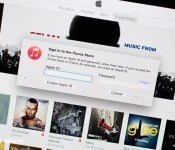
Apple to pull AOL login support for iTunes accounts on March 31

Apple will drop support for logging into iTunes using your AOL username and password at the end of March 2015. Apple originally partnered with AOL for logging into iTunes in late 2003, and used to give users the option to log in either with their email address and password or their AOL credentials. Will still be able to use your AOL email address to register for iTunes.
Apple will pull support beginning March 31, and users must convert their username and password to an Apple ID before that time, according to the company’s support article:
You must convert your AOL Username to an Apple ID in order to maintain access to the stores and to content you purchased previously.
You can find Apple’s support page with the instructions for converting your AOL username and password into an Apple ID at the link below.

First look: Microsoft Health for the web

Microsoft Health has added a pretty nifty web app to the apps already available on different platforms, meaning you’re never far away from your data, regardless of the device in front of you. Arriving at the same time as new features and a developer SDK for the Microsoft Band, the popular wearable few can actually buy continues to get better and better.
Here’s a quick first look at the new web dashboard.

Archos to offer Windows tablets and laptops to middle and high-school students in France

Archos has decided to help a new education effort in France with a selection of Windows 8.1 tablets and notebooks that it will offer to schools in its native country at special prices. This new program is designed to be a part of France’s “Grand Digital for Schools Project” which is aiming to give 50,000 tablets and notebooks to middle and high-school students in 2015 and over a million such devices to students in 2016.
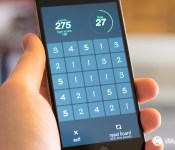
New iPhone number game Pivots makes addition fun

Pivots is a new number game for the iPhone where you use math in a race against the clock. The objective of Pivots is to add rows and columns up to 15 before the clock runs out, and the game offers you the ability to change the board in order to reach your goal.
Pivots lets you change the board by rotating 2×2 squares in order to reposition numbers in a given row or column. Every time you successfully line up a row or column that adds up to 15, you earn points and put time back on the clock. Failed moves will see time subtracted. As you make progress in Pivots, new levels will speed up the clock and add multipliers to your score.
Pivots is a free download, though there is a $1.99 in-app purchase to remove advertising. You can get Pivots from the App Store right now.
- Free – Download Now
Google acquires Softcard tech, fate of Windows Phone apps unknown

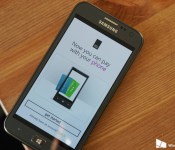
Google announced earlier today that it has acquired “technology and intellectual property” from the online payments company Softcard. Rumors about the acquisition were first reported in January. The news puts the fate of the recently launched Softcard Windows Phone apps for Verizon and AT&T customers up in the air.
Here are some of the apps you’ll use on the Apple Watch in April

April is coming sooner than you think, and developers know this all too well.
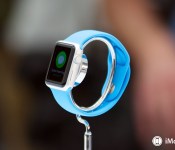
Hundreds of iOS developers are hard at work prepping all sorts of WatchKit apps for the Apple Watch: Health monitors, RSS feed readers, social communications apps, business programs, and more.
Wareable and Wired spoke with several developers in the last week about their impending Apple Watch software, and they’re offering a bit of a sneak peek at what’s in store for users when the device launches.
Wareable spoke with ten developers working on a variety of apps for the watch, including list-making, a ski tracker, and a smart home remote:
Curtis Herbert’s Slopes app is designed for skiers and snowboarders who use an iPhone’s GPS to record stats and form: “Think Nike+ or RunKeeper, but for winter sports, and with unique takes on visualising data, such as 3D replays right on your phone.” The goal of the companion app is to make it easier to check in on stats while on the mountain: “Gloves get in the way of TouchID, and iPhones are usually buried deep in warm pockets. So an Apple Watch app is perfect for getting details at a glance, and you can start recording without ever taking out your iPhone.”
Wired has a more focused look on companies specifically looking to innovate in the health space:
Take Propeller Health, another tool for those with respiratory conditions. In addition to monitoring inhaler usage with the company’s Bluetooth sensor, its location-sensing mobile app tracks weather, pollen count, and air quality (along with other personal trigger factors) to notify a patient when conditions arise that might initiate an asthma attack. The notifications are personalized and contextually relevant, and since they’re on the wrist, they could be even less obtrusive than they are on a smartphone.
Both of these roundups excite me for different reasons: Wareable’s roundup gives a good overview of what we might see appearing on our watch faces come April, while Wired’s interviews paint a fascinating picture of the Apple Watch’s potential to change the health landscape. As someone who’s consistently been frustrated with fitness trackers because I do a sport that’s not particularly conducive to step-tracking, I have high hopes for the Watch’s varied sensor data; it’s also really exciting to think about the potentials for long-term lifestyle changes and further Health app integration.
What apps do you folks most want to see come to the Apple Watch on launch day? Let us know in the comments.
 AIVAnet