



Apple Seeds Second OS X 10.10.3 Yosemite Beta to Developers
 Apple today seeded the second beta of OS X 10.10.3 Yosemite to developers, two weeks after releasing the first OS X 10.10.3 beta and three weeks after releasing OS X 10.10.2 to the public.
The new beta, build 14D87h, is available for registered developers through the Software Update mechanism in the Mac App Store and through the Mac Dev Center.
OS X 10.10.3 brings several new features to Yosemite, including the new Photos for OS X app. Photos is designed to serve as a replacement for both iPhoto and Aperture, and is on track to see an early 2015 launch. Early reviews have suggested that while Photos is a suitable replacement for iPhoto, with more advanced tools and performance optimizations, it may leave professional users disappointed, at least in its initial incarnation.
The first beta of OS X 10.10.3 also brought a new emoji picker that consolidates emoji into a single page with clear labels, and support for Google 2-step verification when setting up accounts in System Preferences.
Update: Today’s 10.10.3 update introduces new diversified emoji options and new skin tone modifiers for emoji, as hinted at in the previous 10.10.3 beta. There are also new country flags and updated emoji for the iPhone, iMac, and Apple Watch.

Valve’s SteamVR hardware heads to GDC

Valve — the company behind Portal, Team Fortress 2 and the game distribution hub Steam — will show off its own virtual reality hardware, SteamVR, at GDC 2015 next week. This comes despite Valve’s previous insistence that it had no plans to release any such hardware. We had our doubts about that anyway, after Valve held virtual reality demos at Steam Dev Days in January 2014. Developers who got their hands on the company’s early VR experiments were impressed by their holodeck-levels of immersion. Beam us up, Valve.
Valve will offer demonstrations of SteamVR at GDC, along with a look at the new, improved Steam Controller and new living room devices. These are all part of the Steam Machines initiative, Valve’s plan to compete with gaming consoles by licensing its own Linux-based operating system, SteamOS, to PC manufacturers, meant to be sold in a package with the Steam Controller. Valve expects Steam Machines to launch this year.
Source: Steam
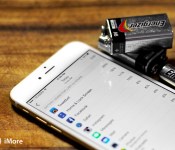
No, you don’t want a thicker iPhone with a bigger battery

One of the most common misconceptions when it comes to the iPhone is that Apple could simply make it a few millimeters thicker to improve its battery life.
It then follows, under that train of thought, that Apple is deliberately sacrificing battery life for cosmetics. That the company is putting an obsession for thinness over usability. In fact, it’s the exact opposite of that. Before we get to the busting, however, here’s the myth, most recently repeated by the Wall Street Journal:
Take the latest iPhone. Let’s do a thought experiment, starting with what has changed between the iPhone 4 and the iPhone 6. In four years, Apple’s engineers made the iPhone 2.4 millimeters (0.094 inches) thinner, or about the thickness of three credit cards. Despite giving it a much larger screen, they also shaved off eight grams, or about the weight of a packet of ketchup.
Given the size of its current battery, a little back-of-the-envelope math reveals it’s more than reasonable that if the iPhone 6 were as thick as the iPhone 4, the iPhone 6 could have double its current battery life.
Except, no.
Take an iPhone 6 as thick as the iPhone 4 and imagine how heavy it would be. Apple was deliberate when they pointed out the iPhone 6 was actually lighter than the iPhone 4. They did that because, while thinness is nice and certainly improves the feel of the phone, it’s lightness that matters. Lightness is what improves usability.
The idea of a thick phone with longer battery life sounds great precisely until you actually try to hold it up for prolonged periods of time. Then it causes fatigue and eventually prevents you from using it for as long as you’d really like to. (It’s the same reason Apple’s been striving to make the iPad thinner — to make it ever lighter and more usable.)
An iPhone 6 or iPhone 6 Plus with the same thickness as an iPhone 4 would be too heavy for many people to read iBooks or watch movies for long periods of time in bed, for example. It would also be harder to balance and use one handed while walking around.
Also, batteries don’t just hold in power — they hold in heat. They’re insulators. Batteries are part of the reason why processor speeds need to be ramped down. They’re also not RF transparent, so they can affect how radios work as well.
With Apple’s current generation of thin-as-in-light phones, you can add a thicker, heavier battery case for those times when you want or need extra power. If Apple made a thick-as-in-heavy phone, you couldn’t tear half of it off for the times when you really didn’t need the extra boost..
This way, usability is the standard and bulk is the option, not bulk as the standard at the expense of usability.
John Gruber of Daring Fireball made another observation:
Consider laptops — for years, battery life on a laptop was somewhere around 4 or 5 hours, at best. It was a struggle to use one throughout a cross-country flight. Today, you could probably fly coast to coast roundtrip with MacBook Air on a single charge.
The change in laptops happened when Apple redesigned them to be, essentially, giant battery packs, and Intel made x86 more power-efficient with chipsets like Haswell. iOS devices are already giant battery packs, though, and ARM is already power efficient. The same kind of design and architectural advances that allowed for longer MacBook battery life are probably different than those that will eventually allow for longer iPhone battery life.
Chipsets will continue to improve, screen technology will evolve, and radios will get more efficient. As these and other advancements happen, Apple will have a light, usable phone and great battery life. Over time, the same will not doubt prove true for the Apple Watch as well.
The iPhone 6 Plus, with its day-and-a-half of charge capacity, shows that strategy already at work.

CM12S and OxygenOS to arrive in mid to late March

OnePlus has been experiencing a ton of issues regarding their partnership with Cyanogen Inc., so the flagship killing company decided to create their own ROM, OxygenOS. We’ve seen a very brief preview of the new operating system, but many details haven’t been announced yet, including a tentative release date. But today, OnePlus co-founder Carl Pei announced on Twitter that CM12S and OxygenOS will become available sometime around mid to late March.
@rajarshi_10 We released an L alpha a while ago, but a more stable build (OxygenOS & CM12S) will need to wait until March. Sorry for delay!
— Carl Pei (@getpeid) February 23, 2015
It’s been heavily speculated that OxygenOS is meant to replace Cyanogen OS as the default ROM for OnePlus’ next smartphone. But when it comes to the One, Pei recently shed some light on how the company will handle the new OS. In a recent Reddit AMA, Pei explained that the OxygenOS update won’t be available as an OTA (over the air) update on the OnePlus One. He explains:
For the OnePlus One, it will likely not be an OTA, but rather a choice for users who want to try something new and are willing to flash it themselves.
OxygenOS will be a near stock-like build of Android, and the company says they are starting from the ground up on this one, putting only what they want in the OS, taking into consideration everything that users have been asking for.
Are you planning on flashing OxygenOS when it’s available?

Unlocked Nexus 6 (32 GB) in both Cloud White and Midnight Blue now available at Amazon

The Nexus 6 might not be the most popular phone in the land, but it certainly is the toughest one to purchase. If you’ve been trying to get your hands on one, you can grab the 32 GB version at Amazon for $649.99, just $0.99 more than what you would pay Google through the Play Store. They have both Cloud White and Midnight Blue in stock, and it’s on Prime so you can save the shipping costs and receive it in 2 days, assuming you’re a Prime member.
Just hit the source link below and choose which color you want to get your order in.
source: Amazon
Come comment on this article: Unlocked Nexus 6 (32 GB) in both Cloud White and Midnight Blue now available at Amazon

All Lollipop users should spend $1.50 on this app
Lollipop users all share a common frustration, and that is the lack of a true silent mode for your device. Sadly, Google did away with the silent mode in favour of notification priorities, but SoundHUD is an app that brings that all back.
SoundHUD is a customisable replacement volume panel that doesn’t require root access and will give you full control over your volume settings.

Silent mode HOW-TO
1. Go to System settings -> Sound & notification -> Interruptions
2. Turn OFF all priority interruption switches
3. Get up, do a little dance, and enjoy the silence! No more calls, notifications, reminders – just alarms!
You get a 2 week free trial of SoundHUD and then it’s only $1.50 to unlock it, which is well worth it.
So what are you waiting for? Grab it from the link below now.
The post All Lollipop users should spend $1.50 on this app appeared first on AndroidGuys.

How a Gamergate target is fighting online harassment

There’s a wariness to the way that Alex Lifschitz and Depression Quest creator Zoe Quinn comport themselves over Skype, as though they’ve grown accustomed to expecting assault. Their voices are clipped, their laughter strained. They’re careful about everything, vigilant against even the slightest risk of being hacked.
Which makes sense. Caution is a natural response when you’re in the crosshairs of the Internet.
Lifschitz and Quinn are the co-founders of Crash Override, a grassroots volunteer effort that aims to provide support to those suffering from online harassment. It’s not the first of its kind; organizations like Stay Safe Online and Working To Halt Online Abuse have long labored to cultivate a safer Internet. But Crash Override is trying to offer a little more. “One of the big things that separates our network from others is that we like to say it’s ‘for survivors by survivors.’” Lifschitz explains.
Quinn, in particular, is what many would consider a survivor of online harassment. About six months ago, an ex-partner of hers published a series of vitriolic blog posts alleging sexual infidelities. The diatribe, overflowing with screencapped Facebook conversations, was the catalyst for an avalanche of personal attacks from readers who believed that Quinn had slept with a journalist to secure positive coverage for her game.
“It’s for survivors by survivors.”
This supposed breach of ethics gave way to the so-called Quinnspiracy Theory: that Quinn used sex and pity to manipulate the industry. As weeks passed, the accusations continued to mount. Quinn was implicated with a litany of questionable acts, including sabotaging a game jam led by The Fine Young Capitalists. The situation eventually came to a head when actor Adam Baldwin created the #Gamergate hashtag, providing an identity for the growing movement.
Though ostensibly about ethics in games journalism, Gamergate has also been linked to various incidents of online harassment, including doxxing (having one’s private information researched and disseminated), SWATing (the act of inciting an emergency response to false situations) and death threats, among other examples. Quinn says she personally experienced many of these kinds of attacks.
But where others might reciprocate aggression in kind, Lifschitz and Quinn are taking a more constructive approach with Crash Override. “There’s a massive cultural issue where people sort of think that the internet is this magic alternate dimension where your actions don’t matter,” Quinn says. “When really, it’s sort of like tech needs to have its Soylent Green moment and go ‘The internets is people!’”
Educating the public about the dangers of online harassment is only part of what Crash Override does. Built in response to their own experiences, the organization specializes in assisting others with what the two describe as “coordinated online mob harassment.” Such attacks are often planned on anonymous bulletin boards like 4chan and 8chan, which have become infamous as staging grounds for Internet “raids” — large-scale assaults on websites, forums or targeted people. Quinn says that Crash Override is also beginning to assist with “smaller scale things,” such as individual cyberstalking and harassment.
There’s no cut-and-dried methodology to the work they do. Quinn says no two cases of harassment are the same, adding that the “correct thing to do” can vary wildly depending on things like the person’s ethnicity, gender, who their aggressors are, and the nature of their digital footprints — the kind of personal data they’ve made available on the Internet. Not surprising, considering the panoply of forms such abuse can take, and how minorities are treated online. A recent survey by the Pew Research Center, for example, shows that young women are more likely to experience “severe” forms of abuse — stalking, threats of physical assault and sexual harassment — than men.
 According to Quinn, some of these situations can be safely waited out. However, a huge portion requires active monitoring and safety measures to be taken on the part of the victim. “What we try to offer people is some best practices, advice, and just lending an ear if they’d like to talk because very few people understand what it means to go through this kind of harassment.”
She adds that the network can also help provide some basic diagnostic assistance for those attempting to divine weak points in their computer setup, along with information on what kind of service hacks to expect and how a person might be compromised. For highly technical matters and more specialized assistance, Crash Override has an extended network of experts conversant in fields like white hat hacking, PR, law enforcement and counseling — most, if not all, of whom were former clients.
The original group, Lifschitz says, came about when a handful of those affected by Gamergate banded together to contend with their harassment. “There wasn’t much of of a formal procedure other than ‘Hey, we really helped each other out, wanna join up?’” Lifschitz adds that there are still people who they reach out to who are “not formalized agents of the network.”
But Crash Override is not a catch-all solution, says Quinn. “There are some people that we can’t really do much for in terms of, like, if they have a very specific need. “So, in those cases we like to try and refer them to someone on our network who has prior experience with their specific situation.”
Similarly, Quinn warns that Crash Override can’t really assist unauthorized third parties looking to act on someone else’s behalf. (“We don’t like to step in unless we’re explicitly working with the victims themselves,” she says.) Still, there’s a middle ground. The organization has a Tumblr cataloging general advice and other assorted public service announcements. Thus far, it includes an explanation on how to avoid being doxxed and how to secure private accounts. More specialized guides are in the works, including one on how to talk about mob harassment. “Everybody can benefit from having better online security,” Quinn says. “Everybody can benefit from scrubbing themselves from information brokers.”

Although the pair hope to help as many people as possible, local cyber laws can be a factor. “There are some countries that take this more seriously than others,” Lifschitz says. “Sweden and Norway have more secure laws about that kind of thing, or pay more attention to the issue. The UK has stricter cyber crime laws.” Lifschitz also said that SWATing is mainly an issue in North America.
The two are reserved about discussing future plans for Crash Override. Lifschitz says it’s “all very organic.” He describes a similar approach to funding, too. Right now, the organization is being funded by the pair themselves, but that’s subject to change. “Currently, we’re doing just fine on our own,” Quinn states, stressing that she can’t currently see a situation where the group would need to accept outside funding. “If circumstances dictate that we could be more effective and help more people in ways that we’re good at while still making sure that all of our agents are safe and anonymous and everything’s still working on our end, we’ll go in that direction.”
While Crash Override has been positively received by the general media, it’s also being met with angry opposition. Lifschitz says that over 700 hacking attempts have been attempted across their sites, with Crash Override itself enduring 184 of them. Nonetheless, the pair continue to persist, determined to give back to the community that they love.
Lifschitz says that over 700 hacking attempts have been attempted across their sites, with Crash Override itself enduring 184 of them.
“Being able to survive as we have is something we recognize that not everyone will be able to do.” Lifschitz says. “We have to give back somehow as best we can, and to people who might not be able to have access to the same resources we do.”
“We get so many people contacting us every day saying just, like, ‘thank you for being there. It also takes a bit of a personal toll, but it’s something that we know we’re in for the long haul, and we’ve always been prepared for that.”
If you’d like to get involved with Crash Override or have been the victim of online harassment, you can learn more at the organization’s website.
[Image: Hackers movie (background) / Crash Override Network (logo); Zoe Quinn 2014 via Wikimedia; Crash Override Network (gif)
Filed under: Gaming

Apple Now Selling Updated World Travel Adapter Kit With Lower Price, No 30-Pin Cable [iOS Blog]
Earlier this month, Apple began selling an updated World Travel Adapter Kit, which offers a set of seven AC plugs and prongs to fit in different electrical outlets around the world.
The new kit that Apple’s selling no longer includes a 30-pin to USB cable, and rather than adding a Lightning to USB cable, Apple has instead opted to ship the kit with no cable and drop the price by $10.

Apple’s updated World Travel Adapter Kit includes seven pieces (up from six plus a 30-pin cable) and specifies that it supports outlets in Brazil in addition to North America, Japan, China, United Kingdom, Continental Europe, Korea, Australia, and Hong Kong. Apple has also updated the language specifying which devices the kit is compatible with to reflect its newest products.
The kit is designed to work with iPod, iPhone, and iPad, and is compatible with Apple MagSafe and MagSafe 2 Power Adapters (for MacBook, MacBook Pro, and MacBook Air), 10W and 12W USB Power Adapters, and Portable Power Adapters.
The updated World Travel Adapter Kit can be purchased from the online Apple Store for the new lower price of $29. It’s also available in many Apple retail locations.

Samsung Galaxy Core Prime headed to Verizon on February 26th

Verizon has just announced that the budget-friendly Samsung Galaxy Core prime will make its way to the carrier on February 26th. It will launch for $29.99 for users who’d like to sign up for a two-year contract, and will be priced at $8 per month for users taking advantage of the Verizon Edge plan. While the carrier has yet to release the off-contract price for this device, the phone will likely launch for around $200.
The Galaxy Core Prime has a 4.5-inch 480 x 800 resolution display, a quad-core 1.2 GHz Cortex-A53 Snapdragon 410 processor backed by 1GB of RAM, 8GB of internal storage and support for up to 64GB of MicroSD card expansion. It’s running Android 4.4.4 KitKat out of the box, and has a 2000mAh battery, a 5MP rear-facing camera and a 2MP front-facing camera. Verizon also says that the phone will be updated to Android 5.0 Lollipop in the future.
The Samsung Galaxy Core Prime won’t win any awards on the spec sheet, and it’s probably not the best device out there for the money. But for those who want the Samsung Galaxy experience without breaking the back, this may be a good contender. We’ll be sure to follow up if we hear anything else regarding the price of this device.
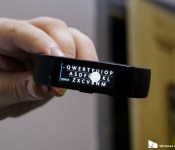
Typing on the Microsoft Band keyboard is surprisingly good

One of the new features in the latest Microsoft Band update is a customized keyboard. And despite its diminutive size, typing on it is surprisingly good. To get to grips with it, Microsoft embedded a tutorial guiding you through everything you need to know. If you haven’t got the update yet, check out our short video below to see it in action.
 AIVAnet