Learn to develop impressive mobile games, $39

Do you have what it takes to put together the next Candy Crush? With this Unity3D developer bundle, you just may. 7 expertly guided courses and over 40 hours of premium tutelage comprise this …



Do you have what it takes to put together the next Candy Crush? With this Unity3D developer bundle, you just may. 7 expertly guided courses and over 40 hours of premium tutelage comprise this starter pack that puts you on the direct path to app creation. You’ll learn to script with C#, work with game objects, debug, and more. All facets of game creation are covered including lighting, animation, and everything in between. Whether you’re a beginner or already have a decent developer noggin, you’ll find tremendous value in these training packages.
Don’t let a lack of know-how stop you from braining your exciting ideas to fruition. Sure, you could head down to the local college and drop thousands on classes (if they’re even offered) or you can get in the driver’s seat today and begin creating with this bundle for just $39.
Happy developing!
See more at deals.androidguys.com
Do you have what it takes to put together the next Candy Crush? With this Unity3D developer bundle, you just may. 7 expertly guided courses and over 40 hours of premium tutelage comprise this …

Is your phone always dying? Are you afraid to hit the town for the day because you’ll be unreachable 4 hours into your trek? No matter what your lifestyle, an extra boost of power is …

There are plenty of reasons for one to want to keep their internet connection private. It’s possible that you have a dose of distrust for your government and want to ensure your sense of …

Today is the last full day to get your entries in for a chance at winning the Choose Your Own Smartwatch Giveaway. Entries will no longer be taken after 12PM (PST) on 2/17 and you can’t win …
(function() var script = document.createElement(‘script’);script.src = ‘https://stacksocial.com/widget.js?publisher=androidguys&type=editorial_post_widget_preferences’;script.async = true;var entry = document.getElementsByTagName(‘script’)[0];entry.parentNode.insertBefore(script, entry);)();
http://www.androidguys.com/pubgalaxy/728×90.html
The post Learn to develop impressive mobile games, $39 appeared first on AndroidGuys.
Minima Pro Live Wallpaper is one of those apps that you didn’t know you needed until you have it. Then you cant imagine what you did before you had it. Well, that is if you are lover of wallpapers and customization. Live wallpapers come in all forms, from rotating cities to flying asteroids, but sometimes you just want a nice clean interface. Minima Pro Live Wallpaper accomplishes that and then some by providing you with over 70 different designs, the ability to customize your own and a cool 3D parallax effect.
Functionality
One of the first things that I noticed was just how clean and simple everything looked. Simple by no means being a negative thing. When you first open the app a theme is automatically chosen for you but you can go into the setting to where things get really exciting. The settings menu allows you to choose from over 70 different high quality prebuilt designs so you can get to actualizing that homescreen concept you have been meaning to create right from the get go. If you are feeling more adventurous then you can actually go and customize the prebuilt themes and change them to your liking. Don’t like that green circle, make it red. That yellow square not really calling out to you, make it purple. Heck, make it a triangle if you want. The options are endless! One of the really neat features that I liked was the ability to have the app randomly generate a theme and then have it change to it daily. So you can have a new unique wallpaper every day of the week and so forth.
Final Thoughts
Minima Pro Live Wallpaper is sure to be a welcome addition to any homescreen. With its high quality designs, its unique take on minimal wallpapers and the high level of customization, one would be hard pressed to find a reason not to give it a try. So head on over to the Play Store and download the app using the widget below.
D
(function() var script = document.createElement(‘script’);script.src = ‘https://stacksocial.com/widget.js?publisher=androidguys&type=editorial_post_widget_preferences’;script.async = true;var entry = document.getElementsByTagName(‘script’)[0];entry.parentNode.insertBefore(script, entry);)();
http://www.androidguys.com/pubgalaxy/728×90.html
The post Minima Pro Live Wallpaper review appeared first on AndroidGuys.


IFTTT has announced the addition of three new apps to their portfolio of products and they have rebranded their main IFTTT service. The new apps have been given the “Do” moniker and consist of Do Button, Do Camera and Do Note. They essentially take the concepts of IFTTT’s recipes and put a graphical interface on them while also connecting them to specific functions. IFTTT also announced that their primary app is now being called IF.
The Do Camera app gives users the ability to use their camera hardware in their mobile devices to create recipes to trigger actions with just a tap. For instance, a user could setup a recipe to automatically post photos to a specific Facebook album with the tap of a button. On Android devices, this would eliminate the need to select a share option to access. The Do Camera app can already connect to a number of services like Twitter, Facebook, Evernote, Gmail, Dropbox and more.
The Do Button app lets users create recipes that are launched via a button that can be put on the homescreens of their mobile devices. The button recipes can be used to launch or trigger a wide variety of chores if users have the appropriate apps and hardware. For instance, users can quickly send an email using Gmail, send a direct message via Twitter, create a calendar entry, or control their Nest thermostat.
Finally, the Do Note app functions as a notepad where users can enter text and then convert that into an actionable item via a recipe. For example, users can type out some details for a meeting on the notepad, tap the Do button within the app, and have a Calendar event created. Similarly, users could use this to type out a tweet and send it without launching the Twitter app.
You can grab all three of the new apps from Google Play using the download links below.


Do Camera app
Google Play Download Link (Do Camera)
Do Button app
Google Play Download Link (Do Button)
Do Note app
Google Play Download Link (Do Note)
source: IFTTT
Come comment on this article: IFTTT rebrands service and adds new Do apps


Smartphones are big business, but it doesn’t necessarily mean OEMs are making money off this massive platform. In fact, most companies are actually coming up short, with the exception of one major player. It was recently asserted that Apple is consuming around 93 percent of the smartphone industry’s profits, which doesn’t leave much space at the table for its competitors, mainly Android OEMs. Despite having the biggest market share of global smartphone shipments, manufacturers building phones based on Android are fighting for scraps. But why is this happening and how is Apple making so much money?
Despite having the biggest market share of global smartphone shipments, manufacturers building phones based on Android are fighting for scraps.
It all starts with the beginning of a device’s development. Unlike its competitors, Apple is pretty much a one-stop shop. Just about everything is being done in-house. The California-based tech giant produces its own software and only releases one to two new smartphones each year. This practice definitely keeps expenses down compared to rivals like Samsung and LG. Toss in some high margins and things start to become somewhat clearer.
So how can Android phone producers make the move from appetizer to entree? Here’s a few ideas that might help struggling OEMs earn a place on a more profitable menu.

Unlike Apple, Android phone makers such as Samsung, LG and HTC use third-party software offered by Google. While Android is often referred to as a “free to use” platform, this age-old statement is only partially true. The platform’s core software can be installed and even changed by just about anyone, however this excludes the applications that make up Google’s Mobile Services (GMS). Apps such as Gmail, Google Maps and most importantly Google Play are attached to expensive licensing agreements. And while it’s not entirely clear how much these licenses cost, it’s estimated that they range from $40,000 to $75,000 depending on the number of devices being shipped.
Expenses such as GMS licensing, along with hardware production and the development of in-house software quickly drives up costs. Again, Apple only releases a couple of handsets each year, but a company like Samsung cranks out well over 15. Factor in annual marketing expenses for such a heavy roster of equipment and the opportunity to make some serious cash becomes even more elusive.

OEMs produce countless Android-powered smartphones each year, with hardware ranging from top-shelf to the bottom of the barrel. This approach covers just about every market, but it’s certainly not the most cost effective. In order to shake some of the unnecessary expenses that come with producing smartphones, companies need to drop the dead weight in their catalogs taking away from potential profits.
If the most profitable smartphone maker is only releasing a couple of phones each year, should its competitors really be countering with 10 to 15 different handsets? This definitely needs to change. Major companies like LG, Samsung, HTC and Sony need to pare things down to around four different phones or less each year. Just imagine if Samsung only released a Galaxy S6 and Galaxy Note 5 in 2015. This would drastically reduce the amount of cash being spent to market and produce unnecessary and (arguably) unwanted devices. Remember, even smartphones of the lowest quality require costly materials, production facilities and teams of people in order to be released.
Just imagine if Samsung only released a Galaxy S6 and Galaxy Note 5 in 2015.
Two phones a year may sound a bit extreme, but in addition to a lighter balance sheet, such a change in direction could result in better products being made. Instead of wasting resources and talent on a phone that will likely only receive one software updates during its lifespan, manufacturers could focus their efforts on providing the best equipment support possible.

Another possible way that Android could become more profitable for OEMs would be the release of a platform like Google’s rumored Android Silver initiative. Under this program, Google would’ve paid OEMs and wireless carriers to sell handsets that adhered to Mountain View’s strict specifications. This meant near-vanilla builds of Android, with very little bloatware. In addition to handling the majority of OEMs’ software needs, Google was reportedly ready to invest as much as $1 billion to cover marketing expenses for Android Silver devices. The program was never formally announced and Google reportedly shelved it due to internal doubt about its ability to be successful.
Even if Google has placed such a promising idea on hold, it doesn’t mean OEMs can’t do something similar by themselves. For example, HTC is often praised for its first-class hardware, but the Taiwanese firm regularly struggles to make its smartphone business profitable. If the outfit retired its homegrown Sense software in favor of stock Android, it might prove beneficial for the company. Not just limited to HTC, this idea has the potential to work for any OEM funneling large sums of money into the development of its own third-party UI.

Since Android is a “free” open source platform, anyone can use it and modify it. This opens up opportunities for companies to produce their own mobile operating systems based on Android. Not exactly a new idea, startups such as Cyanogen Inc have already went this route, however it does come with a few tradeoffs. Remember those Google Mobile Services we talked about earlier? Due to licensing restrictions, Google-branded apps are absent from most official CyanogenMod releases. Without Google Play or a proper medium for users to purchase and acquire applications, alternative Android-based operating systems continue to struggle for relevancy.
Without Google Play or a proper medium for users to purchase and acquire applications, alternative Android-based operating systems continue to struggle for relevancy.
Not just limited to startups, corporate juggernauts like Amazon have used Android to power its Kindle tablet line. The biggest difference here is that the mega-retailer has managed to launch its own Appstore. Although it may not be as popular as Google Play, Amazon’s offering is one of the few alternative places to buy legitimate Android applications safely. Samsung also has its own Galaxy Apps store, which is currently restricted to its own devices, however the platform has yet to really catch on. Perhaps it will take more time, or even OEMs working together to produce a reliable Google Play substitute. But if such a thing came to fruition, smartphone makers would be able to explore more low-cost software ventures.

Android isn’t going anywhere, but its lack of profitability could cause major smartphone makers to notice alternative mobile operating systems. Samsung is already working on Tizen and Microsoft’s Windows Phone is another possible option for OEMs looking to diversify their portfolio.
In the meantime, manufacturers that decide to stick it out with Android will need to make adjustments to their current business models if they desire to operate for profit. I really think scaling back the number of devices released in a year is the best starting point and it’s really not that hard to do. But until this starts happening or Google pulls the trigger on Android Silver, OEMs are invited to a free all you can eat buffet, where cutlery sets cost $40,000 to $75,000.
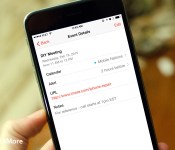

The Calendar app on your iPhone and iPad not only lets you create and view events and appointments, but it lets you store all sorts of other important details as well. From conference call dial-in numbers to Google Hangout URLs, the link and notes field in the Calendar app can come in very handy!


Lenovo found itself in a bit of hot water when some customers started noticing weird sponsored links in the search results on their brand new PCs. The culprit it turns out was a little piece of adware called Superfish the company was shipping on laptops. The company listened to customer complaints and turned off the server-side portion of the app in January. It also stopped pre-installing Superfish on new machines around the same time. While Lenovo said originally that it had “temporarily removed” the software from new machines while its developers worked on an update to address concerns, it now says that it will not preload the software ever again.
This is a problem. #superfish pic.twitter.com/jKDfSo99ZR
– Kenn White (@kennwhite) February 19, 2015
The add-on analyzes images and offers up ads for the same or similar products at a lower price. This, in and of itself, is slightly troublesome. But what really set off alarms was when users discovered how it worked; It installs a “man-in-the-middle” certificate that would allow Superfish and other parties to look at data from secure sites. Pop up ads are annoying, but leaving your bank info vulnerable to prying eyes is downright dangerous.
Lenovo says that has not found “any evidence to substantiate security concerns.” Though, the tweet above which seems to show a certificate to bankofamerica.com issued by Superfish seems like plenty of cause for concern. Even if the software is safe and secure, Lenovo doesn’t seem interested in pissing off its customers. So Superfish won’t be making a comeback.
The manufacturer did want to make one thing abundantly clear in a statement given to Engadget:
“Superfish technology is purely based on contextual/image and not behavioral. It does not profile nor monitor user behavior. It does not record user information. It does not know who the user is. Users are not tracked nor re-targeted. Every session is independent.”
Make of that what you will. But installing any sort of adware on a machine before it even leaves the factory seems like an obviously bad idea, regardless of whether or not it violates a user’s privacy.


Reports over the past few weeks have suggested that Samsung could be using a smaller sized battery than expected with the upcoming Galaxy S6 flagship. Today, we have confirmation of that coming straight from a supply chain which clearly shows the 2,600 mAh battery pack that is expected to be used on the handset.
Samsung has posted teasers over the past few days which have indicated that the flagship will sport an all-day battery life, so this revelation shouldn’t be concerning for Samsung fans.

The leak doesn’t reveal much apart from the battery unit. Seeing how it’s pretty thin in nature, it’s safe to assume that the Galaxy S6 will be pretty thin as well. The smartphone is expected to be unveiled on the 1st of March just before the MWC event officially kicks off in Barcelona.
Do you think the 2,600 mAh battery will be sufficient to run a Quad HD display and the Exynos 7420 octa core chipset? Sound off below.
Source: Weibo
Via: Phone Arena
Come comment on this article: Battery capacity of the Samsung Galaxy S6 confirmed by a new leak


Ever since the Asus Zenfone 2 was announced in Las Vegas last month, we’ve been waiting for news of its availability and pricing. One reason for the excitement has been that that the Zenfone 2, or at least one variant anyway, is one of the very first smartphones to boast 4GB of RAM. And now it’s available to pre-order via AliExpress for $440.

As alluded to above, the Zenfone 2 comes in two variants, with the lower model sporting a 64-bit Intel Atom Z3560 Quad-Core processor running at 1.8GHz, along with 2GB of RAM. The higher-powered model uses the 64-bit Intel Atom Z3580 Quad-Core CPU, running at 2.3GHz and backed up with 4GB of RAM. Apart from those differences, both models share the same hardware:
The 2GB model is available to pre-order on AliExpress for $299.90, a bit more expensive than Asus’ previously announced price of $200. The 4GB model Zenfone 2 has a pre-order price of $439.90. Both the 2GB/4GB models up for pre-order have 64GB of internal storage, and they are available in Ceramic White/Osmium Black/Glamor Red/Glacier Gray/Sheer Gold colours. As yet, there is no firm date on shipping.


Via: PhoneArena
Source: AliExpress
Come comment on this article: Asus Zenfone 2 with 4GB of RAM becomes available to pre-order for $440


Manufacturers are said to be rolling out the Android Wear 5.0.2 update to a series of smartwatches today. As of now, users of the the LG G Watch R as well as the Samsung Gear Live are reportedly seeing the update notifications on their devices.
The Moto 360 started receiving the update yesterday, so we expect the likes of the ASUS ZenWatch, Sony SmartWatch 3 and the LG G Watch to get the update subsequently.
Android 5.0.2 mostly introduces bug fixes, so don’t expect any visual changes post the update. The update modifies Google Play Services along with bringing performance enhancements to the devices.
It will arrive over the air (OTA) and will require your wearable to have at least 80% of battery before proceeding. Are you seeing the update on your LG G Watch R or the Samsung Gear Live yet? Let us know below.
Via: Phone Arena
Come comment on this article: Android Wear 5.0.2 update now being sent out to the Samsung Gear Live and the LG G Watch R


We’ve already seen three wallpapers of the HTC One M9 leaking out (first, second and the third) courtesy of a popular Twitter source. And now we have officially received our fourth wallpaper of the One M9, suggesting that there might be very little mystery left when the device is shown off in a little over a week from now.
The leak comes from renowned developer and the name behind the popular Maximus ROMs, LlabTooFeR. As for the wallpaper in question, there’s not much to go with apart from what we see above, which was the case with the previous three leaks as well.
These wallpaper leaks have confirmed to us that the One M9 will pack a 1080p resolution display and not a 2K display like previous rumors claimed.
What do you think about all these wallpaper leaks? Is it getting a little out of hand?
Source: @LlabTooFeR – Twitter
Come comment on this article: Fourth HTC One M9 wallpaper caught in the wild
 AIVAnet