



Weekly Photo Contest: Tilt Shift

The past couple of weeks our weekly photo contests have taken on some quite broad themes, but this week we’re going to try something a little different. We’re focusing on one specific effect, and that’s Tilt Shift. You may know it best as the effect that can turn city scenes into appearing to be miniature villages. By changing the depth of field you can create some stunning effects.
So, it’s going to test your editing as well as your photo taking. The Lumia Creative Studio is one of a number of apps that will help you produce the effect, which I did up top with the image of a train platform taken on my Lumia 830.
But before all that, who won last week’s pattern inspired contest? Let’s find out!
T-Mobile starts pushing out Android 5.0 Lollipop to Galaxy S5
The long wait is over, for the most part, for Samsung Galaxy S5 users on T-Mobile. The Uncarrier is in the process of pushing out a OTA update to devices that carries with it Android 5.0 Lollipop. The update isn’t small by any means and weighs in at 939.59MB’s. You read that correctly, nearly 1GB. […]
The post T-Mobile starts pushing out Android 5.0 Lollipop to Galaxy S5 appeared first on AndroidSPIN.
Two more HTC One M9 wallpapers get leaked out in all their 1080p glory
Yesterday, we were graced with a leak of one of the HTC One M9 wallpapers. What’s interesting is that the image had a resolution of 2160×1920 which seems to suggest that the display of the HTC One M9 could be 1080p, though this isn’t quite confirmed. Since then, two more wallpapers have leaked out since then, again […]
The post Two more HTC One M9 wallpapers get leaked out in all their 1080p glory appeared first on AndroidSPIN.

An ‘Alien’ movie is coming from the creator of ‘District 9’

District 9 creator Neill Blomkamp gave sci-fi fans a brief glimmer of hope in January, when he teased that he had secretly been working on an Alien sequel that had (apparently) been scuttled. Well, it might be back on again — Blomkamp is now claiming on Instagram (with support from Variety sources) that the project is “officially [his] next film.” There’s no word on the movie’s plot or when it might hit theaters, but his sneak peek showed concept art that included Ripley in an alien-like suit, Weyland-Yutani’s headquaters and the return of Aliens‘ Corporal Hicks.
Fox hasn’t chimed in yet, but it’s likely just a matter of time if this pans out. The real question is whether Blomkamp can return the franchise to its former glory. While he hit it big with District 9 and shows promise with his upcoming flick Chappie, the mixed reviews of Elysium suggest that Blomkamp doesn’t automatically produce box office gold. And Variety notes that Alien director Ridley Scott won’t be involved — he’s too busy with his follow-up to Prometheus, so it’s all on the (relatively) new guy to make this work.
Um… So I think it’s officially my next film. #alien
A photo posted by Brownsnout (@neillblomkamp) on Feb 18, 2015 at 3:55pm PST
Filed under: Home Entertainment, HD
Source: Neill Blomkamp (Instagram), Variety
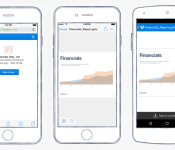
You can now open shared links in the mobile Dropbox app

As of today users of Dropbox on mobile devices will no be able to open files and folders of Dropbox shared links right in the app. Which means instead of being directed to a web page, you’ll be able to access previews of documents and photos or save files/folders to your Dropbox account all within the app.
If you’ve already saved the file, clicking the link will take you to that file or folder and you’ll be able to move, rename or favorite it. You’ll also be able to edit Microsoft Office docs right from their respective apps. At this point, it’s in a staged roll out so you should have it within the next few days.
source: Dropbox
Come comment on this article: You can now open shared links in the mobile Dropbox app

Android Zodiac: notable Android events
Android has come a long way since its release. From the HTC Dream to the Nexus 6, everything has changed. To come so far, significant things have happened that have changed the Android world. To highlight some of these events that have occurred, I have created an Android Zodiac! Yes, I’m aware this is not the same as the Chinese Zodiac, and this doesn’t really say anything about those born in those years. If you’re looking for something like that, check out our article called “What does your phone say about you“. Anyways, let’s dive in.

2007: Year of the Open Handset Alliance
2007 was a big year in not only the Android world, but the technology world as a whole. This was the year that the first iPhone was announced, and when Google and 47 other firms announced the Open Handset Alliance that would lead to Android. The reason for this was to unite companies to “enable everyone in our industry to innovate more rapidly and respond better to consumers’ demands” by having an open operating system, Android. The SDK is available to everyone, and the goal is to have one standard among mobile phones. If you’re interested, you can even look at the website that was released for this here. Definitely a blast from the past! Anyways, it would be the Open Handset Alliance that would help make Android the most popular OS on the market.

2008: Year of the HTC Dream
In 2008, the very first Android phone was released: the HTC Dream. Also known as the T-Mobile G1, this was the first phone to showcase Android. This smartphone not only had a sliding keyboard, but it had a home screen you could customize, complete with a wallpaper and widgets. There was also a new notification system that displays the icon for an app in the status bar whenever there’s a new notification, and you can slide down from the top to view more details about the notification. There was also integration with Google services allowing access to Gmail, YouTube, and more. On top of all of that, it was backed by the OHA, Google, and a promise to have updates brought to it that would bring new features and bug fixes. This device would change how software is designed and implemented for devices everywhere. Another interesting thing about this is HTC would later be the first for other landmarks in Android. But more on that later…
2009: Year of the Android Wars
2009 was the year that most of the manufacturers we know in Android phones today started to make Android phones. Samsung, Motorola, HTC, Sony, LG, and more all threw their hat into the Android phone ring. HTC released four other smartphones after the HTC Dream; Samsung released the first Galaxy phone, along with three other phones; Motorola released three phones along with their first DROID, Sony released the first Android Ericsson phone, and LG released a phone. Below is a collection of some of the phones along with a link to their specifications.
Note: I may have missed a few devices. Please let me know what I’ve missed!
 Samsung
 Motorola
 HTC
HTC
 Sony
Sony
 LG
LG
2010: Year of the Nexus
In 2010, Google released their first in-house designed smartphone: the Nexus One. Once again, HTC was the first with something in the Android space, as they manufactured the Nexus One. The Nexus One was a phone released with an unlocked bootloader for developers to create and test software on a version of Android that was untouched by manufacturers. It was also designed by Google to provide an example of what it believes other phones should look like in terms of hardware. The phone was sold online by Google, eventually being available through carriers. Little did we know, this would open a world of expectations from Android geeks everywhere as each year we now await eagerly to see what Google will release in the next Nexus. The Nexus One also was the first phone with Android 2.1 Eclair, which is another precedent set by this phone.

2011: Year of the Modern Phone
2011 saw the introduction of a lot of aspects in smartphones that consumers have come to expect of their smartphone. Displays started getting bigger, the bodies started getting thinner, and keyboards started disappearing. Screen resolutions started becoming important, and design started to focus more on looking futuristic. 2011 saw phones such as the Samsung Galaxy S II, the first Samsung Galaxy Note, the first Motorola DROID RAZR, and the Motorola DROID BIONIC. HTC and LG started to up their game too. Companies who were a part of the Android world started releasing more and more devices, and companies that weren’t involved before started to get involved. Users started to expect more out of their devices. A lot of the things you see in your current smartphone likely resembles most of the phones that came out in 2011.
 2012: Year of the Samsung

Let’s be honest, 2012 was all about Samsung. Not only did they have almost 50 different models and refine their Galaxy Note in the much more successful Galaxy Note II, but they released their most successful phone ever: the Samsung Galaxy S III. The S3 turned out to overtake the Apple iPhone 4S and iPhone 5 in sales in Q3 2012, selling over 18 million units in Q3 alone. The design was different, its speed and fluidity was unprecedented, and Samsung had added features to Android through its TouchWiz UI (user-interface) that helped make the OS (operating system) more friendly. Again, the Galaxy Note II also did well, selling over 3 million units in under two months of its release. The Note II had improved on the first generation in almost every way, and can certainly be accredited for the rise in popularity of the “phablet”. Samsung was on fire, and at that time it seemed no other manufacturer could touch them.

2013: Year of the User
2013 was a big year for Android. After Samsung’s huge success in 2012, all the other manufacturers took a step back and realized they needed to change things, and focus on the user. LG released their very different LG G2, where the power and volume buttons were on the back. Sony released the Xperia Z series, where durability became a focus. HTC released the gorgeous HTC One (M7). Google/LG released the Nexus 5, which improved on the widely accepted Nexus 4. Motorola released the Moto X, which focused on genuinely useful features and consumer design, and the Moto G, which brought great functionality and speed to budget phones. In 2013, we saw a huge focus on the end-user, finally bringing Android as an ecosystem to the big leagues.

2014: Year of the Chinese
After all-around positive reception to Android devices in 2013, most manufacturers pretty much just improved on their previous flagships in small ways (which is not a bad thing). However, with little to no innovation, this made way for a new player in the Android space: Chinese manufacturers. Xiaomi especially, but companies like Huawei, Vivo, Oppo, THL, and OnePlus entered the smartphone race with some serious gusto. While most of these companies had already existed, their entries in 2014 gained a lot of attention, and money. OnePlus in particular with their very controversial invitation-only system garnered many headlines. However, Xiaomi was the company that often made a couple of entries onto lists of top-selling smartphones, such as this one. Essentially, manufacturers based in China proved that they were starting to get serious about making Android smartphones.

2015: Year of the Software Design
I know I know: 2015 has just started. So you can take this as my prediction for the big thing in 2015. Some say that it will be all about wearables; others say it will be all about phone displays. In my opinion, wearables still have a ways to go before it becomes mainstream, and curved displays can only do so much at their current state, especially considering how expensive they are to manufacture. With innovation in the hardware space becoming infrequent (except for Project Ara, but that’s not ready yet), there is really only one place left to go: software. And while new features in software are introduced all the time, I think that Android Lollipop has shown us that Android can look good. Pretty soon, iOS will not be the only pretty operating system, as more and more manufacturers adopt Lollipop; with manufacturers having their own UI skin they slap on their phones, they’ll recreate Lollipop a bit, but users are going to want the design to still be there, so there is going to be a lot of creativity in the software. Hopefully.
That wraps up the Android Zodiac! Let me know what you think 2015 will bring. Perhaps in a year, we can dig this post back up and compare and add-on what really happened.
(function() var script = document.createElement(‘script’);script.src = ‘https://stacksocial.com/widget.js?publisher=androidguys&type=editorial_post_widget_preferences’;script.async = true;var entry = document.getElementsByTagName(‘script’)[0];entry.parentNode.insertBefore(script, entry);)();
http://www.androidguys.com/pubgalaxy/728×90.html
The post Android Zodiac: notable Android events appeared first on AndroidGuys.

Apple Facing Lawsuit for Poaching Key Battery Engineering Employees From A123 Systems
Amid rumors that Apple is hiring employees for a secret car project, the company is today facing a new lawsuit for poaching employees from battery manufacturing company A123 Systems. While the specific battery expertise of many of the employees is unknown, at least one of the employees had experience with developing battery technology for electric vehicles.
According to a lawsuit shared by Law360 (via 9to5Mac) Apple recently hired five employees from A123 Systems to create a “large scale battery division,” violating noncompete agreements that employees signed with the latter company.

A123 filed suit Feb. 6 in Massachusetts Superior Court, alleging Apple hired away five employees who developed new battery technology and products and tested existing products, despite the fact that the employees were under contracts with noncompete, nonsolicit, and nondisclosure obligations.
Since June, Apple has been mounting “an aggressive campaign to poach employees of A123 and to otherwise raid A123’s business,” the complaint said.
The employees are said to have left under “suspicious circumstances,” and A123 discovered correspondence between its former employees and Apple recruiters on company computers. A123 warned Apple about the noncompete contracts and sought assurance that Apple would not develop a competing business, but Apple reportedly stopped responding to A123’s letters.
According to its website, A123 Systems creates “advanced Nanophosphate lithium iron phosphate batteries and energy storage systems,” supplied to many vehicle manufacturers. Two of the employees that Apple hired, Dapeng Wang and Indrajeet Thorat, were PhD scientists who manned separate projects at A123, which the company has had to shut down because of difficulty finding replacements.
Wang’s LinkedIn profile lists him as a “Development Engineer” at A123 Systems, working on prismatic cell design and tests, among other things. Thorat’s LinkedIn profile indicates he held the position of “Battery Research Engineer, Modeling” and A123, where he worked on batteries for hybrid vehicles.
Designed experiments to understand/optimize performance of a cell for Hybrid and Plug-in hybrid vehicles (HEV and PHEVs), Grid energy storage and frequency regulation. Developed models to predict capacity fade and resistance rise during life of a cell under specific duty cycles.
Other employees listed in the lawsuit are Mujeeb Ijaz (A123 CTO), Don Dafoe (Cell Product Engineering), and Michael Erickson (Battery Materials Scientist). Many of the employees’ profiles list them as still with A123, and none have any listed association with Apple. Dafoe’s profile lists a “Bay area startup” as his place of employment since January 2015.
It is not clear what the A123 Systems employees hired by Apple are working on at the company or whether their work is related to the company’s secret car project because Apple is constantly evolving its technology and working on a wide array of battery improvements for all of its future devices. The lawsuit suggests that A123 Systems is, however, concerned that Apple is working on something that competes with its own product lineup, which is focused on passenger and commercial electric vehicles.

‘Blackshades’ leader pleads guilty to peddling webcam spying hacks

The Blackshades spying hack group may have come crashing down with a bang last year, but its alleged leader is going considerably more quietly. Alex Yucel has pleaded guilty to charges that he distributed Blackshades’ remote control tool, which let creeps eavesdrop on webcams, track keyboard strokes and hold computers for ransom. Whether or not he faces a stiff penalty is still up in the air, however. Sentencing isn’t until May 22nd, but Yucel has already said he won’t appeal if he gets less than 7.25 years in prison. The court could easily throw the book at Yucel given that Blackshades violated the privacy of half a million people, but it may not be eager to spark a prolonged fight.
[Image credit: Andrew Burton/Getty Images]
Filed under: Internet
Source: Reuters
Samsung officially acquires mobile payment startup LoopPay

Samsung has just announced the company’s acquisition of LoopPay, a mobile payment startup company. This acquisition will open up doors for Samsung to compete with mobile payment systems like Apple Pay and Google Wallet. There’s no word yet as to how much LoopPay sold for, but we’ll be sure to update you if that information surfaces.
We can’t say that this acquisition is all that surprising, since LoopPay and Samsung have worked together in the past. Just last month, LoopPay announced they would make mobile payment-enabled cases for Samsung’s Galaxy Note 4 and Galaxy S5 handsets that would release sometime in 2015. Moreover, Samsung was reportedly in talks to acquire LoopPay back in December, though both companies denied the claims. After Apple Pay launched last Fall, it was obvious that Samsung would take action to compete with Apple’s mobile payment platform.
Yesterday, we reported that Samsung was looking to spend their $56 billion cash reserves on M&A and company growth over this next year. After a difficult 2014, it now appears that the company is already getting a start on acquisitions that would “be a good fit” into Samsung’s business model.
If you’re unfamiliar with LoopPay, it brings an interesting take to the mobile payment world. Unlike Apple Pay and Google Wallet who rely heavily on NFC, LoopPay offers something more than that. Of course, it offers transmissions through NFC, but the payment system’s “magnetic secure transmission” technology is backwards-compatible with legacy terminals, and the built-in hardware makes payments by means of a small electromagnetic field that closely resembles that of a credit card swipe. So to complete a payment with LoopPay, all you need to do is tap your mobile device near the credit card swiping terminal… and that’s all. This allows the payment method to be compatible with both NFC payment modules as well as credit card swiping terminals. If you need some more clarification as to how exactly LoopPay functions, check out the video below:
Sometime after this acquisition is complete, card information will likely be secured on Samsung devices by using the fingerprint sensor, much like we see with Apple Pay. For now, LoopPay is only compatible with LoopPay-enabled phone cases and keychains, but we’ll likely see a huge overhaul of the technology once the payment company fully integrates with Samsung.
LoopPay’s founders, Will Graylin and George Wallner, will work closely with Samsung’s mobile division going forward. Take a look at the press release below for more information on the acquisition.
Mountain View, CA and Seoul, Korea – February 18, 2015 – Samsung Electronics Co., Ltd. today announced that it has agreed to acquire LoopPay, the acclaimed mobile wallet solutions provider that turns existing magnetic stripe readers into secure, contactless receivers. LoopPay’s technology has the potential to work in approximately 90% of existing point-of-sale (POS) terminals, according to internal research, with no investment in new infrastructure required by merchants. LoopPay will join Samsung to strengthen the company’s overall efforts to provide users with seamless, safe, and reliable mobile wallet solutions. As part of the acquisition, LoopPay founders and veteran payment industry entrepreneurs Will Graylin and George Wallner will work closely with Samsung’s Mobile Division. LoopPay has built an advanced and widely accepted contactless payment solution using its patented Magnetic Secure Transmission (MST) technology. LoopPay’s talent and technology, paired with Samsung’s world leading mobile technology, global presence, and distribution capabilities will help drive the next wave of innovation in the digital smart wallet. “This acquisition accelerates our vision to drive and lead innovation in the world of mobile commerce. Our goal has always been to build the smartest, most secure, user-friendly mobile wallet experience, and we are delighted to welcome LoopPay to take us closer to this goal,” said JK Shin, President and Head of IT and Mobile Division at Samsung Electronics. Samsung has an existing relationship with LoopPay, having first identified the potential for the pioneering technology when it became a strategic investor along with Visa and Synchrony Financial. The investment, which was facilitated by Samsung’s Global Innovation Center, helped fuel LoopPay’s MST technology development. “We are excited to take our relationship with LoopPay to the next level, by bringing consumers a mobile wallet solution that is not just safe and reliable, but also widely accepted at more locations than any competing service,” said David Eun, EVP of Samsung’s Global Innovation Center. “Through this deal we can significantly accelerate our mobile commerce efforts. LoopPay’s outstanding leaders and team have deep-rooted relationships with banks, card networks and merchants that will complement those Samsung has established over the years.” Margaret Keane, President and CEO of Synchrony Financial, the largest provider of private label credit cards in the U.S. and a leader in promotional financing, as well as an investor in LoopPay, commented, “This is great news for our customers who can access their cards and make payments using LoopPay’s contactless MST technology. Our goal is to offer valuable products for our clients, service providers, and our customers. We look forward to working with LoopPay and others to deliver secure mobile payment solutions for all of our 60 million active accounts.” “LoopPay is focused on delivering a digital wallet solution that is dependable for consumers around the world, one that provides more value from card issuers and the merchants that serve them,” said Will Graylin, CEO of LoopPay. “We are excited to join the Samsung family to continue our goal of making smartphones trusted, secure smart wallets and unlock the limitless possibilities of mobile enabled
LG G Watch Urbane up for pre-order in the UK

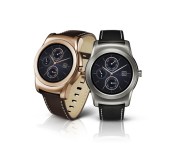
The LG G Watch Urbane has appeared in leaks for quite a while now. Earlier today, we came across the possible pricing of the two premium smartwatches from the Korean manufacturer. And now, Expansys UK has listed the two variants of the G Watch Urbane with a price tag of £299.99 ($462).
Both the Gold and Silver models of the smartwatch are on offer and we’re hoping they will be made available together. The G Watch Urbane is essentially a metal version of the G Watch R. Thanks to the materials used in its making, it has a very premium appeal to it.
Internally, the smartphone has pretty much the same hardware as the G Watch R, so don’t expect any changes in functionality or performance. LG has remained silent regarding the global launch of the G Watch Urbane, but we expect to have more information over the coming days.
Source: Expansys UK (Gold) (Silver)
Come comment on this article: LG G Watch Urbane up for pre-order in the UK
 AIVAnet