3 years of private connection with Anonymizer VPN, $55

There are plenty of reasons for one to want to keep their internet connection private. It’s possible that you have a dose of distrust for your government and want to ensure your sense of …


Various variants of the HTC One M8 have seen their update to Android 5.0 Lollipop. T-Mobile and Sprint have led the charge here in the states while others, like Rogers and Telus in Cananda have done their due diligence. Stateside that still leaves AT&T and Verizon. AT&T recently pushed an update, but it wasn’t Android […]
The post Hold onto your britches, Verizon HTC One M8 Lollipop expected to be approved first week of March appeared first on AndroidSPIN.


Though Messages has its quirks, I’ve been lucky to avoid most of them — I haven’t had my message history disappear, nor have random contacts popped in or vanished out of thin air. I’ve rarely had problems with messages not being received or erroring out.
But I’m not immune to every iMessage problem. And the current bane of my existence is group messages — and the multiple threads they spawn in their wake.

In a perfect world, when you wanted to reach your friends, you’d start a group message and then you’d chat inside that message and only that message. Unfortunately, if your friends are switching between multiple Apple devices, using both phone numbers and email addresses for iMessage, running an older version of iOS, old Android software, or some other quirk that iMessage fails to recognize, it can cause the conversation to split into multiple threads.
The worst part of this is that those conditions I offered up above? Those are only the ones I’ve personally been able to test, and they’re not 100 percent repeatable. You can have an SMS group with Android contacts that won’t split into multiple groups. You can have an only-iMessage conversation that splits every time someone says something. Sometimes sending an image will split the conversation. It’s unpredictable, and beyond that — frustrating.

Of course, when you involve our green-bubble SMS friends, or international carriers, there are bound to be quirks in the system; after all, Apple can’t control how that message data is sent, only how it’s received. And if, for whatever reason, a group message you send includes person A, but person A only sees this as a one-on-one conversation between you and them and responds accordingly, Apple can’t really fix that.
In my testing and informal Twitter polling, newer versions of Android do appear to avoid the split bug — but I haven’t had enough SMS group conversations with Android and iMessage friends to say that for sure. It may well be that group messaging might just be broken for those friends of yours on older, crankier devices.
But even if Apple can’t correctly parse or control group messages with old SMS contacts in them, the company should be able to improve the user experience somewhat or at least explain to the end-user why their groups are getting split.
In fact, here’s a radical idea: If the same contact has multiple iMessage IDs, or if multiple groups have the exact same contacts inside them, why not reconcile and merge them together before displaying them in the app? In other words, handle all the complexity internally, but present a simple, orderly view to the customer.
This would solve another annoying iMessage issue — accidentally carrying on two conversation windows because you’ve sent messages to both a user’s phone number and their Apple ID. I’ve done this for solo users, but I also have an absurd number of group conversations between my mother, father, and sister — and every time their contacts are in a different order, it creates a new message record. It’d sure be nice to merge all those multiple conversations together.

If this issue frustrates you like it frustrates me, and you have a developer account, I suggest filing an Apple Bug Report on the subject — ours is #19814094.
The memory leak bug is considered Lollipop’s biggest bug yet, and one of Android’s most annoying bugs in general, and while Google has yet to push out an update to fix it, XDA Developer Arter has posted a solution to fix this issue only if your phone is rooted. It’s as simple as replacing the boot animation. Here are the steps:
1. Download this replacement bootanimation2.zip file
2. In the zip, there are two folders: CM and ASOP. Open one or the other depending if you’re running stock or CM
3. Choose 32-bit or 64-bit depending on what device you have. Chances are you’ll be choosing 32-bit
4. Replace the bootanimation file in /system/zip/ with the new file. (You’ll need a file browser with root permission capabilities)
5. The ower of the file is Root:Root
6. Permissions are 755 when asked
Unfortunately, if you are using a ROM other than stock or CM, this will not work for you. Hopefully Google will push an update to officially fix the memory leak soon.
(function() var script = document.createElement(‘script’);script.src = ‘https://stacksocial.com/widget.js?publisher=androidguys&type=editorial_post_widget_preferences’;script.async = true;var entry = document.getElementsByTagName(‘script’)[0];entry.parentNode.insertBefore(script, entry);)();
http://www.androidguys.com/pubgalaxy/728×90.html
The post How to fix Android Lollipop memory leak bug appeared first on AndroidGuys.
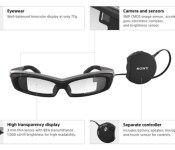

Sony has made it official with their announcement today that they will start selling their SmartEyeglass Developer Edition SED-E1 starting in March in ten countries and they are even taking pre-orders starting today in the U.K. and Germany. Sony is also releasing the official version of the SmartEyeglass SDK so developers can start working on porting their apps over to the device.
Sony indicates several SmartEyeglass apps will be available from Google Play once the devices start to ship. These include the Twitter and Facebook apps we already knew about along with the official SmartEyeglass app used to configure settings on the device. Sony indicates apps for Gmail, reading RSS feeds, calendar, and voice control will also be available.
Sony is hoping the SED-E1 version sets itself apart from a device like Google Glass by providing a binocular display in which information is displayed on top of the lens the user looks through rather than using a dedicated HUD display the user has to glance over to see.
Sony is making this particular model of SmartEyeglass available to developers in Japan, the U.S., the U.K and Germany starting in March. Enterprise customers will have access shortly thereafter, also in March, in France, Italy, Spain, Belgium, Netherlands and Sweden. Sony is pricing the SED-E1 version of their smartglass device at $840 USD.
Anyone out there considering investing in a pair of these?
Click here to view the embedded video.
source: Sony
Come comment on this article: Sony announces release of SmartEyeglass Developer Edition SED-E1

As promised in January, the newest game in the EA-owned Sims franchise, The Sims 4, is now available for purchase on the Mac. The Sims 4 initially launched for PC back in September of 2014, but it’s taken several months for the company to ready a Mac version of the game.
Like other games in the franchise, The Sims 4 tasks players with the creation and control of the lives of virtual characters. The goal of the game is to guide sims through life, establishing relationships, building homes, advancing through careers, and conquering goals.
The Sims 4 begins with creating a sim with deep customization options. It’s possible to randomly create a sim to start the game off in just a few minutes, but for those who would like select each aspect of their sim, the options are available. You can customize facial features, hair, accessories, makeup, and select outfits for every occasion from day to day wear to party wear.
Beyond the physical, creating a sim also involves choosing a name, personality traits that affect how sims interact with other sims, and a lifetime aspiration like reaching the top of a career ladder, having a big family, or hosting amazing parties.

Once a sim is created and ready to move into the world, the idea is to choose a house and direct your sim through life. With The Sims, the possibilities are endless. Sims can lounge around all day watching TV and being slobs, or pick up a job and pursue a career in several different fields, including crime, business, food, and more.
Sims have a never-ending list of minor achievements that are based on their relationships, personality, and lifetime goal, so gameplay largely involves fulfilling these minor achievements (a goal might be talking to a friend, cooking a meal, or buying a household item), earning money, building families, and progressing through the sim’s life. Amidst all of this, it’s also necessary to meet a sims’ basic needs like hygiene, food, and sleep.

Building houses and community lots is the other major aspect of gameplay in The Sims, and in The Sims 4, a lot of the building tools are easier to use and more intuitive than in past games, making it easy to create detailed structures that range from the simple starter house to sprawling castles.
The Sims 4 has a thriving online community where it’s possible to download sims, houses, and rooms created by other users or upload your own. This content is accessible from the “Gallery” option marked by a portrait icon at the top of the screen. The gallery is home to a huge collection of content that can be added to your game with just a few clicks — one of the most impressive aspects of The Sims 4.

The Sims 4 has received some criticism for notable gameplay changes and features that were stripped from the previous game, but EA has pledged updates that will return some of the missing functionality to the game over the course of time. EA has already re-added pools and ghosts, two major features that did not ship with the game, and two additional free content updates have added genealogy to track sim family lines, holiday items, and two new careers.
EA’s also released a major content pack for The Sims 4, Outdoor Retreat, which introduces a new vacations feature, new areas to explore, new traits, new skills, and more. Along with the full game, the new expansion is available on the Mac.
We tested The Sims 4 for Mac over the weekend ahead of its launch and we didn’t encounter any significant bugs, performance issues, or lag when playing the game. Performance was equivalent to the PC version of the game. Of course, some users could still see issues, but on a 2013 iMac and a 2012 Retina MacBook Pro, the game ran well. System requirements can be found here.
The Sims 4 is missing some of the content from The Sims 3 and has some major differences in gameplay, namely that it’s no longer possible to travel around the world without loading screens, but it should be noted that the game’s performance has been much improved by some of these tweaks to the gameplay — The Sims 4 runs quickly and has minimal lag.
If you’ve been playing The Sims 4 for PC and want to transfer your saved game to Mac, that’s possible with a USB drive. Simply copy the “saves” folder from the PC and transfer it to The Sims 4 folder on the Mac, and the save files will be available and ready to play once you log into The Sims 4 on a Mac.
The Sims 4 for Mac be purchased through EA’s Origin platform for $59.99. There’s also a deluxe version available for $69.99, which includes exclusive bonus content. Outdoor Retreat can be purchased for an additional $19.99. If you already own the PC version of the game, you can download the Mac version at no additional cost.

brightcove.createExperiences();
“The Google phone is coming, the Google phone is coming!” Towards the end of 2009 the prospect of a Google-branded Android smartphone was lighting up the tech blogosphere. Google had already been selling the Android Dev Phone 1 to developers, but it was basically a SIM-free, unlocked HTC Dream. The idea that Google might sell its own smartphone directly to consumers was genuinely exciting.
Thankfully, when it did arrive, it wasn’t called the Google Phone. Little did we know that the HTC-made Nexus One would only be the start of something much bigger. Join us as we take a look back at the Nexus family, from its humble beginnings with the Nexus One to ending with the latest members in the family, the Nexus 6 and Nexus 9.

On January 5 2010 Google announced the Nexus One officially and it was to be the first device to run the new Android 2.1 Eclair. It had a 3.7-inch AMOLED display (later versions would switch to Super LCD), a 1GHz Snapdragon processor, 512MB of RAM, 512MB of storage (190MB available), and a 1400mAh battery. It also featured a 5MP camera with auto-focus, LED flash, and digital zoom. Manufactured by HTC, the Nexus One had a premium unibody design. It went on sale through Google’s online store for $529.
In 2010 January 5th, the Nexus One arriving, bringing along with it the ethos of what we see today. It was a showcase platform, a reference device of sorts for developers and OEMS to take note and orbit their designs around.
In terms of specs the Nexus One definitely shook the market up and pushed things forward. The screen was considered big at the time and the Nexus One was generally praised for being a powerful smartphone, but it wasn’t a smash hit. HTC would actually have more success with the Desire which was very similar, but sold with the HTC brand, Sense UI, and through traditional carrier routes.
Google sold about 20,000 units in the first week, and ten weeks in Flurry estimated sales had reached 135,000. People weren’t used to buying phones at full price online from Google and it was relatively expensive. The fact that Google initially partnered with T-Mobile in the US didn’t help either, as it had limited network coverage compared to Verizon and AT&T. There were also issues with support, as people with problems were shunted from T-Mobile to Google to HTC.
A lot of people wrote it off as a failed experiment, but Google definitely learned a lot. It began to sell the Nexus One through retail channels and shut the web store down in May 2010. The Nexus line was only just getting started.
In December 2009 Google filed a trademark application for the name “Nexus One”, but in March 2010 it was denied because a company called Integra Telecom was already using it. This wouldn’t stop Google from using it, but it could leave them open to a lawsuit. Integra never sued, so presumably they came to some kind of agreement.
There was another hitch for the Nexus name when the estate of Philip K. Dick complained. His daughter, Isa Dick Hackett, started talking to the press about how the Nexus One was obviously a reference to the Nexus 6 line of androids featured in her father’s novel Do Androids Dream of Electric Sheep, later adapted as the movie Blade Runner. She said they were open to discussion, effectively inviting Google to pay a settlement. Google claimed the name had nothing to do with Dick’s work and was being used in its original sense as a place where things converge. It was eventually settled out of court and we don’t know what was agreed.

Google decided to switch from Android pioneer HTC and partner with Samsung for the Nexus S. It ushered in Android 2.3 Gingerbread when it was released in December 2010. It continued the trend towards larger displays with a 4-inch Super AMOLED (there was also a Super Clear LCD version). The unique feature was NFC, and it also boasted 16GB storage (no microSD slot), but the specs weren’t a huge leap over the Nexus One.
Android was becoming stronger and stronger and some may say, this is where things really started.
Our Nexus S 4G review wasn’t exactly glowing, with complaints about reception and battery life, but the Nexus S was generally well-received. This time it was sold through retail partners like Best Buy, and in May 2011 Sprint began to sell it in the US. We don’t really know exactly how many were sold, but Samsung did reveal that it sold 512,000 Nexus S 4G units between Q2 of 2011 and Q2 of 2012.
It’s not clear why Google switched to Samsung, but the general consensus seemed to be that it was keen to spread the patronage around. The Samsung Galaxy S released in June 2010 was fast making the South Korean manufacturer the biggest player on the Android scene; it would go on to sell 24 million units.

Google stuck with Samsung for the Galaxy Nexus and the name is a real nod to Samsung’s growing success with the Galaxy brand. The announcement was delayed after the death of Steve Jobs on October 5, but on October 19, 2011 it was unveiled, and it went on sale the following month.
The Galaxy Nexus launched Android 4.0 Ice Cream Sandwich and it was hotly anticipated. Google had really advanced the Android platform and Samsung was smashing it on the hardware front with the Galaxy S2. The reviews were positive. The Galaxy Nexus boasted a 1.2GHz dual-core processor with 1GB of RAM, a huge curved 4.65-inch Super AMOLED display with a 720p resolution, and all the extras you’d expect.
Regardless of whether the device was a high seller or not; there was no doubt that the new software features made the Galaxy nexus a compelling device for those looking for an interesting, bloat free device showcasing a great and flexible OS.
One surprise was that Google back-pedaled on the open sales model and partnered with Verizon in the US. There was later a Sprint version, but then Google went back to selling phones directly SIM-unlocked on the Play Store and it soon dropped the price to $350. The Galaxy Nexus was also the first phone to get Android 4.1 Jelly Bean in July 2012.
The Galaxy Nexus wasn’t a big success. One of Samsung’s lawyers actually described the sales as “miniscule”, but he was arguing against Apple in a patent infringement suit. The import and sale of the Galaxy Nexus was briefly banned from June 29 to July 6 in the US when Apple was granted a pre-trial injunction. Samsung’s lawyer, John Quinn, revealed that it made $250 million in six months and “at most, captured 0.5 percent of the market.” You’ll no doubt remember how the trial worked out.

It was time for another change. This time Google partnered with LG. After Hurricane Sandy delayed the announcement speculation reached fever pitch, and Google finally unveiled the Nexus 4 on October 29 2012, to go on sale the following month.
Most people were surprised by the switch to LG, but it was an OEM on the up. The LG Optimus G was proving very successful and showed that LG was capable of producing high-end smartphones. The Nexus 4 was based on it and it would be the most successful Nexus to date.
The LG Nexus 4 brought serious style at a price point which sat comfortable with a lot of wallets.
A 1.5GHz quad-core processor, 2GB of RAM, a 4.7-inch display with a resolution of 1280 x 768 pixels, an 8MP camera, and support for wireless charging. This was a cutting edge device with an interesting and eye-catching, shimmering glass-backed design. It would also be sold directly through the Play Store and through carriers and retailers. So far, so good, but the real reason the Nexus 4 was to sell so well was the price.
This was a device capable of holding its own in flagship company and Google was selling it for $299 for the 8GB version and $349 for the 16GB version. Within a year, August 27 2013 to be exact, the price was dropped further to $199 and $249 respectively.
You can find out what we thought at the time in our Nexus 4 review.
According to estimates Google had sold 3 million Nexus 4 handsets by the middle of 2013.

LG was retained as manufacturer for the Nexus 5 which landed on October 31 2013. Google repeated the trick of offering a high end smartphone with near-flagship specs for a knock down price. The Nexus 5 combined a 4.95-inch full HD 1080p display, with a lightning fast 2.26GHz quad-core processor, and 2GB of RAM. It featured Android 4.4 KitKat and won instant plaudits for being a silky smooth performer at an affordable price.
What started out as a handy reference device for developers soon began to attract widespread appeal and why not? It was at a lower price point but featured an uncluttered interface and timely updates.
A phone of this caliber for $349 (16GB) or $399 (32GB) was impressive and it sold well through the Play Store. In January this year Google CFO Patrick Pichette called it a “very strong” performer. We certainly liked it, as you can tell in our Nexus 5 review, but we don’t know how many handsets Google has sold. What we can say definitively about the Nexus 5 is that on release it was the best phone you could buy for $350 by a very long stretch.
There’s been some argument about the purpose of the Nexus smartphone line over the years. It may have started as a reference design and a handy device for developers, but there’s no doubt the appeal has widened beyond that scope. It has never been heavily marketed and it doesn’t come close to competing with the big Android OEM flagships in terms of sales, but it has certainly exerted an influence.

Admittedly the latest member of the Nexus family is a pretty serious departure from past Nexus phones, both in size and in recent pricing philosophy. Typically, Nexus devices have generally focused on great specs at a lower price but with the Nexus 6, we have entered the premium territory. The Nexus 6 comes in at $649 for the 32GB model, and $699 for the 64GB variant. The phone essentially looks like a blown up Moto X with a Nexus logo on it, and is the first Nexus phone to have a metallic frame.
For the first time we see a difference in the very nature of what we believe the ‘Nexus’ branding represents.
While recent Nexus devices have made pretty big sacrifices in order to keep pricing low, the more expensive price point of the Nexus 6 means it packs much more powerful punch. The Nexus 6 is powered by a 2.7GHz Snapdragon 805 processor with an Adreno 420 GPU, 3GB RAM and a beautiful QHD display. Even areas where the Nexus line has typically fallen short remain strong with this phone, such as the 13MP main shooter with OIS and 2MP front cam. The Li-Po 3220 mAh battery is also reasonably decent. Even bigger of a deal, the Nexus 6 is one of the first devices to offer Android 5.0 Lollipop out of the box, which is a big change for Android bringing a new Material Design look and plenty of under the hood changes.
It is still early days for the Nexus 6, so we can’t speak too much about its success on the marketplace but with a bigger push towards carriers, it is clear that Google has big hopes for the device. For what it is worth, the Nexus 6 also appears to be selling well enough, judging by the fact that the phone is still pretty hard to come by even months after its arrival.
Now that we’ve ran through the Nexus phone series, let’s turn towards the Nexus tablet family. The tablet market has been a completely different game for Google. While it didn’t take long for Android to become a smash hit in the phone world, Google spent many years catching up with the iPad and its dominance in the tablet arena.
In 2011, Google would arguably make its first big push towards becoming a real player in the tablet market with the announcement of Android 3.0 Honeycomb, a version of Android specifically optimized for tablets. However, it wouldn’t be until 2012 that Google would introduce the world to its first Nexus tablet.

It could be argued, that the Nexus 7 was the first Nexus device to have mass consumer appeal. Google had finally brought a device which didn’t just appeal to android enthusiasts but something that had the hardware, price and ecosystem to slowly start matching their competitors.
In 2012, Google would announce the Nexus 7, a curiously small 7 inch tablet. It was made in conjunction with ASUS and it was the first tablet the carry the Nexus branding. It featured an unusual form factor and came very friendly to the wallets of potential buyers. At $199, it was the cheapest way of entering the Nexus family and easily one of the cheapest tablets on the market, despite packing solid specs like a Tegra 3 processor, 1GB RAM and a 7-inch display with a resolution of 1280 x 700.
Through what was a rigorous design and production process, Google and ASUS managed to release a tablet which propelled the Nexus brand to widespread knowledge and put the 7 inch form factor into the spotlight. The tablet also saw the debut of Android 4.1 Jelly Bean, introducing an improved pull-down notification area, “Project Butter” performance improvements and several other under the hood changes.

In the later part of 2010, Google brought Nexus fans yet another tablet, this time giving them a 10-inch form factor that was more common thanks to devices like the iPad. Built in conjunction with Samsung, the Nexus 10 featured an outstanding 2560 x 1600 resolution screen all running on a 10.1 inch PLS-Backlit LCD. Under the hood was a Samsung Exynos 5250 processor with a Mali T-604 GPU, 2GB RAM and either 16 or 32GB storage.
Price wise, the Nexus 10 wasn’t nearly as aggressive at the Nexus 7, priced at $399 for the 16GB version and $499 for the 32GB model. That said, the tablet was still cheaper than other high end tablets like Apple’s iPad.
Critically speaking, the Nexus 10 received mixed but generally positive reviews, though it was nowhere near the level of a hit that the Nexus 7 would prove to be. Despite not having the long-term impact of the Nexus 7 series, the Nexus 10 was sold out within hours of its release on the Play Store and, like many other Nexus devices throughout history, Google ran into stock problems.

Given the new found popularity of the 7 inch form factor, it was only a matter of time before Google released a successor to the Nexus 7. Google would’ve missed an opportunity had they not followed up. On July 26th in the US and the 28th of August in the UK, the Nexus 7 2013 would arrive. While Samsung had been the partner of choose for Google’s second tablet, the follow-up to the Nexus 7 would see Google return to working with Asus.
This time around, the Nexus 7 (2013) would move from the Tegra family of chips over to Qualcomm’s Snapdragon S4 PRO and the tablet would have 2GB of RAM. The screen was also improved, with the resolution jumping up to 1920 x 1200. Interestingly enough, the battery in the Nexus 7 (2013) was smaller, and yet actually performed better due to software optimizations from the latest version of Android (4.3 Jelly Bean).
While the Nexus 7 (2013) was a pretty sizable update in all the ways that mattered, it still continued the original Nexus 7’s mission of giving consumers a lot of tablet, for not a lot of money. While slightly pricier than the original, the Nexus 7 (2013) would set consumers back $229 or $269, depending on if they went with the 16 or 32GB variant.

Last but not least, the Nexus 9 arrived in the latter part of 2014, alongside the Nexus 6. Like the Nexus 6, the Nexus 9 not only introduced a new size to the mix, but pushed towards the premium end and did away with aggressive Nexus pricing. Partnering with HTC for the first time since the Nexus One, the tablet comes in at $399 or $479, depending on if you choose the 16 GB or 32GB of storage.
Like the Nexus 6, the Nexus 9 not only introduced a new size to the mix, but pushed towards the premium end and did away with aggressive Nexus pricing.
Turning to the rest of the specs, the Nexus 9 offers up an Nvidia Tegra K1 processor with 2GB RAM, an 8.9-inch display with a resolution of 2048 x 1536 with a 4:3 aspect ratio, 16 and 32GB storage options and solid onboard front-facing speakers. Like the Nexus 6, the Nexus 9 was one of the first devices to ship with Android 5.0 Lollipop out of the box.
While stock issues were a problem for a short while towards the beginning, getting your hands on a Nexus 9 has proven to be a much easier affair than the Nexus 6. Whether this is better supply levels from HTC or less impressive sales, it’s hard to say at this point. For those looking for more details on the Nexus 9, it might not hurt to check out our review of the device.
There is little doubt that we are in a good place right now with the Nexus program. Where we are and with the technology available, the Nexus 6 and Nexus 9 are some of the best devices to come out of the Nexus program. That said, their premium pricing has turned away some of those who preferred the idea of the Nexus program being a great place not only for pure Android, but for affordable dev-friendly devices.
For Nexus fans unsure of where Google is heading with its new push towards premium (and jump into phablet-size phones), the future is just as confusing as it is exciting. It’s unclear what’s next for the Nexus program, but regardless of what happens, Android Authority will be here to bring you the latest in the months and years to come.
Wireless charging isn’t some newfangled ability. The Nexus line has had it built-in for a while and there are plenty of cases, kits and pads out in the market to give the ability to your current devices. Patriot has a pretty slick set-up with Fuel iON for various Galaxy devices and iPhone. While very useful […]
The post Upcoming Galaxy devices to support multiple wireless charging standards on-board appeared first on AndroidSPIN.

There are plenty of reasons for one to want to keep their internet connection private. It’s possible that you have a dose of distrust for your government and want to ensure your sense of privacy while online. Maybe you’ve made enemies or inadvertently endeared yourself to some over-infatuated stalker and want to safeguard your activities. Perhaps you travel frequently for business and spend a significant amount of time connected to unsecured public Wi-Fi and want to immunize yourself from the painful experience of being targeted by a hacker. Whatever your reasons, demanding a private and secure internet connection no longer means you’re some sketchy weirdo; it’s quickly becoming the new norm. Now, who can you trust to provide an anonymous VPN? We’re offering three years of solid service from Anonymizer!
Anonymizer has been an established brand in the online privacy sector for almost 20 years. The service constantly scrubs your online activity, keeping it squeeky clean. You’ll get unlimited bandwidth across up to 5 devices simultaneously and you’ll only ever be connected to Anonymizer’s proprietary servers so there’s no fear of linking up with a shady connection. Your location and IP address will be concealed and kept secure with sophisticated masking and you’ll always have a direct line to US-based customer support, 24 hours a day, 7 days a week. While a three year subscription normally costs over $200, AndroidGuys readers can secure their connections for just $55 with today’s deal!
See more at deals.androidguys.com
There are plenty of reasons for one to want to keep their internet connection private. It’s possible that you have a dose of distrust for your government and want to ensure your sense of …

Today is the last full day to get your entries in for a chance at winning the Choose Your Own Smartwatch Giveaway. Entries will no longer be taken after 12PM (PST) on 2/17 and you can’t win …

In today’s world it’s almost a social prerequisite to have a fundamental understanding of Adobe’s suite of products. Whether you’re a journalist that needs to superimpose …

Motorola last not shot out emails advising that its Valentine’s Day weekend promotion will be extended a few more days. Indeed, you can now save a sizable chunk of money on products through …
(function() var script = document.createElement(‘script’);script.src = ‘https://stacksocial.com/widget.js?publisher=androidguys&type=editorial_post_widget_preferences’;script.async = true;var entry = document.getElementsByTagName(‘script’)[0];entry.parentNode.insertBefore(script, entry);)();
http://www.androidguys.com/pubgalaxy/728×90.html
The post 3 years of private connection with Anonymizer VPN, $55 appeared first on AndroidGuys.

Not content with legally prevailing over Typo on multiple occasions, BlackBerry is dragging Typo back into court of the iPhone case maker’s second iteration of their Typo keyboard. The first edition was barred from sales for copying the Q10 keyboard design, which Typo ignored, which ended with them being hit with an $860,000 fine. Now the Typo2, which looks less like a BlackBerry keyboard, is landing the company back in hot legal waters.

Although it’s adopted by many of the market’s leading manufacturers, wireless charging is still considered to be an emerging technology. At present, there are three main parties striving to provide the service — the Wireless Power Consortium (WPC/Qi), the Power Matters Alliance (PMA) and the Alliance for Wireless Power (A4WP). South Korean multinational company, Samsung, is a member of all three parties, and now it looks like it’s trying to bring them all together in its latest smartphone — the Galaxy S6.
According to a post published on its official blog earlier today, Samsung received a delivery of components back in 2014 which support multiple standards. It has now finished designing and testing the hardware — so we can expect to see devices using the new chips sometime this year, bearing that it mind the Galaxy S6 could potentially support all three standards of wireless charging.
“With our upcoming Galaxy smartphones, users will be able to enter a new wireless world like never before,” writes Samsung.
Obviously, it’s more than possible that this technology won’t be quite ready for the Galaxy S6′s unveiling on March 1 and Samsung is, instead, referring to its next Galaxy Note device. I guess we’ll just have to wait a few more days to find out.
Source: Samsung
Come comment on this article: The Galaxy S6 will support all wireless charging standards

 AIVAnet