


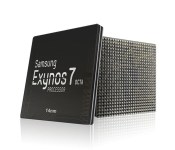
Samsung begins production of an Exynos 7 Octa CPU with a 14nm process

Samsung has begun mass production of a new version of its Exynos 7 Octa processor, made with a 14nm FinFET process technology. The company previously announced the Exynos 7 Octa in October, but made using a 20nm process.
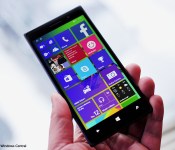
From the Editor’s Desk – Should you (hack) install Windows 10 on your phone?

Today is a holiday in the US, well, technically a holiday, so I do not expect a busy news cycle. Many in the US have the day off, including those in the tech world, so things will likely start off slow.
With that out of the way, let’s talk about a few things on my mind as we head into this week.
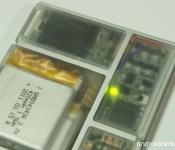
Toshiba shows off prototypes of its Project Ara camera modules

Google’s Project Ara modular smartphone effort will get some third party help from companies like Toshiba. It recently showed off some early prototypes of camera modules that can be used with the current Spiral 2 design of the smartphone.
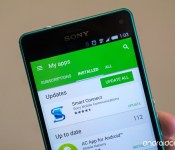
Updating your apps through Google Play

Keeping your apps up-to-date

Now that you have some great apps installed on your Android — whether you have just a few or have went wild and installed all the apps — you’ll want to keep them all up to date. Apps get updated for different reasons. Sometimes developers offer new features or a new look to things, other times updates address pesky bugs that keep things from being perfect. Updates are important, and so is managing them on our end.
The Play Store app gives us a little leeway with how and when we update our apps. You can let things be more or less automatic and update themselves (apps that need new permissions are never automatically updated) or you can manually go through and inspect each update before it’s installed. Both methods have their advantages.

Switch to iPhone: For better privacy and security

There’s never been a better time to switch to iPhone. Whether you’re tempted for yourself or looking to help the Android owner in your life, the all-new, all-better iPhone 6 and iPhone-6-plus make the move more compelling than ever — especially when you add the value of privacy and security.
The value of privacy
Everything has a cost. Some things cost money, and we can easily see that reflected in our bank or credit balances. Other things cost time, and we can see it tick away on the clock. When things come at the cost of our attention or our data, however, they can be harder to see, and the price can be harder to appreciate.
Who’s emailing us and about what. Who’s meeting us and when. What we’re searching for and looking at on the web. Our location, our identity, the names and contact information of our friends and family. All of this is invaluable, yet many of us are happy to give it away to save a few dollars on a gadget or a service.
Privacy is so important we’ve enacted reams of laws to protect ourselves against its invasion, criminally and civilly. Yet technology has made it not only easy, but attractive to barter is away without a second thought.
Yet that’s starting to change. Privacy and its true value is starting to become part of the discussion. With the iPhone, Apple has gone so far as to make privacy one of its most important features.
Apple’s CEO, Tim Cook, in an open letter on privacy from Apple.com:
A few years ago, users of Internet services began to realize that when an online service is free, you’re not the customer. You’re the product. But at Apple, we believe a great customer experience shouldn’t come at the expense of your privacy.
Our business model is very straightforward: We sell great products. We don’t build a profile based on your email content or web browsing habits to sell to advertisers. We don’t “monetize” the information you store on your iPhone or in iCloud. And we don’t read your email or your messages to get information to market to you. Our software and services are designed to make our devices better. Plain and simple.
Last week the President of the United States, Barack Obama, held a summit on Cybersecurity. Tim Cook accepted the invitation to be there, unlike the CEOs from competitors Google and Facebook . Some saw their lack of attendance as a protest. Others saw it as recognition that the very idea of privacy threatens their data-collecting business models. For Apple and Tim Cook, it was literally a “matter of life and death”.
If you get an iPhone and use iCloud mail, Apple doesn’t scan it so they can insert ads. If you turn on Siri, Apple doesn’t demand you share your web activity with them in order to use even its most basic features. If you use Apple’s Health app, you get to individually control read and write permissions, per app or accessory. That way, for example, if you choose not to share your blood glucose levels with your insurance company, rather than know you’re not sharing it, they don’t even know it exists.
What’s more, if you decide you do want to use Google services or apps, you can use many of them like YouTube and Maps without being logged in, which while not a perfect shield, does help preserve some level of privacy.
Here’s what iMore reader jayzero76 shared:
I bought a gold 64GB [iPhone 5s] when it came out! Love my Mac and MacBook! Got a chance to buy a [OnePlus One] and bought one to give it a try! I like Google but when I saw the facts behind it that makes me worry about security! Just check out Google dashboard and see what Google all collected from us!
To make an absurd analogy, it’s the difference between buying your dinner and walking away, and getting given a lobster dinner for free and then wondering what’s expected from you after. If that sounds unnecessarily creepy, that’s because it is.
In a world where Google bought and developed Android to prevent their getting cut off from data during the mobile transition, Apple positioning privacy as a feature may be brilliant marketing, but it’s also incredible attractive to anyone who wants to buy a product and not be a product.
Updating security
The iPhone didn’t just revolutionize the mobile phone, it revolutionized mobile security. Apple built it not only to be security-first — sandboxed and protected against the kinds of malware and viruses that plagued Windows desktops of the day — but they built it to be updatable against threats of the future as well.
From the start, Apple knew it had to take control of software updates to make sure every iPhone, on every carrier, in every country got them on time and all at the same time. That continued as the iPhone expanded, and as iCloud allowed for over-the-air updates.
Contrast that to Android where updates are at the mercy of manufacturers and carriers who have somewhere between zero to no interest in pushing out updates and patches to older devices.
Google recently received attention for failing to patch a security vulnerability in Android’s WebView. Android Central:
It’s easy to confuse the symptom — WebView vulnerabilities — with the root cause. The real problem isn’t that Google won’t update Jelly Bean’s WebView, but that so many devices are still running Android 4.3 and below with little prospect of being updated, regardless of whatever action Google might take. Even if Google were to issue patches for Jelly Bean’s WebView code (and Ice Cream Sandwich’s, and Gingerbread’s), users would still be waiting on OEMs (and carriers) to push out firmware updates, just as they’re waiting on Android 4.4 today. And if the manufacturers of these devices were inclined to push out updates at all, chances are they wouldn’t be stuck on Android 4.3 or earlier to begin with.
This is all absolutely true. If I was an Android customer, however, it also absolutely shouldn’t be my problem. It should be taken care of by some of the most powerful companies in the world, because it would be the right thing for them to do.
With the iPhone, the the latest iOS 8.1.3 software update didn’t just push out to the latest iPhone 6 and iPhone 6 Plus handsets, it pushed out to the iPhone 4s, originally released three and a half years ago in the fall of 2011.
If you’d bought an iPhone 4s on launch day, you’d now have enjoyed updates from iOS 5 to iOS 8. That includes new features like turn-by-turn navigation and extensions, bug fixes and performance enhancements, and security updates. The same time, every time.
Moreover, Apple’s App Store and sandboxing model means you’re protected against downloading viruses and malware, end-to-end encryption protects your communications, and the company’s activation lock service makes your iPhone a far less attractive target for thieves.
Just like it’s hard to put a dollar value on privacy, it’s hard to put a dollar value on the peace of mind that comes from security, and from Apple delivering those updates month after month, year after year.
Time to switch!
Apple has made privacy and security table-stakes. The company has bet their reputation on respecting and safe-guarding customer data. As a customer, that’s not only comforting to me, it’s compelling.
It tells me that the full weight and will of one of the most powerful and focused companies in the world is bent on giving me great products rather than turning me into their greatest product.
And those are just two of the benefits of switching to iPhone.
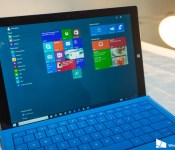
First impressions of Windows 10 Technical Preview (Build 9926) on the Surface Pro 3

The Surface Pro 3 is the only Windows machine I have in the house, so I was hesitant to install Windows 10 Technical Preview on it. After hearing good things about the recent Build 9926, I finally caved in and decided to install the Preview. Here are my first impressions so far.
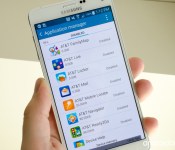
There’s bloatware, and then there’s bloatware

There’s been a lot of talk about “bloatware” of late. Some of our doing, some not. And the latest round has started to reach inconceivable proportions.
But just like Wallace Shawn’s Vizzini, we keep using that word. Bloatware. And perhaps it does not mean what we think it means.
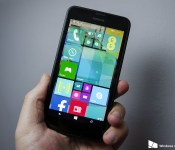
Poll: Did you install the Windows 10 preview on your phone?

It’s been an exciting weekend in these parts, mostly down to finally having the first Windows 10 preview for phones downloaded to play around with. Of course, not everyone has been fortunate enough to be on the list of supported devices, but there was always going to be some disappointed Windows Phone fans. It is, after all, just a preview.
But on the flip side there’s a whole bunch of people who can, and probably did, install the preview. We’ve been looking forward to it for some time now, and despite the potential issues, it’s sometimes hard to resist. So, that’s what we’re asking for today’s weekly poll, did you install the Windows 10 preview on your phone?
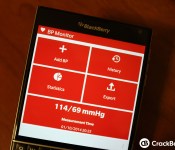
Track and monitor your blood pressure with 200 copies of BP Monitor

If you are seeking to maintain or track your blood pressure for either yourself or to provide to medical professionals, BP Monitor is a handy application to have on your device. If you are not already familiar with it from the weekly roundup it is a Built for BlackBerry application which gives users the option to track blood pressure, heart rate, weight, height, BMI, date/time and notes on a daily basis. It also features a useful tool to export this data as a CSV file for sending to your PC or your physician via email.
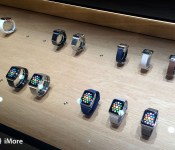
Apple reportedly tested many more health features for Apple Watch

The Apple Watch was originally planned to be focused much more on health-monitoring, according to a new report, with an array of sensors for tracking blood pressure, heart rate and other vitals. Challenges with deploying the sensors, however, meant that Apple had to focus on notification, transaction, remote control, and other, more rounded features as well. The Wall Street Journal:
Development languished because much of the health-sensor technology failed to meet Apple’s standards, these people said. Apple tinkered with sensors that measured the conductivity of skin, a concept used in polygraphs to gauge stress. The technology also showed promise for heart-rate monitoring such as an electrocardiogram, or EKG, these people said.
But these features didn’t perform consistently on some people, including those with hairy arms or dry skin. Results also varied depending on how tightly the person wore the Watch, they said. Instead, Apple opted for more pedestrian pulse-rate monitoring, these people said.
The report went on to add that future iterations of the Apple Watch may include a few health-related sensors. Meanwhile, the Apple Watch as it currently stands looks to focused on convenience as its killer feature.
As for production numbers, they report that Apple is looking to manufacture around 5 to 6 million units in time for its launch. That number would be considerably higher than the 720,000 shipments of Android Wear devices in 2014. The report suggests that half of the production run is for the entry-level Apple Watch Sport, which will be priced at $349. One third will be the stainless steel Apple Watch. That would leave the remaining on sixth of the production run — which comes out to around 850,000 units — for the gold Apple Watch Edition.
The Apple Watch launches this April.
 AIVAnet