Skip to content

Archive for

16
Feb

7 unique smartphones you’ve likely never heard of


Saygus v2 phone press 2

Back in 2012 we wrote a piece on phones you’ve probably never heard of. At the time, brands mention included Xiaomi, Blu, THL, among others. Something big has happened in the Android world since then: many of these names are actually reasonably well known these days, thanks to growth in global sales and websites like ours that help bring lesser known devices to light.

That said, there’s still a host of devices that are largely unheard of for those in the Western markets. While not all of them are winners on the spec front, many stand out either due to aggressive pricing, unique designs, build materials or even just having massive batteries. With that in mind, we take a look at seven devices that you may have never heard of, or at the very least they aren’t the first devices or brands that come to your mind when you think of Android.

Sharp Aquos Crystal X

sharp-aquos-crystal-x Ron Amadeo / ArsTechnica

Historically speaking, Sharp hasn’t been a brand that we associate with the mobile world, at least not outside of making displays. Of course, this isn’t the same case in Japan, where the company uses its display prowess to develop unique devices in the Aquos family.

Recently, thanks to Sprint, we got our first taste of the Aquos line with the Sharp Aquos Crystal, a mid-range device with ultra-thin bezels. While the phone didn’t pack the most impressive specs (720p display, Snapdragon 400 CPU, etc), in Japan there’s a higher-end model, dubbed the Crystal X, that packs the same ultra-thin bezel design but touts flagship level specs.

Specs

  • 5.5-inch S-CG-Silicon LCD display with 1080 x 1920 resolution
  • 2.3GHz Qualcomm quad-core Snapdragon 801 CPU
  • 2GB of RAM
  • 16GB, microSD (SD, SDHC, SDXC) expansion
  • 12.8MP rear cam, 1.2MP front cam
  • 2610 mAh Li-Ion battery
  • 73 x 139 x 11 mm, 157g
  • Android 4.4.4 KitKat

As you can see, while not carrying the latest processing package available, the Sharp Aquos Crystal X has pretty decent specs. Of course, the Sharp Aquos Crystal X’s biggest call to fame is its ultra-thin bezels. That said, thin bezels aren’t all sunshine and rainbows, as some folks may not care for the design. Additionally, thin bezels could also make the phone more susceptible to cracks and damage if dropped.

Getting your hands on the phone will set you back around 23000 Japanese Yen, or roughly $194.14, on Amazon Japan. Keep in mind that’s a Softbank model, and likely requires a contract.


Fairphone

Fairphone

While the Crystal X stands out for solid specs and ultra-thin bezels, the Fairphone’s call to fame isn’t in the spec sheet. Instead, the Fairphone aims to be the first “ethically sourced” smartphone on the market. In other words, Fairphone does its best to make sure the materials used for its phones are from conflict-free resources and that the workers involved are paid reasonable working wages and are treated as fairly as possible. We’ve actually reported about the Fairphone in the past, though our last article was nearly two years ago!

Fast-forwarding to today, the phone produced limited runs in 2013 and 2014. For 2015 they aim to reportedly create a newer model with refreshed specs, and so until that happens it will be nearly impossible to get ahold of one directly through Fairphone. Thankfully a number of partnering retailers in the UK still offer up the original phone model for those interested.

Specs

  • 4.3-inch IPS LCD display with 960 x 540 display
  • 1.2GHz quad-core MediaTek MTK6589
  • 1GB of RAM
  • 16GB, microSD up to 64GB
  • 8MP rear shooter, 1.3MP front cam
  • 2000 mAh battery
  • 126 x 63.5 x 10 mm, 170g
  • Fairphone OS (based on Android 4.2.2 KitKat)
  • Compatible networks GSM 850 900 1800 1900

Spec-wise, this is far from the ‘best’, but we felt its goals were admirable enough that it should still be highlighted as one of the “best ideas” that most of us have never heard of. Here’s to hoping that in 2015 they are able to continue their goal of creating an ethically sourced device, while also bringing us a bit more impressive specs.

Wondering how “fair priced” the Fairphone is? At least through one UK site we found it for 250.00 British Pound Sterling, or about $384.44. That alone would be a hefty price for a Mediatek phone, but it is even worse when you consider that this price is for a 24 month contract! We suppose getting parts for an ethically sourced phone simply doesn’t come cheap.


Lumigon T2 HD

Lumigon_T2_HD_scroll

Sharp stands out for bezels, Fairphone for its goal of creating a device that’s made from conflict-free materials. So what makes the Lumington T2 HD stand out? Besides the fact that probably few of you have ever heard of the phone or the brand, the Danish handset maker boasts that its phones are not only extremely premium, but highly durable.

The T2 HD is made from stainless steel and features Gorilla Glass 3 to protect the screen. Whether you find its design appealing is probably a matter of taste, though it certainly stands out due to the stainless frame and the inclusion of a unique charging dock.

Specs

  • 4.3-inch display with 720p resolution
  • Qualcomm Snapdragon S4 Pro with Andreno 320
  • 2GB of RAM
  • 32GB or 128GB storage
  • 13MP rear shooter with flash and backside illumination sensor, 2.4 MP front cam
  • 6.4 Wh built-in Li-ion battery
  • Android 4.4.2
  • Compatible networks: GSM 850 / 900 / 1800 / 1900 MHz, 3G/UMTS 900 / 2100 MHz, 4G/LTE 800 / 1800 / 2600 MHz, LTE 100Mbps download / 3G / HSDPA+
  • Connectivity: Wi-Fi 802.11 b/g/n, Bluetooth 4.0, NFC
  • Water- and dust-resistant design (IP55)
  • Dimensions and weight: 127 x 64 x 8.7 mm, 148g
  • Infrared receiver and transmitter
  • FM receiver

While it’s still more than capable of providing a decent Android experience, the Snapdragon S4 Pro inside is more than a little dated. Processor and 720p 4.3-inch display aside, most of the specs are still pretty solid. There’s also several stand-out features like an encrypted software “Vault” for file storage, a universal remote app that works with the integrated IR blaster, an IP55 water/dust resistant design, and a display that works even with gloves.

The T2 HD is available through its official website for 3559 Danish Krone, or what translates out to about $545.23. Finding it stateside is a much more pricier affair, however, with one Amazon listing selling the phone for $819.


Desay Magical Mirror X5

desay-magical-mirror-x5
Sapphire screens are said to provide improved levels of protection from scratches and even drops, and despite be offered by few mobile devices, they have certainly be hyped up quite a bit in recent years. Now Chinese-based Desay is getting into the sapphire screen ring with the Magical Mirror X5. Aside from the inclusion of sapphire glass protection, everything else about the Magical Mirror X5 is fairly ordinary. The phone has a 5-inch 720p display, a Mediatek quad-core CPU, 1GB RAM and 16GB internals.

Specs

  • 5-inch display with 720p resolution
  • MediaTek quad-core CPU
  • 1GB of RAM
  • 16GB storage
  • 13MP rear shooter, 5 MP front cam
  • 2050mAh battery
  • Android 4.4 KitKat
  • Support for 4G LTE

While Desay isn’t a well known brand, at least in the western world, the use of Sapphire glass protection makes the device above pretty novel, even if it’s far from a power house. Even more impressive, is the fact that Desay managed to give the phone a fairly aggressive price tag equivalent to just $160.


Pantech Vega Iron 2

When we think of Korean smartphone companies, LG and Samsung are the names that come to mind. One of less popular players these days is Pantech, despite the fact they actually build pretty solid devices. In fact, recently AA’s Matthew Benson wrote an article describing his time with the Pantech Vega Iron 2 and going so far as to say that the product is “the Galaxy S5 he wished Samsung had built”.

The Pantech Iron Vega 2 has Samsung-like aesthetics, including a plastic back with a chamfered, striped metal frame. You’d be forgiven if you thought Pantech had simply copied the Galaxy Alpha and Note 4 design language for the Vega 2, but in reality the phone arrived a few months after the Galaxy S5, but before the arrival of the Alpha and Note 4. The Pantech Vega Iron 2 doesn’t only look like a solid device, it has the specs to match. The phone has a Snapdragon 801 CPU, an Adreno 330 GPU, 3GB RAM and 32GB storage. The rest of the specs are equally decent, and the entire package is ran on Android 4.4 KitKat with Pantech’s custom UI on top.

Specs

  • 5.3-inch display with a 1080p resolution
  • Snapdragon 801 CPU with Adreno 330
  • 3GB RAM
  • 13MP rear cam with OIS, 2.1MP front cam
  • Bluetooth 4.0
  • LTE-A
  • NFC
  • 3220 mAh battery

As you can see, the Vega Iron 2 may not be “unique” as many of its features are quite similar to what we’ve seen with recent Samsung devices, but it did make the move to metal before Samsung and offers up pretty solid specs that make it worthy of being pointed out in this list. The price tag for the phone is also pretty reasonable, with the device being offered up on Amazon for $564.49.


THL 5000

ThL 5000 (15)

Battery size is the name of the game for the THL 5000, which packs a 5000 mAh battery into a reasonably compact body. With its big battery and official talk times of 47 Hours for 2G and 30 Hours for 3G, it’s pretty obvious what makes the THL 5000 stand out as unique.

Aside from the battery, we have a pretty stereotypical Chinese phone with fairly uninspiring aesthetics and a MediaTek MTK6592T octa-core processor underneath, paired with 2GB of RAM. While most of the specs are “high-end” as far as MediaTek goes, the phone certainly isn’t anywhere at the same level as modern flagships rocking chips from companies like Qualcomm, Samsung and even arguably Intel.

Specs

  • 5 inch IPS display with a 1080p resolution
  • 2.0GHz MediaTek MTK6592T octa-core
  • 2GB
  • 16GB storage, microSD expansion up to 32GB
  • 13MP rear cam, 5MP front cam
  • 5000 mAh battery
  • Connectivity : GPS, microUSB 2.0, Wi-Fi b/g/n, Bluetooth 4.0, NFC
  • Networks: GSM 850, 900, 1800, 1900MHz for 2G / WCDMA 850, 2100MHz for 3G
  • Android 4.4 KitKat
  • 145 x 73 x 8.9 mm, 170g

Unlike the vast majority of the phones on this list, getting the THL 5000 in western markets like the US isn’t particularly difficult with places like Amazon offering it up for $259.99 and similar (or even more aggressive) pricing can be found through various Chinese import sites. For more details on the THL 5000, be sure to check out our review of the device. 

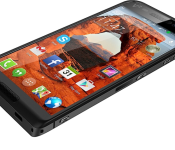
Saygus V2

Saygus-v2-1-aa

The Saygus V2 stands out for a few reasons, first its looks are a bit bizarre and as a result the phone can’t be accused of being a “carbon-copy” of devices from bigger name OEMs. Second, the phone brand is relatively unheard of, hitting CES 2015 out of nowhere and generating a fair amount of hype. Finally, the phone offers just about everything expect for the kitchen sink.

The biggest call to fame for the V2 is the fact it offers up two microSD slots, both capable of excepting 128GB cards. Combining this with the 64GB internal storage, that means you can potentially store up to 320GB of data. Beyond this, you’ll find the Snapdragon 801 CPU with 3GB RAM — not the most bleeding edge package in 2015, but more than enough to provide a solid Android experience.

Specs

  • 5-inch display with 1080p resolution
  • Snapdragon 801 CPU
  • 3GB of RAM
  • 64GB storage, two microSD slots for expansion
  • 20.7MP rear shooter, 13MP front cam
  • 3100mAh battery
  • Android 4.4 KitKat
  • Support for 4G LTE
  • Infrared and other standard connectivity (NFC, Bluetooth, etc)
  • Water and dust resistance
  • 137 x 67 x 9.7 mm,141 g

As you can see, the phone is every bit as capable as most flagships from mid-to-late 2014. While the devices of 2015 will easily trump it, there’s plenty of extras thrown in here such as dual microSD, waterproofing and more. At $599, the phone isn’t ultra-cheap, but still pretty reasonably priced for a phone with the above specs. It’s also worth noting that the software experience is essentially stock KitKat, with an upgrade to Lollipop in the works.

Okay, so many of you may have heard of this phone, but globally speaking, its still pretty new to the game and very much worthy of being the last entry in this list.


And that concludes our list. While we considered mentioning devices like the OnePlus One, the reality is that brand recognition is pretty high these days for OPO and similar devices, at least among the nerd crowd. Any other powerful, unique and standout devices we didn’t mention? Let us know in the comments.


16
Feb

A night in Richard Branson’s state-of-the-art Virgin Hotel


A night in Richard Branson's state-of-the-art Virgin Hotel

Richard Branson knows how to make a first impression. The first thing I saw when I arrived at Virgin’s debut hotel was a statuesque blonde in a bright-red trench coat stepping out of a matching-hued Tesla, with a photographer documenting the whole ordeal. The photographer was there for glamour shots, naturally, and the Model S serves as the hotel’s house car that’ll drop guests off anywhere within a 2-mile radius. However, it wasn’t in service just yet. Virgin bills the hotel as “brilliant,” and to see just how smart it actually was, I spent a night in the premiere Chicago location. Given that the inn is run by the same company that wants to make us all space tourists with Virgin Galactic, I suppose I shouldn’t have been surprised by anything during my stay — least of all, an electric sports sedan waiting out front.

With Virgin Hotels, you set your own check-in time and there’s no rigid check-out deadline.

What sets Virgin Hotels apart from other lodging options is a lot like what separates Virgin America from its airline competitors. Male and female employees alike are young, attractive and dapper, and there’s a keen focus on using tech and charm to make the whole experience less stressful and more customer-friendly. For starters, with Virgin Hotels, you set your own check-in time and there’s no rigid check-out deadline. “Use your discretion,” the iPad-wielding front-desk attendant told me.

This, I learned, is to make it easier if your flight is delayed, for example. As a third-shifter, it caught me off guard; it felt tailored to me. I wouldn’t have to scramble out of bed and possibly leave a phone charger or other gadget behind in my rush to make it to the front desk before 11 AM this time.

The customer-first approach doesn’t stop there. When making a reservation either online or via a mobile app dubbed “Lucy,” (more on that later) there’s an option to take a quick survey about your interests and your stay. It takes all of five minutes and, like Virgin’s pre-flight safety video, it’s quite cheeky. Plan on traveling with a bedside companion? What’s their relationship status to you: married, dating, “friends” or it’s complicated? Are you bringing kids along? If so, The Know wants an idea of their favorite food. Same goes for any canine cohorts; yes, Virgin Hotels are dog-friendly. Additionally, the questionnaire also asks for your dream minibar item and snack in addition to favorite band and music genre. Oh, and speaking of snacks, all minibar items are set at street prices; a Red Bull will run you $2 — not $10.

Virgin’s first hotel is located in Chicago’s The Loop district.

When I stepped inside the doors at 203 N. Wabash, it felt like walking into one of Virgin America’s airport terminals. There wasn’t any purple, neon mood lighting, but there were dance remixes of pop music playing over the PA and a gaggle of smartly dressed, smiling attendants armed with Apple’s tablets eager to get me checked in and learn who I was. Rich red carpeting, meanwhile, was everywhere I looked, from the stairwell leading to the second-floor bar to the walls of the elevators.

The hotel literally stands in the shadow of the hulking Trump International a few blocks away, but despite the Virgin’s conveniences, similar rooms actually undercut the competition in price. Whereas a room at the Trump commands anywhere from $445 and up at weekend rate, my spot at Virgin cost $275.

… mere blocks from Trump International.

It’s pretty clear that these are early days for the hotel, though. The premiere Chicago location had been open all of three weeks during my stay and I was told that of the nearly 90 rooms available, they were only running at 20 to 30 percent capacity on a given night. Everything was still getting broken in, from the touchscreen-based check-in stations at the front desk to the staff.

In addition to the Tesla drop-off service, other aspects of the hotel weren’t up and running yet either. That includes the in-house, American-diner-styled Miss Ricky’s, Two Zero Three (a coffee shop by day/wine bar by night) on the ground floor and the aptly named Rooftop Bar. I was told these should be fully operational come the hotel’s grand opening in April.

Hopefully that extends to Lucy, too. The video above shows the app as capable of doing everything, from making a reservation to checking out, and everything in between. In theory, you could set the room to a toasty 74 degrees, and have a burger waiting and your favorite tunes playing once you got back after doing some sightseeing. In practice, however, it’s a different story. For starters, when I tried booking via the iOS app (it’s available on Android as well), it sputtered and the reservation section wouldn’t load, so I was forced to do it on my laptop.

When I tried booking via the iOS app, it sputtered and the reservation section wouldn’t load, so I was forced to do it on my laptop.

What’s more, I’d answered The Know’s questions the night before and had already forgotten my login for that by the time I’d booked. When I went to reset my password via email, I was told that my @engadget.com domain wasn’t supported and I’d have to call for assistance. Instead of doing that, though, I left a note on my reservation of what happened, asked for my account to be applied to my room and hoped for the best.

When I checked in at the front desk with Lucy, I got a dreaded message that there wasn’t a reservation under my name. I panicked, but it turns out that my room simply wasn’t ready even though I got there at the time I’d listed when booking. The staff apologized profusely and offered me another room on a higher floor. Were the hotel operating at full capacity, I’m not sure how this would’ve worked — especially given the whole “no check-out deadline.”

Virgin red follows into the rooms themselves. Entry doors, rugs, the Smeg mini fridge and other accents all bear the fiery hue, while neutral laminate wood flooring rests underfoot. Each room (or “chamber,” as they’re officially called) is divided into two sections: a spacious dressing room with two vanities, twin closets with motion-activated lighting, a shower stall and a commode. The idea is to give you privacy and separate your sleeping area from the spot where you take your room service.

That peculiar corner piece on the bed acts as a chaise lounge of sorts.

Beyond a set of sliding privacy doors is the bedroom with a king-size mattress (or two fulls), and a swiveling desk adorned with a red lamp and Stellé Audio Bluetooth speaker. In-room WiFi was the fastest I’ve seen at a hotel, with the Ookla Speedtest recording 20.95 Mbps downloads and 26.20 Mbps uploads. In contrast, everywhere else I’ve stayed has struggled to break single digits with free internet. Just as Ookla was finishing its evaluation, a bellhop knocked, delivering the Gosling’s I’d spied on at the front desk. Voila.

Power outlets are where you need them, too. They aren’t tucked away by a baseboard; they’re in full view so you can plug your devices in on either side of the bed. I half-expected them to have USB ports in addition to the standard three-prong plugs, but that wasn’t the case. The one near the desk is where things get interesting, though: There’s an HDMI input and an Ethernet port. This is to plug your laptop into so you can watch your own media on the TV if the video-on-demand options don’t suit you.

Should you forget to grab the clicker from its pouch on the wall, Lucy’s got your back there as well because she acts as a TV remote. You can’t order room service directly from the app yet, though; for now, you need to either pick up the phone or place your order from the wall-mounted, 40-inch LG flatscreen. So, technically you’re using the app, but the experience isn’t quite what’s promised.

I’m curious whose favorite color is red.

Speaking of which, this is where the entertainment options like custom playlists reside. How’d my challenge fare? Not so great. The tailored playlist featured electronic dance music (EDM), but that’s not the same as hardstyle. Compared to Virgin America’s seat-back entertainment systems, the selection was lacking, too. There was no Taylor Swift, Chemical Brothers or Nirvana (I have diverse taste, okay?), but I had Coldplay, Adele and Avicii to choose from in addition to Katy Perry’s Teenage Dream, among others. Thankfully, the Stellé audio tower had enough oomph to kick out the jams from Google Play Music on my iPad mini 2.

For all of its advances and modern motives, though, Virgin Hotels still has a foot in the past and Lucy just isn’t capable enough yet. My room came with English breakfast, for example, but you have to fill out a tag for egg and toast preferences and leave it hanging on the door the night before. I sleep exclusively on the left side of beds, so I missed the tag because it was sitting on the mattress’ right-side nightstand. I’d figured this would be handled by the app given Branson’s futuristic ideas.

Tech like Philips Hue smart lighting systems and Sonos’ popular wireless music systems are quickly becoming mainstream too, so you’d think those would be standard at Virgin’s hotel — they’re app-controlled, after all — but that isn’t the case either. I liked using the app to control room temperature and fan speed, but let’s face it: That’s the sort of thing you typically only do once. What’s more, there really wasn’t a need to order more towels or anything via the app either because the room was pretty well-stocked. Lucy feels more superfluous than actually useful for now, a bit of a gimmick that’ll hopefully be expanded upon soon.

The Commons Club where, from 6 PM to 7 PM every night, drinks are on the house for hotel guests.

Despite those niggles, I couldn’t shake the feeling that this could be the future of hotels. It isn’t so much a technical revolution (though that foundation is in place), but one focusing the experience on the customer. Every hotel where I’ve stayed for work has always felt archaic, impersonal and cold, aiming to nickel-and-dime at every turn for what should be standard options. From the nightly hour-long open bar for guests and the reliable WiFi, to the desk staff that remembered my name and where I was traveling from, my night felt, well, inviting. It should be something that’s industry standard, but sadly isn’t. Like taking a cross-country flight with Branson’s airborne baby, my stay at Virgin Hotel actually made me look forward to my next visit — not dread it. That’s a future I can get behind.

Filed under:

Comments

16
Feb

Samsung Exynos 7 Octa SoC with 14nm FinFET technology now ready for mass production


Samsung_Exynos_7_Octa_01Samsung announced earlier today that a new Exynos 7 Octa chip is now ready for mass production. It’s the first processor using 14nm FinFET technology. 14nm is much better than the current 20nm offering, and it boosts performance by 20% and power by 35%.

The performance is the key here since this is likely the chip that will power the upcoming Galaxy S 6. the S6 will sport a smaller battery than the S5 (2,600 vs 2,800 mAh), but hopefully the FinFET technology will ensure no drop in battery life.

The new chip is also 64-bit and is an octa-core.

source: Samsung

Come comment on this article: Samsung Exynos 7 Octa SoC with 14nm FinFET technology now ready for mass production

16
Feb

Apple Watch Gets Another Competitor in the Android-Based LG Watch Urbane


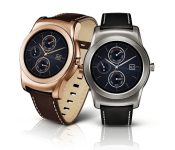
LG Electronics today announced a new device in the line of Android Wear smartwatch products, called the LG Watch Urbane. Planned for a full unveiling at Mobile World Congress next month, the watch is said to combine the traditional aspects of a luxury timepiece with the “high-tech flare” of a modern smartwatch.

The LG Watch Urbane follows in the footsteps of LG’s previous foray into the world of smartwatches with the LG G Watch R, launched last October. LG says while the G Watch R was designed with a more active lifestyle in mind, the Watch Urbane has taken a more formal, classic route that will suit both men and women. Despite the formal look, the Watch Urbane is powered by a smartwatch-style touch-based interface that is compatible with any smartphone running Android 4.3 or above.

LG Watch Urbane

“The LG Watch Urbane’s classic design and smart features make it the perfect smartwatch to complement our G Watch and G Watch R, which were designed as more casual and active devices,” said Juno Cho, president and CEO of LG Electronics Mobile Communications Company. “LG Watch Urbane is an important part of our strategy to develop wearable devices that are worn and viewed as everyday accessories, not electronic gadgets.”

The LG Watch Urbane includes the same 1.3-inch full circle P-OLED display as the LG G Watch R – which was the first smarwatch to include such a display – but features a narrower bezel this time around, offering it that more formal, sleeker look touted by LG. The watch comes in gold and silver options with a natural leather strap that can be replaced by any 22mm wide band, according to the company.

Not many specific details were given on the device’s smartwatch capabilities, but LG confirmed the LG Watch Urbane will be able to measure a user’s heart rate for fitness purposes thanks to a photoplethysmography (PPG) sensor built into the device. Other key factors, like pricing and whether the new Android-based smartwatch will hit around the Spring launch of the Apple Watch, was not yet disclosed by LG.

Key Specifications:

– Chipset: 1.2GHz Qualcomm® Snapdragon™ 400
– Operating System: Android Wear™
– Display: 1.3-inch P-OLED Display (320 x 320, 245ppi)
– Size: 45.5 x 52.2 x 10.9mm
– Memory: 4GB eMMC/ 512MB LPDDR2
– Battery: 410mAh
– Sensors: 9-Axis (Gyro / Accelerometer / Compass) / Barometer / PPG (Heart Rate Sensor)
– Colors: Gold / Silver
– Other: Dust and Water Resistant (IP67)

LG’s newest foray into the increasingly crowded world of smartwatches is the latest in a long line of companies announcing new iterations of older products, or new products altogether, preparing to do battle with Apple’s April launch of the Apple Watch.


16
Feb

Last chance to enter our Choose Your Own Smartwatch Giveaway


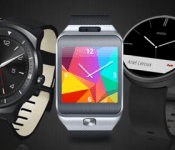
Today is the last full day to get your entries in for a chance at winning the Choose Your Own Smartwatch Giveaway. Entries will no longer be taken after 12PM (PST) on 2/17 and you can’t win if you don’t submit. Enter now and place your name in the hat for a free Moto 360, Samsung Gear 2, or LG G Watch R. Good luck!

See more at deals.androidguys.com

Do Not Miss These Other Deals!


(function() var script = document.createElement(‘script’);script.src = ‘https://stacksocial.com/widget.js?publisher=androidguys&type=editorial_post_widget_preferences’;script.async = true;var entry = document.getElementsByTagName(‘script’)[0];entry.parentNode.insertBefore(script, entry);)();


http://www.androidguys.com/pubgalaxy/728×90.html


The post Last chance to enter our Choose Your Own Smartwatch Giveaway appeared first on AndroidGuys.

16
Feb

Peak – Brain Training: keep your wits about you with daily training


Sometimes as we get older, we feel our brains are slowly losing their sponge-like qualities they had in elementary school. Or, we aren’t as quick with a comeback as we could back in high school. Peak – Brain Training is an app that hopes to provide with daily games and exercises to keep your brain at its optimal level.

They say: “With millions of members worldwide, Peak is a personalized self-improvement app specifically designed to help you improve your Memory, Focus, Problem Solving, Mental Agility and Language skills with fun, challenging games, reaching goals and building healthy training habits – all backed by scientific and educational research. With 15 games offering adaptive and dynamic difficulties, unique challenges, personalized workouts and daily goals, Peak aims to get your brain skills in tip-top shape. Peak helps you train smarter with in-depth performance reviews, analytics and statistics – all simply and beautifully visualized.”

We say: Peak – Brain Training has neuroscientists behind the app, so you can be assured that the app has scientific research backing it. The app uses games as well, so the goal is that exercising your brain won’t be boring, but rather quite fun. It is also designed very well. With the app having 4.3 stars and over 100,000 downloads, something must be done right here.


(function() var script = document.createElement(‘script’);script.src = ‘https://stacksocial.com/widget.js?publisher=androidguys&type=editorial_post_widget_preferences’;script.async = true;var entry = document.getElementsByTagName(‘script’)[0];entry.parentNode.insertBefore(script, entry);)();


http://www.androidguys.com/pubgalaxy/728×90.html


The post Peak – Brain Training: keep your wits about you with daily training appeared first on AndroidGuys.

16
Feb

The Sound Recorder app in Windows 10 for phones is minimal, but effective


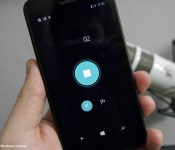
Sometimes it’s the simplest apps that we use and love the most. This one, Sound Recorder, in Windows 10 for phones, fits into that category. For those of us that take voice notes often, it’s a daily staple that has to be there. Just as with a Calculator app, or an Alarm clock, and so on.

The Sound Recorder Windows 10 app is minimal in styling, but still mighty effective with some good features at the same time. Here’s a quick first look.

16
Feb

Online US store in the works for Xiaomi says Hugo Barra


Xiaomi is a pretty large smartphone manufacturer over seas. They have particularly done well in China, India, Taiwan and Singapore. The Xiaomi devices run a custom build of Android called Mi. Mi ROM’s have been around for quite a while and has found its way onto a number of my previous devices. It is easily […]

The post Online US store in the works for Xiaomi says Hugo Barra appeared first on AndroidSPIN.

16
Feb

Deal: Amazon’s Fire TV only $34 with 3-month subscription to Sling TV or $84 without


Best-Media-Streamers-AA-17

Sling TV just launched a few days ago, and it’s gotten many consumers to second guess their traditional cable network. When it launched, Amazon and Sling TV partnered up to offer some great deals on the Fire TV set-top box and Fire TV Stick. That deal is still going on, but if you haven’t taken advantage of it yet, now may be a good time to do so.

Amazon is currently offering the Fire TV set-top box for $84, which is a $15 discount from its normal price. That’s already a pretty good deal, but it gets better. If you’re looking to try Sling TV, pre-paying for a three-month subscription ($60 in all) will get you a $50 discount code for the Fire TV. So, with the two deals combined, the Fire TV can be yours for $34 with a three-month subscription to the streaming service. In all, you’ll pay $94 for the set-top box and Sling TV subscription. Considering that the Fire TV is normally $99, this is a pretty decent deal if you’re considering signing up for Sling TV already.

So, how do you get the discount code? First, head to the Sling TV website and prepay for your three-month subscription to the service. You’ll then receive a coupon code that can be used for either $50 off the Fire TV set-top box or to get a free Fire TV Stick. Copy the discount code, and head to Amazon and add either the Fire TV box or Stick to your cart. Enter the discount code before you check out, and your price should drop to the aforementioned promotional price. If you have any trouble along the way, let us know in the comments and we’ll help you sort it out.

Once you sign up for your subscription, head to the Amazon links below to grab the Fire TV set-top box or Fire TV Stick.

Save on the Amazon Fire TV set-top box
Save on the Fire TV Stick


16
Feb

[Deal] Best Buy has the Dell Venue 8 7000 for $369 plus get 1 year of Office 365 for Free


dell_venue_8_pic_02

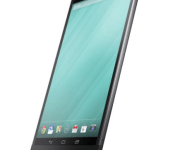
If you have had your eye on the Dell Venue 8 7000, now might be a good chance to grab one. Best Buy has it on sale for $369.99 ($30 off), plus they are giving you a bonus. That would be 1 year of Microsoft Office 365 Personal, which is a $69.99 value. On top of all this, they are including Free shipping.

The Office 365 subscription will include one PC or Mac plus one iPad or Select Windows Tablet. I am hoping they failed to mention Android in the notes since Microsfot Office is now available on Android tablets.

The Venue 8 is one of the thinnest tablets in the world. It’s only 6.1 mm thick, but it also packs very high-end specs. It includes an 8.4-inch OLED Quad HD (2560 x 1600) display, a 2.3 GHz Intel Atom processor, 2 GB of RAM, 16 GB of internal storage, and an 8 MP rear camera with Intel’s RealSense technology for scanning real-life objects in 3D. About the only downer of this tab is that it’s running Android 4.4.2 KitKat, but that isn’t a big deal since most top tier apps are sporting Material Design these days.

source: Best Buy


Come comment on this article: [Deal] Best Buy has the Dell Venue 8 7000 for $369 plus get 1 year of Office 365 for Free