Adobe Certified Training: Lifetime access to expert tutorials, 84% off

In today’s world it’s almost a social prerequisite to have a fundamental understanding of Adobe’s suite of products. Whether you’re a journalist that needs to superimpose …




Friday the 13th’s first reaping is upon us, as Google’s Helpouts program, launched back in November 2013, will be shutting down at the end of April.
The service, utilizing the Google Hangouts platform, provided a way for people to get help on a variety of topics, spanning from cooking to tech support. Helpouts also allowed providers of expertise to sell their services, like in the case of piano lessons.
Google has posted a short informational about the closing on its product support page, but also took the time to send out an email discussing the matter:
Hi Joseph,
We have some sad news to share with you today: Helpouts will be shutting down onApril 20th, 2015. While this announcement was just posted on our site, we wanted you to hear the news directly from us.
Since launching in 2013, Helpouts has been a home for people to connect with experts on topics they want to learn about or seek advice and solutions to everyday problems. The Helpouts community includes some engaged and loyal contributors, but unfortunately, it hasn’t grown at the pace we had expected. Sadly, we’ve made the tough decision to shut down the product.
Starting April 20th, you’ll be able to download your Helpouts history using Google Takeout (available until November 1st, 2015). Until then, you can email us with any questions or concerns you have about your account or take a look at these FAQs.
We want to thank you for your support—both the providers who shared their expertise with the world, and the people who needed some extra help or advice along the way. You’ve had a lot to contribute—and we’ve loved learning alongside you.
Our best wishes,
The Helpouts Team
The Google Takeout mentioned by Google is a web-based program that allows users to download their Google data across the entirety of the Google products spectrum. You can visit that page by clicking here.
So long, Google Helpouts. It actually was a clever idea, it just never seemed to take off.
Source: Google
Come comment on this article: Google Helpouts shutting down April 20th


You’d be hard-pressed to find someone who doesn’t know that SpongeBob Squarepants has a new film in theaters. He’s pretty much everywhere you look; this is doubly so for folks with children. What better time to deliver a mobile game based on the lovable Nickelodeon character? SpongeBob: Sponge on the Run is done in the tradition of Subway Surfers, Minion Rush, and Temple Run. It’s no surprise, then, that it’s a trending app in Google Play this week.
Play the brand-new SpongeBob: Sponge on the Run based on the new SpongeBob Movie: Sponge out of Water!
SpongeBob and Plankton are in a race to find the lost Krabby Patty formula somewhere in Bikini Bottom, Apocalyptic Bikini Bottom and a real-world beach. When he’s not running, SpongeBob is flying, floating in a bubble, or has Plankton jumping around his surreal imagination. And when the running gets tough, the tough get heroic! SpongeBob becomes Super SpongeBob to knock through any obstacle in his way!
One only need look at a few screen shots to see the appeal of this one. What’s more, you can also get a great sense as to what the game looks like and how it’s played. If you’ve ever played endless runners then you know exactly how addicting it gets.
You’ll find all sorts of SpongeBob goodies sprinkled throughout the game, including character customization, vehicles and obstacles, and familiar locations. It’s a little more expensive than similar titles but that matters little to the tens of thousands of people who have already downloaded.
(function() var script = document.createElement(‘script’);script.src = ‘https://stacksocial.com/widget.js?publisher=androidguys&type=editorial_post_widget_preferences’;script.async = true;var entry = document.getElementsByTagName(‘script’)[0];entry.parentNode.insertBefore(script, entry);)();
http://www.androidguys.com/pubgalaxy/728×90.html
The post SpongeBob: Sponge on the Run brings endless runner to Bikini Bottom appeared first on AndroidGuys.
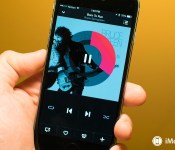

Apple’s been rumored to have a new streaming service in the works ever since their $3 billion acquisition of Beats Music, and now we’ve got just a few more details on what might replace iTunes Radio. One such detail the price, which is said to be currently debating around $7.99/month (higher than competitors such as Spotify or Pandora).
Interestingly, an overhaul of the music available in the iTunes Store might be in the cards:
Other clues suggest a major scrub to the iTunes store, which will rid itself of thousands of titles including soundalikes and certain covers, all at Apple’s discretion, say insiders. Moreover, the disallowed music includes artist rerecordings, favoring original or best-of versions and, critics contend, the major labels that retain those rights. Additionally, featured-artist sliders, previously chosen editorially, may now be determined by sales velocity, leaving some to wonder if iTunes is becoming less like a Tower Records and more of a Target — limited selection and a focus on hit titles. “Until now, iTunes has been good to the indies,” contends one vet. Conversely, an Apple source says such case-by-case house-cleaning to eliminate duplicative and deceptive versions is routine.
While we find it hard to imagine Apple actively culling thousands of titles from iTunes, we can see the “duplicative and deceptive” cleansing as a net positive for customers (especially if that same library is going to be leveraged for streaming). What form, exactly, Apple’s new streaming service will take is up in the air, though we’ll likely find out more about it in the next several months.
Source: Billboard
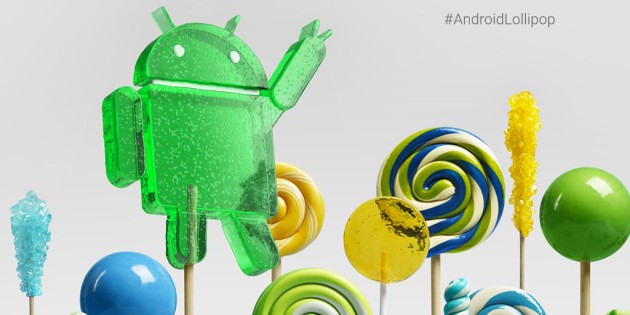
Comparing Android to iOS is always a delicate topic. Both sides have hard-core fans who are often unable to appreciate what the opposite number brings to the table. One aspect that is often brought up by iOS fans when debating which OS is best is the alleged ‘bugginess’ of the Android operating system when compared to the ‘reliability’ of Apple’s mobile offering. This point of contention would appear to be invalid though, with the news that the latest version of Android (Lollipop) offers increased stability. By comparison, it seems that iOS 8 has gone in the opposite direction, with it’s users experiencing higher app crash rates.
As you can see from the figures quoted below, the difference in app crash rates is barely noticeable, but for the hard-core fan in a heated discussion it may prove to be a satisfying point to raise to their fellow debater. The data was compiled by Crittercism, a company that monitors the performance of mobile applications.
Unlike iOS 8 that actually increased its app crash rate by .3% over iOS 7, Android 5.0 Lollipop managed a decrease of .6% over it’s the previous version of Android (KitKat). While that .6% isn’t a large number, it’s definitely a step in the right direction, which is another point to raise when debating which mobile operating system is best. It’s also impressive considering all the different devices that Android has to offer. It should be noted that crashes can occur for any number of reasons. Sometimes rather than it being the fault of the operating system, an app can crash from poor coding or issues with the device itself.
Source: ZDNet
Come comment on this article: Android 5.0 Lollipop users reportedly experience fewer crashes than iOS 8 users

On Friday, Google and Mattel announced the fruit of a new partnership: a View-Master that uses Google’s Cardboard technology.
Cardboard is Google’s virtual-reality platform, and Mattel hopes to use it in a product that will allow kids to explore famous places, landmarks, planets, and so forth. It uses an Android smartphone as the display and the View-Master itself as the housing.
This device is a successor to the View-Master made decades ago, which projected 3D-like images as children flipped through its picture reels.
It might be what Mattel needs to hold off rivals such as Hasbro and Lego. The company’s revenue has been decreasing slightly in recent quarters, even while the aforementioned have been able to increase theirs.
Google and Mattel expect the View-Master to be released in October.
For more information on the product, check out the official site here.


(function() var script = document.createElement(‘script’);script.src = ‘https://stacksocial.com/widget.js?publisher=androidguys&type=editorial_post_widget_preferences’;script.async = true;var entry = document.getElementsByTagName(‘script’)[0];entry.parentNode.insertBefore(script, entry);)();
http://www.androidguys.com/pubgalaxy/728×90.html
The post Google intros Carboard-based View-Master appeared first on AndroidGuys.
If you are an 80’s kid they you are probably very familiar with the View-Master. While it is much older than that with its first show of sorts appearing at the 1939 New York’s World Fair. The history of the product is pretty interesting and rather exciting to know it got its start in Portland Oregon. […]
The post Google and Mattel reinvent the View-Master and turn it into a VR headset filled with wonder appeared first on AndroidSPIN.


Panasonic is the latest company to throw its real hat into the virtual reality fray, after showing off a prototype headset that will compete with rival products from Samsung and LG. The goggles were shown at a press event in Japan this week, and house an OLED display with a 90-degree viewing angle, capable of video unto 75 frames per second. The glasses use ear-hooks to support themselves, and were demonstrated alongside an omnidirectional camera, similar to Samsung’s Project Beyond. Of course, this doesn’t rule out gaming use (which is mostly where Oculus and Sony are duking it out), but given Panasonic’s heritage in displays and image capture, it’s not hard to imagine that immersive content will be the primary use case (no word on what inputs there are etc.). The company reportedly said that the camera-part is being built with the 2020 Tokyo Olympics in mind. While that’s still a few years away, we’re hoping all the signs are suggesting we won’t have to wait quite so long for more details on the when this headset might become reality.

Filed under: Gaming, Home Entertainment
Via: SlashGear
Source: Techon

Apple CEO Tim Cook is at the White House Summit on Cybersecurity and Consumer Protection which is occurring now, and he is expected to speak for approximately 10 minutes beginning at 11 a.m. Pacific Time, ahead of a presidential address set to take place at 11:15.
The summit is being streamed live on YouTube and can be watched below.
The White House is expected to unveil its next executive action on cybersecurity at today’s summit. The event includes tech executives, academics, government officials, with several panels on topics like payment security, and improving cybersecurity practices at consumer oriented businesses.
Cook, who is one of the few top executives at the summit, is expected to speak on the importance of user privacy. Cook has been a major voice calling for government surveillance reform, asking for limitations on government authority to collect users’ information and transparency about data demands. MacRumors will update this post with highlights on what Cook has to say.
Note: Due to the political nature of the discussion regarding this topic, the discussion thread is located in our Politics, Religion, Social Issues forum. All forum members and site visitors are welcome to read and follow the thread, but posting is limited to forum members with at least 100 posts.


For years now, companies have been claiming that wearables will be the “next big thing”. It’s 2015 and wearable devices are still niche at best. With Apple, HTC and likely many other players entering into the game this year, it’s clear that OEMs want wearables to be successful. The problem is that consumer reception is still fairly lukewarm.
For this week’s Friday Debate we talk about what it will take for smartwatches to go mainstream. What features would make you buy one? Or do you think they will always remain niche? Additionally, why do you feel the first generation of wearables (Android Wear, Gear, etc) haven’t taken off in a bigger way?
This week there wasn’t a lot of community responses, though you can check out the official forum thread to read all the responses we received. We will showcase one response this week, however, from the well known community member MasterMuffin.
I believe that smartwatches will always remain niche, or at least for a very long time. Personally, absolutely nothing realistic could make me buy a smartwatch as I don’t find anything in them that could justify spending any money whatsoever. Heck, I’m not sure if I’d use one should I get one for free! I do not represent the majority of people though, so why isn’t this new product category gathering more attention?
Part of the reason why smartwatches haven’t caught on is, of course, the one we always like to talk about: Apple. They did a smart thing by announcing their watch so early, because I’m certain it ate the sales of the others by quite a bit. There are plenty of articles that mention Apple Watch when talking about smartwatches and how we should wait and see before making any buying decisions. There’s nothing other manufacturers can do about this. Still, I wonder if even Apple can pull this off. Will their fans really buy anything with an Apple logo?
Another thing that manufacturers simply can’t do is make the hardware good. The technology needed to make a “truly” smart smartwatch just isn’t there yet, at least if you want a reasonably sized watch, and magic is unreliable. And I’m not talking about better batteries as battery life might not be an actual problem, because everyone that I’ve talked with who has a smartwatch has said that you can just charge it at night and all is fine and dandy. What I’m talking about is technology that allows for independent smartwatches with functions like those in sci-fi movies. The current smartwatches feel like feature phones on your wrist!
One feature that could help the sales is compatibility with phones with different operating systems. Samsung’s Tizen-powered watches only work with a handful of Samsung’s own devices, Android Wear only works with Android and the Apple Watch will only work with iOS. Sadly, cross-compatibility is not going to happen in a million years.
My amazing, never-before heard tips for Samsung, HTC, LG etc. are the following: design, advertise, advertise and advertise. You need to make regular folks want to use something they’ve never needed before (and something that’s 110% useless in this writer’s opinion), so the easiest solution is either to make smartwatches fashion items or just to imprint them deep into everyone’s subconsciousness. Better start working on your mind controlling techniques!
Robert Triggs
I believe that usefulness is still the big issue for smartwatches. The benefits are few and difficult to sell to consumers, while the costs are relatively high for, what is essentially, a smartphone accessory.
Currently, Android Wear’s design, which steers watches more towards a notification hub, isn’t providing the substantial boost in functionality that would make a smartwatch truly useful. I’m going to speculate that this may have something to do with why some smartwatch developers, such as HTC and LG, are said to be working on their own smartwatch platforms.
If smartwatches are to become a successful mainstream technology, companies are going to have move beyond fitness gimmicks and smartphone extensions into making watches viable products on their own. SIM-enabled watches will help with this a little, but they’re also going to need better technology in areas such as memory and connectivity. For example, I’d be more inclined to grab a smartwatch and ditch my phone if I could wirelessly listen to music from it or use it as a storage space to carry documents and media around with that I could then beam to other devices.
If I concentrate really hard, I can maybe see smartwatches taking on the role of the social platform, for calls, messaging, email, calendar appointments, etc, while the smartphones take a backseat to provide video and gaming content, if only smartwatches were more flexible in terms of features. But I haven’t seen a company indicate that their product is capable of much more than tracking your steps and duplicating information already available on your phone.
So I’ll continue to pass, for now.
Matthew Benson
Several weeks ago I wrote an opinion piece on why I prefer Samsung’s Tizen over Android Wear smartwatches. Among the various reasons: Gear products, the Gear S especially, have more native functionality and features than Android Wear. This includes everything from a telephone to a contact list to an email application to a calculator, etc.
When I saw the report of Android Wear device sales, the low number shocked me. Considering the platform is compatible with any Android device running Kitkat or higher, that’s a ton of potential users. It’s far different than say, the Gear line, which requires not only a Samsung device, but a compatible Samsung device no less.
Android Wear has the ability to be very successful, but isn’t. Heck, even our readers seem to prefer phone or tablet posts over wearables. Is it the fact that the hardware selection is so limited? Perhaps. Is it because the hardware itself is rather expensive for such a fledgling platform? Certainly a possibility. In reality I think it’s actually a combination of the two, as well as perhaps something more.
While this could be totally wrong, I expect the Apple Watch to sell over a million units the launch weekend. Heck I wouldn’t be surprised if 5 million are sold within the first few months. Does the Apple Watch look fantastic? Not really, though I am quite fond of the Digital Crown and the navigational prowess it claims to possess. No, I believe that the Apple Watch will sell simply because (1) it’s made by Apple, and (2) Apple users are willing to spend more money than those who prefer Android: see any comparison of App Store vs. Play Store sales, or say… Apple’s Q4 2014 earnings report.
I am not trying to characterize Android users as “cheap”, nor am I even implying frugality is bad. One could easily shake their head at Apple customers, who continue to buy products that lack the same hardware capabilities and features as Android. Still, while Android devices have been on a race to the bottom/commodity path, Apple’s prices have remained expensive and exorbitant. Heck just look at the backlash Google received with respect to its Nexus 6 pricing; as if the first three Nexus phones weren’t also expensive. Look at the big winners in 2014: Chinese companies with very low profit margins.
I feel a large part of the problem with Android Wear is that the (relatively) high cost of entry is just too much for consumers. Perhaps they literally don’t have that money to spend, or that Google has failed to substantiate why they should. This goes back to the marketing problem I touched upon with last week’s question. Either the hardware itself needs to get cheaper (and considering Android Wear specs, the existing hardware is seemingly priced way too high just because its new and there isn’t much competition) or else Google needs to do some real promoting and pushing of the platform. Google needs to sell customers on the the idea of a wearable before the hardware will take off.
Andrew Grush
I will start by echoing both Mastermufin and Matthew Benson, in saying that I think that the arrival of the Apple Watch will be a boon for the smartwatch industry. While I’m not so sure that the watch will be as big of a hit as Apple hopes, I think it will get the wearable conversation going. Right now, there are probably a fair number of “regular folks” that know very little about the smartwatch market and what these devices do. Public exposure is important for smartwatches, and something they currently lack. While advertising exists, it’s pretty limited at this stage and I think that’s a big part of why smartwatch sales are still slow going.
Most of the comments from other writers and Mastermuffin were pretty negative, calling out smartwatches (and Android Wear in particular) as useless and very limited. I agree that for some consumers this may be the case, though personally I love my Moto 360 and use it regularly. Does it do anything my phone couldn’t? Technically, no. In reality, I can check emails and other notifications in situations where I otherwise wouldn’t — while jogging, biking, in church, in a meeting, during dinner, etc. It allows me to stay constantly connected without my phone. Glancing quickly at a watch is arguably less rude in circumstances like a movie, meeting or church than pulling out a phone would be.
As for whether or not smartwatches can ever be truly mainstream? I’m not so sure. For now, they will remain niche, and that’s not necessarily a bad thing. Long-term, I think that smartwatches mainstream potential depends on how much OEMs invest on either design (making watches a fashion accessory) or functionality (making watches more stand-alone and not just for augmenting the smartphone experience).
You’ve heard from both Mastermuffin and Team AA, now it’s your turn. How do you about the current crop of smartwatches? Do you feel that smartwatches will ever go beyond their current niche? We welcome you to leave your responses in the comments below, or you can get even more detailed in the forums.

In today’s world it’s almost a social prerequisite to have a fundamental understanding of Adobe’s suite of products. Whether you’re a journalist that needs to superimpose your publication’s logo into your article’s featured image, a restaurateur that needs a gripping logo design for his/her franchise, an exciting skateboarder who needs a sizzling video reel to go pro, or just about ANY position you can think of — Adobe is THE software developer for the modern creative professional. Don’t know a pen tool from Pinterest? Couldn’t adjust kerning if your life depended on it? Don’t sweat it. The Adobe Certified Training Course will bring you up to speed with the hottest technology and help give you the competitive artistic edge in the workplace.
This package includes over 5,000 design courses in video format from an award-winning trainer, Train Simple. You’ll learn Photoshop, Illustrator, InDesign, Lightroom, Dreamweaver, Flash, ColdFusion, Edge Products, Muse, CSS3, HTML5, JQuery, WordPress, JavaScript, Premiere , Audition, and more! Whether you’re a beginner or a a seasoned vet, these courses are primed and ready to be devoured at your own pace. Regularly priced at $500, AndroidGuys readers get LIFETIME access for just $79! This sale is for an extremely limited time, so grab this bargain while you still can.
See more at deals.androidguys.com
In today’s world it’s almost a social prerequisite to have a fundamental understanding of Adobe’s suite of products. Whether you’re a journalist that needs to superimpose …

Motorola last not shot out emails advising that its Valentine’s Day weekend promotion will be extended a few more days. Indeed, you can now save a sizable chunk of money on products through …

Imagine the horror of a bricked or water-damaged phone and the sudden realization that all of your valuable photos, contacts, and sensitive information are drifting away in the digital wind. We …

We’re heading into a holiday weekend here in the United States so you know what that typically means. That’s right, Amazon is giving away a bunch of free apps and games. For the next …
(function() var script = document.createElement(‘script’);script.src = ‘https://stacksocial.com/widget.js?publisher=androidguys&type=editorial_post_widget_preferences’;script.async = true;var entry = document.getElementsByTagName(‘script’)[0];entry.parentNode.insertBefore(script, entry);)();
http://www.androidguys.com/pubgalaxy/728×90.html
The post Adobe Certified Training: Lifetime access to expert tutorials, 84% off appeared first on AndroidGuys.
 AIVAnet