


Letter Way review
Letter Way is a word game that has a unique puzzle gameplay to it. You use the creation of words to open up letters on the board to make more words to open up more letters until all the letters have been opened. This makes for a dynamic and challenging gameplay experience.
Gameplay
The gameplay is quite enjoyable, and can be both a pick up game, or a game you sit and play for a while. You use the letters you see to form words. When letters you use are next to tiles that have a color and you successfully create a word, those colored tiles will flip to reveal new words. However, different colors do different things, making the gameplay more challenging. I enjoy word games (even though I’m not very good at them) and I feel as though this game brings a unique approach without being another Scrabble copycat. There are levels too, about 80 of them, so the game should keep you pretty busy as each level gets harder.
Interface
Interface is how the app looks and how you interact with it. Letter Way does well with both. The game looks good, and feels modern, bringing intuitive graphics and animations. The game is also very touch friendly, making the “controls” a breeze and something you don’t even need to think about.
Instructions
Letter Way walks you through how to play the first couple of levels, making it easy for anyone to download the game and learn how to play. I don’t have much to say about them, actually, which is a good thing because it does its job!
Letter Way is a fun game that can be addicting, challenging, and fun all at the same time. Honestly, I don’t have anything bad to say about the game.
(function() var script = document.createElement(‘script’);script.src = ‘https://stacksocial.com/widget.js?publisher=androidguys&type=editorial_post_widget_preferences’;script.async = true;var entry = document.getElementsByTagName(‘script’)[0];entry.parentNode.insertBefore(script, entry);)();
http://www.androidguys.com/pubgalaxy/728×90.html
The post Letter Way review appeared first on AndroidGuys.

Art, Instagram and digital disintegration

Traditional photographs inevitably incur some physical wear and tear, while their digital counterparts are seemingly immune to such damage. When repeatedly shared over social channels, though, digital files can suffer a similar fate as they’re repeatedly copied and compressed. Artist and photographer Pete Ashton has sped up this gradual disintegration process in his recent project entitled “I am sitting in stagram.” He began with a single photo, uploaded it to Instagram, took an unfiltered screenshot and reposted the resulting image, repeating the process 90 times to produce an effect akin to the real-life aging process. That specific count also allowed him to fit a 6fps time-lapse video of the project into the service’s 15-second limit to animate the transmutation.
The core concept of Ashton’s work (and its title) was inspired by an audio experiment from 1969 called “I am sitting in a room” by composer Alvin Lucier. That version began as a spoken word recording that was played back and re-recorded through a repeated process. Like Ashton’s images, the sound became a haunting departure from the original after multiple iterations. It’s not the first time that Lucier’s pioneering work inspired a new generation of artists: William Basinski used a similar method to create his 2002 expimental album called “The Disintegration Loop” and YouTube’s emergence spawned a video variation in 2010.
The topic of digital image degradation stemming from re-use was even explored earlier this year in an article for The Awl, leading its author to declare the trend of less-than-crisp photos as “shitpics.” While that seemingly pejorative term is more about the online community adding some rough edges to an all-too-perfect digital landscape and Ashton’s take on the phenomenon is more conceptual, they both seem to find something compelling in all that noise.
Filed under: Cameras
Via: Gawker
Source: Art Pete

Tim Cook Expected to Arrive in Israel Next Week for Inauguration of Herzliya-Based Offices [Mac Blog]
 A new report out of Israel-based business newspaper Calcalist [Google Translate] claims Apple CEO Tim Cook is planning to make a trip to Israel next week to coincide with the grand opening of the company’s newest office space in the country. The plans are, however, yet to be finalized.
The project, housed in the beachfront district of Herzliya Pituach, has been ongoing since the middle of 2013, when Apple signed a contract to lease 12,500 square meters of office space in the district.
With the project now completed, Apple is set to house 800 employees in an expanded footprint of 17,000 square meters (183,000 square feet). According to Haaretz, the company’s R&D centers in Israel are focused on “storage space, processors and communications chips,” so the new Herzliya offices are likely to be tied into those areas.
Apple has two other office spaces in Israel: one much farther out from Herzliya in Haifa and another within walking distance of the new building in nearby Ra’anana. For that reason, Apple is expected to consolidate the Ra’anana offices into the new building once it’s up and running.
As Haaretz noted back in 2013, many believe Apple’s continued expansion overseas highlights the company’s deep appreciation of foreign markets and its desire to keep the manufacturing of Apple products under as much of its own control as possible.
“Apple is preparing to drop external suppliers and to control its entire production process,” [Explace chairman Shlomo] Gradman said. “This is a company that maintains its secrecy and they’re currently exposed to information going every which way. So it’s buying companies and improving its abilities in the field of microelectronics so that it can control the production process from beginning to end.”
“Even though Apple has been active in Israel for only a short time, the company has been impressed by the abilities here.”
Apple first began making headway into Israel after purchasing flash memory firm Anobit to gather a few key components of the manufacturing of the iPhone and iPad – namely flash memory performance and reliability – under its own roof. A meeting last year between Cook and Israeli Prime Minister Benjamin Netanyahu pointed towards the company’s continued interest in Israel’s market, despite the specifics of the conversation being kept private.

Galaxy S 6 could get released around March 22

The Galaxy S 6 and Galaxy S 6 Edge will be unveiled on March 1 at Mobile World Congress, but when will you be able to buy one? Phone Arena has received a tip from a Samsung employee that says that a vacation blackout period has been set for March 22 through March 30.
Of course we don’t know for sure, but it’s likely that the Galaxy S 6 and the Galaxy S 6 Edge will be released during that period.
Now interestingly enough, there is another vacation blackout period set for April 19 through April 27. The tipster was speculating that it could be for just the Galaxy S 6 Edge or it could be for brand new Galaxy Note tablets.
It sounds like we won’t have to wait too long to buy a Galaxy S 6. Will you be grabbing one?
source: Phone Arena
Come comment on this article: Galaxy S 6 could get released around March 22
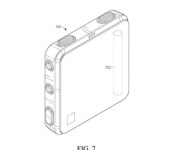
Google gets patent for a new body odor removing device

Google has reportedly received a new patent for a device which wards off body odor. This is almost like a wearable which can be attached either to your neck or the waistline, and then do its magic.
To fight off body odor, the device will sense the physical activity of the user wearing the device and emit fragrance which will counter the odor. It also has tiny fans which can help decrease body odor. Google originally applied for the patent back in 2012, but it took the USPTO until now (Feb 10) to grant them the patent.
The device can also alert you when your friends are within proximity, so that you can avoid bumping into them. The device will give you alternative directions to your destination so as to avoid meeting someone you know.

Since this is only a patent application at the moment, there’s no word on whether this device will ever come to fruition. It seems too early for a product like this to make the shelves, so it’s possible that Google will wait a couple of years before bringing this to the market.
Source: USPTO
Via: NY Daily News
Come comment on this article: Google gets patent for a new body odor removing device

Solving the battery life conundrum

For all the incredible improvements in mobile technology there’s a persistent complaint that tops the consumer survey charts – battery life.
According to IDC’s survey, Top 10 Smartphone Purchase Drivers, battery life is the top consideration by a distance, way ahead of ease of use, operating system, and camera resolution. Battery life topped the list in a similar UK survey by GMI which found that 89 percent of respondents felt long lasting batteries were important, compared to 68 percent for brand in second place, and 67 percent for a fast processor in third.
If battery life is so important to us then why aren’t the manufacturers focusing on it? Why do the majority of us still have to charge our smartphones every single day?
Moving the goalposts
The lithium-ion batteries that power our smartphones have been improving, but the processors and screens that they’re powering have been improving much faster. As we jump to QHD displays and octa-core processors we need more power just to maintain the same level of usage.
As we pack in more and better features, and our expectations for performance grow, battery life suffers.
“The inconvenient truth is that we can probably build more on silicon than we can turn on in one go,” Ed Plowman explained to us in ARM’s mission to improve gaming on mobile, “Working out how we can make the techniques employed on high-end gaming platforms accessible on mobile hardware without blowing power budgets is a real challenge.”
As we pack in more and better features, and our expectations for performance grow, battery life suffers. Our smartphones also get more prone to overheating, which has a knock-on negative impact on our batteries.
Why aren’t they improving faster?
It is becoming increasingly difficult for engineers to squeeze more power out of the existing technology. New breakthroughs require expensive and time-consuming testing on a large scale. Safety concerns are paramount with batteries because they can literally explode if the manufacturer gets it wrong. There’s no substitute for long term testing.
Exciting findings in the lab can’t always be scaled up for mass production. How do you balance output, capacity, longevity, and charging speed? Even if something has been extensively tested and it can be scaled, it’s going to be prohibitively expensive compared to older technology which is already being manufactured for the mass market.
That’s not to say that research and development departments around the world aren’t working on new battery technology, because they are, but there’s a big gap between a lab breakthrough and a mass roll-out. In the short term we’re likely to get more mileage out of workarounds that extend or boost our existing li-ion technology.
Working around the problem

Some people are already working around the problem by using extended battery cases, external chargers, and extra batteries, but there are obvious downsides. There’s no getting away from the extra expense and the added bulk of a battery case or an external charger.
Many manufacturers are also embedding batteries now and making it hard to replace them, ostensibly because that enables slimmer, unibody designs. It can also help with water resistance and potentially tougher phones. Of course, it doesn’t hurt from the OEM perspective if you decide to switch your phone every year or two because the battery is dying.
There are lots of different ways that the battery life problem may be rendered moot.
Improving charging

We’ve taken a look at what’s holding back wireless charging before. The technology is far from flawless, there’s little agreement on industry standards, and no one has really given it a big marketing push. It also still relies on contact. It may not solve the problem in its current form, but don’t count it out just yet.
Something like WattUp from Energous, which uses RF and Bluetooth to charge a device within 15 feet of a transmitter could be a game changer. If truly wireless solutions like that are proven safe and they hit the market with the right level of support, then perhaps wireless charging can still be the answer.
Speed is another line of attack. We’re already seeing smartphones and chargers that speed up the process of charging. Qualcomm’s Quick Charge 2.0 technology offers 75 percent faster charging, so you’re looking at around half an hour to get to 60 percent on your battery. StoreDot wants to take it much further with the promise of a 30 second recharge, but the technology is yet to be perfected and it can’t be retrofitted.
Battery top-ups

How about unobtrusive solutions that enable us to top up the battery throughout the day? We’ve seen ideas like Ampy which transforms your kinetic energy from walking and other activities into a standard external battery pack that could be used to top up your smartphone.
Wearables could play a big part here. As we develop batteries in different shapes they could be built in to clothing. Beyond transforming kinetic energy, there’s some possibility that body heat could be used. We could also see solar panels woven into our clothing, though early examples like this Hilfiger jacket aren’t terribly inspiring.
Sticking with the solar theme, there’s a possibility that solar charging could be built into our phone’s screens. But these ideas all offer a limited return, and some depend a great deal on our activity level or location.
New battery technology
Barely a month passes without news of some possible breakthrough that will improve on our current technology, whether it’s Stanford University’s next-gen lithium batteries tripling smartphone battery life, the promise of silicon anodes, research into nanomaterials to lengthen li-ion battery life, or start-ups like MIT spin-off SolidEnergy looking to boost battery longevity.
There are possibilities everywhere, but no solid answers on the future of batteries.
We may see much vaunted wonder-material graphene transform battery tech in new Li-ion designs or as part of a supercapacitor. There are possibilities everywhere, but no solid answers on the future of batteries. For all the promise, we don’t seem to be on the verge. The next big breakthrough still looks to be years away rather than months.
What we can be sure of is that software optimization will continue to play an important part, and component manufacturers are still finding ways to reduce and optimize power consumption.
Where exactly is the sweet spot between performance and functionality? Would you be happy to ease off the cutting edge and dial back resolutions and specs if it meant week long battery life? Would you be happy with better charging technology? Or do you envisage another solution?

3 reasons the Galaxy S6 will resurrect Samsung

It has been known for sometime that Samsung’s sales have been slipping. While they are still on top of the Android market, they still trail Apple. The Galaxy S series has been Samsung’s key to success, but also the key to their failure. The Galaxy S3 was one of the first Android phones to compete head to head with the iPhone, but each Galaxy S device after that has been lackluster.
Samsung didn’t change their formula very much in the transition to the Galaxy S4 and Galaxy S5. Both phones still featured a ‘cheap’ plastic design followed with only slight bumps in the hardware category. Nothing was truly groundbreaking to make the Galaxy S4 and Galaxy S5 must-have devices. While both devices sold well, neither really dominated the market.
The lack of success on the two previous iterations of the Galaxy S line has put a heavy burden on the shoulders of Samsung. The next Galaxy device will be pivotal to Samsung’s future success in the smartphone market. This has lead to Samsung starting the Galaxy S6 design from scratch and the codename “Project Zero” was a good start.
Everything surrounding the Galaxy S6, whether they are images, leaks, or rumors, are purely speculation. Based on that speculation, we have compiled 3 reasons why the Galaxy S6 or Project Zero, will revive Samsung.

The first key to success of the Samsung Galaxy S6 will be the design. While Samsung has always been up-to-date on the hardware, their design was always criticized. It is very understandable when paying over $700 for a smartphone that the consumer would want a premium design, which would include metal. We have seen this premium design over and over again by Apple with their iPhone series, Samsung’s top competitor.
Samsung tested the waters originally with the Galaxy Alpha followed by the Galaxy Note 4. Both were very well received and it has set the tone for the S6. According to a leak obtained by SamMobile, the image above are leaked schematics of what to expect on the S6.

The day before the schematics were leaked, images of what is allegedly the Galaxy S6 unibody appeared, and it looks as if it is just what Samsung needs. A device with a solid, thin, unibody is what sells nowadays, just look at Apple.
Not only will the unibody make the Galaxy S6 one of the sleekest devices on the market, it will also make it one of the thinnest. According to the images above, it will be only 6.91 mm thin, compared to 8.1 mm of the Galaxy S5. It doesn’t seem like a lot, but it does a lot for the overall design and will make the Galaxy S6 one of the most attractive devices to come out in 2015.
The first thing a consumer sees is how a device looks. The average consumer is not concerned necessarily by the hardware or specifications, but how the device looks and feels in the hand. Samsung targeted this exploit and it will be the top key factor in reviving Samsung.
For the majority of non-casual users, design is only part of it. What good is a device if it can’t perform? One thing that always has held Samsung back was UI or user interface. TouchWiz has a love hate relationship with a lot of people (a lot of people actually hate it) due to the features, but lack of performance.
TouchWiz comes chalk full of features, both wanted and unwanted, but it also comes chalk full of issues. The older TouchWiz has gotten, the more intrusive it has gotten. Features such as Smart Stay, Smart Scroll, Smart Pause, S-Voice all had good intentions, but under-performed to the extent that they were useless and just gimmicks.
Don’t get me wrong, TouchWiz has its perks. Samsung had the strongest push of the quick settings initiative, home screen customization, and widgets. Those features are great, but the negative features outweigh the good ones. This led to a UI that lagged, stuttered, and was underwhelming in performance.

TouchWiz compared to stock Android
Samsung has slowly been trying to improve TouchWiz for the past couple of phones. Most notably, the Galaxy Note 4, which was one of the most well-performing TouchWiz phones to-date, but it still wasn’t good enough. A SamMobile exclusive gave us new up regarding the UI, mentioning that most of it will be downloadable.
A fluid and quick user interface is a must when it comes to having a successful device. There is nothing worse than a phone lagging when transitioning through screens or opening up applications. Samsung has taken note of this and the Galaxy S6 will allegedly be “Nexus fast”, referring to the speed of a stock Nexus device.
While the design and user interface of a phone are important, what powers the device is just as important. Samsung has never been one to skimp on specs on their flagship devices, always employing the latest Snapdragon chipset in their flagship devices.
Originally it was thought the the Galaxy S6 would feature the ever-popular Snapdragon 810, but it was rumored to have overheating issues once the processor would start hitting certain clock speeds. Samsung was not impressed, so they will employ their own processor on the upcoming S6.

Why is this important you ask? The Exynos 7420, which is made by Samsung, is in its own category as far as performance. The S6 recently appeared on the AnTuTu Benchmark and blew by previous records by capturing a score of 60,978. Almost 10,000 over the previous record.
Not only will the Galaxy S6 feature an all-new slimmed down version of TouchWiz to boost performance, but it will feature one of the, if not fastest, processors on the market. It can’t get any better can it? It can. All rumors point towards the Galaxy S6 being the first ‘S’ device to sport 3 GB of RAM.
Samsung is looking at the tri-fecta on the upcoming Galaxy S6. Every aspect of the device will be an upgrade and nothing will be the same as far as previous iterations of the device. Most importantly, the three aspects that matter the most, will receive an overhaul.
Project Zero may be Samsung’s greatest achievement to date, but we won’t know until March 1st when the phone is debuted and later released. Combine the fact that the Galaxy S6 will feature a new design that includes a metal unibody, a new, Samsung made processor, and a new version TouchWiz, we are looking at an all-new side of Samsung.
Samsung is used to sitting atop its perch as King of Android, but its lack of intuition and innovation has hurt it drastically. Everything that the Galaxy S4 and Galaxy S5 featured that was detrimental to the success of Samsung’s flagship devices, has been overhauled or removed.
When the Galaxy S6 gets announced at Mobile World Congress on March 1st, look for the tri-fecta to revive the mobile giant. This is a side of Samsung that we haven’t seen and aren’t used to, and it will take the mobile tech community by storm. Look for the Galaxy S6 to sit atop sales and reclaim what the Galaxy S3 brought to Samsung.
Galaxy S6 render courtesy of Under KG
(function() var script = document.createElement(‘script’);script.src = ‘https://stacksocial.com/widget.js?publisher=androidguys&type=editorial_post_widget_preferences’;script.async = true;var entry = document.getElementsByTagName(‘script’)[0];entry.parentNode.insertBefore(script, entry);)();
http://www.androidguys.com/pubgalaxy/728×90.html
The post 3 reasons the Galaxy S6 will resurrect Samsung appeared first on AndroidGuys.

The dual SIM Lumia 435 is now on sale in Russia for 4,490 Rubles

The dual SIM version of Microsoft’s latest Windows Phone, the Lumia 435, is now on sale in Russia. The phone can be bought via Microsoft’s online site for 4,490 rubles, or about $68.

Engadget giveaway: win a V.360 HD camera kit courtesy of VSN Mobil!

There’s something to be said for a well-framed photo, but with the right tech, you can now capture high-resolution video and stills in the round. That’s what VSN Mobil’s new V.360 is all about: it’s a 360 degree camera in a tough shell that can capture the world around you in 1080p HD. It’s available now for $399, but for one lucky Engadget reader, the price is $0. You’ll get a V.360 camera to take along on snowboarding trips, vacations and anywhere else you want to capture a full panorama. The camera boasts a Snapdragon 800 processor, wireless connectivity (WiFi or Bluetooth), and an array of sensors including GPS for geotagging your shots. There’s also a companion app that lets you view your images and video right from your Android or iOS device. If you’re up for a little action, the v.360 is also compatible with most existing GoPro mounts. All you need to do is head to the Rafflecopter widget below for up to three chances at winning one of VSN Mobil’s new 360-degree cameras.
- Entries are handled through the Rafflecopter widget above. Comments are no longer accepted as valid methods of entry. You may enter without any obligation to social media accounts, though we may offer them as opportunities for extra entries. Your email address is required so we can get in touch with you if you win, but it will not be given to third parties.
- Contest is open to all residents of the 50 States, the District of Columbia, and Canada (excluding Quebec), 18 or older! Sorry, we don’t make this rule (we hate excluding anyone), so direct your anger at our lawyers and contest laws if you have to be mad.
- Winners will be chosen randomly. One (1) winner will receive one (1) v.360 camera.
- If you are chosen, you will be notified by email. Winners must respond within three days of being contacted. If you do not respond within that period, another winner will be chosen. Make sure that the account you use to enter the contest includes your real name and a contact email or Facebook login. We do not track any of this information for marketing or third-party purposes.
- This unit is purely for promotional giveaway. VSN Mobil and Engadget / AOL are not held liable to honor warranties, exchanges or customer service.
- The full list of rules, in all its legalese glory, can be found here.
- Entries can be submitted until February 13th at 11:59PM ET. Good luck!
Filed under: Announcements

ESPN Merges iPhone and iPad Apps Together to Deliver Unified Experience [iOS Blog]
ESPN is giving its digital platforms a makeover this week by consolidating its iPhone and iPad apps into one unified experience. The new ESPN app combines what was formerly ESPN SportsCenter for iPhone and ESPN ScoreCenter for iPad into one app that offers universal support for iPhone, iPad and iPod touch. The app has also received a significant redesign and long-overdue support for iPhone 6 and iPhone 6 Plus.

In addition to a fresh coat of paint, the new ESPN app introduces a revamped ESPN Now that delivers up-to-the-minute sports coverage, including news, photos, videos and social media content. The app has also been updated with Cricket World Cup support, including video clips and scores, just as the international championship kicks off in Australia and New Zealand.
ESPN App [Direct Link] requires iOS 8 or later.
 AIVAnet
