



Verizon publishes Lumia Icon PDF detailing Denim and 8.1.1 – update inbound?

Tonight, Verizon Wireless has pushed out a new PDF data sheet detailing the Lumia Denim and Windows Phone 8.1.1 updates that are long overdue for the neglected Lumia Icon.
Verizon previously had missed the Lumia Cyan update, but are now wrapping Cyan and Denim up into one update that was due in “early 2015″.

Yelp devours Eat24 for $134 million to bolster online ordering presence

There are three major players in online food ordering today: Eat24, GrubHub, and Seamless. Yelp, which houses reviews for restaurants and other businesses, has acquired Eat24 for $134 million. The two have been working together as partners for the last two years and, thus, Yelp acquiring Eat24 is completely logical. Eat24 will shift from a partner of Yelp’s into an integrated piece of technology. Rather users experiencing two separate services, Yelp can transform itself into a place for reviews and ordering.
To date, Eat24′s technology spans across the country to about 20,000 restaurants.
Source: Yelp
Come comment on this article: Yelp devours Eat24 for $134 million to bolster online ordering presence

NSA leaks suggest Iran learned cyberwarfare from US attacks

The US government and various security researchers have connected Iran to a number of egregious cyberattacks in the past, including one launched against the Navy. And based on a 2013 NSA document leaked by Edward Snowden that The Intercept has just published, they’ve also long suspected that Iranian officials learned cyberwarfare from the West’s previous attacks against the country’s computers. The NSA is also apparently worried that the country’s cyberweapons are becoming more and more potent, as it continues to improve and not just replicate its enemies tactics. As you might have guessed, Iran’s crusade to give its enemies a taste of their own medicine began with the attacks against its nuclear facility.
While the paper never mentioned Stuxnet by name, it’s widely believed that the US was responsible for creating and using the worm to infect the centrifuges to be installed in Iran’s nuclear plant — Israel followed suit using another virus called Flame. At the same time, Iran suffered a separate attack against its oil industry, which targeted and destroyed its computers. Using the intel it gathered from all those instances, Iran is believed to have created a powerful malware called Shamoon that the country used to infect 30,000 Saudi Aramco computers in 2012. If US cybersecurity firm Cylance is right, then the virus was also used to digitally infiltrate over 50 aerospace, airline and petrol corporations, hospitals and even universities around the globe. In fact, the FBI warns that Iran might not be done yet, and there’s a possibility that it’s launching similar attacks against more companies in the future.
Just like the virus that destroyed Iran’s oil company’s hard drives, Shamoon erases data in all its victims’ computers, rendering their HDDs/SSDs useless. During the Saudi Aramco incident, in particular, it replaced all the info with an image of a burning American fan. Sounds familiar? That’s because Shamoon and the previous virus that inspired it are believed to have been the inspiration for the malware that took down Sony Picture’s computers, in turn. Yes, the one that led to a string of private email and movie leaks that the FBI says was orchestrated by North Korea.
The NSA noted in the documents that it saw no indications that Iran was planning to launch a similar attack against the US when the paper was published in 2013. It did say, though, that the country had been conducting regular DDOS attacks against American financial institutions since 2012, and it was at the third phase of a series of attacks upon publication.
[Image credit: Getty Images]
Filed under: Misc
Via: Wired
Source: The Intercept (1), (2)

Rand McNally’s TND Tablet is designed for truckers

Rand McNally, a company that produces GPS units as well as mileage and routing software for the transportation market, recently took the wraps off of a new Android-powered tablet designed specifically to meet the needs of truckers. Called the TND Tablet, the device packs route-planning tools, truck-specific navigation software, and can even act as a dash cam.
Asus equips upcoming ZenFone Zoom with HOYA lens

At CES 2015, Asus had a spectacular release event that introduced the world to the first smartphone running 4 GB of RAM, among other awesome features. This smartphone I’m speaking of is, of course, the ZenFone 2.
There was, however, a brief bit about a ZenFone Zoom and how it’d have a 13 megapixel camera with 3x optical zoom and a 10 element lens. Official details from Asus have been fairly scarce on the device, so many were left wondering how all of that goodness would fit inside a thin smartphone.
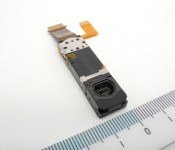
Details are beginning to emerge that answer that question. It appears that Asus may be utilizing the HOYA lens to accomplish such a feat.
What is a HOYA lens, you might ask? If you go to the HOYA Corporation’s website, you’ll find specs for the lens like this handy chart:

Originally announced back in 2013, the Japanese company’s HOYA lens is a “lens unit with 3x optical zoom and optical shake reduction that features the industry’s thinnest size of 6 mm in depth.”
It’s not said whether HOYA has made any improvements on the lens unit since then, but this should give us some idea of what to expect.
Source: HOYA via WhatsOnTech
Come comment on this article: Asus equips upcoming ZenFone Zoom with HOYA lens

Google to discard support for SPDY in Chrome as HTTP/2 becomes standard

The SPDY protocol was introduced by Google in 2009, aiming to make web browsing much faster and more secure than sites running hypertext transfer protocol (HTTP). HTTP has been the standard networking protocol that powers the web since it came to be, though it used to be much slower and less secure. However, the Internet Engineering Task Force (IETF) has been working to update version 1.1 of HTTP to a new version of the protocol called HTTP/2. As the new version of the protocol is on its way to becoming standard, Google has announced that the company will no longer use the SPDY protocol in Chrome.
HTTP/2’s main benefit is improved performance. The new version has added multiplexing, header compression, prioritization and protocol negotiation over the years. Plus, it’s now backed as an industry standard, which is why Google is ditching support for their native protocol. Google explains:
We’re happy to have contributed to the open standards process that led to HTTP/2, and hope to see wide adoption given the broad industry engagement on standardization and implementation. We also look forward to further advancements in fundamental Internet protocols that lead to a faster and more secure Internet for everyone.
Google plans to completely remove support for SPDY from Chrome in early 2016. At the same time, Google will also remove support for NPN, a TLS extension, in favor of ALPN in Chrome. The company strongly urges server developers to move to HTTP/2 and ALPN. HTTP/2 support will gradually begin rolling out to Chrome 40 in the upcoming weeks.
Study says phones are just as good as wearables at tracking fitness

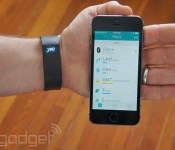
Think you have to wear a dedicated fitness tracker to get accurate data? Don’t worry — you may have a good excuse to skip the wristband. The University of Pennsylvania has published a study showing that smartphone apps’ step counts are reasonably on the mark, at less than a 7 percent variance between their data and what observers saw first-hand. With wearables, it’s all over the map. Some are very accurate, like Fitbit’s One and Zip; others don’t give you much of an advantage over a phone, and Nike’s Fuelband was sometimes off by a wide margin.
This isn’t to say that you should ditch wearables for good. The test only focused on six trackers, and didn’t include either the latest devices (including smartwatches) or a wide range of activities. There are also certain situations where a phone simply isn’t practical. You may not want to go on a run with your Galaxy or iPhone, for one thing. All the same, there’s enough evidence here to suggest that your handset is good enough when you’re only concerned about the distance you’ve walked in a given day.
Filed under: Cellphones, Wearables, Mobile
Via: EurekAlert, ScienceDaily
Source: Penn Medicine, JAMA

Samsung possibly removing its smartphones from Japan

When the Galaxy Note Edge was announced in September, Samsung selected Japan as the market to see the device first. The technology used for the curved edge of the display was already present in Japan; therefore, Samsung viewed the country as a good starting point for the Galaxy Note Edge. Once everything was up and running in Japan, the device was launched in additional markets. Unfortunately, nothing seems to be paying off for Samsung in Japan as the company is reportedly considering leaving the removal of its smartphones from Japan.
As of December 2014, Samsung holds a mere 4% of the Japanese smartphone market share. It places Samsung in sixth place behind companies such as Apple, Sony, and Sharp. Fourth months after launching, Samsung sold less than 100,000 units of the Galaxy Note Edge. The reason for the other companies, aside from Apple, having a strong place in Japan is because Sony and Sharp are domestic to the country. Consumers have gravitated to them due to trust. Apple, though, has been experiencing growth in Japan because of the hype surrounding the iPhone and iPhone 6 Plus. Samsung has faced a decline in sales to the point where exiting Japan seems like the best option.
Source: BusinessKorea
Via: G 4 Games
Come comment on this article: Samsung possibly removing its smartphones from Japan

The Witcher Twos-days: Episode 2 is coming up tonight!

The Witcher 3 is set to be one of the year’s biggest role-playing games when it arrives on Xbox One, Windows, and Playstation 4 this May. The third game in the Witcher series differentiates itself from other open-world action-RPGs with its dark and mature storyline filled with meaningful player choices and memorable sidequests.
To help prepare our readers for The Witcher 3, Windows Central has begun a new weekly Twitch series focused on The Witcher 2. Every Tuesday night at 8pm Central (9pm Eastern, 6pm Pacific), we play through another section of the game while you guys watch the stream at Twitch.tv/Eastxtwitch. Tonight we also have four copies of The Witcher 2 for Windows to give away, so you’ll definitely want to tune in and chat along during the stream!
Did you miss the first episode of our Witcher Twos-day series? Don’t worry; we’ve got a full write-up that will get you up to speed – complete with screenshots from the stream!

Flipboard makes its way to the desktop with Flipboard for the Web
Flipboard, the popular news aggregator, has just announced Flipboard for the Web, allowing you to view all of your news and stories from the desktop. It’s simple and exactly what you’d expect: sign in with your Flipboard account, and all of your personalized topics are ready to be seen. The new website is very pretty and features responsive layouts for different screen sizes, a new scrolling interface and interactions triggered by your mouse. The Flipboard team explains:
By developing for mobile first, we saw that content could shine again in a clean and uncluttered environment. The Web evolved, too, with things like responsive design making for easier (and prettier) reading and navigation. The vision of our founders—to bring a print-like aesthetic to digital content—could finally be realized.
Flipboard’s new website still offers a similar magazine-like interface, only users now use scrolling to navigate through pages, not the standard flipping motion Flipboard users are used to. Cover stories are still present on the web interface, bringing today’s top stories to the top of the page, sorted by Flipboard. One thing to note: part of the beauty of using the app was to view each article within Flipboard, without the need to open a web browser. On the web interface, clicking on a link opens the original web page in its own tab. This may not be the best delivery method, but the service is now live for diehard Flipboard fans.
Take a look at the introduction video above to learn more about Flipboard for the Web, or head to this link to start using the new website.
 AIVAnet