



European Parliament will not use Microsoft Outlook apps due to “security issues”

Shortly after it launched on mobile devices, the European Parliament has blocked Microsoft Outlook from internal use. The Microsoft Outlook app, which arrived last week on Android and iOS, has been deemed insecure by the government’s information technology (IT) department. Why? Apparently, the apps share password information with Microsoft and emails are stored in a third-party cloud that the European Parliament does not have access to.
The European Parliament’s IT department, DG ITEC, had this to say in an email to employees:
Please do not install this application, and in case you have already done so for your EP corporate email, please uninstall it immediately and change your password.
Via: PCWorld
Come comment on this article: European Parliament will not use Microsoft Outlook apps due to “security issues”

Daily Roundup: Snapchat selfie leads to murder arrest, connected sex toys for your techie Valentine and more!

Is iOS 9 bringing the updates we’ve been waiting for? Which sex toys should you buy for Valentine’s Day? Will the Earth’s potential robot takeover start at a hotel in Japan? We’ve got the answers to these questions and more in today’s Daily Roundup.
Teen charged with murder after posting gruesome Snapchat selfie

In a disturbing sign of the times, a Pittsburgh teenager is being charged with murder after he allegedly shot another teen and took a selfie with the corpse. He then reportedly sent the picture to a friend using Snapchat, and that friend was able to screenshot the photo before it disappeared.
iOS 9 reportedly focuses on under-the-hood upgrades

Apple’s iOS 9 could be the tune-up many users have been waiting for. According to sources for 9to5Mac, the upgrade is less about new features and more focused on “behind the scenes fixes and performance optimizations.”
Adult Themes: 8 connected sex toys for your Valentine

In case tickets to the BDSM flick every Midwestern housewife has been waiting for are already sold out in your city, we’ve come up with an alternative way for you to have an erotic Valentine’s Day. Check out our list of connected sex gadgets (with GIFs!).
Netflix in Cuba costs a third of the average monthly wage

Netflix is now available in Cuba, but it’s not likely the movie-streaming service will profit from the expansion any time soon. Only about five percent of the country’s residents have internet access, and the service’s $8-a-month cost is equivalent to over one-third of the average citizen’s monthly wages.
High-tech Japanese hotel to employ human-like robot staff

Remember Kokoro’s “actroids”? Well, they’re about to take over the reception desk at Nagasaki prefecture’s Henn-ha Hotel. But these multilingual automatons aren’t the only things that make Henn-ha a far from ordinary establishment.
Healbe GoBe review: Can a fitness band really track your calorie intake?

Healbe’s GoBe fitness tracker promises to not only track your movements and sleeping habits, but also what you’re eating. Our James Trew took the wearable for a spin to find out just how accurately it can tally your calories.
You can finally buy a OnePlus with ease

Tuesdays just got a lot more exciting if you’re in the market for a OnePlus One. The company has decided to forgo its standard invite process and open up sales for its 16GB Silk White and 64GB Sandstone Black models on this day each week.
Onda V919 3G Air review
brightcove.createExperiences();
The Bottom Line
- Dual-boot
- Better than HD display
- Good price
- Battery life
- Sensitive home button
- Underutilized internal storage
If you need a tablet which can run your Windows programs and your Android apps then this tablet is an interesting option for you. The display is nice, the processor performs well, however the battery life might not be good enough for some.
(function($)
$(document).ready(function()
$(“#aa_bottom_line .aa_bl_pros_cons”).each(function()
var aa_bl_pc=$(this).find(“.aa_bl_pc”);
var aa_bl_pros=$(this).find(“.aa_bl_pros”).height();
var aa_bl_cons=$(this).find(“.aa_bl_cons”).height();
if(window.innerWidth > 480 && aa_bl_pros != aa_bl_cons)
if(aa_bl_pros > aa_bl_cons)
aa_bl_pc.height(aa_bl_pros);
else
aa_bl_pc.height(aa_bl_cons);
)
);
)(jQuery);
Buy Now
One of the things that seems to polarize people, and start flame wars in general, is how to answer this question: what is the best mobile operating system? Some say Android, others say differently. In the real world we often mix and match our operating systems. For example, although I use an Android smartphone and an Android tablet, I still use a Windows PC. Microsoft’s OS is primarily found on systems with Intel compatible processors (although that is changing). Intel and Microsoft have been trying hard to boost their tablet market-shares, and both companies basically give away stuff to make devices that use their products cheaper. Intel effectively gives away Atom processors and Microsoft makes “Windows 8.1 with Bing” free for certain classes of tablet.
Related – Best Cheap Android Tablets / Best Android Tablets
This has given rise to a surge in the number of Intel powered tablets that run Windows. Since Intel processors can also run Android it was really only a matter of time before an OEM released a tablet which can run both Android and Windows. One such tablet is the Onda V919 3G Air.

Design
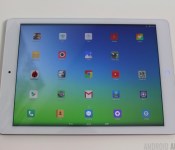
Like many Chinese OEM tablets, the Onda V919 Air is clearly trying to mimic the iPad Air. The dimensions are almost exactly the same as the iPad Air and its overall look is very similar to the iPad Air, even down to the bottom speaker grills that flank the micro USB port.

The power button and volume rocker are on the right hand side, just like the iPad Air, and on the front panel there is a circular home button, again just like the iPad.
On the back there is a plastic cover which when opened reveals slots for the SIM card, the SD card and some metal strips, presumably for the antenna. Again the placement of the cover on the top edge, next to the rear facing camera, is very similar to the iPad.
However there are of course some significant differences. First the Onda V919’s shell is made of plastic, second the device is slightly thicker than the iPad Air, and third the processor in the V919 Air isn’t an ARM based processor like the iPad or even the Nexus 9, it is an Intel chip. The result is that the Onda V919 can run both Android and Windows 8.1, but I will talk about that some more later.

One problem I did find with the design is that the circular home button is very sensitive. It only requires the lightest of touches for it to activate. What this means is that when holding the tablet in landscape my thumb kept touching the button and taking me to the home screen. This is can be very annoying. At first I thought that the tablet software was unstable and that apps kept crashing and dumping me back into the home screen. However I eventually worked out that my thumb was to blame. Adjusting how I held the tablet finally solved the problem, however even though I am conscious of how I need to hold the device, I still find that my thumb gets too close to that home button.
#gallery-1
margin: auto;
#gallery-1 .gallery-item
float: left;
margin-top: 10px;
text-align: center;
width: 33%;
#gallery-1 img
border: 2px solid #cfcfcf;
#gallery-1 .gallery-caption
margin-left: 0;
/* see gallery_shortcode() in wp-includes/media.php */


Display
The Onda V919 has a 9.7 inch display with a QXGA resolution, in other words 2048 x 1536. This means it has 4:3 screen ratio, just like the iPad, and also the Nexus 9. That translates to a pixel density of 264 ppi.
Now some people prefer tablets with a 16:10 screen ratio, because more of the display is used when watching widescreen movies, however the 4:3 display ratio is certainly a popular alternative.
The Onda uses an IPS display which yields good viewing angles. The color reproduction is good, and the screen is bright. However one disappointment is that the tablet doesn’t have a light sensor which means there is no automatic brightness option available.
Performance
As I mentioned earlier, at the heart of the Onda V919 3G Air is an Intel processor, not an ARM based processor as found in the majority of Android devices. In this particular case it is an Intel Atom Z3736F, a quad-core processor which runs at 2.4GHz and includes an Intel HD Graphics GPU.
In terms of usability the performance of the V919 3G Air was good. The UI always reacted quickly and games like Epic Citadel were able to achieve at least 50 frames per second. Video playback is smooth and I didn’t experience any lags or annoying pauses while using the device.
As for the individual benchmarks, the tablet scored 892 on Geekbench’s single core test, 2113 on its multi-core test, and an unverified 33413 on AnTuTu. Using 3DMark the device scored 7449 on Ice Storm Extreme and it managed 50 frames per second in Epic Citadel in High Quality mode.
GameBench testing confirmed the Epic Citadel score and showed that for simple 2D games the device can easily hit 55 fps.

Hardware
The Onda V919 has a 6200 mAh battery. It is hard to theorize about the battery life from just the raw mAh number. But for comparison, the Nexus 9 has a 6700 mAh battery while the iPad Air and the iPad Air 2 have 8820 mAh and 7340 mAh batteries respectively. Unfortunately it looks like the battery life in the V919 isn’t great. My testing showed that you can stream YouTube videos for around 4 hours on a single charge. Alternatively a single charge will let you play intensive 3D games for around 2.7 hours or simpler 2D games for around 3.7 hours.

Overall these numbers are a little disappointing and it seems to me that the software needs to be correctly optimized for the hardware and Intel processor. If I fully charged the battery and then rebooted the tablet, so that no extra programs were running, the device loses over 30% of its charge in 11 hours while asleep. According to the battery chart, over 50% of the battery was consumed by the “Android system.”
The speaker on the V919 is nothing special, it does its job in that it produces sound, however don’t expect anything amazing. Also the speaker grills don’t seem to have any relation to the actual speaker, as covering both grills only reduces the sound marginally.
The tablet has built in support for 3G on 850, 1900 and 2100MHz. The last number is the common 3G frequency and should work in most places around the world, however a lot of carriers also use a secondary 3G spectrum range. In Asia and South America this is often 850MHz, but in Europe it tends to be 900MHz.
The device might work on AT&T in the USA as it uses 850 and 1900 MHz, however I haven’t tested it. For other networks in the USA standard GSM calls should work. You need to check with your carrier to ensure compatibility or if you trust Wikipedia then the List of UMTS networks page could have the information you need. As you would expect the tablet also supports Wi-Fi 802.11 b/g/n and Bluetooth 4.0.
The V919 comes with 2GB of RAM, which is the most supported by the Intel processor, and either 32GB or 64GB of storage depending on which model you buy. My test unit has 32GB.

One thing to remember is that this device actually has two operating systems pre-installed, Android and Windows 8.1. The internal storage is divided up between Android and Windows, with some space being used for the operating systems themselves and the remaining divided up as usable storage between the two environments. Under Android the 32GB model has around 6GB of space for installing apps and for storing your own files. Under Windows the free space on the “Disk C:” is about 8.5GB. This means that the rest is used to hold the OSes. However, the numbers don’t seem to add up and I am left with the feeling that a large chunk of flash memory is being underutilized.
In terms of what is missing, this tablet is very short on sensors of any kind. It has an accelerometer and that is about it. There is no GPS, no NFC, and no magnetometer. For most people this probably isn’t a problem, however many 3G enabled tablets come with at least GPS, so it would have been a nice addition.
Camera
The cameras on the V919 are very basic. The rear facing camera has a 5MP sensor and the front facing camera has a 2MP sensor. Personally I find the front facing camera the most important on a tablet as it is useful for video conferencing with Skype.
The rear camera is good considering this is a tablet and it is only a 5MP sensor. The color reproduction is fairly faithful and the camera works well enough indoors as well as outdoors. Having said that, you aren’t going to win any photo competitions with it. Unfortunately the front facing camera is terrible. The colors blur easily and indoors there is lots of noise.
The bundled camera app is very simple and offers little more than the very basic operations. If you do use the camera more than occasionally then you would probably want to install a third party camera app.
Here are some sample shots so you can judge for yourself:
#gallery-2
margin: auto;
#gallery-2 .gallery-item
float: left;
margin-top: 10px;
text-align: center;
width: 25%;
#gallery-2 img
border: 2px solid #cfcfcf;
#gallery-2 .gallery-caption
margin-left: 0;
/* see gallery_shortcode() in wp-includes/media.php */


Software
The key selling point of the Onda V919 3G Air is its dual-boot ability. The device comes pre-installed with Android 4.4.4 KitKat and Windows 8.1 with Bing. Each OS has a way to make the device to reboot into the other operating system. Under Android there is a “OS Switch” icon on the notification blind, and on Windows there is the DualOSSwitcher program, which is on the toolbar by default.

The supplied version of Android is fairly vanilla, except for the launcher. Onda has included its own launcher which doesn’t include an apps draw. Like the iPad, all the icons are on the home screens and you need to organize everything into folders. The Onda launcher also includes a theme switcher which allows you to pick one of 5 pre-installed themes including Funny Board and Childhood dream! If you don’t like the launcher, then the good news is that since this is Android, you can easily replace the launcher with one of your choice.

There are also a few bundled apps including a neat Wi-Fi configuration program and the LPAL configurator for Intel’s always listening technology. You are meant to be able to set a trigger that allows you to wake your tablet using your voice, however I couldn’t get it to work!
As for Windows, the installed version runs as expected. I won’t talk too much about how hard Windows 8.1 is to use without a mouse and keyboard, but that isn’t the fault of Onda. If needed you can use a mouse and keyboard via a micro USB to OTG converter (and a small USB hub), but you will need to buy one separately.
I was able to install programs like Chrome and VLC without any problem and the default Windows camera app worked reasonably well with the rear-facing camera. There wasn’t a toggle to switch to the front facing camera, however Skype found the front-facing camera without any problems.

One problem with the provided version of Windows is that some bits of the UI keep appearing in Chinese. Having fiddled with the regional settings etc., I thought I had set everything to English, but still from time to time I would get a window with Chinese writing!
The tablet comes with an micro SD card slot and the card is shared between Windows and Android. This means that files copied onto the card in one OS is available under the other. I was able to install Windows programs on the micro SD card (by installing them under D:), however there is no option under this build of Android to move apps to the SD card.
Price and Conclusion
The concept of a dual-booting tablet is an interesting one and Onda certainly has made it a viable option. Overall the screen is good, the processor seems to perform well enough and both OSes run as you would expect. The battery life is less than I would have wanted and the over-sensitive home button can be annoying. But these weaknesses might be forgivable if you really like the idea of a dual-boot tablet.
You can get an Onda V919 3G Air from Geekbuying.com for just $225 for the 32GB model, and $240 for the 64GB model. The 64GB model is currently in pre-sell and will be available from February 25th. However the 32GB model is available now.

Humble Cartoon Network Mobile Bundle grows to 14 games

At the start of last week, Humble Bundle launched a Cartoon Network edition of its mobile bundle. There were eleven games, based on Cartoon Network characters, available at the start. Today, the amount of games has been raised to fourteen. Donors will receive the games based on the amount donated. Any donation will net four games and that numbers climbs to the full fourteen when exceeding $8.
This round of Humble Mobile Bundle will benefit Khan Academy and Child’s Play Charity. In addition to being for a great cause, funds will be rewarded to hardworking developers.
Pay any amount to get:
- Regular Show: Best Park in the Universe
- Regular Show: Ghost Toasters
- Regular Show: Ride ‘Em Rigby
- Adventure Time: Treasure Fetch
Pay more than the average (of $6.18 at the time of this post being published) to get:
- Regular Show: The Great Prank War
- Adventure Time: Jumping Finn Turbo
- CN Superstar Soccer
- Ski Safari: Adventure Time
- Adventure Time: Fionna Fights
- Adventure Time: Rock Bandits
- Ben 10: Wrath of Psychobos
Pay more than $8 to get:
- Monsters Ate My Birthday Cake
- Adventure Time: Time Tangle
- The Powderpuff Girls: Defenders of Townsville
The Humble Cartoon Network Mobile Bundle donation period will end in just under seven days.
Source: Humble Bundle
Come comment on this article: Humble Cartoon Network Mobile Bundle grows to 14 games

Best Buy website outs the Moto E (2nd gen)

While the Moto X and Moto G lines were refreshed in late 2014, the Moto E has yet to follow suit with an update, until now. Out of the blue, it seems that Best Buy has now listed up the Moto E 2nd gen, despite the fact that Motorola has yet to announce it.
The model listed on Best Buy’s website is for Sprint Prepaid and appears to be powered by a Qualcomm 1.2GHz processor, likely a Snapdragon 200. There’s also 1GB RAM, 8GB storage with microSD, a 5MP rear shooter, VGA front cam, a 4.5-inch display with 540 x 960 resolution, Android 5.0 Lollipop and allegedly the phone has support for both 3G, 4G and 4G LTE. The Best Buy listing also says the phone is 5.12×2.64x.47-inches and weighs in at 5.04 ounces. The claim of LTE support is pretty interesting, especially considering the Moto G (2nd gen) doesn’t offer LTE, although an optional LTE model did recently surface.
Much like the Moto G’s successor, the next-gen Moto E isn’t a massive update from the original, though it appears to be a more sizable upgrade than the Moto G (2nd gen) was. Some of the notable changes include increasing hte size from 4.3-inches to 4.5, going from 4GB to 8GB storage, and the addition of a VGA front cam. Oh, and LTE — if that part of the spec sheet is accurate.
While the Best Buy listing appears to be live, there’s no shipping options outside of site to store and no stores appear to have it stocked. It’s possible that Motorola’s announcement is just around the corner and Best Buy simply jumped the gun, or perhaps the phone’s launch will simply be a quiet one.

Here’s why people are volunteering for a one-way trip to Mars

If you’ve heard about the Mars One mission, you’ve probably had one overriding question: what the hell would prompt someone to volunteer for a one-way trip to another planet? Thanks to The Guardian, we now have a clearer answer. The news outlet has just published If I Die on Mars, a documentary that asks three Mars One finalists why they’re willing to leave Earth (and everyone they know) behind. In short, they have little to lose and a lot to gain. None of the three candidates has a romantic attachment, and they all feel that they’re achieving a higher purpose by settling a distant world. That common response won’t be very reassuring to their families, but it does help make sense of a seemingly irrational desire for interplanetary travel.
Filed under: Transportation, Science
Source: The Guardian (YouTube)

Android patent lawsuit between Samsung and Microsoft settled

In what has to be one of the quickest resolutions to a patent lawsuit between tech giants in recent history, Microsoft and Samsung have announced a settlement over patent royalties for some code included in Samsung’s Android devices. The lawsuit stemmed from an agreement reached between the two companies in 2011 that flared up in August 2014 when Microsoft accused Samsung of breach of contract.
According to Microsoft’s original complaint, the company claimed Samsung had failed to make agreed upon royalty payments. Microsoft was asking that the contract be declared valid and that in addition to the payments owed, that Samsung also pay interest for late payments.
Neither side revealed any details of the settlement, instead issuing a joint statement that said, “Samsung and Microsoft are pleased to announce that they have ended their contract dispute.”
source: Re/code
Come comment on this article: Android patent lawsuit between Samsung and Microsoft settled

Skype 5.2 for Android update making it even easier to connect

Skype has announced an update to their messaging app for Android taking it up to version 5.2. The update includes several improvements and enhancements. Grabbing the headline as a new feature now available, users can send photos to their contacts whether the receiver is online or offline. When the recipient of one of your photos logs in to Skype, they will see any photos that have been shared with them inline in their chat history.
Along with the ability to send a photo to a contact at any time, Skype made a few other improvements including:
- Picture in picture view is now supported on phones, too – letting you keep a video call going even when you navigate away to other applications
- Chats load faster, especially when opened from a notification
- Call quality improvements, especially in low bandwidth scenarios
The updated version of Skype is now available in the Google Play Store.


source: Skype
Come comment on this article: Skype 5.2 for Android update making it even easier to connect

Android patent lawsuit between Samsung and Microsoft settled
In what has to be one of the quickest resolutions to a patent lawsuit between tech giants in recent history, Microsoft and Samsung have announced a settlement over patent royalties for some code included in Samsung’s Android devices. The lawsuit stemmed from an agreement reached between the two companies in 2011 that flared up in August 2014 when Microsoft accused Samsung of breach of contract.
According to Microsoft’s original complaint, the company claimed Samsung had failed to make agreed upon royalty payments. Microsoft was asking that the contract be declared valid and that in addition to the payments owed, that Samsung also pay interest for late payments.
Neither side revealed any details of the settlement, instead issuing a joint statement that said, “Samsung and Microsoft are pleased to announce that they have ended their contract dispute.”
source: Re/code
Come comment on this article: Android patent lawsuit between Samsung and Microsoft settled
Apple Rumored to Update Non-Retina MacBook Air Line in Late February
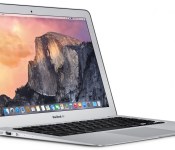
The much-anticipated 12-inch Retina MacBook Air is believed to launch sometime in the middle of 2015, but a new rumor out of foreign news website Letem svetem Applem [Google Translate] points to a smaller refresh of the existing MacBook Air line hitting as early as February 24.

The website, citing sources from the Czech reseller network, states the update will come with no fanfare or keynote presentation, unsurprising considering a lack of major changes for the lineup. The company also won’t discuss the long-rumored ultra-slim MacBook Air around the launch of the new refresh, hoping the “quiet” update tides users over until later in the year.
If true, the focus on the fact that the update would be “minor” points to only slight bumps in areas like storage and processing power, with Apple choosing from 2.2GHz Core i5-5250U, 1.8GHz Core i5 chip, and 2GHz Core i7 processors, while keeping the well-known 11- and 13-inch form factors of current MacBook Airs. Intel launched the new Broadwell processors appropriate for the current MacBook Air lineup last month.
Reports of the 12-inch MacBook Air have been swirling for over a year now, but the product missed the originally rumored timeframe of a 2014 launch. Rumored to be in mass production since last month and with claimed part leaks beginning to surface, the Retina MacBook Air is reported to launch sometime in the second quarter of 2015.
 AIVAnet