Outrun the darkness with Lamp Head for Windows Phone

Lamp Head is yet another endless runner styled Windows Phone game but the game isn’t your run of the mill endless runner game. The goal is to run your gaming character as far as possible, flipping up and down to avoid deadly obstacles.
Fitted with a lamp to shed a little light on these dangers and keep the darkness at bay, Lamp Head is an entertaining Windows Phone game to pass the time with. Available for low-memory devices, Lamp Head also includes missions or goals to work towards and global leaderboards.
Android 5.0 Lollipop for Samsung Galaxy S4 LTE-A now ready to download
Android 5.0 Lollipop for the Samsung Galaxy S4 LTE-A (GT-I9506) has been available in Germany, the Czech Republic, and Slovakia for a few weeks, but now it looks like the update will be rolling out for the rest of us.
The official OTA for Android 5.0.1 Lollipop should be hitting your notification window very soon, but those countries confirmed to be getting it include Germany and the Czech Republic.
Remaining countries are expected to receive the OTA soon.
(function() var script = document.createElement(‘script’);script.src = ‘https://stacksocial.com/widget.js?publisher=androidguys&type=editorial_post_widget_preferences’;script.async = true;var entry = document.getElementsByTagName(‘script’)[0];entry.parentNode.insertBefore(script, entry);)();
http://www.androidguys.com/pubgalaxy/728×90.html
The post Android 5.0 Lollipop for Samsung Galaxy S4 LTE-A now ready to download appeared first on AndroidGuys.
Linaro quick hands on with a Project Ara phone

Linaro, a not-for-profit engineering organization involved with ARM open source software development, has spent a little time talking about and showing a quick hands on with Project Ara and a few essential modules.
The talk looks at some of the implications and hurdles of the project and contains plenty of information for those looking to keep up with the modular engineering project. There’s about 10 minutes of content on Ara in the video and a brief close look at a phone being put together at the 36:34 minute mark.
The big hurdle still to be addressed by Project Ara is that of component compatibility and all of the implications that this has for low and high level programming. Ideally, Ara requires hardware vendors to collaborate on a specific device class, so that batteries, audio, WiFi components, etc, from different vendors all play nicely with Ara, much like common PCI-E, USB, or UART standards used in other pieces of hardware. The ARM development community and Google are approaching major vendors to try and address the issue, which could to help avoid the irritations and incompatibility issues associated with proprietary software and hardware.
There is still plenty of work to be done on Project Ara before the device’s commercial debut in Puerto Rico in the closing months of 2015, but developers look to have a firm handle on the challenges ahead.
‘Battlebots’ is coming back to TV this summer

That’s right, Battlebots is coming back from its place in the early-00’s vault for a six episode run on ABC this summer. In its original run the show featured “talent” like Sean Salisbury, Bil Dwyer, Bill Nye, Traci Bingham and Carmen Electra, but there’s no word yet on who will be hosting this time around. The most important part of course should be the bots themselves, which will still be homemade but are promised to be “bigger, faster and stronger than ever before.” It looks like the show is also taking some cues from last decade or so of reality TV (for better or worse), by delving into the design of each robot and the people who build them. The show last aired on Comedy Central in 2002, but developments like 3D-printing and the Maker movement are just a part of the progress we’ve seen since then. We’re still months away from finding out if Battlebots has a place after its long hiatus, but until then you can check out some highlights and an oral history of the original series.
https://www.youtube-nocookie.com/embed/Oo3zWxO3yYs?rel=0
[Image credit: Associated Press]
Filed under: Home Entertainment, HD
Via: Deadline
Source: ABC

Latest OnePlus One OTA update introduces MaxxAudio and Swiftkey to owners

The OnePlus team has today announced a CyanogenMod 11S update for the OnePlus One. The update will begin rolling out from today, bringing with it numerous fixes and improvements, but highlights include SwiftKey and MaxxAudio, both of which are now bundled with the OS. No, we’re not on Android 5.0 Lollipop just yet.

OnePlus One will be available without an invite every Tuesday

OnePlus is making its “no invite” events a regular occurrence, with the OnePlus One set to go on sale with no strings attached every Tuesday.
Announced on the company blog today, the new system will see both the 16GB Silk White ($300) and the 64GB Sandstone Black ($350) versions go on sale without invitations. The events will open every Tuesday at 12AM Pacific/3AM Eastern/8AM British/4PM Hong Kong and will last for 24 hours.
OnePlus is not giving up on its invites any time soon. The “beloved” system will remain in place for the other six days in the week, and users buying the One during the open windows will still receive invitations to give away to friends.
The new open windows are for the global variant of the OnePlus One, so Indian and Indonesian customers won’t get to join in the fun. However, OnePlus will still hold occasional events for these markets – a “one-time” limited stock event will be held in India tomorrow, starting at 10AM IST.
OnePlus has received a ton of flak over its restrictive sales policies, but the invitation system has some clear benefits for the young company. OnePlus can keep manufacturing costs in check and minimize the amount of money it sinks into stocks, and the savings are passed to the customer. OnePlus has always claimed it makes very little money on each phone it sells, though exact figures are not public.
Lawmakers like Fred Upton are FCC hypocrites

Although hypocrisy in politics is common, this type of hypocrisy with the Federal Communications Commission (FCC) does indeed surprise me because of the high degree of flip-flopping that is being done by certain politicians.
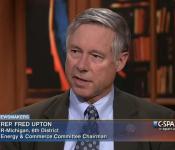
House Energy & Commerce Committee chairman Fred Upton (R-Mich.) is outraged at the FCC’s decision to go forward with new network neutrality rules. Now, I have absolutely no issue with his anger at that specific topic. I personally agree with net neutrality but many do not and I respect that.
What I take issue with is the quote by Upton about the White House needing “to get its hands off the FCC.” Uptown also made it a point to state that all of this net neutrality talk was bad for the Internet business since “providers need certainty so they can move forward with their business models.”
If he wants the President to stay out of FCC affairs, he seems to have changed this belief since President Obama took office. Previously, Upton pushed hard for support from President George W. Bush when Upton helped create the Broadcast Decency Enforcement Act, which passed in 2006. This gave the FCC additional power to punish broadcasters who showed indecent material on radio and television.

UPI Upton (Right) watching President Bush sign the Broadcast Decency Enforcement Act.
Upton even attended the celebrated signing of the bill with former President George W. Bush. During his time at the White House, President George W. Bush gave Upton a nickname of “Freddie Boy.”
Therefore, at this point in time, Upton seems to enjoy giving the FCC additional power and is quite happy at the President publicly supporting his plan. But maybe Upton simply wanted President Obama to stay out of the debate because of his so-called belief that the government should have no role in deciding the rules for the broadband industry.
Yet, since 2000, has their been a politician that has had his hands more on the FCC than government official Fred Upton? As we discussed above, Upton was one of the central figures in giving the FCC additional power in punishing broadcasters.

In 2004, Upton was one of a number of politicians asking the FCC to review the TV industry and see “whether a la carte pricing would be technologically and economically feasible.” Did he forget about the need to give TV providers that “certainty” for their current business models? Don’t get me wrong, I love that Upton did this but going by his reasoning today, this is not something that should have ever been brought up if he was looking to give the industry “certainty.”
Then in 2006, Uptown openly pushed for the passage of the Communications Opportunity, Promotion and Enhancement Act (Cope Act) which made it easier for telecoms firms to offer video services around the country by replacing 30,000 local franchise boards with a national system overseen by the FCC. Again, this is now the second time that Upton put forward bills that gave the FCC additional power.
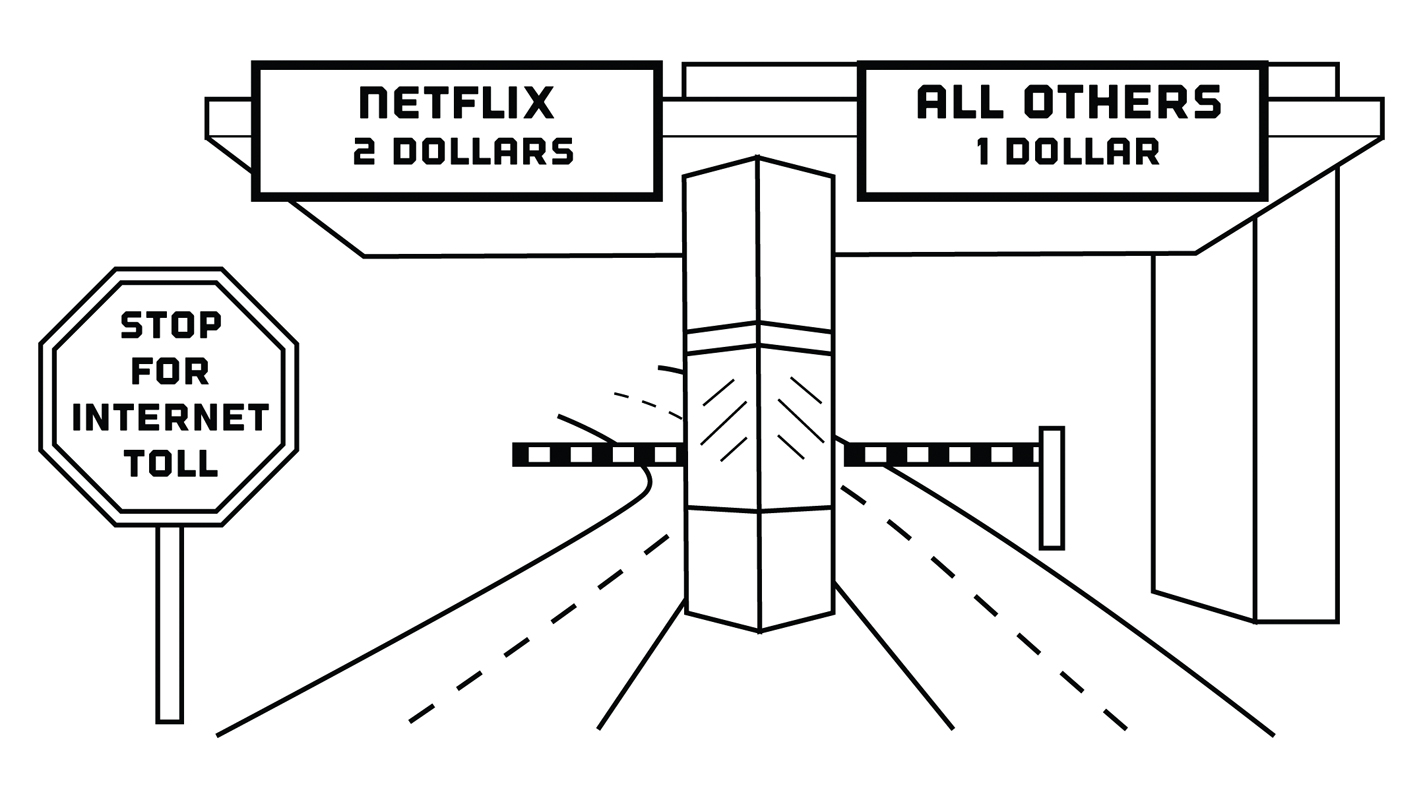
Or how about the fact that Upton helped write a draft of bill that would have created a “two-tiered” Internet back in 2006 that was backed by the FCC. In the mid-2000’s, ISP’s were pushing lawmakers to allow for them to create a “two tier system” which would allow them to charge content providers different rates depending on the amount of traffic or bandwidth they require.

PBS Fred Upton on PBS discussing the two-tier internet proposal in 2006
BellSouth’s Chief Technology Officer executive William L Smith, openly discussed the potential to charge a premium to websites for prioritizing downloading by noting that Yahoo could pay to load faster than Google. AT&T and other telecoms wanted to charge consumers a premium fee to connect to the higher-speed Internet and also charge websites a premium to offer their video to consumers on the Internet.
Again, who helped write this draft?
“The prospect of a tiered Internet with ‘regular’ and ‘premium’ broadband services is spawning fierce debate as Congress takes up a major overhaul of telecom regulations. The House of Representatives last month held hearings on a preliminary draft by two GOP congressmen, Joe Barton of Texas and Fred Upton of Michigan, that would give the telecom companies the freedom to establish premium broadband services. The telecom bill is due for action early next year.” The Inquirer.net discloses that the FCC has even signed on to the “two tier” idea. – Boston.com
Generally speaking, those against net neutrality tend to claim that net neutrality advocates are crazy for thinking that ISPs could try to create a two-tier Internet. Yet, as we can see, they have already tried to do exactly that.
The list goes on with numerous actions by Upton who pushes for more and more government “regulation” when it comes to causes that he supports such regulation.

By the way, Upton wouldn’t have money riding on these decisions, would he? I mean, I can’t think of a bigger conflict-of-interest if he did. Of course he does. According to Gawker and the 2013 Personal Financial Disclosure statements:
Some members of Congress profit from the same companies they’re supposed to police. Four members of the House Energy Subcommittee on Communications and Technology—that’s the committee that’s specifically in charge of regulating the telecom industry, including the internet—hold investments in AT&T, Comcast, and Verizon. When these companies make big profits, these Congressmen share in them.
Hon. Fred Upton (R-MI) – Chairman of the House Committee on Energy and Commerce and ex-officio member of the Subcommittee on Communications and Technology.
– AT&T* (investment amount: $15,001 – $50,000; reported income from investment: $0)
– Comcast* (investment amount: $1,001 – $15,000; reported income from investment: $0)
– Verizon (investment amount: $1,001 – $15,000; reported income from investment: $1 – $200)
– Rep. Upton’s wife invests $15,001 to $50,000 in AT&T and receives $1,001 to $2,500 in annual income from that investment. She also invests $1,001 – $15,000 in Comcast and receives $1 to $200 in annual income from that investment.
In fact, as the International Business Times reported, “Rep. Fred Upton of Michigan and Rep. Greg Walden of Oregon — received more money from cable-industry interests than almost any other members of Congress, campaign finance records show.”
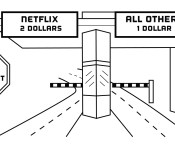
How many terrible anti-net neutrality videos are going to be made?

Last week, we reported on a wireless industry group’s laughably bad attempt at making an anti-Title II video. In it, the CTIA (the wireless industry’s lobbying arm with members including AT&T and Verizon) made their case for wireless carriers being exempt from any net neutrality rules with cringe-worthy fake actors and utterly debunked stats.
This week, we have an industry-funded group trying their hand at making a terrible anti-net neutrality video. The astroturf group (meaning a group set up and paid for by a company) claims that they made the short film to show the “dark future of government Internet regulators dropping into homes.”
Now, from what I can see in the video, the point is that the government is interrupting a woman from romancing the handsome cable guy. So, they are using the porn angle for their net neutrality argument?
Honestly, I am not sure what other point is made here that is supposed to persuade people that net neutrality is somehow a bad thing.
Lawmakers like Fred Upton are FCC hypocrites
Although hypocrisy in politics is common, this type of hypocrisy with the Federal Communications Commission (FCC) does indeed surprise me because of the high degree of flip-flopping that is being done by certain politicians.
House Energy & Commerce Committee chairman Fred Upton (R-Mich.) is outraged at the FCC’s decision to go forward with new network neutrality rules. Now, I have absolutely no issue with his anger at that specific topic. I personally agree with net neutrality but many do not and I respect that.
What I take issue with is the quote by Upton about the White House needing “to get its hands off the FCC.” Uptown also made it a point to state that all of this net neutrality talk was bad for the Internet business since “providers need certainty so they can move forward with their business models.”
If he wants the President to stay out of FCC affairs, he seems to have changed this belief since President Obama took office. Previously, Upton pushed hard for support from President George W. Bush when Upton helped create the Broadcast Decency Enforcement Act, which passed in 2006. This gave the FCC additional power to punish broadcasters who showed indecent material on radio and television.
UPI Upton (Right) watching President Bush sign the Broadcast Decency Enforcement Act.
Upton even attended the celebrated signing of the bill with former President George W. Bush. During his time at the White House, President George W. Bush gave Upton a nickname of “Freddie Boy.”
Therefore, at this point in time, Upton seems to enjoy giving the FCC additional power and is quite happy at the President publicly supporting his plan. But maybe Upton simply wanted President Obama to stay out of the debate because of his so-called belief that the government should have no role in deciding the rules for the broadband industry.
Yet, since 2000, has their been a politician that has had his hands more on the FCC than government official Fred Upton? As we discussed above, Upton was one of the central figures in giving the FCC additional power in punishing broadcasters.
In 2004, Upton was one of a number of politicians asking the FCC to review the TV industry and see “whether a la carte pricing would be technologically and economically feasible.” Did he forget about the need to give TV providers that “certainty” for their current business models? Don’t get me wrong, I love that Upton did this but going by his reasoning today, this is not something that should have ever been brought up if he was looking to give the industry “certainty.”
Then in 2006, Uptown openly pushed for the passage of the Communications Opportunity, Promotion and Enhancement Act (Cope Act) which made it easier for telecoms firms to offer video services around the country by replacing 30,000 local franchise boards with a national system overseen by the FCC. Again, this is now the second time that Upton put forward bills that gave the FCC additional power.
Or how about the fact that Upton helped write a draft of bill that would have created a “two-tiered” Internet back in 2006 that was backed by the FCC. In the mid-2000’s, ISP’s were pushing lawmakers to allow for them to create a “two tier system” which would allow them to charge content providers different rates depending on the amount of traffic or bandwidth they require.
PBS Fred Upton on PBS discussing the two-tier internet proposal in 2006
BellSouth’s Chief Technology Officer executive William L Smith, openly discussed the potential to charge a premium to websites for prioritizing downloading by noting that Yahoo could pay to load faster than Google. AT&T and other telecoms wanted to charge consumers a premium fee to connect to the higher-speed Internet and also charge websites a premium to offer their video to consumers on the Internet.
Again, who helped write this draft?
“The prospect of a tiered Internet with ‘regular’ and ‘premium’ broadband services is spawning fierce debate as Congress takes up a major overhaul of telecom regulations. The House of Representatives last month held hearings on a preliminary draft by two GOP congressmen, Joe Barton of Texas and Fred Upton of Michigan, that would give the telecom companies the freedom to establish premium broadband services. The telecom bill is due for action early next year.” The Inquirer.net discloses that the FCC has even signed on to the “two tier” idea. – Boston.com
Generally speaking, those against net neutrality tend to claim that net neutrality advocates are crazy for thinking that ISPs could try to create a two-tier Internet. Yet, as we can see, they have already tried to do exactly that.
The list goes on with numerous actions by Upton who pushes for more and more government “regulation” when it comes to causes that he supports such regulation.
By the way, Upton wouldn’t have money riding on these decisions, would he? I mean, I can’t think of a bigger conflict-of-interest if he did. Of course he does. According to Gawker and the 2013 Personal Financial Disclosure statements:
Some members of Congress profit from the same companies they’re supposed to police. Four members of the House Energy Subcommittee on Communications and Technology—that’s the committee that’s specifically in charge of regulating the telecom industry, including the internet—hold investments in AT&T, Comcast, and Verizon. When these companies make big profits, these Congressmen share in them.
Hon. Fred Upton (R-MI) – Chairman of the House Committee on Energy and Commerce and ex-officio member of the Subcommittee on Communications and Technology.
– AT&T* (investment amount: $15,001 – $50,000; reported income from investment: $0)
– Comcast* (investment amount: $1,001 – $15,000; reported income from investment: $0)
– Verizon (investment amount: $1,001 – $15,000; reported income from investment: $1 – $200)
– Rep. Upton’s wife invests $15,001 to $50,000 in AT&T and receives $1,001 to $2,500 in annual income from that investment. She also invests $1,001 – $15,000 in Comcast and receives $1 to $200 in annual income from that investment.
In fact, as the International Business Times reported, “Rep. Fred Upton of Michigan and Rep. Greg Walden of Oregon — received more money from cable-industry interests than almost any other members of Congress, campaign finance records show.”
Lawmakers like Fred Upton are FCC hypocrites
Although hypocrisy in politics is common, this type of hypocrisy with the Federal Communications Commission (FCC) does indeed surprise me because of the high degree of flip-flopping that is being done by certain politicians.
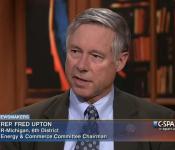
House Energy & Commerce Committee chairman Fred Upton (R-Mich.) is outraged at the FCC’s decision to go forward with new network neutrality rules. Now, I have absolutely no issue with his anger at that specific topic. I personally agree with net neutrality but many do not and I respect that.
What I take issue with is the quote by Upton about the White House needing “to get its hands off the FCC.” Uptown also made it a point to state that all of this net neutrality talk was bad for the Internet business since “providers need certainty so they can move forward with their business models.”
If he wants the President to stay out of FCC affairs, he seems to have changed this belief since President Obama took office. Previously, Upton pushed hard for support from President George W. Bush when Upton helped create the Broadcast Decency Enforcement Act, which passed in 2006. This gave the FCC additional power to punish broadcasters who showed indecent material on radio and television.
UPI Upton (Right) watching President Bush sign the Broadcast Decency Enforcement Act.
Upton even attended the celebrated signing of the bill with former President George W. Bush. During his time at the White House, President George W. Bush gave Upton a nickname of “Freddie Boy.”
Therefore, at this point in time, Upton seems to enjoy giving the FCC additional power and is quite happy at the President publicly supporting his plan. But maybe Upton simply wanted President Obama to stay out of the debate because of his so-called belief that the government should have no role in deciding the rules for the broadband industry.
Yet, since 2000, has their been a politician that has had his hands more on the FCC than government official Fred Upton? As we discussed above, Upton was one of the central figures in giving the FCC additional power in punishing broadcasters.
In 2004, Upton was one of a number of politicians asking the FCC to review the TV industry and see “whether a la carte pricing would be technologically and economically feasible.” Did he forget about the need to give TV providers that “certainty” for their current business models? Don’t get me wrong, I love that Upton did this but going by his reasoning today, this is not something that should have ever been brought up if he was looking to give the industry “certainty.”
Then in 2006, Uptown openly pushed for the passage of the Communications Opportunity, Promotion and Enhancement Act (Cope Act) which made it easier for telecoms firms to offer video services around the country by replacing 30,000 local franchise boards with a national system overseen by the FCC. Again, this is now the second time that Upton put forward bills that gave the FCC additional power.
Or how about the fact that Upton helped write a draft of bill that would have created a “two-tiered” Internet back in 2006 that was backed by the FCC. In the mid-2000’s, ISP’s were pushing lawmakers to allow for them to create a “two tier system” which would allow them to charge content providers different rates depending on the amount of traffic or bandwidth they require.
PBS Fred Upton on PBS discussing the two-tier internet proposal in 2006
BellSouth’s Chief Technology Officer executive William L Smith, openly discussed the potential to charge a premium to websites for prioritizing downloading by noting that Yahoo could pay to load faster than Google. AT&T and other telecoms wanted to charge consumers a premium fee to connect to the higher-speed Internet and also charge websites a premium to offer their video to consumers on the Internet.
Again, who helped write this draft?
“The prospect of a tiered Internet with ‘regular’ and ‘premium’ broadband services is spawning fierce debate as Congress takes up a major overhaul of telecom regulations. The House of Representatives last month held hearings on a preliminary draft by two GOP congressmen, Joe Barton of Texas and Fred Upton of Michigan, that would give the telecom companies the freedom to establish premium broadband services. The telecom bill is due for action early next year.” The Inquirer.net discloses that the FCC has even signed on to the “two tier” idea. – Boston.com
Generally speaking, those against net neutrality tend to claim that net neutrality advocates are crazy for thinking that ISPs could try to create a two-tier Internet. Yet, as we can see, they have already tried to do exactly that.
The list goes on with numerous actions by Upton who pushes for more and more government “regulation” when it comes to causes that he supports such regulation.
By the way, Upton wouldn’t have money riding on these decisions, would he? I mean, I can’t think of a bigger conflict-of-interest if he did. Of course he does. According to Gawker and the 2013 Personal Financial Disclosure statements:
Some members of Congress profit from the same companies they’re supposed to police. Four members of the House Energy Subcommittee on Communications and Technology—that’s the committee that’s specifically in charge of regulating the telecom industry, including the internet—hold investments in AT&T, Comcast, and Verizon. When these companies make big profits, these Congressmen share in them.
Hon. Fred Upton (R-MI) – Chairman of the House Committee on Energy and Commerce and ex-officio member of the Subcommittee on Communications and Technology.
– AT&T* (investment amount: $15,001 – $50,000; reported income from investment: $0)
– Comcast* (investment amount: $1,001 – $15,000; reported income from investment: $0)
– Verizon (investment amount: $1,001 – $15,000; reported income from investment: $1 – $200)
– Rep. Upton’s wife invests $15,001 to $50,000 in AT&T and receives $1,001 to $2,500 in annual income from that investment. She also invests $1,001 – $15,000 in Comcast and receives $1 to $200 in annual income from that investment.
In fact, as the International Business Times reported, “Rep. Fred Upton of Michigan and Rep. Greg Walden of Oregon — received more money from cable-industry interests than almost any other members of Congress, campaign finance records show.”
 AIVAnet