Wireless carrier charged customers for data roaming they didn’t use

MobileSyrup alerts us to an odd story. Fido Solutions is a Canadian cellular telephone service provider owned by Rogers Communications. Last week, a number of Fido customers were charged for data that they didn’t use.
Specifically, some customers had their data roaming automatically activated despite turning off the “Data Roaming” option on their phones. These customers then saw multiple charges of $7.99 every month.
But the phones had the “Data Roaming” option turned off so why was Rogers charging them? When customers contacted Rogers about this issue, they were not given an actual explanation.
But we do have a theory:
Rogers likely placed the phone(s) in the United States using its regular roaming mechanism, and incorrectly billed for data coverage when there was none. That’s pretty bad. – MobileSyrup
To Rogers credit, they have released a statement claiming that customers would not be charged for data that they didn’t use and that they are “proactively crediting customers who were wrongly charged for U.S. roaming when data roaming was turned off while they were in the U.S.”

Essentially, if you are a Rogers customer who travels or lives near the US, you should check your bills often.
Rogers has quite the history with questionable consumer actions. In 2011, Rogers was found to have committed nearly half of all net neutrality infractions in Canada. Then this year, Rogers was ranked among the worst ISPs in the world when it comes to aggressively slowing user traffic.
Samsung brings Tizen to Bangladesh, says it was well received in India

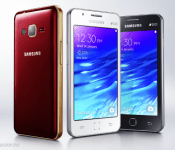
Samsung has finally begun pushing out its Tizen operating system for smartphones this year, which started with the launch of the Z1 in India a few weeks ago. Despite indications that the Z1 was off to a slow start, Samsung is confident enough in Tizen’s progress to launch the Z1 in a second country – Bangladesh.
In a press release, Samsung states that the Z1’s launch in India was a success, by its measurements, and that the handset was “well received” in the region, despite the increasingly competitive nature of the local market. The company goes on to tout the benefits of the lightweight custom operating system, its broad local language support and packet data compression, among others.
The Z1 is priced at around just $95 and features low end specifications quite typical of its price point. The handset comprises a 1.2GHz dual-core processor, 768MB RAM, 4GB internal memory, 3.15 megapixel camera and a 1,500mAh battery.
Bangladesh’s smartphone market shares many similarities to India’s, with a relatively low rate of smartphone penetration and a growing demand for low cost, internet connected devices. Therefore, Samsung is to retain its focus on low-cost hardware, targeting the Z1 at first time smartphones users looking to hop online. Abroad, Samsung also has plans for Tizen as a cross-platform OS for wearables, SmartTVs, and home appliances.
With 150 million potential untapped consumers in the country, it isn’t hard to see why Samsung is interested in this emerging market. The Samsung Z1 was released in Bangladesh on February 3rd.

Report: Is Xiaomi preparing to go public?

Following its latest round of fund raising, Xiaomi was valued at $46 billion, making it one of the most valuable growing technology companies in recent history, exceeded only by Facebook. ifeng.com, a news website run by Hong Kong’s Phoenix TV network, reports that Xiaomi may now be preparing to publicly float the company on either the Hong Kong or US stock exchange.
According to the report, Xiaomi is weighing up its options between Hong Kong and the US and will likely make a decision based on whichever offers the highest valuation. The company is also said to have been offered various IPO packages by investment banks. Despite its high valuation recently, sources are sceptical that Xiaomi would be able to match Allibaba’s record breaking $25 billion IPO in New York last year.
Back at the Xiaomi brand’s founding in April 2010, CEO Lei Jun, a 70 percent shareholder, stated that the company would not be listed on the stock market for at least five years. With that time frame coming to an end and Xiaomi looking for additional investment to fund regional expansion and its growing product line-up, the time might be right for the company to go public.
Perhaps Xiaomi will reveal something along these lines at its press event in San Francisco next week?
HTC expects a solid first quarter, but the One M9 may not make a difference

Following a good end of the year, HTC hopes 2015 will continue on an upward trajectory.
For Q4 2014, HTC posted a small profit, as well as the first quarterly increase in revenues in three years. The growing revenue is especially important because it means that HTC has managed to sell more devices (or increase the average selling price of its phones) compared to the previous quarter. While HTC remained profitable throughout most of the year, staying in the black was thanks to slashing costs, rather than increasing revenues.
Today HTC published consolidated results for Q4 2014, showing small differences from the preliminary figures published on January 6. Quarterly revenue was NT$47.9 billion, while net profit was NT$0.5 billion.
What’s more interesting is HTC’s outlook for Q1 2015. Peter Chou’s company is forecasting between NT$41.5 billion and NT$45 billion ($1.32 billion and $1.43 billion) in revenue, a decrease compared to Q4 2014, but roughly 30 percent more than the same quarter in 2014.
Most electronics companies go through a lull in the first quarter of the year compared to the holiday quarter, but the fact that HTC expects a slowdown suggests the M9 won’t be available for enough time in Q1 to make an impact on revenue. The device will be introduced at the beginning of March (last month of Q1), but it may be weeks before the device becomes widely available.
All in all, HTC appears to be on a good path, but a lot depends on what the company will show us on March 1. Samsung has a lot weighing on the success of the Galaxy S6, due the same day, and it will be fun to see these two major players trying to one-up each other.

‘ControlAir’ App Brings Finger Gesture Controls to Mac [Mac Blog]
Earlier this week, gesture recognition technology company eyeSight introduced ControlAir, an app that uses a Mac’s camera to read finger-based movements, allowing users to control various media applications without needing to physically interact with their computers.
The app, which is free to download, works with many popular Mac-based entertainment apps like iTunes, Spotify, Rdio, Netflix, QuickTime, VLC and Vox. The main control scheme is a user’s index finger, which, when raised, calls up ControlAir‘s user interface banner.

Users drag their fingers left and right to highlight the volume rockers, previous/next and play/pause buttons, lowering their index fingers in an “air-click” motion to select and raising their fingers to their lips to mute. Once the designated app is open, ControlAir‘s touch-free functions will still be able to be called up even if the ControlAir app sits in the background of another.
“ControlAir offers a simple way to control your music and video applications,” said Gideon Shmuel, CEO of eyeSight. “Media apps are often running in the background and ControlAir keeps the control of those apps always accessible by simply raising a finger.”
ControlAir‘s responsiveness is impressive, and the app is compatible with any iMac, MacBook Pro, and MacBook Air with OS X 10.9 or later, but its constant requirement of access to a computer’s camera functionality may hinder its usability for some. As long as a compatible app is open, the green camera-indicating light will remain on until the app is closed. ControlAir can recognize gestures up to five feet away, according to eyeSight, but still picked up and smoothly recognized inputs from up to seven feet in MacRumors‘ testing.
The limits to the app’s current functionality are hoped to be addressed incrementally in the future, with eyeSight specifically promising more entertainment app support will be “coming soon.”
ControlAir can be downloaded from the Mac App Store for free. [Direct Link]
Accessory of the Day: Active noise-cancelling headphones $42.90
Sometimes you need to just drown out the sound of the world. Enter the Audio Technica QuietPoint headphones with 90% background noise-reduction. Living in a big city, I can’t wait to put these through their paces. While Audio Technica also offers an over-the-ear option, these in-ear buds are rated 4/5 stars with over 800 positive reviews and a price point of only $42.90 (Prime eligible). What are you favorite noise-cancelling headphones?
(function() var script = document.createElement(‘script’);script.src = ‘https://stacksocial.com/widget.js?publisher=androidguys&type=editorial_post_widget_preferences’;script.async = true;var entry = document.getElementsByTagName(‘script’)[0];entry.parentNode.insertBefore(script, entry);)();
http://www.androidguys.com/pubgalaxy/728×90.html
The post Accessory of the Day: Active noise-cancelling headphones $42.90 appeared first on AndroidGuys.

New trademark applications reveal the Samsung S6 edge is in the works

Amidst all of the leaked images and information about Samsung’s forthcoming flagship devices, some new information from the Korea Intellectual Property Rights Information Service (KIPRIS) reveals some more concrete data about Samsung’s plans. The filings with KIPRIS are applications for trademark protection for the “Galaxy S6″ and the “S6 edge”. While Samsung may just be engaging in some proactive planning, this seems like a pretty good sign that the company is planning to follow a similar marketing strategy with their Galaxy S line of devices that they introduced with the Galaxy Note 4 and Galaxy Note Edge released last fall.
The fact that Samsung’s next flagship smartphone will go by the name Galaxy S6 is no surprise and is consistent with their naming convention for the last couple models. The name for a rumored device that will have one and maybe two auxiliary screens on the side or edges of a device is close to what most people have been calling it anyway, but there are a couple noteworthy issues with the trademark. First is the absence of the word “Galaxy” as part of the trademark. The second item of note is the use of all lowercase for “edge”. The all lowercase edge is probably just some marketing idea to try to be a little bit different. It is not clear though why Samsung may not have included Galaxy in the name for the S6 edge device.


source: Galaxy Club
via: phoneArena
Come comment on this article: New trademark applications reveal the Samsung S6 edge is in the works

Top 5 password manager apps for Android [February 2015]

Most users have multiple email accounts spread across various places (work, home etc). And it’s obvious that these accounts won’t have the same passwords, which makes it almost impossible to remember them all (assuming they’re not simple). This is where password managers chime in, helping users keep records of all their passwords in one location.
We posted a detailed list of the best password manager apps on Android way back in October 2013, but a lot has changed since then, so we have decided to refresh that list with a bunch of new apps.
Bear in mind that all apps here support SSL and 128-AES encryption, so your passwords and other credentials are absolutely safe with either one. It’s only a matter of personal preference.

1. Roboform: This password manager app has been around for a very long time on desktops, but has since made its way to mobile platforms as well.
The app is accessible through Windows Phones and iPhones too, so you get a wide range of devices to access your passwords from.
To use Roboform on your Android device, you will need to subscribe to its Roboform Everywhere service. This will offer you seamless integration across platforms while offering you high-level encryption for passwords and other crucial data.

2. PasswordBox: This app carries the bells and whistles of a password manager app, but also offers the ability to store your notes and other data securely.
There’s a built-in browser with the app as well, which will provide one touch login to all your social networks like Facebook, YouTube, Twitter, Gmail etc.
It’s a free download with the ability to make in-app purchases, so make sure you give it a try.

3. Dashlane: As far as free apps go, one can’t do much better than Dashlane. This app offers support for both Android and iOS devices by default and lets you sync passwords seamlessly between devices.
Much like PasswordBox, Dashlane comes with an integrated browser which further offers support for accounts with Google’s 2-factor authentication.
A premium subscription is required to allow cross platform syncing, which is a small price to pay for a very handy feature.

4. 1Password: The app is a free download much like most of the aforementioned password manager applications.
Functionality is pretty much the same here, but upgrading to the pro version for $9.99, gives you access to a multitude of tools, ideally suited for large businesses.
With the pro license, you can also share password vaults to other people.

5. LastPass: The app is yet another popular desktop password manager, but customers can also make use of the mobile versions.
Ranked among the best out there, LastPass can offer a convenient way to store your passwords. There’s even a dedicated LastPass keyboard which can autofill all your passwords for you.
So we highly recommend LastPass as a must have password manager app for your Android device.

6. mSecure: It’s hard to leave out an app like mSecure from the list of best password manager apps. It featured in our 2013 list as well, and has certainly come a long way since then.
The app can generate random passwords all by itself, so you don’t have to worry about inadvertently giving it away. There’s also the ability to back up all your essential data to a microSD card slot, which ensures that your data will always be with you.
If you rely on Dropbox for your content, you will be pleased to know that the app also has an (optional) auto sync feature in place which means you can access your credentials safely from a wide range of devices.
There’s also a very handy security feature in place which wipes all data from the device if a hacker tries to enter a false password. This feature is optional for the users though.
So that should sum up our list of the best password manager apps as of February 2015. Think we missed out on something? Make sure to let us know in the comments section below.
Come comment on this article: Top 5 password manager apps for Android [February 2015]

Another telecom CEO admits that Title II classification won’t change anything

In the last few weeks, we have seen Verizon’s CFO admit that being classified as a Title II organization would not affect Verizon’s future investments.
“I mean to be real clear, I mean this does not influence the way we invest,” he said. “I mean we’re going to continue to invest in our networks and our platforms, both in Wireless and Wireline FiOS and where we need to. So nothing will influence that. I mean if you think about it, look, I mean we were born out of a highly regulated company, so we know how this operates.” – Ars Technica
Now, Charter Communications President and CEO Tom Rutledge is telling investors the same thing. On Thursday morning, during the company’s fourth-quarter earnings call, Rutledge said that Title II classification would not change any part of their company.
“It doesn’t look like it changes anything,” said Rutledge, whose company has nearly 4.8 million broadband customers now after picking up 104,000 data subscribers in the fourth quarter. In any case, he noted, “it does look to be the law of the land.” – Light Reading
Rutledge also claimed that he thought of Title II as an “excessive approach” that was causing the marketplace “uncertainty and confusion” amongst telecom companies.
But several months ago, Rutledge spoke at an industry conference and openly admitted to having no issue with Title II classification:
Asked about President Obama’s proposal to regulate ISPs with Title II of the Communications Act — the same law regulators currently use to oversee phone companies — Charter chief executive Tom Rutledge said he was surprised by the plan. But, he added, so long as the Federal Communications Commission waived parts of Title II that weren’t relevant — a step that even staunch net neutrality advocates support — it would be an acceptable outcome. – Washington Post
Meanwhile, Time Warner Cable seems to think that the broadband market is “very attractive” whether or not the FCC acts on Title II classification while Comcast has also brushed off the idea of Title II putting a dent in their future investment plans.

As the Washington Post notes, we have now seen leaders at Comcast, Verizon, Time Warner Cable and Charter Communications all play down the actual investment risks for stricter regulation under Title II.
Has the Windows Phone 8.1 update hit your HTC 8X?

The HTC 8X may well be starting to receive the Windows Phone 8.1 update, that’s according to some reports from multiple regions. They follow Vodafone Australia stating the network will not be rolling out the update for 8X owners.
 AIVAnet