


Apple’s Luca Maestri named most admired Fortune 500 CFO

As it turns out, if your company rakes in billions upon billions in profit, you become quite popular in management circles. According to a recent study, Apple CFO Luca Maestri is the “most admired fortune 500 CFO.”
The survey, which was conducted by Model N, revealed that 24 percent of the C-level executives it surveyed listed Maestri as most admired, with over half of them listing Apple’s outstanding performance as the reason for their choice. Maestri was in good company as well, with Walmart CFO Charles Holley and For CFO Bob Shanks following up with 15 percent and 8 percent respectively.
This follows up on a breakout quarter for Apple, which saw the company rake in an astounding $74.6 billion in revenue on the back of record demand for its products.
Source: CNN Money

B&H knocks the unlocked Lumia 830 down to just $379.99

B&H has discounted the unlocked version of the Lumia 830 for just $379.99. Normally the retailer sells the same smartphone for $449.99 so this discount gives buyers a $70 price cut. This is the lowest price yet we have seen for a new contract-free version of this smartphone.

Radio Shack, Apple and the ever-changing face of retail

Reports indicate that Radio Shack, that venerable retail electronics store chain, will soon file for bankruptcy protection. Amazon and Sprint are reportedly interested in acquiring some of the retail locations for their own purposes. It’s a sad footnote to a company that holds a dear place in my heart. Meanwhile, Apple retail stores pull in record earnings per square foot. It’s an interesting juxtaposition.
As a teenage computer nerd in the 1980s, Radio Shack was one of the few retail jobs I could get that didn’t bore me to tears. I worked there selling computers, stereo equipment, electronic parts, but mostly giving away batteries to elderly patrons who came in with a card that entitled them to one free battery a month.
Things have changed over the years. While I worked there, Radio Shack still had a business that catered to electronics and computer hobbyists, both of which were still really niche markets. The front of the store showcased ready-made electronics like home and portable stereo equipment, radio controlled toys and other gadgets that might appeal to gift shoppers, families and others with some disposable income.
Radio Shack really never found a footing in today’s changing retail landscape, trying several times (through an ever-revolving door of C-level executives) to reinvent itself, rebranding as RadioShack and then just “The Shack,” as a general-purpose electronics repair business and cell phone store, but nothing ever took. Rumors of the company’s bankruptcy aren’t new, but the latest round of headlines certainly adds a concrete finality that hasn’t been there before.
In the early oughts Apple began to open its own retail business and found immediate success. The company was able to do so because it has a product that people wanted and was able to carefully pick and choose new locations out of whole cloth, instead of having to support a sagging, bloated and over-extended existing retail structure.
These days, the role of electronics in consumers’ lives is very different than it was in Radio Shack’s heyday. Computers have gone from hobbyist curiosities and “the next big thing” to a necessary tool for most of us to communicate and do business. We depend on our phones, tablets and other devices to keep us connected to one another and to the world at large. We’ve come to think of access to the Internet as more of a fundamental need than just something that’s nice to have. And that’s been within the space of about a decade, much less time than the generational shift other major changes in technology have caused.
I work in an Apple specialist computer store, and we’re often asked why Apple doesn’t have an “official” store in our area (the closest is almost an hour away). Of course, we’re not privy to Apple’s internal decisions, but Apple makes no secret that it’s very judicious about where it opens stores — making sure the retail locations it chooses can profitably support its efforts.
Meanwhile, Radio Shack has at least three locations within thirty minutes of my house — including two that are right across the street from one another. I think it’s telling that one of of them is in the same plaza that used to hold a Gateway computer store. Remember those? Yeah, neither does anyone else.
She’s been at the helm of Apple’s retail operations for less than a year, but Angela Ahrendts purportedly has big plans for Apple’s Chinese operations and for Apple’s existing stores.
According to reports, some Apple retail stores are set for a revamp coinciding with the introduction of the Apple Watch, which Tim Cook recently confirmed is expected to debut in April. The Apple Watch is bound to bring legions of new shoppers into Apple retail stores to see what all the fuss is about.
Apple’s certainly not the only big electronics company in recent memory to develop a retail store strategy. Microsoft has its own stores, even Samsung has dabbled unsuccessfully.
Radio Shack ultimately should serve as a cautionary story not just for Apple but for any other companies with retail footprints: Don’t overextend yourself. Apple’s managed to succeed in building a wildly profitable retail business where many others have failed by making sure it continues to offer products that people want in locations that can support its core business model. That may not always lend itself to be the most convenient model for people that don’t want to drive a long way or hate crowds, but it’s been Apple’s formula for success.
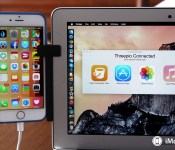
iPhone or iPad out of storage space? Clean it up with the PhoneExpander beta

Big iOS updates, bigger app bundles, and 16GB devices have many an iPhone and iPad user tearing their hair out when it comes to doing just about anything. But there’s a better way than manually deleting images on your phone or removing apps — it just requires a nearby Mac.
We’ve published a few how-tos on finding storage offenders and removing data from your phone, but on-phone removal can be clunky and frustrating.
iTunes is worse: App sync is frustrating and outdated, with the program often hanging or glitching when you least want it to.
For those who want a speedier solution, however, there’s a new app beta on the block and it’s called PhoneExpander. The free beta lets you view and empty the biggest data offenders from your device: namely app cache data, apps themselves, and images.

Once you’ve downloaded the app, you need only to connect your iPhone or iPad to your Mac via USB.
Take out the cache
App caches — or “temporary files,” as they’re called in PhoneExpander — are various little saved states that let your apps open quicker on repeat viewings, like saved offline map data. (As an FYI, game saves are not stored in these files, so you don’t have to worry about accidentally wiping your Space Age progress.) A single app’s cache won’t necessarily break the storage bank, but if you have a few dozen apps on there, you might start feeling the crunch.

Getting rid of them in PhoneExpander is as simple as clicking the Clear Temporary Files button — all apps are auto-checked by default, but you can easily uncheck specific apps if you’d rather their caches stay intact.
Apps away
On your iPhone or iPad, there are two ways to delete an app: manually tapping and holding on an icon from your home screen to enter edit mode, then deleting it; or going to Settings > General > Usage > Manage Storage and tapping on an individual app’s record to delete it.

For one app, it’s not a big deal. If you’re trying to free up a lot of space, however, you may be looking at a lot of tapping. PhoneExpander lets you remove apps in bulk without having to first go through the iTunes sync process on your Mac. By default, it even organizes them by size, so you can see just how much excess space that copy of iMovie or Fitstar Yoga is taking up. To delete an app, just select the checkbox next to it, then press Remove checked when you’re ready to go.
I’ll note that this process won’t back up the app bundle to your computer the way iTunes does; any iCloud-stored data for that app will be safe, and you’ll be able to redownload the app from the iTunes Store, but you won’t be able to retrieve a saved bundle from your computer’s hard drive. Doesn’t matter for most people, but just in case: be forewarned.
Shoebox your Camera Roll
PhoneExpander’s Clear Photos button is a little more nuanced than it appears: The action doesn’t just remove your images and video — it also backs them up to your Desktop or other selected folder on your computer under the name PhoneExpander Backup. That way, you don’t have to worry about your images being lost forever just because you needed an extra gigabyte or two of space on your iPhone.

The app does tend to take awhile to process large amounts of photos and video, so don’t be alarmed to see OS X’s beachball as it processes; I did this several times with both photos and videos and everything got saved and
Musical goodbyes
The PhoneExpander beta doesn’t quite have its music removal tool set up yet, but I imagine it’ll look similar to the Remove Apps tool. If you can’t wait for PhoneExpander to add the tool, you can always manage your music storage from iTunes, or through Settings > General > Usage > Manage Storage > Music.

Clean up time!
Despite being in beta, PhoneExpander appears to be relatively solid — and it’s super-simple to use for clearing out space on your iOS devices. Check it out, and let us know if it solved your storage woes!
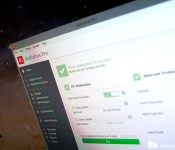
Avira Antivirus Pro 2015 review

Avira Antivirus Pro 2015 is an entry-level premium antivirus program for Windows, that offers parental social network monitoring and firewall on top of the usual real-time virus protection.
Avira Antivirus Pro includes download scanning, browser protection, and secure online shopping for $38.99/year. For $57.99/year, you can upgrade to Avira Internet Security Suite, which tosses in system speedup utilities, like file encryption and cleanup. For $77.99/year, you also get a driver updater which identifies and removes corrupt or outdated drivers, and helps your machine run at its peak. A full feature breakdown is available here.

Samsung reported to still be the manufacturer of next-gen Apple’s A9 processor

Once more, this time with feeling.
Just like we said in December when Samsung started building the 14-nanometer A9 processor for Apple, and in July 2013 when Samsung was first tapped to make the chip, Samsung is yet again being confirmed as Apple’s partner for the next-generation A-series chip.
Said Re/code:
While Apple had hoped to rely more heavily on Taiwan Semiconductor Manufacturing Co. to fabricate the Ax family of processors used in its iOS devices, the company has turned to Samsung for its next-generation A9 chip, according to people with knowledge of the situation.
TSMC, which had been contracted for making the A8 processor that powers the iPhone 6 and iPhone 6 Plus, as well as the latest-generation iPads, has fallen out of favor thanks to their inability to manufacture chips with anything smaller than the 20nm process they currently use. Samsung’s 14nm process runs cooler, uses less power, and has a smaller footprint.
The news comes alongside reports that Samsung’s upcoming Galaxy S6 flagship will use their own Exynos processors over Qualcomm chips — which are manufactured by TSMC.
Source: Re/code

Zomato update lets you save your review drafts, serves up event details

Zomato, the popular restaurant finder app for Windows Phone, has scored an update today, bringing it up to version 6.4.1. Coming along for the ride are some new features including review drafts and promo filters, along with an updated logo that reflects its recent acquisition of Urbanspoon.

How to batch rename files in OS X Yosemite

Up until OS X Yosemite, it was a pain the butt to batch-rename files – you either had to do it manually, arduously replacing the file names one by one, download a specialized utility, use some Terminal command-line wizardry, or perhaps resort to a tool like Apple’s Automator utility. Not any more, thanks to Yosemite. Here’s how!
First of all, why would you want to batch-rename files? There are lots of reasons, actually. Maybe you’ve found a more efficient or more descriptive naming scheme than one you’ve developed previously. Or maybe you’re working on a new project, and you’d like to differentiate the files you’ve already created from new ones. There are multitudes of reasons why it might be important to do so, but the bottom line is, before now, it’s always been an uncomfortable process.
These days, thanks to Yosemite, it’s much easier. Here are step-by-step instructions for how to do it.
To batch rename files
- Open a Finder window.
- Locate the files you want to rename.
- Shift-click to select multiple files, or lasso the ones you want to rename.
- Click on the Action button at the top of the Finder window. (Alternately, you can right-click or control-click the selected files to produce a contextual menu.)
- Select Rename [xx] items…
- Click the Rename button.
The Rename action is pretty versatile: You can either replace a segment of the filename with something else (using the Replace Text command), add text before or after the file name (using the Add Text command) or reformat the file names all together, indexing them with a number increment (using, predictably, the Format command.) Choose the method best suited for whatever you want to do.
Yosemite will take care of the rest. Easy peasy!


If you make a mistake, a quick command Z will undo the file name change.
Any questions? Let me know in the comments.

Under Armour buying Endomondo and MyFitnessPal

Sports apparel company Under Armour has announced plans to acquire two fitness-themed apps, Endomondo and MyFitnessPal. The two deals, which is scheduled to close before the end of the first quarter of 2015, will cost Under Armour a total of $560 million, with $475 million to acquire MyFitnessPal, and another $85 million for Endomondo.

Under Armour buying Endomondo and MyFitnessPal

Sports apparel company Under Armour has announced plans to acquire two leading fitness-themed apps: Endomondo and MyFitnessPal. The two deals, which are scheduled to close before the end of the first quarter of 2015, will cost Under Armour a total of $560 million, with $475 million to acquire MyFitnessPal, and another $85 million for Endomondo.
Under Armour says that these deals will supplement and expand upon the company’s own MapMyFitness and UA RECORD apps. It added:
With the acquisitions of Endomondo and MyFitnessPal, Under Armour continues to strengthen its position at the forefront of the connected fitness space and advances its goal of delivering game-changing solutions to how athletes and fitness-minded individuals train, perform and live. Combined with the growth of MapMyFitness, these acquisitions will expand Under Armour’s Connected Fitness community to include more than 120 million registered users.
Both Endomondo and MyFitnessPall will continue to operate out of their current locations in Copenhagen and San Francisco, respectively, after the acquisitions close.
Source: Under Armour
 AIVAnet