


How the iPad Air 2 became Federico Viticci’s main computer

We recently did our iPad Air 2: three months later roundtable, chatting about why and what we liked about Apple’s latest tablet. Federico Viticci has done his own three-month iPad Air review for MacStories, aptly titled “Why the iPad Became My Main Computer”:
There’s a big difference between reflecting upon the future of the iPad and claiming that nobody knows what it’s good for anymore. This is a common mistake that is often repeated in tech publications: because the iPad can’t perform all the tasks a Mac can handle without breaking a sweat, then it automatically loses its reason to exist. Realistically speaking, the iPad has flaws, there’s plenty of new low-hanging fruit in iOS, but it’s being used in ways that no other computer or smartphone has ever been.
… The iPad Air 2 has allowed me to eschew the physical constraints of a computer that isn’t as portable as I’d need it to be. My type of work allows me to do most of my computing on an iPad, and, while I realize that it’s not for everyone, the iPad is the computer for me, and I expect the apps and workflows that are still Mac-only to fade over time and transform into new iOS experiences, just as they’ve done over the last three years. The software innovation that is taking place on iOS and the App Store is unparalleled, and I have personally witnessed how iOS has evolved and changed my work routine since 2012.
While I still personally prefer working on my 11-inch MacBook Air to my iPad Air 2, I nonetheless find Viticci’s case compelling. It’s not the perfect device for everyone yet. It may never be. But that’s okay: That’s why there are Macs, and iPhones, and Apple TVs, and PCs.
You have to find the right device for your life; for Viticci, that device happens to be the iPad Air 2. For more on why, read his complete review on MacStories.

Blue Line Magazine highlights BlackBerry’s role in Law Enforcement

Law Enforcement has a long history of making use of BlackBerry products and services around the world, so perhaps it’s no surprise that in the latest issue of Blue Line Magazine when the topic of ‘how the Internet age, cyberspace and virtual networks affect neighbourhood activity and community safety’ comes up, there’s also discussion of BlackBerry and how it helps community policing efforts.
Apple Media Event Rumored for Late February, Apple Watch and 12″ MacBook Air Likely Topics
Apple may be planning to hold a special event during the month of February, according to French Apple-focused website iGen [Google Translate] (via iDownloadblog). The site’s sources, which are often reliable, suggest that the event might take place during the last week of February, potentially on Tuesday, February 24.
The event may see Apple once again showcasing the Apple Watch, which is set to debut in April, and it may also see the launch of the 12-inch MacBook Air. KGI Securities analyst Ming-Chi Kuo recently predicted that the upcoming notebook will debut in March, which is in line with a late-February unveiling.
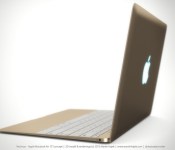
 Rendering of the 12-inch MacBook Air by Martin Hajek
Apple’s 12-inch MacBook Air is rumored to feature a new ultrathin design that does away with fans and introduces a revamped trackpad. It may include a low-power Core-M processor and it may be the first device to take advantage of the new reversible USB Type-C connector, which is much smaller and allows a USB cable to be inserted into a notebook in any orientation.
Apple may also use the event to unveil additional details on the Apple Watch, such as pricing and battery life. An event showing off the Apple Watch could explain why Apple has been asking some developers to have their apps ready to launch in the App Store in mid-February, as we reported last week. It’s possible that Apple will use apps from these developers to demonstrate additional capabilities of the watch.
Though rumored, a February event is by no means confirmed at this point, and it is unclear what else Apple might cover in addition to the Apple Watch and the 12-inch MacBook Air.

FCC Chairman states outright: they plan to classify internet access as a utility

It’s official, Federal Communications Commission Chairman Tom Wheeler wants to reclassify internet service providers as utility providers under the FCC’s Title II authority. The move aims to preserve the principles of net neutrality in law, barring ISPs from blocking, throttling, or prioritizing traffic.
Said FCC Chairman Tom Wheeler:
“I am submitting to my colleagues the strongest open internet protections ever proposed by the FCC. These enforceable, bright-line rules will ban paid prioritization, and the blocking and throttling of lawful content and services. I propose to fully apply—for the first time ever—those bright-line rules to mobile broadband. My proposal assures the rights of internet users to go where they want, when they want, and the rights of innovators to introduce new products without asking anyone’s permission.”
We can expect the ISPs to fight tooth-and-nail to derail the FCC’s effort — expect particularly vociferous objections from the likes of Comcast and Time Warner. They’ll claim that this will stifle competition (when the two don’t compete at all) and investment (when they’ve been investing in upgrading their networks for decades without using any of the potentially-violating tactics they seek to employ). They’ll say that this is bad for the internet, when the internet has flourished under the blanket assumption of these very same rules. What the FCC is proposing is to set the current operating conditions of the internet as the standard operating conditions, to enshrine into regulation that this is how the internet should work going forward.
In a surprise twist, the FCC even plans to apply these rules to mobile network operators. Previously the FCC had taken a more hands-off approach to cellular networks, but it appears they’re poised to enforce net neutrality principles onto wireless carriers that have played fast-and-loose with the idea.
We’ve been watching this fight unfold for months now, and things are about to get very real.
Source: Wired

FCC Chairman states outright: they plan to classify internet access as a utility

It’s official, Federal Communications Commission Chairman Tom Wheeler wants to reclassify internet service providers as utility providers under the FCC’s Title II authority. The move aims to preserve the principles of net neutrality in law, barring ISPs from blocking, throttling, or prioritizing traffic.

FCC Chairman states outright: they plan to classify internet access as a utility

It’s official, Federal Communications Commission Chairman Tom Wheeler wants to reclassify internet service providers as utility providers under the FCC’s Title II authority. The move aims to preserve the principles of net neutrality in law, barring ISPs from blocking, throttling, or prioritizing traffic.

FCC Chairman states outright: they plan to classify internet access as a utility

It’s official, Federal Communications Commission Chairman Tom Wheeler wants to reclassify internet service providers as utility providers under the FCC’s Title II authority. The move aims to preserve the principles of net neutrality in law, barring ISPs from blocking, throttling, or prioritizing traffic.
10 million Chromecasts found their way into homes across the world in 2014

Google sold about 10 million units of its Chromecast streaming TV dongle worldwide in 2014. This is the first time that hard sales numbers have been released for the product. Last week, Google stated that the Chromecast was the number one selling streaming device in the US in 2014 but did not give out specific sales figures.
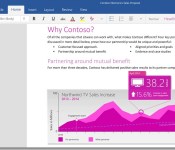
Touch-based Word, Excel and PowerPoint apps now available for Windows 10 preview users

Windows 10 Technical Preview users can now download the long-awaited touch-based versions of Word, Excel and PowerPoint from the beta version of the Windows Store.

Dead Synchronicity: Tomorrow Comes Today brings the undead to the Mac April 10

Dead Synchronicity: Tomorrow Comes Today, the first game from Spain-based Fictiorama Studios, will be released via digital download for the Mac, PC and Linux platforms on April 10 for the price of $19.99.
Here’s the rather morbid storyline summary for the 2D adventure game:
In Dead Synchronicity, you play as Michael, a man with no past, who must recover his identity and decode the two events that brought the world to the edge of collapse: the so-called Great Wave, an inexplicable chain of natural disasters, and a pandemic that turned humans into the “Dissolved”, infected beings whose sick bodies will eventually dissolve into blood. However, before they die their gruesome death, the Dissolved gain special cognitive powers. If Michael doesn’t hurry, he won’t be able to avoid the impending moment of “dead synchronicity”, when Time itself starts to dissolve.
Fictiorama Studios received much of its funding to make the game from a successful Kickstarter campaign in 2014. It will be published by Daedalic Entertainment.
 AIVAnet