



HBO tries using Blu-ray to hook cord-cutters on new shows

Remember BD-Live? Other than being the reason so many Blu-ray discs take forever to load, it’s a way for them to pull in continuously updated content from the internet and HBO’s using it to reach people who only watch its shows on disc. The new feature is called “HBO Sampler” and it unlocks full episodes of some of the network’s other shows for streaming. Currently that list includes the season one premiere episodes of Girls, Looking, Banshee and Togetherness, while in the future Veep, Silicon Valley, Game of Thrones and True Detective premieres will pop up too. It’s only a single episode so it’s no HBO Go or even Amazon Prime, but if you already own some of the boxed sets in the last year or so (Game of Thrones S3, True Detective S1, etc.) or will buy any of the ones coming out in 2015 then you can get a peek at what HBO subscribers are watching.
Filed under: Home Entertainment, HD
Source: HBO (YouTube)

Twitter rolling out Tweet Activity analytics to Android app

Earlier this evening, I learned that Tweet Activity is starting to make its way to mobile users around the world. The feature that has normally been found only on the web (and briefly on iOS) can be found hidden below a tweet’s timestamp. I tweeted about Samsung’s upcoming Unpacked 2015 event and then saw the VIEW TWEET ACTIVITY section shortly after. Tapping that will expand into the statistics found on the web. It shows how many people expanded the tweet, viewed the included media, replied, retweeted, favorited, and more. Above all of this are the totals for impressions and engagements.
Hit the break for screenshots.


Let us know in the comments if Tweet Activity has appeared in your tweets.
Come comment on this article: Twitter rolling out Tweet Activity analytics to Android app
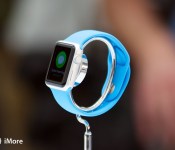
Iterate 81: Brad Ellis on designing for the Apple Watch

Iterate brings together the best designers and app producers in the business to talk user interface, human interaction, icon design, and user experience from concept to implementation. On this episode — Brad Ellis joins Marc, Seth, and Rene to talk about WatchKit and designing for the Apple Watch, including screen size, remote views, and what makes the most sense.
Guests
Hosts
Feedback
Yell at us on Twitter or leave a comment below.
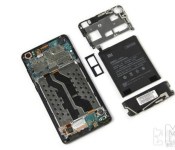
Xiaomi Mi Note teardown gives us a look at the hardware powering the device

Xiaomi’s Mi Note is the latest flagship from the Chinese manufacturer to offer high-end features at an affordable price. For $370, you get a device with a 5.7-inch full-HD display, 3GB RAM, Snapdragon 801 SoC, 13MP camera, dual-LTE connectivity and HiFi audio. The folks over at the MIUI forums got their hands on the device, and proceeded to dismantle it to find out how the hardware stacks up.
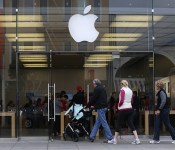
Apple salvages its US job plans by turning a factory into a data center

Apple has long had dreams of bringing more manufacturing to the US, but the reality has been harsh at times — the Arizona sapphire plant it helped build went down the tubes last year after its key partner, GT Advanced, went bankrupt. However, the tech giant has at least managed to salvage something out of this messy situation. Apple tells Bloomberg that it’s converting the failed factory into a solar-powered “command center” for its worldwide networks. The effort will see it pour $2 billion into the facility (one of Apple’s biggest investments yet, the company claims) and create 150 direct jobs, not to mention 300 to 500 related positions in construction and support. It’s not clear when the data center will be ready, but GT has control of the place until the end of 2015.
The handover is good news if you were worried that the plant would languish. With that in mind, it’s apparent that this isn’t quite what Apple was envisioning when it gave GT Advanced a $578 million loan back in November 2013. Originally, the goals were to both create 2,000 jobs and add to an American manufacturing base that includes the Mac Pro factory and a screen glass plant in Kentucky, among others. While the command center undoubtedly helps soften the blow of a sapphire deal gone south, it’s not going to mollify critics who think Apple still leans too heavily on overseas production.
[Image credit: Justin Sullivan/Getty Images]
Filed under: Cellphones, Tablets, Wearables, Mobile, Apple
Source: Bloomberg
Google working on service to compete with Uber

The app-based transportation network field is not too crowded but competition is present. Uber and Lyft have been fighting atop the market for sole supremacy. The only issue is that Google has an interest in being involved. The company, according to Bloomberg Business, is developing an app-based transportation network of its own. The service would likely launch alongside the existing driverless car project.
David Drummond, Google chief legal officer and senior vice president, has been a member of Uber’s board of directors since 2013. The executive has reportedly chatted with other Uber board members about the possibility of Google developing a competitor. Drummond even showed screenshots of the service’s app to Uber executives. Now, the board members are deciding on Drummond’s future with Uber.
In August 2013, Google Ventures funded Uber with $258 million. Additional money was invested into Uber just a few months later. The belief was that Google had eyed Uber as an acquisition target or, at the very least, a business partner. With this report, it seems that Google is going directly against Uber rather than working with it.
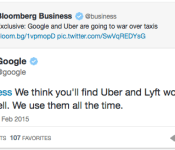
The image at the top of this page is Google’s response to the source on Twitter. Do you think they are bluffing? Let us know in the comments.
Source: Bloomberg Business
Come comment on this article: Google working on service to compete with Uber
Lenovo closes 2014 with dipped profit, Motorola acquisition partially to blame

Today, Lenovo recapped its year-ending quarter’s performance with both positive and negative takeaways.
Hit the break for more.
The quarter’s net profit dipped to $253 million compared to the previous year’s $265 million. That is a drop of 4.5%. The purchase of Motorola contributed to the decline. Lenovo acquired Motorola for almost $2.91 billion and the company also made a deal with IBM for $2.1 billion. Basically, Lenovo spent big on two major businesses and it weighed heavily on this report.
Revenue, however, did exceed $14 billion and that is an increase of 31% compared to the previous year. And Motorola was part of that, too, alongside Lenovo-branded devices. Motorola sold more than 10 million devices throughout the quarter. The 2014 range of Motorla devices really captures the attention of consumers around the world. The increase was above 118%. With its re-entry into China, Lenovo says Motorola should be profitable within the next 4-6 quarters.
Lenovo noted that it expects growth across the board in coming quarters.
Lenovo Q3 2014/15 Results Exceed Consensus Estimates with Strong Core Business and Fast Traction in New Investments
Powered by new smartphone and enterprise engines, profitability set to expand
- US$14.1 billion in revenue
- Pre-tax income before non-cash, M&A-related accounting charges* of US$348 million and pre-tax income of US$274 million
- Net income before non-cash, M&A-related accounting charges* of US$327 million and net income of US$253 million
- Achieved record high milestone of 20 percent PC market share**
- M&A delivers more balance: 65 percent of revenue now from PCs, 24 percent from Mobile and 9 percent from Enterprise vs. one year ago when PCs were 81 percent
- Basic EPS of 2.32 US cents, or 17.99 HK cents
- Net cash reserves of US$1.3 billion (as of December 31, 2014)
HONG KONG–(BUSINESS WIRE)–Lenovo Group (HKSE: 0992)(PINK SHEETS: LNVGY) today announced consensus-beating results for its third fiscal quarter ended December 31, 2014, showing a strong PC business and fast traction in the integration of its Motorola Mobility (Motorola) and former IBM System x, x86 server (System x) investments. Quarterly revenue was US$14.1 billion, a 31 percent increase year-over-year.
Third quarter pre-tax income before non-cash M&A-related accounting charges was US$348 million, up 8 percent year-over-year. These non-operational, non-cash, M&A-related expenses totaled US$74 million and included charges such as intangible asset amortization and interest on promissory notes related to the Motorola and System x investments. Including these expenses, pre-tax income was US$274 million, down 15 percent year-over-year. Similarly, third quarter net income was US$253 million, down 5 percent, while net income before non-cash, M&A-related accounting charges was US$327 million, up 23 percent.
Lenovo’s core PC business remains strong even as it drives a significant transformation and diversification with the addition of the Motorola and System x businesses. Balance has become a major strength for Lenovo: PCs now account for 65 percent of the company’s revenue, while Mobile delivers 24 percent and Enterprise contributes 9 percent. Just a year ago, PCs accounted for 81 percent of Lenovo’s business.
“This quarter, we are at the starting line of a new race, but the results show that we have the right strategy, we made the right acquisitions and we executed well globally, so I am confident we are ready to win,” said Yuanqing Yang, chairman and CEO of Lenovo. “Our core PC business maintained its leading position and further improved profitability. The two newly acquired businesses are achieving great momentum in their first quarter of integration. They are definitely becoming our growth engines. Motorola is already a global strength: for the first time it sold more than 10 million units in the quarter and it is now re-entering the China market. Meanwhile, we have a strong start with the System x integration, even while we further refine and develop it, leveraging Lenovo’s operational excellence and efficiency to be even more competitive. I remain fully confident we will meet all of our financial commitments this year, and also that we are on the right track to win in the long term.”
The Company’s gross profit for the third fiscal quarter increased 54 percent year-over-year to US$2.1 billion, with gross margin at 14.9 percent. Operating profit for the quarter decreased 3 percent year-over-year to US$325 million. Basic earnings per share for the third fiscal quarter was 2.32 US cents, or 17.99 HK cents. Net cash reserves as of December 31, 2014, totaled US$1.3 billion.
Innovation in Lenovo continues to drive business model transformation and deliver impressive products that drive sales and profitability. In October, the company executed a major global consumer product launch, announcing a new family of Yoga convertible PCs and tablets. Lenovo won a record 77 awards at the Consumer Electronics Show in early January across every category – PC (where Lenovo’s lightest ever LaVie laptop won top honors at the show), tablet, smartphone, applications, software and peripherals – demonstrating its unique breadth and depth of product innovation.
BUSINESS GROUP OVERVIEW***
In the PC Group or PCG, which includes PCs and Windows tablets, Lenovo sales were US$9.2 billion with a record high pre-tax income (PTI) of US$494 million. Lenovo shipped 16 million PCs in the quarter, up 4.9 percent year-over-year, for a total market share of 20 percent. Going forward, consolidation trends favor this business. Lenovo sold its 100 millionth ThinkPad laptop PC, marking a historic milestone for this legendary brand.
In the Mobile Business Group or MBG, which includes products from the Motorola investment, Lenovo-branded mobile phone business, Android tablets and TVs, Lenovo sales were US$3.4 billion generating PTI of negative US$89 million. Motorola shipped more than 10 million units, up 118 percent year-over-year, adding US$1.9 billion to MBG’s revenues. Soon to re-enter China, Motorola is on track to be profitable within 4-6 quarters of close.
Combining shipments of Motorola and Lenovo-branded devices made Lenovo a truly global player, the third largest vendor of smartphones behind Samsung and Apple and their most credible challenger. Together, the two brands had nearly 6.6 percent market share, up 78 percent year-on-year. Global tablet market share was 4.8 percent, with 3.7 million shipments, up 9 percent year-over-year, powered by the launch of our latest Yoga tablet.
Unlike many smaller mobile phone players that rely almost completely on a slowing China market, Lenovo now drives about 60 percent of its mobile phone volumes outside China, having entered 67 countries in the last two years. Lenovo has built the scale, distribution, brand assets and IP portfolio required to compete around the world and challenge the top two players. And, as smartphone trends move from premium to mainstream, and mature to emerging markets, Lenovo is in the best position to capture these next waves of growth and deliver its stated profitability commitments in the Motorola business.
In the Enterprise Business Group or EBG, which includes servers, storage, software and services sold under both the Lenovo ThinkServer brand and the System x business unit, sales were US$1.2 billion. Sales of the System x unit were US$986 million. Only 90 days into the integration of System x, EBG delivered positive operational PTI, although its standard PTI – which included non-cash, M&A-related items – was negative US$42 million. It is solidly on track to be a US$5 billion business with better margins than PC in 1 year.
Combined shipments of Lenovo ThinkServer and System x servers made Lenovo number 3 worldwide, with 10.4 percent market share. Despite the intense competitive fire in the year since Lenovo said it planned to acquire System x, its business is stabilizing, with rapid success in China making it number one in that market, while benefiting from access to new opportunities in 160 countries that were previously unavailable to IBM or Lenovo.
GEOGRAPHIC OVERVIEW
Lenovo’s China geography totaled US$4.1 billion in revenue in the third fiscal quarter, an increase of 1 percent year-over-year, which accounted for 29 percent of the Company’s worldwide revenue, while operating margin improved by 0.3 points year-over-year to 5.7 percent. During the third quarter, Lenovo protected its PC leadership with 38.2 percent share. Fierce competition in the China mobile phone business was a drag on the performance of Lenovo-brand smartphones.
In the Asia Pacific geography, Lenovo’s revenue totaled US$1.7 billion for the third quarter, or 12 percent of the Company’s worldwide revenue, up 7 percent year-over-year, with record high operating margin of 5.4 percent, up 3.9 points year-over-year and record high PC market share at 16.1 percent, up 0.2 points year-over-year. Strong volumes in smartphone shipments were seen across the ASEAN region.
Lenovo’s revenue in the Europe/Middle East/Africa (EMEA) geography during the third fiscal quarter saw continued growth and increased profitability with revenue up US$1.6 billion, a 40 percent increase, to reach US$4 billion, while margin improved by 1.2 points year-on-year to 3 percent. Powered by strong consumer performance, this success drove a record-setting contribution to Lenovo’s worldwide revenue of 29 percent. During the quarter, Lenovo had record PC market share of 19.6 percent in EMEA, up nearly 4.4 points. Lenovo achieved the number 1 position in PC across 13 EMEA countries, further improving its number two position in the EMEA PC market.
The Americas geography revenue was US$4.3 billion for the third fiscal quarter, up 88 percent year-over-year, comprising 30 percent of the Company’s worldwide revenue, mainly due to the inclusion of Motorola and System x in the geography’s results. The Americas geography saw PC market share of 11.1 percent. Lenovo maintained the number four position in the US while avoiding fierce price competition in lower end, low profit devices to protect profitability. The North America region saw strong revenue and shipment growth and solid profit improvements, while the Company is taking decisive action to reverse challenges in Brazil, which impacted the geography’s overall performance.
* These figures are provided for greater transparency and to aid further analysis of the business.
** see IDC data 4Q 2014
*** Previously, the company provided financial breakdowns by product. With the acquisitions of Motorola and System x, management believes reporting by business groups best reflects the Company’s performance.ABOUT LENOVO
Lenovo (HKSE: 992)(ADR: LNVGY) is a $39 billion global Fortune 500 company and a leader in providing innovative consumer, commercial, and enterprise technology. Our portfolio of high-quality, secure products and services covers PCs (including the legendary Think and multimode YOGA brands), workstations, servers, storage, smart TVs and a family of mobile products like smartphones (including the Motorola brand), tablets and apps. Join us on LinkedIn, follow us on Facebook or Twitter (@Lenovo) or visit us at http://www.lenovo.com.
Come comment on this article: Lenovo closes 2014 with dipped profit, Motorola acquisition partially to blame

Latest Android distribution numbers in, Lollipop on 1.6% of devices

The latest Android distribution numbers are in, and the biggest change from last month is that Android Lollipop has now reached enough users to register on the list, where it has made its way to 1.6 percent of the Android devices.
As for the dominant version of Android? Jelly Bean still holds the lead with a collective 44.5 percent between 4.1, 4.2 and 4.3. That said, KitKat isn’t far behind with 39.7 percent of Android devices running Android 4.4.x, up from 39.1% last month. Ice Cream Sandwich and Gingerbread both saw minor declines, going down from 6.7% to 6.4% and 7.8% to 7.4%, respectively. Froyo, on the other hand, didn’t budge at all staying at the same .4% as last month.

While its discouraging to see any devices stuck on pre-Jelly Bean builds, the good news is that these versions continue to shrink as KitKat and Lollipop rise. We expect even more changes to hit the numbers next month, as a number of devices prepare for Lollipop updates including (hopefully) the One M8, M7 and a number of devices from LG and Samsung.
Now I know what some folks might be thinking when they look at the above numbers, “Android is a fragmented mess”, and there is some truth to this. Taking a look at Apple, for example, you’ll find that Cupertino is much more aggressive at pushing devices to newer OS versions. That said, with many Google and even OEM apps/services coming to Google Play, the version of an OS your device contains is arguably less important than it was in the past. After all, most folks with a decent spec’d device, and Jelly Bean or higher, shouldn’t have trouble running the majority of apps found on Google Play.
What do you think of the latest distribution numbers? For those stuck on older versions of Android, do you find your overall experience suffers significantly as a result or do you feel you simply have upgrade envy more than anything? Let us know your thoughts in the comments.
Samsung to Host New Unpacked Event for “What’s Next”. Teases Something with Curves.
Samsung has given us the word that they will host a new Unpacked event this year in Barcelona, and it seems that something with some curves will show up. The image above is a little tease to “What’s Next”, and word on the digital street is that a new Galaxy S Edge will be introduced […]
The post Samsung to Host New Unpacked Event for “What’s Next”. Teases Something with Curves. appeared first on AndroidSPIN.

FCC set to propose strong net neutrality rules this week

A new report says that the Federal Communications Commission could propose a set of regulations Thursday that would support net neutrality for both fixed and mobile broadband service providers. The proposal is likely to be similar to the ones that President Barack Obama announced in November 2014.
 AIVAnet