


CES 2015 Seek Thermal Hands-on: turn your camera into a portable thermal imaging machine
CES is the place for innovation, and one of the cooler (or hotter) innovations that we’ve come across so far at CES 2015 is from Seek Thermal, who has developed a camera add-on for Android and iOS that can turn your device into a thermal imaging device for an affordable price. The camera itself might […]
The post CES 2015 Seek Thermal Hands-on: turn your camera into a portable thermal imaging machine appeared first on AndroidSPIN.

Report says that Sprint’s “Cut Your Bill in Half” deal brought heavy increase in traffic to local stores

Last month, Sprint began heavily promoting their new “Cut Your Bill in Half” deal which allowed customers of Verizon or AT&T to switch to Sprint and receive “unlimited talk and text… and match the customer’s data allowance for half the cost they are currently paying for their monthly rate plan.”
Even though I had several reservations about the fine print found in this deal from Sprint, others apparently did not.
As GeekWire reports, Sprint’s promotion helped bring in a large amount of new customers into their stores. The report measured foot traffic through a company called Placed, who measures foot traffic in businesses by tracking a person’s movements using their mobile phones.
According to the report, Sprint’s stores saw traffic increase seven times the industry average during the first week of the deal. During the second week, store visits declined but still stayed roughly four percent higher than the industry average.
When looking at Placed’s list of top 100 businesses based on foot traffic, Verizon continues to dominate the list for wireless store.
- Verizon – No. 35
- AT&T – No. 43
- Sprint – No. 87
- T-Mobile – No. 99
Even though Sprint is a distant third in that list, the recent promotion saw their overall market share rise nearly 3 percent from the recent increase in store visits.

Monster sues Beats, Dr. Dre and HTC for fraud over famous headphones

Audio engineering company Monster has sued Beats, Dr. Dre and HTC over alleged “fraud and deceit” in the way that Beats acquired the rights to the popular “Beats by Dr. Dre” headphones.
In 2008 Monster entered into a relationship with Dr. Dre and Beats to design and manufacture the now famous “Beats by Dr. Dre” headphones. The headphones have been credited with single-handedly creating the $300-plus headphone market. Since 2008 the high-end headphone market has grown to over $1 billion and has led to other celebrity endorsed headphone products.
Had the partnership expired on its own terms, there would have been no transfer of Monster’s years of work on Beats By Dr. Dre.
Monster’s problem is that it was cut out of the partnership due to what it is calling a “sham” transaction with HTC. In 2011 HTC bought a 51 percent stake in Beats for $309 million. But according to the complaint Beats then quickly bought back half of HTC’s interest. It is alleged that Beats intentionally bought back the stock from HTC so that it was able to cut out Monster altogether via an ownership clause.
The result, according to the suit, is that Beats then continued to make millions of dollars from work done by Monster and its founder Noel Lee. According to Monster’s lawyers, “Had the partnership expired on its own terms, there would have been no transfer of Monster’s years of work on Beats By Dr. Dre.”
To complicate matters Apple bought Beats last year for $3 billion. Monster is claiming that Beats made misleading claims during 2013 when it said that there was no pending “liquidity event” (i.e. a major transaction). If Monster had retained its original stake in Beats then it would have received over $100 million from the Beats-Apple deal.

Here’s what you missed on the first official day of CES

The doors opened; the masses piled in; and it began: Yesterday was the first official day of CES. It’s perhaps the most frenzied day of the week, with hundreds of companies vying for attention within the halls of the Las Vegas Convention Center. So, what happened on the show floor yesterday? Check out the gallery below and find out.
[Image credit: Bloomberg via Getty Images]




CES 2015: Palm brand to be brought back as U.S. subsidiary of TCL/Alcatel Onetouch
Now we finally know why Alcatel Onetouch bought the trademarks to the Palm brand. As announced at CES 2015 by TCL, a Chinese company known to some as Alcatel and others as RCA, the Palm brand will form a subsidiary that will sell devices under the Palm name in the U.S. Naturally, it would seem this […]
The post CES 2015: Palm brand to be brought back as U.S. subsidiary of TCL/Alcatel Onetouch appeared first on AndroidSPIN.

Imagination unveils an Android imaging framework for its PowerVR GPUs
 Imagination Technologies, the company behind PowerVR GPUs and the MIPS processor, has announced a new imaging framework for Android that will allow handset makers to add the latest computational photography and computer vision features into their camera apps via the GPU.
Many of the smartphones on the market today offer camera apps with advanced features like HDR, panoramic stitching, and gesture recognition. However in many cases these features use the CPU to process the imaging data. However GPUs can also handle such work, in fact many image processing algorithms are better suited to the parallel nature of a GPU.
We are making it easy for our customers and their OEMs to differentiate their camera applications.
The new PowerVR imaging framework binds the GPU with other system components, such as the camera sensor and the CPU, into a “programmable image processing pipeline” that can be used by Android apps, like the bundled camera app.
What this means for the consumer is that smartphone makers can add new vision features to their smartphones without having to add special dedicated image processing hardware. As Peter McGuinness from Imagination puts it, “With the imaging framework for PowerVR, we are making it easy for our customers and their OEMs to differentiate their camera applications using their existing SoCs, all without adding to the hardware cost.”
The way Imagination has done this is by adding a set of extensions to the OpenCL and EGL APIs so that an app can directly sample YUV data coming from the camera. As a result OEMs can implement many of the imaging algorithms like noise reduction and HDR in the GPU, rather than the CPU.
Of course for a smartphone to use this GPU computing power, it will need to have a PowerVR GPU, but I guess that is the point that Imagination are trying to make!

Yelp: the FTC won’t penalize us for review complaints

Yelp maintains that it doesn’t game the reviews on its site or try to extort businesses that refuse to pay for ads. In fact, it’s just published a blog post to air that the Federal Trade Commission has finished a year-long deep inquiry into its business practices and has chosen not to take any action against the website. Yelp even claims this is the second time the FTC has investigated the company and finished without penalizing it in any way. Part of the blog post reads:
The FTC looked into our recommendation software, what we say to businesses about it, what our salespeople say about our advertising programs, and how we ensure that our employees are not able to manipulate the ratings and reviews that we display on our platform. After nearly a year of scrutiny, the FTC decided to close its investigation without taking further action.
As you might know, there have been many complaints against the home to crowd-sourced reviews for restaurants and other local businesses for years. If you search “boycott Yelp” on Google, you’ll see a lot of businesses campaigning against the service for allegedly manipulating reviews, refusing to remove fake ones, and demanding money from them, among other things. According to the Wall Street Journal, the FTC received as many as 2,000 reports against Yelp citing the shady practices listed above between 2008 and 2014.
The company says that number’s pretty insignificant “especially when viewed in context of the tens of millions of reviews” on its website. It’s unclear, though, if the commission dismissed the complaints against the service, because it has found that Yelp really didn’t do anything wrong, or if 2,000 complaints are just too few compared to the sheer volume of published reviews. In addition to surviving FTC investigations without getting any penalty, Yelp has also escaped a lawsuit (listing similar complaints against its practices) unscathed in late 2014.
Filed under: Misc
Source: The Wall Street Journal, Yelp
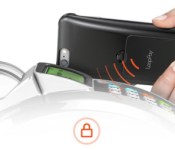
LoopPay Looking to Make Payment-Enabled Cases for Samsung Devices
 LoopPay, the popular mobile payment company, is partnering with XPAL Power and Trident Case to make payment on a Samsung device much simpler. This news was announced at CES yesterday and should help Samsung more efficiently and conveniently incorporate mobile payments on their devices. LoopPay’s partnership with XPAL will involve making a back cover for the GS5, due out sometime in early 2015, with an electromagnetic field emitter inside to imitate a card swipe without actually swiping. The partnership with Trident Case will involve putting the same chip inside a Galaxy Note 4 case, which should be out around late 2015.
This news follows rumors that LoopPay is already in talks with Samsung for putting the tech natively inside the upcoming GS6 and Note 5.
Source: Android Authority
Come comment on this article: LoopPay Looking to Make Payment-Enabled Cases for Samsung Devices

