


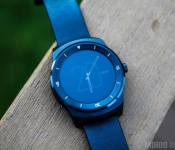
LG reportedly working on WebOS and SIM-enabled smartwatches

More speculation is circulating about LG’s future smartwatch plans, this time from the sidelines of CES in Las Vegas. According to sources from LG, the company is looking to build a more flexible ecosystem for its future smartwatches, which could include switching over to WebOS sometime next year.
LG’s previous smartwatches have all been built on the Android Wear platform, but the company may be looking to break free of the restrictions of Google’s operating system. The most likely replacement would be WebOS, which LG purchased from Hewlett-Packard back in 2013 and has been using to power its recent Smart TV range.
We’re going to slowly try to build an (software) ecosystem around areas we can have more control over,
This is not the first time that we have heard about the possibility of a WebOS smartwatch from LG. Late last year a leaked LG hosted website for a WebOS watch appeared but was quickly taken down.
Apparently, LG plans to expand the use of the WebOS platform to more of its internet-connected televisions this year and then to home appliances and possibly mobile products later. However, the source stated that Android would remain the major platform behind LG’s mobile devices in the near future and there is no indication that LG will attempt to revive WebOS as an Android smartphone competitor. Instead, LG may be planning to trial WebOS on a single smartwatch to test the waters.
A separate source also repeated earlier rumors that LG is preparing to launch a SIM-enabled smartwatch early this year, which will free the watch from dependency on a paired smartphone. However, no details about the hardware or operating system were given.
LG may have been slightly slower than the competition at releasing its first smartwatch, but its latest G Watch R has proven to be one of the best wearables around. 2015 is going to be an important year for the smartwatch market, so we will be eagerly watching LG’s plans this year.

Strong iPhone 6 and 6 Plus Sales Lead to Smartphone Market Share Growth for Apple
The latest smartphone sales data released today from Kantar Worldpanel ComTech highlights good news for Apple on the strength of the iPhone 6 and 6 Plus launch, with Apple gaining share year-over-year in every country surveyed except for Japan.
The report, focusing on the September-November 2014 period, points out that Android market share dropped in most European markets and saw its first decline in the U.S. since September 2013. In the surveyed period, Apple reached 42.5 percent of UK sales, up 12.2 percentage points from the same time in 2013.

In the U.S., the Cupertino-based company’s share of smartphone sales grew 4.3 points to reach 47.4 percent of the market, an unsurprising performance given the strong early sales of the company’s latest iPhones. More data from Apple on October-December iPhone sales will be announced later this month when the company releases its quarterly earnings report.
Apple’s strong performance is being attributed in part to enthusiasm for the redesigned bodies and larger screens of the iPhone 6 and 6 Plus, with the iPhone 6 leading the smartphone pack during the time period.
“The iPhone 6 was the best selling phone in the three months through November 2014, capturing 19% of smartphone sales”, said Milanesi. Verizon and AT&T made up 57% of iOS sales while Verizon and T-Mobile were the top two carriers for Android accounting for 33.7% of all Android smartphones sold.
Despite declines in many markets, Android remains the dominant platform in Europe with 69.9 percent of the market, although that number is down 3.2 percentage points from the same period in 2013. Kantar also notes that customers switching from Android to iOS remained at a steady 18 percent from 2013 to 2014, suggesting Apple’s larger-screened phones have yet to represent significant motivation for switchers.

Fuhu to market nabi tablets ranging from 32-inches to 65-inches (ultra HD) later this year

Fuhu already offers the 20-inch and 24-inch nabi Big Tabs so why stop there? This news might be a little crazy, but certainly not a shocker to me. Last year when I met the folks from Fuhu at CES, they showed me a 70-inch concept tablet that could be marketed to schools. They really didn’t divulge much, but it’s obvious they had a lot of ideas they were working on because they now plan on launching a number of larger tablets ranging from 32-inches all the way up to 65-inches.
These larger tablets are manufactured by LG and will be priced from $699 to $3,999 for the 65-inch 4K Ultra HD model. They could be targeted to businesses, but they really think there is a market in the home, specifically the kitchen and living room. By connecting with home appliances, your kitchen instantly becomes smarter. They can also serve as an entertainment hub in the living room with games and other educational activities. Current and newer smaller nabi tablets could also serve as controllers or second screens.
More importantly, these new tabs could serve as the new TV since you are unlikely to have two 65-inch displays in the same room. They won’t have built-in tuners, but how many people utilize the built-in tuners on their TV anyways? We already have smart TVs, but these TVs would be smarter because you could watch a cooking show and download the recipe or app associated with it at the same time. They will have the full Android experience, including Google Play. Now you can already duplicate this with a cheap stick that includes the full Android interface for your TV, but it won’t be touchscreen. That’s where the money is, not to mention a lot of proprietary software.
Fuhu plans to offer Ultra HD in the 55-inch and 65-inch models, and they will have HDMI connections, as well as WiFi, Bluetooth, and NFC. You can expect to be able to buy these tablets during the 2nd quarter of this year.
Is this something you would consider buying? The only issue I have here is the the cost based on longevity. You are essentially buying a tablet, and we all know how rapid hardware is improving. Your normal 10-inch tablet has a life expectancy of only 2 to 3 years since there is always better processors and displays coming out. Throwing $4,000 on a “tablet” that I might want to replace in two to three years concerns me just a tad. What do you guys think?
Click here to check out last year’s 70-inch concept tablet. It’s the third video. And of course, be sure to check out our complete CES 2015 coverage here.
source: USA Today
Come comment on this article: Fuhu to market nabi tablets ranging from 32-inches to 65-inches (ultra HD) later this year
CES 2015: The BLU Studio Energy is a 5-inch device packing a 5,000mAh battery for 4 days of power
BLU phones probably don’t get as much attention as they should given their value for money, but one of their latest phones announced at CES 2015 should turn more than a few heads. The standard battery for a 5 to 5.5-inch device seems to average about 3,000mAh, which gives most of these smartphones a standard […]
The post CES 2015: The BLU Studio Energy is a 5-inch device packing a 5,000mAh battery for 4 days of power appeared first on AndroidSPIN.

Accessory of the Day: Soundpeats Qy7 Bluetooth earbuds, $35.99

How about a kick-ass pair of Bluetooth earbuds for working out or outdoor activities? The Qy7 from Soundpeats are durable, sweatproof, and have a slew of positive reviews and features that make these earbuds an absolute STEAL for under forty bucks (Prime eligible)!
Join Prime and get this deal with FREE two-day shipping!
Also worth checking out:

The post Accessory of the Day: Soundpeats Qy7 Bluetooth earbuds, $35.99 appeared first on AndroidGuys.

WhatsApp reaches 700 million active monthly users

WhatsApp, an internet based messaging service, has just announced that over 700 million users actively use its service each month. This makes the company the most popular mobile messaging service around the world, and is even more popular than Facebook Messenger. This surge in popularity comes as WhatsApp continues to dominate the Indian messaging market.
Back in August, WhatsApp claimed 600 million active users and has gained around 300 million users over the past year. The mobile messaging service was acquired by Facebook for $22 billion last year, but the social networking giant has seen losses on its investment so far, as WhatsApp’s 99-cent subscription model does not generate a large amount of revenue. WhatsApp saw losses of approximately $230 million in the first half of last year and generated revenue of only $15 million.
Facebook CEO, Mark Zuckerberg, expects that WhatApps will end up contributing to Facebook’s profits, eventually. However, he does not expect this to happen until the app’s regular user base reaches the one billion mark. Based on this recent rate of growth, WhatApp could reach this milestone before the end of 2015.
WhatsApp still has plenty of room for growth in markets where it currently isn’t a major player, such as the US or China. However, temping customers away from their current services may prove more difficult.
Are you sold on WhatsApp or are you using one of its competitors?

Microsoft Band and the Microsoft Health app both get updates

Microsoft Band owners who also own a Windows Phone can now download an update to the Microsoft Health app, along with a firmware update for the fitness band itself. It’s the first such firmware and software update in two months.

Laying out the challenges ahead for Oculus VR as it creates the consumer Rift

“As always, the consumer Rift is in progress and we’re making great progress,” says Oculus VR Product VP Nate Mitchell. He told me that this week, but you could really pull versions of that response from any of the half dozen interviews we’ve done with Oculus VR in the past few years. It’s the elephant in the room that Oculus brings with it from trade show to trade show: When is this thing going to be a consumer product? There’s still no answer in January 2015, as of this year’s CES. Will there be an answer in 2015? Maybe! Your guess is as good as ours, but Mitchell offered us something slightly more optimistic:
“We’re on an awesome path to consumer VR and I do think that 2015 for better, for worse is gonna be a really big year for VR. Even at CES, we’re already seeing it. 2015 is gonna be a big year for VR, whether it’s from Oculus or otherwise, and we’re excited to be a part of it.”
So, uh, what? That’s not exactly an answer. I expect that at this point when speaking with Oculus reps, from Nate Mitchell to founder Palmer Luckey to CEO Brendan Iribe to CTO John Carmack. When they’re ready to announce the consumer version of Oculus Rift, they’ll do it.
That said, this summer marks three years since Oculus formed as a company, and, as much as we dig the latest prototype (Crescent Bay), we’d much prefer a home version. So, first, some good news: There are some pieces of the latest hardware that are pretty close to final. For one, the screen on Crescent Bay is “good enough for the [first version] of the Rift,” according to Mitchell. Here’s his full statement, qualifiers and all:
“I, personally, think that that resolution is high enough to be a consumer product for the beginning of the Oculus Rift. And, one thing we’ve said often, is anytime we show a feature prototype, it’s gonna be that good if not better. For me, I do think that’s good enough for the V1 of the Rift.”
Amazingly, the screen in Crescent Bay is actually less high-res than what’s currently offered with Gear VR — the VR headset that Oculus collaborated with Samsung on, powered by the Note 4 (and its gorgeous Quad HD screen). And you can tell; I could tell, anyway, and I’m no videophile. What’s in Crescent Bay isn’t the same Note 3 screen that an older Oculus Rift dev kit used, but a “custom” screen. “Those are custom screens. They are not Note 3 screens,” Mitchell said. “But we can’t go into it more than that.” Rest assured, those customs screens are made by Samsung, regardless of what Oculus is admitting.
Beyond the screen, there are some functions that Mitchell says are critical to consumer VR. Most importantly — beyond a passthrough camera so that users don’t have to remove the headset to interact with actual reality — is custom input. Think: control. As anyone who’s used VR can attest, the next step after buying into the medium is wanting proper interaction. You want to reach out and grab the world. To feel it, to interact with it — that’s actual immersion.
In this respect, VR is nowhere.

“Input is still one of the critical missing pieces, and we don’t have that much to announce today. But what I can say is it’s something that we are super dedicated to tackling,” Mitchell says. How dedicated? Oculus VR straight up bought two companies that could help: Carbon Design (the design team behind the Xbox 360 gamepad and original Kinect) and Nimble VR (the folks bringing hands into VR).
To date, we’ve seen zero input solutions for VR that are worth anything. Traditional gamepad/mouse and keyboard input works, but does nothing to help with immersion. Luckey echoed that sentiment during our stage interview this week. You can watch that right here if you missed it live:
#fivemin-widget-blogsmith-image-945933display:none; .cke_show_borders #fivemin-widget-blogsmith-image-945933, #postcontentcontainer #fivemin-widget-blogsmith-image-945933width:570px;display:block;
 trydocument.getElementById(“fivemin-widget-blogsmith-image-945933″).style.display=”none”;catch(e)
Beyond input, we’ve already experienced a taste of the other piece required for good consumer VR: an operating system that enables the acquisition and viewing of content (be it games or whatever else).
That taste came in the form of Oculus Home — the OS built into Gear VR that Mitchell says is, “designed to be portable.” He doesn’t mean “portable” like the mobile-powered Gear VR, but “port-able” as in “can be easily moved from one platform to another.” As in, “Can be easily moved from Gear VR to Oculus Rift and anywhere else.”
As for the rest, there’s not much else left in the way. So, is this the year that Oculus VR finally unveils a consumer version of its headset? “VR is basically here, the hardware, whether it’s the comfort and presence on PC or the portability and flexibility and quality of the mobile experience,” says Mitchell. So, uh, maybe? Let’s hope.
Leaked marketing material suggests AT&T Rollover Data will be announced at CES 2015
T-Mobile‘s Data Stash is a pretty hard act to follow – allowing your customers the ability to roll-over unused data to other months is a pretty risky move, but one that has ultimately started to pay off for the American telco, and it seems other carriers have no choice but to match their efforts with […]
The post Leaked marketing material suggests AT&T Rollover Data will be announced at CES 2015 appeared first on AndroidSPIN.
Sony Xperia Z4 and Samsung Galaxy S6 allegedly shown off at CES 2015 behind closed doors
CES is a magical place, with the world’s collective eyes on it scanning for new innovations and products, but it seems some companies there still find time to be secretive and sneaky. We previously heard rumours that the Samsung Galaxy S6 would be at CES 2015, but only in a capacity to be viewed by select parties […]
The post Sony Xperia Z4 and Samsung Galaxy S6 allegedly shown off at CES 2015 behind closed doors appeared first on AndroidSPIN.
 AIVAnet