Android 5.0 Lollipop landing on Galaxy S5 devices in Russia and Malaysia
Everyone wants Android 5.0 Lollipop on their device. There are options and ways to make that happen, but a lot of people are plenty happy just getting the OTA from the manufacturer/carrier and running with it. Samsung hasn’t always been the largest proponent of updates to Android OS version updates in the past, but more […]
The post Android 5.0 Lollipop landing on Galaxy S5 devices in Russia and Malaysia appeared first on AndroidSPIN.
Is this the HTC One M9 (Hima)?

We’ve heard a lot of talk about HTC’s next device, thought to be codenamed the HTC Hima and the successor to the HTC One M8, but very few, if any, pictures of the device have leaked.
That is until now; what is claimed to be the HTC One M9 has leaked onto the internet and boy does it look good.
HTC are said to be keeping the same rear casing as found on the HTC One M8, as well as the same front-facing speaker grille design, but with a facelift. Both the speakers and bezels have been toned down to create what can only be described as an absolutely beautiful device, if the leak is accurate.
The HTC One M9 (Hima) is said to be ahead of schedule too, with some predicting it could appear as early as CES 2015 next week.

The post Is this the HTC One M9 (Hima)? appeared first on AndroidGuys.
Divoom Voombox-Outdoor review

We’ve got another Divoom Bluetooth speaker for you to check out here, this time a little bigger and more powerful. The Voombox-Outdoor Bluetooth speaker brings the quality sound and volume you’d expect from other Divoom speakers, but even better as this is their best available Bluetooth speaker.
BUILD
Built with a rubber and plastic exterior as well as metal speaker grills, the Voombox-Outdoor is weather resistant and can withstand rain, mud and whatever else you throw at it. I gave this speaker the same treatment as its little brother, Voombox-Ongo, with pouring a pitcher of water on it while playing music. With no surprise, this speaker completely ignored the shower it was given. As well as being sturdy and strong, the Outdoor speaker is simple and easy to use, with only four buttons on top (power, pause/play, volume-down/previous, volume-up/next). Simply turn on the speaker with the press of a button, and if your smartphone has Bluetooth on, it will automatically detect the speaker and connect. You also have four options of colors: Smart Black, Indigo Blue, Vermillion Red, and Army Green.
SOUND
I was impressed with the sound on the smaller Voombox-Ongo as it delivered quality sound and vocals with a relatively high volume for the size. I’m even more impressed with the boosted quality of the Voombox-Outdoor, as bass is even deeper, and mids sound incredible. The speaker delivers 15W of sound, and has 5 sound drivers built into it for clean highs, a good midranged punch and deep bass. The only notable flaw when playing music on highest volume was the suffering of the highs, as they were dialed down a little bit when there was bass. But this is to be expected with any Bluetooth speaker of this size.
BATTERY
Divoom claims the battery on the Voombox-Outdoor lasts around 12 hours on a charge. I’m happy to report that I literally has this speaker playing music all day long from 10:30 a.m. till 10 p.m. with a mixture of Kid Cudi Pandora radio and my Awolnation radio. I was very impressed with the 11 1/2 hours of playback.
CONCLUSION
The Voombox-Outdoor places itself in the high-quality range of Bluetooth speakers. With the combination of a weather resistant build, high quality audio and a punchy bass, Divoom is a serious contender for your business. I like a Bluetooth speaker that’s easy to use and connect with anything, and found no confusion using the Voombox speakers. The Outdoor speaker typically retails on Amazon for $99.99 on Amazon, but you can grab one for $79.99 before January 5th here.
The post Divoom Voombox-Outdoor review appeared first on AndroidGuys.
Sony SmartWatch 3 review: dull design, but great for runners

This here is the Sony SmartWatch 3. That might make it sound like it’s the third iteration in a line of gadgets, but really, it’s the first. That’s because even though this is Sony’s third smartwatch (fourth if you count the Sony Ericsson LiveView), it’s actually Sony’s first that comes with Android Wear. Both the original SmartWatch and the SmartWatch 2 ran Sony’s own proprietary platform, which, while Android-friendly, didn’t have nearly the same reach as Google’s Android Wear. It’s great that Sony has finally seen the light, but the SmartWatch 3 has arrived remarkably late to the party, letting rivals like Motorola, LG and Samsung gain ground. On the other hand, the SmartWatch 3 is currently the only Android Wear option with a built-in GPS radio, allowing for more precise workout tracking. Which, as it turns out, could be enough to help Sony stand apart from the pack.
Hardware

While some Android Wear watches like the Moto 360 and the ASUS ZenWatch make attempts at being stylish, Sony’s SmartWatch 3 seems to have given up that notion entirely. Its square watch face, in combination with a rubber strap, definitely gives it more of a sporty, utilitarian look than a fashionable one. Worse still, the band that encapsulates the watch makes the 1.6-inch display seem larger than it is. Indeed, while the bezel surrounding the screen is relatively small, it appears so much thicker when worn in the strap, giving it an unfortunately chunky appearance.
Yet, the fit is not altogether uncomfortable. The flexible strap is coated in what feels like a soft-touch velveteen material, and the weight of the core watch unit is only 45 grams (with the strap, it’s about 74 grams). It’s relatively easy to take on and off thanks to a simple metal clasp, which you can adjust to fit the size of your wrist. The watch might jostle around a bit when you’re running, but on the whole I found it pleasant enough to wear on a daily basis.
The SmartWatch 3’s wrist strap comes in a few different colors: white, black, pink and green. To swap them out, simply push the watch unit out of its rubber enclosure; it should pop out without much effort. That’s easy enough, but this does mean that the SmartWatch 3 isn’t compatible with standard 22mm straps, so you’re stuck with whatever bands Sony offers.
Unlike a lot of other smartwatches, Sony’s latest doesn’t need a proprietary charging dock or cradle. It actually has a micro-USB port housed right in the watch itself, over on the backside, covered by a removable rubber stopper. Though portable charging docks generally contribute to slimmer and more streamlined designs, I actually really like that the watch has this built-in port. If it means not having to carry around yet another thing with me when I travel, I’m all for it. I do recommend popping the watch out of its rubber strap before plugging in the charging cable, however, because it’s rather awkward otherwise.

If you want the watch to survive a dunk in the pool, you should definitely keep that micro-USB port sealed. Once covered though, the SmartWatch 3 is IP68-rated for dust and water resistance, which means it can withstand submersion in up to 4.9 feet of water for 30 minutes. That’s a touch better than the IP67 rating for most other watches like the Moto 360 and the LG G Watch R, which can supposedly be submerged in up to a meter (3.28 feet) of water for half an hour.
Though you’ll be doing most of your navigation via the watch’s touchscreen display, the SmartWatch 3 does have a physical button on the side for when you need to quickly wake it up (or put it back to sleep). You can also hold it down as a shortcut to the Settings menu. The button sits slightly above the surface of the strap and has a nice give when pressed. Internally, the SmartWatch 3 makes use of a rather beefy 1.2GHz quad-core ARM Cortex-A7 processor along with 512MB of RAM, plus 4GB of built-in storage so that you can load it with apps and music from Google Play. Other sensors include an accelerometer, a gyroscope and a compass. Of course, it also has Bluetooth, which you can use to pair with your phone, or connect to a set of headphones.
As I noted earlier, the SmartWatch 3 is also the first Android Wear device to have built-in GPS, which I’ll return to in much greater detail in just a moment. It’s also said to have WiFi and NFC capabilities on board, but as Android Wear doesn’t quite support those two functions just yet, I wasn’t able to test them. Still, it’s comforting to know that the SmartWatch 3 is future-proof in this regard — something I can’t say about most earlier Android Wear devices.
Display

While the design of the SmartWatch 3 might not exactly dazzle you with its style, its display is something else. It’s not round like some of the fancier Android Wear options and it’s a hair smaller too, but its clarity more than makes up for it. The 1.6-inch screen has a 320 x 320 resolution, which amounts to a pixel density of 283 ppi, making it one of the sharpest panels you’ll find on any Android Wear device. I had no problems reading text, even on such a small display. I did, however, find the colors to be a bit muted and the whites to be a little yellow. Suffice it to say, it’s not quite as stunning as the OLED screen we saw on the LG G Watch R.
In exchange for some dull colors, though, a transflective LCD screen makes the SmartWatch 3 easy to view in direct sunlight. I left it on auto brightness most of the time, and thanks to the ambient light sensor, I was able to tell time and find out what song was playing with a quick glance, regardless of how bright it was outside. Like most other smartwatches, the SmartWatch 3 packs an internal accelerometer that lights up the screen whenever you lift it to meet your eyes. This, however, takes a second or so longer than I would like. Normally, this isn’t a big deal, but when I was out and about, running errands, it got a little annoying.
In use

In a sign that Sony is finally coming to its senses, the SmartWatch 3 is blessed with Android Wear and not some proprietary Sony operating system like its previous smartwatches. That means if you’ve read any of our reviews of previous Android Wear devices — or maybe even own one yourself — you probably already know how to use the SmartWatch 3.
But perhaps you could use a refresher, so here’s a brief primer. You’ll need an Android phone to get started (obviously), at which point you’ll need to download the Android Wear application. From there, it’s just a matter of pairing the watch with the phone by following the onscreen instructions. Interestingly, I wasn’t prompted at all to install any additional software like some of the other Android Wear watches (the Moto 360, for instance, requires Motorola Connect, while the ZenWatch wants you to have the ZenWatch Manager installed).
As for navigating the watch itself, here’s how it works: From the default watch face, you can swipe down to reveal the date, battery life information and gain quick access to mute, Theater Mode (where it shuts down the display) and the settings. Whenever you get a notification, you can swipe up take a peek, and then swipe right to dismiss it or left to get a further look at it. Pressing down on the default watch face lets you swap out different watch styles. It’s all fairly intuitive and you should have no problems navigating it if you’re at all familiar with smartphones.
If you’d rather not go through the trouble of finger-swiping, you can also give voice commands thanks to the watch’s built-in microphone. Simply say, “OK Google,” and it’ll bring up a short list of eligible voice commands. You can tell it to do all kinds of things, like set a reminder, send a message or find directions, and it’ll do so. Voice recognition can be a little spotty — I sometimes had to repeat myself once or twice — but it worked pretty well most of the time.

As I mentioned up top, the most distinguishing feature of the SmartWatch 3 is that it’s the first Android Wear device with built-in GPS. This is a very important feature for runners, who often like having GPS in their watches to track their distance, route and pace. In previous Android Wear devices, you still had to lug your phone around with you in order to get that geolocation data, which can be a pain if you want to run with as little burden on you as possible. The SmartWatch 3, on the other hand, lets you keep track of your run completely phone-free.
Of course, this only really works if you use a running app that taps into the built-in GPS function of Android Wear. There aren’t too many of these available right now, but thankfully one of the more popular ones, RunKeeper, updated its app to take advantage of it. I simply downloaded RunKeeper on my phone and it automatically synced the app to my watch. I then left the office to go on a brief walk, leaving my phone safely in my desk drawer. Before I took off, I told the RunKeeper app on the watch to start tracking the workout, and it did. When I came back and reconnected the watch with my phone, it automatically transferred the route, along with the pace and distance information, to the RunKeeper website. In short, the SmartWatch 3’s GPS function works as advertised, and I can imagine it being a popular feature among runners and joggers.
While the SmartWatch 3 also has a pedometer for counting steps, it curiously doesn’t have a heart rate monitor like on the Moto 360 or ASUS ZenWatch. We’ve had mixed experiences with these optical heart rate sensors in the past, but omitting it completely in a supposedly sports-oriented watch seems like a big oversight. That said, the fact that the SmartWatch 3 includes two other uncommon features (WiFi and NFC) could make up for it. We just have to wait for the supported apps to arrive.
Performance and battery life

With a 1.2GHZ quad-core ARM Cortex-A7 processor along with 512MB of RAM, the SmartWatch 3 performs beautifully. I experienced little to no lag when navigating around the watch, and voice commands took no time at all to register. As I mentioned earlier, the accelerometer did seem a little slow to act when attempting to light up the watch with an elbow raise, but on the whole, performance was good.
Battery life, however, is where the SmartWatch 3 really shines. It packs in a 420mAh battery, which is the biggest battery we’ve seen yet in an Android Wear watch. The rated longevity is somewhere around two days. In practice, I found this to be mostly accurate. I left notifications on for Twitter, Facebook and my calendar appointments; used GPS to track the occasional walking route; listened to a few songs on repeat (which I loaded onto the watch via Play Music); and used voice commands extensively throughout the day. The watch kept trucking along for about a day and half before it started begging to be plugged in. When I switched over to Airport Mode and kept the display off for the rest of the day, it lasted almost a full 48 hours. Under what I’d consider moderate to heavy use, that’s quite impressive.
The competition

The smartwatch space is getting increasingly competitive, which makes it all the more important for newcomers like the SmartWatch 3 to stand out. Thankfully, it does. It’s certainly not as stylish as the Moto 360, LG G Watch R or ASUS ZenWatch, and it doesn’t have the sort of unique circular display you’ll find on the first two. At $250, the SmartWatch 3’s price is priced on par with the competition too; the 360 and G Watch R cost $250 and $299, respectively, while the ZenWatch rings in at a more affordable $200.
But what the SmartWatch 3 lacks in style, it makes up for in features. It has built-in GPS, which is great for runners and outdoor enthusiasts, and other goodies like WiFi and NFC mean that the SmartWatch 3 is far more future-proof than any of the other Android Wear devices on the market. Further, its battery life is relatively good, lasting a whole day longer than rivals like the ZenWatch and the Moto 360.
Wrap-up

Sony’s SmartWatch 3 certainly isn’t for everybody. It’s dull compared to its rounder, sexier rivals; its strap is made out of rubber rather than leather; and the display is not as bright or vibrant as others. But if you care more about function than form, the SmartWatch 3 suddenly looks a whole lot more interesting. For runners in particular, built-in GPS is a great feature that lets you leave your phone at home. It also has WiFi and NFC, making it more future-proof than the competition. It also eschews the need for a charging dock thanks to a built-in micro-USB port and has a battery life that makes it one of the longest-lasting smartwatches on the market. No, you shouldn’t get the SmartWatch 3 if you want a watch to impress people at a cocktail party. But if you want one that’s more suited for fitness, this is absolutely worthy of consideration.

LEGO Star Wars: The Complete Saga is now available for Android

In a galaxy far, far away the LEGO Star Wars: the Complete Saga was released for iOS in 2013 with nary a mention for when it would see an Android release. From what we’re seeing though, that day is today. Combining the original LEGO Star Wars (episodes 1-3) and LEGO Star Wars II: the Original Trilogy, you’ll have hours upon hours of Star Wars entertainment. Of course it comes at a sizable download.
The kicker is, is it’s only available in the Amazon App Store at the moment and if you decide to download it from your device you’ll be using 1.44GB of storage, where if you download it to your computer, then sync it over to your device it only costs you 735MB of space. You’ll have to drop $6.99 for the game, but considering what you’ll get for that price, that’s not bad. We’re not sure when it’ll hit the Play Store so if you’re not up for more waiting, Amazon will be the way to go.
According to the App Store listing it’s optimized for these devices: Galaxy S3, Galaxy S4, Galaxy S5, Galaxy Note 2, Galaxy Note 10.1, Nexus 4, Nexus 7, Nexus 10, HTC One, LG G Pad 8.3, Xperia Z, Xperia Tablet Z, Kindle Fire HD 7″, Kindle Fire HDX 7″, Kindle Fire HD 8.9″, and Kindle Fire HDX 8.9″. So your mileage may vary with other devices. That said, if you’re interested in Star Wars LEGO action, hit the source link below.
source: Amazon App Store
Come comment on this article: LEGO Star Wars: The Complete Saga is now available for Android
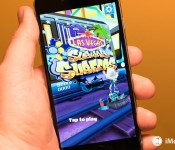
Subway Surfers travel to Las Vegas in the game’s latest update

The popular endless-running game Subway Surfers received an update today in iTunes that sees the World Tour heading to the lights and sounds of Las Vegas. That also means some new contests, themes and unlockable content to try out.
Here’s what’s new in version 1.33.0:
- Follow the Subway Surfers World Tour to glamorous Las Vegas
- Surf beneath the star covered sky and explore the flashy subway
- Add Rex, the amazing performer, to your character crew
- Spice up your Board collection with the fancy Roller board
-
Collect shiny Spades in the Weekly Hunts to unlock cool prizes
-
Free – Download now
Thanks to Agilesh for the tip
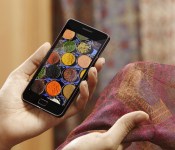
How to install Lollipop-based CyanogenMod 12 on the Galaxy S2 (I9100)

The Samsung Galaxy S2 was released on February 13th, 2011, and was the predecessor of the first Android device to truly rival the iPhone in both sales and popularity. Four years is almost an eternity in the world of tech, but that hasn’t stopped the XDA Developers community of finding a way of getting a stable Android Lollipop build up and running on the Galaxy S2.
The build was posted by XDA user Lysergic Acid, and is a pure, yet unofficial Cyanogenmod 12 build. From what I have read in the thread, the newest version of the build seems fairly stable, but still has some issues with HD video recording and for some some internal storage bugs. This is a 5.0.2 Lollipop release, so there won’t be any signs of Touchwiz here. This particular build is for the I9100 only and does require root. Make sure you are flashing this ROM on the correct device before you get started.
As with most builds on XDA, you will need to root your device. I have rooted the S2 a million times, and although very simple to do, here’s the standard disclaimer: You root at your own risk. If you brick your device, Android Authority or XDA Developers are not responsible. You are in essence voiding your warranty, meaning Samsung can deny you service should they choose to.
Now if you decide you want to try it out, you can root your device (literally in minutes by following the simple step by step instructions here via Chainfire’s CF Root method). Once you have root, you’ll need a KitKat compatible custom recovery to flash the ROM.
Once you have root, do the following:
- MAKE A NANDROID BACKUP!
- Download the ROM and the Google Apps package from the XDA thread here and put it on your sd card.
- Boot into recovery and wipe all data.
- Flash the ROM.
- Flash the Gaaps package.
- Reboot your phone, and remember the first boot can take a little longer than usual.
- Profit.
If you want to see it running before flashing it, XDA member @Troubadour666 put together this video that shows the ROM running on the S2:
I imagine it was no easy feat getting CM12 to run on a four year old device (and especially this well), so be sure to hit that thanks button to everyone responsible if you choose to flash the ROM. While it’s not realistic to expect Lollipop to be as fast and smooth as it is on most (but not all) newer devices, having a stable daily driver in Lollipop will most likely excite a few S2 users out there. Be sure to let us know in the comments how it’s running on your Galaxy S2.
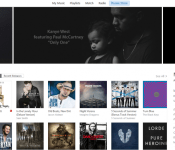
U.S. Music Fans Continue Shift to Streaming Services as Apple Readies Beats Revamp
Paid music downloads, which have dominated the digital music market for years thanks in large part to Apple’s iTunes Store, showed accelerating weakness in the United States last year as music streaming services like Spotify and a resurgence of vinyl record sales exploded in popularity.
According to Nielsen SoundScan (via The Wall Street Journal), streaming music grew a remarkable 54 percent in 2014, moving from 106 billion songs in 2013 to 164 billion in 2014. That growth contrasts with traditional song downloads that dropped off significantly from 2013. Paid downloads for full music albums declined 9 percent in 2014, with individual song downloads seeing an even larger 12 percent drop-off. Overall, according to SoundScan, Americans bought 257 million albums in 2014, 106.5 million of which were downloaded digitally.

Amid the digital shift from individual downloads to streaming, an older technology also saw a resurgence in 2014 with vinyl record sales at their highest levels since SoundScan began tracking music sales in 1991. Nielsen’s tracking shows 9.2 million vinyl records sold, representing a 52 percent overall increase in sales from 2013.
With lackluster overall digital music downloads mirroring a similar drop in iTunes Store sales, Apple has been looking at ways to improve its positioning in the music market. Apple’s initial effort with iTunes Radio to offer a Pandora-like experience that also seeks to drive iTunes Store purchases has had a less-than-stellar reception with availability in only the United States and Australia. That weak entry likely spurred Apple to pursue last year’s acquisition of Beats Music for a full-fledged subscription streaming service.
Recent reports have indicated that Apple will be pursuing a major revamp of Beats early this year that may see prominent integration of the paid streaming service into iOS and iTunes, perhaps including a rebranding under the iTunes name.

Which OEM flagship devices you are most looking forward to in 2015?

It’s the dawn of a new year, but already we are hearing gossip of the next HTC One, the Samsung Galaxy S6, the LG G Flex 2 and countless other devices. With that in mind, for this week’s Friday Debate we want to talk about which OEM flagship devices you are most looking forward to (whether immediate upcomers like GS6 or far-off devices like Note 5), and what you hope to see that manufacturer do differently with their next-gen flagships.
Aside from the devices you are most looking forward to seeing, feel free to weigh in on what you think all Android manufacturers as a whole need to focus on in 2015 (battery life, new designs, etc).
As is our recent custom, we start out the Friday Debate by hearing from our community, followed by members of Team AA and finally we’ll give our readers the opportunity to voice their opinion in the comments section. This week’s topic brought on quite a few responses, though this week we’ve chosen to showcase just one: our community’s Jayfeather.
Jayfeather
Xiaomi Mi 5! It looks like it is going to have killer specs and an awesome display with a decent price tag. There are more and more rumors of the upcoming Xiaomi Mi 5, which is set to be released this month, possibly at CES in a few days.
Xiaomi has always been a pretty good company, and their phones never cease to amaze me, especially for the price. For example, the Xiaomi Mi 3 on Oppo Mart costs 269 dollars, and has a Snapdragon 800 and 2 GB of RAM packed into a 5 inch 1080P screen. It is a Nexus 5 challenger that undercuts the price. The Mi 4 is the same way, although it features pretty much the same specs as the Mi 3, but costs about 400 dollars. I am hoping that the Mi 5 will be in this price range, maybe a little more, as it seems to be a whole lot more of a phone.
The rumors are showing that the Mi 5 will have a Snapdragon 810, 3 GB of RAM, and a 1440P screen! I am not usually that excited about many phones anymore. I have a Nexus 5, and it has about all the speed I will ever need. New phones from Samsung, LG, and HTC just don’t really excite me. Samsung is the same thing over and over with spec bumps every year. I love HTC but they have been screwing up with their camera and bezels, and LG is good, but it is just not that exciting. Every company has good phones, but no new phone really makes me go wow.
A phone can have the best specs and features, and have a high price tag, and that’s like, go figure, right? You pay more, get more. However, Xiaomi’s trend is offering inexpensive phones with excellent hardware. Plus Xiaomi phones tend to have decent development with a lot of ROMs. It just really excites me, and I am really pulling for Xiaomi, because their devices seem to be excellent in every way. My dad is looking for a new phone, he as an AT&T S4, and it sucks. I messed up some things on it. We bought it used, and it has a bunch of problems with the screen, in that it won’t register touch and it has air bubbles under the screen, which is just infuriating. He wants a Note 4, but I do not think it is wise to drop 750-850 on a new Samsung when the Xiaomi Mi 5 is just around the corner, and it may be cheaper and better.
After that, I would like to see the HTC One M9. I have always loved HTC. I have an HTC Sensation that still runs like a beast on Lollipop. HTC phones have excellent build quality, and I am sure the M9 won’t disappoint. If it has an improved camera, it would easily be one of the best phones in the world. So Xiaomi Mi 5 is my top pick, and next is the HTC One M9.
What Team AA has to say
Now that you’ve had a look at what community member Jayfeather had to say, it’s time for Team AA to weigh in:
Joe Hindy
The OEM I’m most looking forward to in 2015 is HTC. Their CEO has been fanning the flames saying that they’re going to have an exciting year and their products have been on an upward trajectory for the last 2 years with the One M7 and One M8 along with their midrange Desire series. The thing with HTC is that while their devices are top notch, they’ve been missing that thing that sets them apart from the rest. Samsung and Sony had waterproofing, the Note 4 and Nexus 6 had ridiculous size and powerful specs. The One M8’s solid offerings were consistently overshadowed by the competition. I’m hoping in 2015, they fix that problem.
I know the big conversation about flagships is that a lot of people think they should be cheaper. While I would certainly love a cheaper high-end smartphone, I don’t believe that everyone’s end game should be to make the cheapest smartphone that they can. In my humble opinion, I think OEMs should approach the outcry like laptop manufacturers do. Have the “Alienware” for expensive that has all the best specs and cutting edge tech, the “HP/Toshiba/etc” midrange for those who want most of the features but not all the best, and the “Chromebook” smartphone that does what you need it to do, is super cheap, but doesn’t feature the cutting edge stuff. Pretty much every OEM is going to release at least 3-5 smartphones this next year. Why not target all three demographics at once?
As a whole, OEMs have been focusing a lot more on expediting updates and larger batteries. We saw a lot of phones coming out with over 3000mAh batteries which allowed them to live much longer than is generally expected. I would love to see that trend continue and improve. Maybe they’ll find a way to squeeze a 4000mAh battery into a 5-inch phone. That’d be wonderful, eh?
There are two things I think Android manufacturers should focus on in 2015. The first is design. Pretty much everything is the same old thing inside of a new coat of paint. The Xperia Z series all look like the same phone with minor alterations. The same with the Samsung Galaxy series. HTC is falling into that habit as well with the One. LG did something really interesting with the back-side volume rocker. I’d love to see more bold designs like that to differentiate from the past.
The other thing I think Android manufacturers need to do is leverage the Google Play Store more. HTC has done this a little bit by releasing a few of their apps to the Play Store for everyone (not just HTC owners) and other OEMs have released their apps there for easier updating. Nokia may be the winners in this area with HERE Maps and the Z Launcher which are both intensely popular and well regarded. However, the looming threat of China invading the Europe and the West is a very real one, especially if they continue to produce cheap smartphones with decent specs. The main difference is the Play Store. The app stores on Chinese smartphones are amateur in comparison to the mammoth gold mine of games, apps, security, and customization sources that is the Google Play Store and it would be wise of Android manufacturers to start pointing that out now. It is a valuable asset and feature that pretty much all manufacturers ignore or downplay and when the Chinese start releasing $200 flagships, the fact that their app stores only have a few hundred thousand apps is going to be a lot more important.
It’s going to be an exciting year in hardware because last year was such a disappointment in terms of sales. Jobs were lost, new hires were made, Companies now realize that they need to shake things up a bit to get money in their pockets. The winners will be us, the consumers.
Eric McBride
2015 might be one of the most exciting years when it comes to smartphones, especially as Chinese companies and other OEMs that were “quieter” during the Samsung/Apple reign seem to be getting a better hold on things. That being said, there are a couple of devices that I am very much looking forward to seeing in 2015.
First up is Samsung. I have learned in life that sometimes being backed into a corner can be one of the best things to happen, as it FORCES you to do something to change the situation. Samsung is now in a position that they haven’t been in for years, as the Galaxy S6 and Note 5 MUST work, and work WELL. No ifs ands or buts about it. If these 2 devices don’t have some massive sales (Note 5 I think will, but I have my doubts about the S6 for some reason), the trouble that Samsung is currently in will look miniscule compared to the problems they will have next year and in 2016. It’s now or never for Sammy, and I can’t wait to see what they bring to the table.
HTC would have to be my second choice, simply because they seem to be hyping things so much lately. The thing with HTC is that they have always brought good devices to the table, despite the fact that they have had lackluster performance over the past years. As Joe pointed out, the M7 and M8 were and still are amazing devices, and with Samsung on the rocks, this could be their real chance to restablish themselves as a real force to be reckoned with.
LG is my next pick, simply because I like the consistency and style of devices they have put out lately. For some reason, I have a feeling that LG might shock us with something amazing, huge, and curved. I’m honestly rooting for them, as they have really climbed from the ashes to become relevant again.
When it comes to tech to focus on, better software optimization and battery life (one could literally be the solution for the other) are what I’m after. 2015 shouldn’t just be the year of specs, as phones with “mid range” hardware and amazing performance have emerged and proved that 17 14ghz processors aren’t needed to make Android fly. Sure I want new processors and 3 to 4gb of RAM in flagships, but I would love to see more focus on getting more power out of existing hardware vs always having to up the speed for everything. Efficiency ftw!
Gary Sims
I’ll start by saying what I am not looking forward to from the major OEMs in 2015, another round of Samsung Galaxy S and Samsung Galaxy Note devices. Don’t get me wrong, I think the Note 4 is a fantastic device, but its physical size is just too large for me, plus it costs way too much for my pocket. And I guess the S5 is also a good phone as well, but really it is just another iteration of the devices that came before it. Which is why I am not waiting with bated breath for another iteration.
I think we will find that 2015 will be the year of the Chinese OEM. OnePlus made a big splash onto the scene this year and although there has been teething problems I think 2015 can only be better. A friend came around over the holidays with his OnePlus One and the phone looked great. I asked him about the various problems that have been reported, and he said he had experienced none of them. So I am looking forward to the OnePlus Two.
I am also looking forward to see what Xiaomi and Meizu can do in 2015. I also think that Huawei could surprise us with more interesting devices from its Honor brand. Plus, I am interested to see what ZTE can do. All of these companies need to heavily push online sales distribution channels and cut out the carriers. Let carriers provide the cellular services but they shouldn’t be dictating which phones we use and how much they cost. That would be like the construction companies that build our highways also selling the cars. There is no freedom, no choice in that.
Besides the Chinese OEMs, I really want to see more from HTC. I think it has produced some solid devices over the last twelve to eighteen months and I think it has more potential. I also think it is really the best company to disrupt the status-quo. If HTC got into online selling and bypassed the carriers, I think it could regain its former glory, why let OnePlus do it when the HTC brand is already so well known and the phones so well respected?
Last but not least, I am looking forward to LG’s offerings for 2015. I think the G series has been brilliant and whenever I go past the window of a phone shop, the LGs always look good compared to their neighbors.
The key factors for 2015 aren’t higher resolution displays or crazily high megapixel counts, it will be price and distribution channels. And any OEM that doesn’t see that will see a loss of market share.
Jonathan Feist
It’s that time of year again, Christmas phone-giving is over, and now we save up our pennies to see what the next round of flagship phones will look like.
It is hard not to be excited for each and every new marquee device coming out of most Android handset manufacturers. With the next round of flagships likely to announce in just a few short weeks at WMC 2015, I expect lots of 64-bit technology, large(r) screen devices and bigger batteries.
Thing is, as excited as I am to see what Samsung, LG, Sony, HTC and more bring to the table, as far as most people’s wallets go, these devices do not matter.
Like most others, above all else this year, I really want to see a significant price drop on the average flagship phone. Because I do not imagine that will happen, that phones like the Galaxy S6, HTC One (M9), LG G4 or the Sony Xperia Z4 will not come in at Moto X pricing, or lower, I think I’ll turn my attention elsewhere.
Let me start with OnePlus. Yes, I know what you may be thinking, don’t do it – no support, screen issues, the whole invite thing is a joke. Thing is, round 1 is over, OnePlus got its butt kicked a little bit (or did they?) learning the hard way how to build a phone and deliver it to the masses. I want to believe that they’ve learned enough to step things up, to become a ‘real’ manufacturer.
Maybe I am wrong to put my expectations in the ‘flagship killer,’ but if they can bring another high-end device to market for less than $400, and sell it without all the hoopla, I’d be interested.
HTC is another player I will keep my eyes on. Maybe not for their flagship offerings, but I will say that I am growing somewhat fond of the Desire line of mid-range devices. Bang for the buck, they’ve got some hits on their hands. Keep the 13MP and larger cameras coming, and I’ll keep an eye on what you are selling.
What I really, really want to see in 2015, a new Nexus device. Let me call it Nexus 5.5. I want a 5.5-inch AMOLED phone, I want a Snapdragon 810 SoC (or better 64-bit chipset), 4GB of RAM, 64GB internal storage with microSD slot, front facing speakers, a battery large enough to provide up to 8 hours screen-on time, a camera in the 13-16MP range with OIS and optical zoom and no non-sense real world usability. Am I asking for too much?
Like Joe said, I am glad for the progress most manufacturers are making in terms of the hardware, there are pros and cons no matter what decision you make, but in the end, much was learned in 2014 and there is a healthy amount of competition in the market – we will all be winners because of it. 2015 is going to be a good year.
Luka Mlinar
I’m gonna have to go with the Xiaomi Mi5. At the moment they are my last big hope for a true flagship phone with the next generation Snapdragon 800 series chip that doesn’t cross the 5″ border into phablet territory. One can always justify adding an extra 0.2″ but personally I consider my 5 inch phone large enough as is. Screen size aside, my love for the up and coming Chinese OEMs has grown almost as fast as they have. While top global OEMs are fighting over adding that one feature that will set them apart over the rest, Xiaomi, OnePlus and Meizu are trying to reach the same heights wile keeping cost at almost half that of the competition. I find that extremely exciting.
With expansion into newer markets, will they adjust their OS to a more vanilla like look? How long can they keep their price down or were the first few models sold cheaply just to create a costumer base an put their foot in the door? These are just some of the question I have and I’m hopefully that 2015 will bring a lot of answers.
As far as what I think OEMs should focus on? Well, we got the internal components where we want them; 8 core 64 bit processors with 3GB of RAM and so on. For 2015 i would like manufacturers to make the exterior of their devices look and feel as good as their internal components are. To take a risk and go beyond the designs of the past. To follow in the footsteps of Google’s MD and reinvent what we thought we knew about design.
Robert Triggs
As a big fan of LG’s last two flagships, I’m really keen to see what can be squeezed into the LG G4. I’d like to see LG keep on the same track, slightly undercutting the big flagship names in terms of price and ignoring the gimmicks, while offering more reliable build quality and superior camera and display features than the low-cost Chinese brands.
Like Joe said, I’m looking for even more diversity this year. I want Samsung’s Galaxy S6 to really justify its ultra-high price tag this time, but with useful features and better software rather than gimmicks. I’m equally stoked to see what Xiaomi can do with its low-cost Mi5 and what Huawei, Lenovo and Meizu will bring to the table this year. That said, I’d hate to the majority of manufacturers race to the lowest price, the Android market will be better off if OEMs can find a market segment to appeal to.
Some OEMs will no doubt try to fractionally improve upon the 5-inch 1080p, 8MP, Snapdragon reference designs that clogged up the end of 2014, but that’s been perfected. I want to see someone try out a slim-bezel 4.2 incher, pack a stellar 20MP camera into a mid-range phone, or try some weirder designs that push functionality further than the G3, Note Edge or Oppo N3. I’m looking at you Project Ara.
Matthew Benson
The device I am most looking forward to for this year is the LG G Flex 2. As mentioned a few weeks back, my device of 2014 was the original, and it is thus with great anticipation that I await the technological advancements that LG will inevitably bring to the table. Hopefully it will have a full 1080p display, and retain the same curved angle as the original (as opposed to the Galaxy Round). Also LG had mentioned it could have bent the original in an even more pronounced fashion than it did, thus it would be interesting to have something even more rounded, or perhaps something that could actually be bent. The idea of a semi-“rubber” chassis would be quite an interesting idea. The phone would literally be able to flex, but still be hard enough to retain a certain shape.
Personally I have been partial to LG devices in recent years. While the OEM provides as much “bloat” as Samsung, LG has far more to offer with the insane level of customization options. The ability to manually select the on-screen navigation buttons (including their order) as well as change every single icon’s picture is something that Samsung could stand to include. Likewise, LG devices seem to have excellent battery life, especially the original G Flex.
Beyond that, I am actually looking forward to a “flagship” Samsung Gear device. The Gear S is actually quite nice for what it is, but the thing looks like a cheap toy when push comes to shove. The LG G Watch R has a much more professional and “traditional” look to it, and it would be fantastic if Samsung could offer something similar. Some weeks ago I wrote a post about a rumored “ring display” watch Samsung had patented: that would be a step in the right direction.
Likewise, I am also very interested to see what flagship tablet Samsung can release this year, especially if it will have another SAMOLED screen. The best possible offering would inevitably be the Galaxy Note 10.1 2015 Edition, or perhaps a successor to the Galaxy Note 8.0. Last years Galaxy Tab S duo were nice of course, but the lack of additional functionality that the Note series offers was a bit of a downer.
The one feature that really needs to be implemented this year is quick charging. Simply put, I’m disgusted with the excruciating amount of time required to charge any kind of tablet device. The Galaxy Tab S 10.5 in particular took an insane wait, and even the Nexus 9 is exceedingly excessive. It’s high time that more thought be put into this component because when you’re dealing with batteries that keep getting bigger and bigger, there is just no excuse why you need to wait 4-6 hours (or more) to top them off.
Now it’s your turn
You’ve heard from Jayfeather and Team AA, now it’s your turn. What OEM handsets are you most looking forward to? What other kind of Android-related devices are you hoping to see this year? Tell us what you think in the comments!
*Note poll was originally featured in a post from yesterday, but is applicable here as well*
(function ()
var opst = document.createElement(‘script’);
var os_host = document.location.protocol == “https:” ? “https:” : “http:”;
opst.type = ‘text/javascript’;
opst.async = true;
opst.src = os_host + ‘//’ + ‘www.opinionstage.com/polls/2242892/embed.js’;
(document.getElementsByTagName(‘head’)[0] ());

Dealing with cellphone carriers is confusing on purpose

Several days ago, the New York Times ran an interesting piece that pointed out just how confusing wireless plans are presented to consumers. As the story pointed out, even executives at several wireless phone companies are admitting that such confusion exists due to a “a Tower of Babel of competing plans, with highly specific requirements and offerings and even, in many cases, unique language buried in the fine print.”
But at what point will people realize that such plans are intentionally as confusing as possible? AT&T’s new chief executive has since admitted to “propagating some confusion in the marketplace” while T-Mobile’s chief marketing officer admitted to being part of an “industry where the carriers have sown a massive amount of confusion.”
So let’s get into the confusion that always adds to the carriers financial pockets.
Upgrading
When Verizon and AT&T first introduced their new upgrade programs (in response to T-Mobile), they made sure to make it as difficult as possible to understand for the average consumer. Why? Because customers weren’t saving whatsoever with the upgrade plans. In fact, customers were paying twice for the same phone.
For years, carriers have admitted openly to jacking up the cost of service to counter handset subsidies. Yet, when the new upgrade plans were introduced which eliminated the subsides, the price of service didn’t drop at all. In fact, it took some national attention over several months for the carriers to make changes to the upgrade programs so that they weren’t a complete and utter “rip-off” (as Lifehacker flatly stated).

Or as the New York Times explained:
One wireless phone plan allows customers to upgrade to a new phone in less than two years. Another allows a pool of data to be shared across multiple devices. Yet another offers unlimited data, but only at slower Internet speeds. All these perks are there for the taking, yet the average wireless phone bill continues with its monthly sting. Confused yet?
Unlimited Data
When T-Mobile went around the country with their “unlimited data” plans, they really meant that customers could use their service up to a select amount of GB’s. If customers went over a capped amount, they wouldn’t be charged overages but were throttled to speeds of 64 kbps or 128 kbps for the remainder of their billing cycle. T-Mobile was even nice enough to exempt speed-tests from their usage caps so throttled users wouldn’t be able to tell if they were being throttled. How nice.
When Sprint was advertising to all the benefits of their “Truly Unlimited Data” plans that allowed customers to “avoid the data dilemma”, they really meant that customers could only use 5GB on their phones/tablets without paying ridiculous overages.

When Tracfone Wireless advertised that their MVNOs Straight Talk and Net10 plans included “unlimited data”, they really meant that customers had unlimited data up to 2.5GB and then dial-up speeds for the rest of the month. Of course, you could purchase more data per month for an additional fee.
A TracFone spokeswoman said in a statement that Straight Talk’s 30-day $45 “unlimited” plans and $60 “unlimited international long” plans include 2.5 GB of high-speed data. – FierceWireless
When AT&T advertised their “unlimited data” plans to iPhone users for several years, AT&T really meant that they could only use 2GB, or maybe 3GB, or top 5% of data in your area….or something.
Service Contracts
When FreedomPop was advertising their “free wireless service“, they really meant that customers had to pay a multiple number of fees for such things as receiving usage alerts, rolling over bytes to other months and other charges for simply using the service (such as the $0.99 “Active Status fee” which has since been removed by FreedomPop).
AT&T must have forgot to tell wireless customers that they were raising the “Activation Fee” for those on two-year contracts. Rather than being forced to pay just $4 for the arbitrary and unnecessary fee, customers are now paying around $40 for it. It is what I call a BIC “Because I Can” fee.

Speaking of AT&T, let’s not forget about the addition of another BIC fee. Last year, AT&T announced that wireless users would need to pay a $0.61 “Mobility Administrative Fee”. Although AT&T claimed it was to help “defray certain expenses,” it was clearly AT&T looking to add yet another below-the-line fee that allows companies like AT&T to jack up the cost of service without raising advertised rates.
When T-Mobile advertised to consumers in Washington that they could have a “no-contract” plan for an iPhone 5 with an upfront cost of $99, Washington State’s Attorney General slammed T-Mobile for false advertising since customers still were forced to sign an agreement stating that they would pay off the total owed. T-Mobile eventually changed their advertising language and acknowledged that they were “misrepresenting that customers can obtain wireless service and telephone equipment without restrictions.”
Technology Terms
As I have written about a number of times, wireless carriers seem to enjoy advertising technology that they don’t actually offer. Apparently the carriers believe that by stating that you offer something a number of times, then you magically do offer that technology. If that doesn’t work, the carriers push the International Telecommunication Union (ITU) to dumb down the definition of the technology so that everyone can suddenly offer it.
For years, T-Mobile, AT&T and Sprint have spent many millions in advertising of their 4G networks that didn’t even speeds anywhere near 4G speeds. T-Mobile claimed that their 3G HSPA+ service was the “largest 4G network” while Sprint and AT&T pretended that their Mobile WiMax and HSPA+ networks (from several years ago) were also “4G.”
During 2011, Rogers Communications in Canada publicly admitted that their LTE network was not going to be nationally available for some time. That didn’t stop Rogers from promoting their new “4G” network that was simply their current HSPA+ network. When asked as to why they were suddenly introducing their HSPA+ network as 4G, Rogers tried to blame competitors for “confusion” as to what “4G” entailed. So to avoid confusing consumers, Rogers joined other wireless carriers in calling everything and anything “4G”.
In both 2011 and 2013, Representative Anna Eshoo, D-Palo Alto, introduced the Next Generation Wireless Disclosure Act which would have required carriers to disclose a list of details about the network, including minimum data speeds, network reliability and coverage, and specifically what technology was being used to provide “4G” service. Both times, the industry managed to kill the bill through intensive lobbying.
Cramming
As this site has reported on a number of occasions, T-Mobile, Verizon, AT&T and Sprint have all been involved with cramming tactics for years now and have reaped the benefits of such tactics to the tune of millions of dollars per year. Cramming refers to wireless carriers who would sign up consumers to a $10 a month service that sent text messages containing a variety of news/tips/horoscopes. The carriers would then try to confuse the charges on a customer’s bill, ignore requests to be removed and dodge any attempts to be contacted.

Over the last year, the FCC has surprisingly been active in stopping this practice through a variety of fines.
- Sprint is facing a $105 million fine for cramming.
- AT&T has paid a $105 million fine for cramming.
- T-Mobile has paid a $112.5 million fine for cramming.
- Verizon has been involved with several class-action lawsuits for their past cramming actions.
Conclusion
Wireless carriers make it difficult for a reason: Money.