


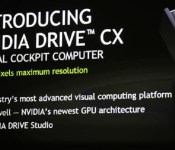
Nvidia Tegra X1 powers Nvidia Drive CX car infotainment system

Tonight Nvidia announced the Tegra X1, its latest mobile processor. While the company has yet to unveil any mobile devices that will utilize the technology, they did reveal their plans to bring the chip to automobiles through its new Nvidia Drive CX “digital cockpit”.
According to Nvidia’s CEO Jen-Hsun Huang, the Drive CX is a small computer system for your car that is capable of processing 17 megapixels, equivalent to roughly two 4K screen. This is a big step forward compared to current “state-of-the-art” vehicles that can process around 1 megapixel.
Nvidia’s new computerized car system not only is a virtual cockpit, it also is a full featured infotainment experience that includes media integration, text-to-speech, navigation, voice control and reportedly supports any major OS including Linux, QNX or even Android. From the wording of the announcement, we believe that doesn’t just mean supporting Android Auto, it potentially could run Android Auto technology directly — something that Android M is rumored to be bringing to the table. Of course, that’s just speculation at this point.
We’ll be sure to update this post if and when we learn more about Drive CX and Nvidia’s plans for the platform. What do you think of Nvidia’s plans to bring the new Tegra X1 to cars? Let us know what you think in the comments.

NVIDIA introduces Tegra X1: a mobile superchip with 256 GPU cores

This evening, NVIDIA held its press conference for CES 2015 to announce the new Tegra X1 mobile superchip. The processor contains various components that make it a powerhouse. Alongside the eight-core 64-bit CPU are 256 cores for the GPU. It supports 4K video at 60Hz.
The Tegra X1 is based on the Maxwell architecture that was announced only four months ago. This is down from the two years it took NVIDIA to transfer Kepler architecture, its predecessor, over to mobile in the form of Tegra K1.
The new mobile superchip remains energy efficient despite its cutting edge performance. NVIDIA showcased its strength and efficiency by running a demo of Unreal Engine’s Elemental. The engine is equal to what is found in high-end PCs and today’s gaming consoles.
NVIDIA compared Tegra X1 with Tegra K1 and Apple’s A8 and found there to be little competition. Tegra X1 performs better than both, NVIDIA CEO Jen-Hsun Huang explained, by blowing the A8 “out of the water.”
Hit the break for more.

The company also further inserted itself into the automobile industry with the digitial dashboard/cockpit platform DRIVE CX. It allows multiple operating systems to have control over the different displays located in a vehicle. Quite literally, NVIDIA is expecting everything in a car to evolve into displays and cameras.
Android Auto is integrated into DRIVE CX. The visual platform is powered by Tegra X1 and software NVIDIA calls DRIVE Studio. The entire collection of inputs for the mobile supercomputer in a car is known as DRIVE PX. It performs real-time image processing and recording so that the vehicle can have accurate information instantly.
Click here for our CES 2015 coverage.
Come comment on this article: NVIDIA introduces Tegra X1: a mobile superchip with 256 GPU cores
NVIDIA’s Tegra X1 is the first mobile chip with a teraflop of power

How powerful can a mobile processor get? Try a teraflop worth of raw computing muscle. NVIDIA just announced the Tegra X1 “mobile super chip” – and yah, it’s sort of fast. The X1 is the first mobile chip to achieve a teraflop of computing power, co-founder and CEO Jen-Hsun Huang said on stage at NVIDIA’s CES press conference tonight. That makes it just as fast as the world’s fastest supercomputer in 2000. It’s basically the same Maxwell GPU architecture for PCs, which the company announced several months ago, brought to mobile. Tegra X1 packs in an eight-core CPU, 256 GPU cores, and altogether it should deliver around twice the performance of last year’s Tegra K1 mobile chip.
Developing.
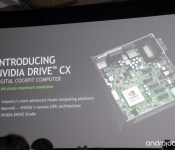
NVIDIA Drive CX is an all-new digital cockpit


NVIDIA tonight at its CES press conference unveiled a new generation of digital cockpit — NVIDIA Drive CX.
It’s the equivalent of two 4k displays or four full HD displays from a single computer. In your car.
Digital dashboards. High-resolution side mirrors. Curved cockpit displays. That’s the future of driving, NVIDIA’s Jen-Hsun Huang said tonight from Mandalay Bay in Las Vegas.

ASUS planning to release three more wearables in 2015

It hasn’t been very long since ASUS released the ZenWatch but according to ASUS CEO Jerry Shen, the company is already planning a follow-up smart watch to the ZenWatch. In addition to the ZenWatch 2.0, two other wearables were mentioned by Shen that will focus on health related data, like step counting and blood sugar monitoring.
Shen, when speaking about a possible time frame for the release of the successor device, said that he is shooting for a third-quarter unveiling. The first ASUS ZenWatch was announced back on September 9th at IFA 2014 and hit the shelves in the United States on November 9th, so the Taiwanese company may stick to this release pattern.
The ZenWatch is currently being sold on Best Buy’s website for $199 USD. Of the Android Wear variety, the ZenWatch is probably the classiest looking smart watch out of the square-face bunch. Its specs include an IP55 water-resistance rating, a 1.6-inch AMOLED display and a Qualcomm Snapdragon 400, along with 512MB of RAM and 4GB of storage capacity.
As I mentioned, the operating system used by the ZenWatch is Google’s Android Wear. But will the second generation ZenWatch also run off Android Wear?
Shen curiously told reporters that the updated wearable will not be so heavily reliant on being tethered to your smartphone and will even allow for phone calling without being tethered. Depending on your opinion as to whether or not an Android Wear device could even be functional without being tethered to your smartphone, the implications of this statement could mean that either ASUS is planning on following Samsung down the road of independence from Android in terms of wearables or that Shen knows something about the future iterations of Android Wear.
As far as the two fitness bands that Shen promised, there was no timetable given on their debut. It could be possible that we might see one or both of them at CES 2015 this week.
And on that note, you can get all of your CES 2015 news this week from Talk Android. So click here for our full CES 2015 coverage starting…well, now!
Source: Focus Taiwan
Come comment on this article: ASUS planning to release three more wearables in 2015

Lenovo’s latest business Ultrabook does away with last year’s unpopular design

You haven’t known a fanboy until you’ve met a ThinkPad fan. The brand’s loyal following (many of whom started as IBM users) can be very resistant to change. How resistant? Let’s put it this way: Anytime the brand’s current owner Lenovo so much as redesigns the touchpad, it does so at its own peril. That being said, Lenovo may have gone too far with last year’s X1 Carbon. With the 2014 edition of its flagship business Ultrabook, Lenovo ripped out the physical Function buttons, leaving users with an “adaptive” panel whose touch-sensitive buttons changed depending on the task at hand. We weren’t fond of it, and apparently real-world users weren’t either: The company just unveiled the 2015 edition, and it brings back the physical function keys you all seemed to miss so much. Additionally, Lenovo undid some of the changes it had made to the touchpad. Whereas the last-gen model had a clickpad with zero buttons, this year’s model returns the two right and left clickers that used to sit at the top of the pad — the ones meant to be used with the signature red pointing stick.
Other than that, this is basically the same X1 Carbon already on the market: a 2.8-pound carbon fiber machine with an optional 2,560 x 1,440 touchscreen and Intel Core processors running under the hood. (These are Intel’s fifth-generation Broadwell processors, which will probably see their formal debut here at CES.) As for configuration options, you can get it with either 4GB or 8GB of RAM, along with either a regular solid-state drive (128/180/256/360 gigabytes) or a faster PCIe-based SSD (256GB or 512GB). Finally, you can get it with an LTE radio, in case you don’t want to be at the mercy of nearby WiFi hotspots. Look for the updated X1 Carbon to land this month, starting at $1,249.

Lenovo also made some changes to the rest of its ThinkPad lineup, from its other Ultrabooks to its lower-end business notebooks. Starting with the ultraportables, the 12.5-inch X250 replaces the X240, while the T450s is an update to the T440s. At 2.88 and 3.5 pounds, respectively, both are ever so slightly lighter than the machines they replace. Both make use of Intel’s new Broadwell processors, as well as Lenovo’s existing “Power Bridge” technology, which combines a built-in battery with a swappable one, allowing you to insert a fresh cell without shutting down. Additionally, both will be offered with a choice of spinning, hybrid and solid-state disk drives, along with an optional backlit keyboard. The main differences are size (obviously) and screen resolution; as the larger of the two machines, the 14-inch T450s starts with 1,600 x 900 resolution, whereas the X250 comes standard with a lower-res 1,366 x 768 panel, though both can be configured with a 1080p touchscreen. These also go on sale this month, with the X250 starting at $749 and the T450s going from $999.
Moving on, the 14-inch T450 and 15-inch T550 are also technically Ultrabooks, though they sacrifice some portability in the name of stronger performance. The two weigh in at four and five pounds, respectively, but in exchange will be available with optional discrete graphics, as well as a 3K screen on the 15-incher. These too will run Intel’s fifth-gen Core processors, and feature Lenovo’s Power Bridge technology (exact battery life TBD). They’re also set to arrive this month, starting at $799.
Finally, the lower-end machines. The 14-inch E450 and E550 pack fifth-gen Core processors, just like all the other machines here, except they’re heavier, at 4.0 and 5.2 pounds. They’re also missing certain niceties, like backlit keyboards and touchscreen displays. If you can live without that stuff, though, you’ll get a built-in Intel RealSense depth-sensing camera, along with optional discrete graphics, up to 16GB of RAM and up to 1080p screen resolution. Those start at $449, and will be available this month. In addition, there’s the 14-inch L450, which weighs in at 4.25 pounds and will also feature Broadwell processors, optional discrete graphics, up to 16GB of RAM and up to 1,920 x 1,080 screen resolution. No word exactly on how much that’ll cost, but Lenovo’s positioning it as the value-priced option in its lineup, which means a sub-$500 starting price is probably in order.
Lenovo unveils new Thinkpad products at CES 2015

Lenovo has today announced a series of new Windows 8.1 products for its Thinkpad line at CES 2015 in Las Vegas. The range topper is this, the Thinkpad X1 Carbon which is one of the lightest 14-inch Ultrabooks in the world, built partly to celebrate 100 million Thinkpad products sold in Lenovo’s 22 year history with the line.
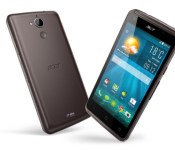
Acer announces 4G-capable Liquid Z410 smartphone

Acer has just announced their new low-cost smartphone ahead of CES 2015, the Liquid Z410. Acer has been a long-time supporter of the budget smartphone movement, and this new device fits right in to the company’s lineup. This new device is meant to deliver a solid mid-range experience to the user without breaking the bank.
So what makes this device so interesting? The Z410 totes a 64-bit quad-core MediaTek MT6732 CPU, ARM Mali-T760 GPU, as well as 4G connectivity. It also has a 4.5-inch qHD display with 540×960 resolution, 5MP rear-facing camera and a 2MP front-facing camera with a wide 80-degree lens. The device also has a battery that can last up to either 5.5 hours of talk time or a massive 400 hours of standby. There’s no mention of the actual battery capacity, but we’ll know more details about the device later in the week. We’re also unsure of what Android version the device is running, but we do know that the company has decided to include familiar software features like Acer QuickTouch and AcerRAPID Key.
The Z410 will be sold for only €129 (around $155), and will be available in Europe, the Middle East and Africa around the end of February. Acer will have the device available on the CES show floor in the coming days, so stay tuned to Android Authority for more details on this device and many others!
Ready to Boom: Acer Introduces the Liquid Z410 4G Smartphone
LAS VEGAS

1 year free of Netflix, Milk Music with purchase of Samsung Galaxy S5, Note 4, Tab S, or 4k TV

For the few of you who held off to get a new device until after the new year, you’re in luck as Samsung is rewarding you with a year subscription to Netflix and Milk Music. In order to qualify, you must purchase a Samsung Galaxy S5, Galaxy Note 4, Tab S, or any Samsung 4k television. The deal is valued over 100 dollars and is limited to the first 115,000 people who register so don’t procrastinate on this promotion. You will also need proof of purchase in order to qualify for the free Netflix deal.
Purchases only qualify if they were made between Jan. 4-17.
Claim your reward here – Samsung Promotions

The post 1 year free of Netflix, Milk Music with purchase of Samsung Galaxy S5, Note 4, Tab S, or 4k TV appeared first on AndroidGuys.

Qualcomm releases video showing just how connected everything can be

This year at the Consumer Electronics Show (CES) in Las Vegas, a common theme will be connecting everyday items. This is known as the Internet of Things or Internet of Everything. The obvious place for this approach is the home and Qualcomm is one of the companies willing to show how it can be done. Qualcomm claims it can bring together everything “from your water meter, faucet and TV to your washing machine and even your light bulbs.” After all, it does design that processors powering millions of devices around the world. There are not many companies that have the sheer strength that Qualcomm does.
Hit the break for the video.
Click here to view the embedded video.
Click here for our CES 2015 coverage.
Come comment on this article: Qualcomm releases video showing just how connected everything can be

