



Xiaomi sells 61 million handsets in 2014 with a revenue of over $12 billion

Things are certainly looking good for Xiaomi. A few days ago it officially completed its latest round of fundraising, and managed to secure another $1.1 billion of additional investment. This gives Xiaomi a valuation of some $46 billion and technically makes the Chinese manufacturer the most valuable technology startup in the world. If you think those figures look too good for a startup, well think again. Xiaomi’s chairman Jun Lei has written in a blog post that the company has managed to double it sales to $12.2 billion. It did this by selling some 61 million handsets, not bad for a company that is only 5 years old.
During the second quarter of last year Xiaomi became China’s biggest selling smartphone brand by number of handsets sold. In doing so it pushed Samsung into second place. According to the BBC that means that globally Xiaomi is the world’s third largest smartphone maker.

But the company isn’t content with just selling in its home market. Xiaomi plans to expand to more countries after its successful entry into the Indian market, where is managed to sell 1 million handsets.
Xiaomi also has new handsets in the pipeline. It recently announced the Redmi 2, a 64-bit, 4G LTE, colorful smartphone which will retail in China for just $110; and the company has confirmed that it will be launching its new flagship device sometime in January.
Would you buy a Xiaomi handset if they were officially launched in your country? Please let us know what you think in the comments below.

NVIDIA’s new ‘superchip’ for mobile is the Tegra X1


The folks at NVIDIA have been working hard over the last couple of years to blur the lines between their desktop class GPU architecture and their mobile GPU architecture, and at CES this year the company wants to show off how they have raised the bar. Their latest achievement has been dubbed the Tegra X1, bringing with it the power of NVIDIA’s Maxwell GPU. Just like last year, NVIDIA hopes to prove that mobile devices powered by Tegra can visually compete with game consoles.

CES 2015: Blue Spark Introduces ‘TempTraq’ Wearable Thermometer and iOS App [iOS Blog]
Blue Spark Technologies has unveiled its new TempTraq wearable Bluetooth thermometer at CES 2015, which pairs with a companion app to give live updates and alerts on body temperature. The company notes that the thermometer is great for parents who want to measure their child’s temperature without disturbing rest, as data can be viewed and shared in real time.
The TempTraq contains a patented flexible battery and can measure temperatures between 86.0°F and 108.3°F, providing both real time and historical data in graphical or tabular view. Caregivers can receive real-time data from the thermometer from up to 40 feet away, and simply press a button on the thermometer while typing in a unique access code on the companion app to start using it.
Blue Spark also details how it simplifies the temperature reading process on the app with the thermometer:
TempTraq further simplifies the temperature reading process by providing easy-to-follow colors that indicate temperature levels: Green, less than 100.4°F; orange, equal to or greater than 100.4°F; red, equal to or above the user-set temperature level. Caregivers can even receive alerts when a child’s temperature enters this designated red zone.

Blue Spark’s TempTraq wearable Bluetooth thermometer is pending FDA approval and will be available in the near future.

CES 2015: Parrot Unveils RNB6 In-Dash Entertainment System with Apple CarPlay and Android Auto Support
Drone and headphone manufacturer Parrot has unveiled its new RNB6 in-dash car entertainment system at CES 2015, which features a 7-inch, 720p touchscreen with built-in support for Apple CarPlay and Siri Eyes Free as well as Android Auto and Android Auto Voice.
Parrot’s RNB6 system also boasts a number of internal specs and features including Bluetooth 4.0 and configurable 5GHz Wi-Fi, as well as rear ports for GPS, HDMI, microphone input, ethernet, onboard diagnostics and USB devices. The in-dash system features a built-in dash camera with a wide-angle lens and full HD support, and also supports steering wheel control for UI navigation.
Parrot did not give a suggested price for the RNB6, but noted that it would be shipping during the latter half of 2015. 
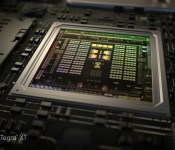
NVIDIA debuts Tegra X1, world’s most advanced mobile processor


NVIDIA kicked off its new year by announcing its latest mobile processor, the Tegra X1. Built upon the Maxwell GPU, this one features a 256-core GPU, 8-core 64-bit CPU, and so much more. As the first mobile processor to hit more than 1 teraflops of processing prowess, the Tegra X1 is no joke.
Yes, it works as well as the XBOX One, and it even runs more efficient. As advanced as the processor sounds, you’d be correct if you thought it’s too much for a smartphone. In fact, the Tegra X1 is poised to work in a host of environments including automotive.
NVIDIA showed off a variety of manners in which the new chip will find a way into the cars of the future. Once in place, the heads-up displays, in car monitors, and rear entertainment will be super-charged. The Tegra X1 will be integrated into NVIDIA’s Drive Car computers which leads to self-driving, self-parking, really cool cockpits, and other auto enhancements.
Although there’s not a lot of Android implications in the immediate announcement, the in-car stuff does have ties to the platform. According to NVIDIA, the Tegra K1/Drive PX stuff is designed work with all major platforms. We were treated to some brief demos of the current in-car Android Auto stuff; suffice it to say, the future experience looks much better.
Be sure to check out NVIDIA’s press release for all the goods on the new chip.

The post NVIDIA debuts Tegra X1, world’s most advanced mobile processor appeared first on AndroidGuys.
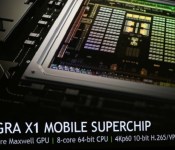
Nvidia announces latest mobile processor, the Tegra X1

At CES 2015 Nvidia unveiled its next gen mobile CPU, the Tegra X1. The latest chip is based on Nvidia’s 256-core Maxwell GPU, and features an eight-core 64-bit CPU and follows up last year’s Tegra K1.
The Tegra X1 is the first mobile processor to achieve 1 teraflop throughput, handles 4K video at 60Hz, and is said to be twice as powerful as the K1. It’s worth mentioning that the first supercomputer to pull off more than 1 teraflop did so in 2000 and needed 10 million watts to achieve such a feat, showing how far we’ve come. In addition to featuring a major boost in processing power, the X1 is also just as, if not slightly more, power efficient than its predecessor.
As per Nvidia PR, here are the main specs of the new chip:
- 256-core Maxwell GPU
- 8 CPU cores (4x ARM Cortex A57 + 4x ARM Cortex A53)
- 60 fps 4K video (H.265, H.264, VP9)
- 1.3 gigapixel of camera throughput
- 20nm process
Nvidia naturally focused on the graphics abilities of its so called “superchip” and highlighted the support for graphics standards like Unreal Engine 4, DirectX 12, OpenGL 4.5, CUDA(R), OpenGL ES 3.1 and the Android Extension Pack, as well as individual features like Voxel Global Illumination for real-time dynamic global illumination and Multi-Frame Anti-Aliasing.
“To achieve this dream, enormous advances in visual and parallel computing are required. The Tegra X1 mobile super chip, with its one teraflops of processing power, is a giant step into this revolution,” said Nvidia’s CEO Jen-Hsun Huang.
On the CPU side, Nvidia opted for a standard ARM configuration, with 4 fast Cortex A57 cores and 4 power saving Cortex A53 cores connected into a big.LITTLE configuration that allows on the fly allocation of resources depending on the task. This setup is similar to that used by Qualcomm on the Snapdragon 810, and it will be interesting to see how the chips fare against each others in benchmarks and real world performance. Nvidia has skipped its custom Denver cores for the Tegra X1, though Denver may make a return on a future gen.
Nvidia is also pushing hard automotive applications; a dual-Tegra X1 setup powers the Drive CX virtual cockpit/infotainment system, which is capable of handling 17MP of graphic output, the equivalent of two 4K screens.
At least at the time of this writing Nvidia has yet to announce any devices that feature the Tegra X1, though the company offered a vague timeline for the rollout, with the first devices equipped with the chip to begin arriving in the first half of the year. Nvidia has a history of having trouble delivering on its promises, so it remains to be seen whether Tegra X1 will fare any better.
Read the press release for the official rundown on Tegra X1.
Tegra X1 is built on the same NVIDIA Maxwell(TM) GPU architecture rolled out only months ago for the world’s top-performing gaming graphics card, the GeForce(R) GTX 980. The 256-core Tegra X1 provides twice the performance of its predecessor, the Tegra K1, which is based on the previous-generation Kepler(TM) architecture and debuted at last year’s Consumer Electronics Show.
Tegra processors are built for embedded products, mobile devices, autonomous machines and automotive applications. Tegra X1 will begin appearing in the first half of the year.
It will be featured in the newly announced NVIDIA DRIVE(TM) car computers. DRIVE PX is an auto-pilot computing platform that can process video from up to 12 onboard cameras to run capabilities providing Surround-Vision, for a seamless 360-degree view around the car, and Auto-Valet, for true self-parking. DRIVE CX is a complete cockpit platform designed to power the advanced graphics required across the increasing number of screens used for digital clusters, infotainment, head-up displays, virtual mirrors and rear-seat entertainment.
“We see a future of autonomous cars, robots and drones that see and learn, with seeming intelligence that is hard to imagine,” said Jen-Hsun Huang, CEO and co-founder, NVIDIA. “They will make possible safer driving, more secure cities and great conveniences for all of us.
“To achieve this dream, enormous advances in visual and parallel computing are required. The Tegra X1 mobile super chip, with its one teraflops of processing power, is a giant step into this revolution.”
Driven by the exceptional graphics compute horsepower from Maxwell, NVIDIA’s 10th-generation GPU architecture, Tegra X1 is the first mobile processor with capabilities that rival supercomputers and game consoles.
Faster Than Previous Top Supercomputer Indeed, Tegra X1 has more horsepower than the fastest supercomputer of 15 years ago, ASCI Red, which was the world’s first teraflops system. Operated for a decade by the U.S. Department of Energy’s Sandia National Laboratory, ASCI Red occupied 1,600 square feet and consumed 500,000 watts of power — with another 500,000 watts needed to cool the room it occupied. By comparison, Tegra X1 is the size of a thumbnail and draws under 10 watts of power.
As serious gamers know from using the NVIDIA(R) GeForce(R) GTX 980 GPU, the Maxwell architecture solves some of the most complex lighting and graphics challenges in visual computing. Its innovations include Voxel Global Illumination, or VXGI, for real-time dynamic global illumination and Multi-Frame Anti-Aliasing, or MFAA, for incredibly lifelike graphics in the most demanding games and apps.
“Tegra K1 set a new bar for GPU compute performance, and now just a year later Tegra X1 delivers twice that,” said Linley Gwennap, founder and principal analyst of the Linley Group. “This impressive technical achievement benefits both 3D graphics, particularly on devices with high-resolution screens, as well as GPGPU software that is becoming more prevalent, particularly in automotive applications.”
Technical Specifications Tegra X1 supports all major graphics standards, including Unreal Engine 4, DirectX 12, OpenGL 4.5, CUDA(R), OpenGL ES 3.1 and the Android Extension Pack, making it easier for developers to bring PC games to mobile.
Tegra X1’s technical specifications include:
--  256-core Maxwell GPU
--  8 CPU cores (4x ARM Cortex A57 + 4x ARM Cortex A53)
--  60 fps 4K video (H.265, H.264, VP9)
--  1.3 gigapixel of camera throughput
--  20nm process

More details are available on the Tegra X1 website.

Google Glass accessory will give you thermal vision
 As CES 2015 kicks into gear, companies will be throwing out press releases like Mardi Gras beads in order to draw attention to their products they plan on demoing at the show. One company, Round Concept LLC, has announced a rather interesting device that will be a side attachment to your Google spectacles. The purpose you ask? To give you thermal vision, brought straight to your Google Glasses’ visual overlay.
The attachment is called Third Eye, and the product will appear at Round Concept’s booth during the CES event. For more articles about the electronics show, click here for our full coverage of CES 2015 throughout the week. For further reading about Third Eye, click the “Read More” link below. Round Concept LLC is a company founded by Ivan Arbouzov, who comes from the night-vision tech field. Arbouzov had this to say about Third Eye in his press release:
…the prototype of the Third Eye – a “patent pending” design of the thermal attachment to smart glasses and more. Now any wearable device capable of image processing can extend its vision by adding a live thermal imaging stream into its viewfinder or recording unit. The Third Eye can be attached to the smart glasses or used separately with a multitude of mounting options developed by Round Concept, LLC.
 This device is coming on the heels of a lot of speculation that Google Glass is failing to show any promise of being an industry changer. It’s been discussed that Google may start to give up on consumer adoption and focus Glass’ unique utility towards the enterprise sector. The features Glass has to offer are definitely more identifiable with professions like doctors and surgeons, as well as engineers and architects.
A big score for Google Glass, and in turn Round Concept, is if it can make any headway into the military and law enforcement sectors. Arbouzov had a similar idea but different approach to Third Eye’s usage by discussing the Homeland Security’s TSA agent’s role in combating the possible spread of diseases. “We will fight Ebola by adding a smart glass to the arsenal of airport personnel and let them immediately identify passengers with fever. It will even work automatically and trigger a daylight camera on the glass to identify the person,” he said.
Personally, they can take my money now, but only if whenever I power on the attachment, it makes that Predator helmet wah-peh noise from the Predator movie franchise. You know what I’m talking about… Source: Round Concept
Come comment on this article: Google Glass accessory will give you thermal vision
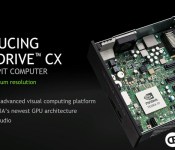
NVIDIA Drive CX is an all-new digital cockpit for your vehicle


As part of NVIDIA’s CES press conference tonight, NVIDIA CEO Jen-Hsun Huang, unveiled a new generation of digital cockpit called NVIDIA Drive CX platform, which is powered by NVIDIA’s Tegra X1 and includes runtime software known as DRIVE Studio and can run across most every major OS found in automobiles such as QNX, Linux and Android.

NVIDIA’s next-gen X1 mobile chipset: a closer look at the numbers

Earlier tonight, NVIDIA’s Jen-Hsun Huang officially pulled back the curtain on the Tegra X1 – a next-generation mobile powerhouse of a chipset that’s also the first to proffer a teraflop of processing power. It’s going to play a crucial role in the company’s automotive future, but the mobile nerds reading this might be a little more interested in how fast the X1’s going to make our gadgets. Thankfully, NVIDIA pulled us aside for a fast-and-furious benchmarking session that gave us a better idea of what to expect when X1s start trickling into the wild.
First though, a quick note about the test setup: NVIDIA had a handful of octa-core X1 reference boards with 4GB of RAM installed tablet-class heatsinks slapped onto them (an NVIDIA spokesperson said the setup was essentially what you’d said in an 8-inch X1-powered tablet). As Huang noted on stage, the X1 chipset also packs the 256-core Maxwell GPU; that’s up from the 192 last year’s K1 one came loaded with. Alas, NVIDIA wouldn’t confirm how fast the processor cores themselves were clocked. C’est la vie, friends.

Anyway, take a peek at the numbers the X1 put up. Where applicable, we’ve included scores from the Nexus 9 and the NVIDIA Shield tablet, which run the 64-bit and 32-bit versions of the Tegra K1, respectively.
| NVIDIA X1 Reference |
Google Nexus 9
|
NVIDIA Shield tablet | iPad Air 2 | |
|---|---|---|---|---|
| AndEBench-Pro | 12,401 | 12,047 | 10,363 | N/A |
| 3DMark IS Unlimited | 43,769 | 24,256 | 30,970 | 21,659 |
| GFXBench 3.0 Manhattan Offscreen (fps) | 65 | 31 | 31 | 32.4 |
| CF-Bench | N/A | 31,695 | 43,033 | N/A |
See those two AndEBench values in italics? We didn’t have a Nexus 9 or a Shield Tablet on hand to test, so we used median values provided by the app’s maker, the Embedded Microprocessor Benchmark Consortium. The X1 pulls ahead of both its predecessors in the test, if only just (we’ll update this post after we run our own tests on the proper hardware). The X1 is no slouch at video, as it supports 4K video decoding at 60 frames per second — it handled playback of a video shot from a RED camera without a single hiccup, just in time for all the big content providers to, well, go big on ultra high-def video.
Maxwell’s power is undeniable, too: The X1 absolutely spanked all comers (sometimes by over a factor of two) in the more graphically involved tests, a testament to the strength of its future as a game platform. While we’re on the subject of gaming, NVIDIA also confirmed that the X1 will play nice with a whole host of APIs used in game development, since it has the same Maxwell architecture as its high-end GTX 980 desktop graphics card.In a perfect world, that’ll make for easier ports and less hectic game translations from more traditional platforms like PCs and consoles to mobile ones.

And the icing on this slice of silicon cake? The X1 is designed to sip (rather than gulp) your device’s power reserves. In one particularly involved test, the NVIDIA team measured the voltage usage rates of the X1 versus the iPad Air 2… after tearing apart eight of them and downclocking the X1 so both were at an equivalent level of performance. In the end, average power consumption for the Air 2 was 2.6 watts, versus 1.5 watts for the X1, a pretty significant power savings. It’s still early days for the X1, and all of the above has been just a taste of what we can expect when X1-powered devices hit later this year.
Filed under: Mobile
CES 2015: Withings Reveals ‘Activité Pop’ Watch with Activity and Sleep Tracking Capabilities [iOS Blog]
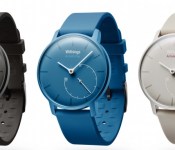
Withings today revealed its new Activité Pop wearable at CES 2015, which is an analog watch that contains advanced activity and sleep tracking capabilities. The Activité Pop is a follow up to Withings’ Activité watch which was revealed last year, and comes with a lightweight design that features a swappable silicon strap, a body that is water-resistance for up to 30 meters, and a battery that lasts up to 8 months.

The watch contains two hand dials, with one hand dial showing the current time and a secondary hand dial tracking activity and progress as determined by Withings’ Health Mate companion app. For example, if a user sets 10,000 steps as a goal in the app, the secondary hand dial moves as steps are made, and the watch vibrates when a goal is achieved. During the day, the watch can automatically track swimming and running and tracks sleep quality at night with all info available through Health Mate.
The Activité Pop will be available to purchase online in the United States from BestBuy.com on January 5th for $149.95, and will be available at Best Buy stores in March 2015. The watch will come in three color choices including “Azure”, “Shark Grey”, and “Sand.”

