


Woojer: revolutionary immersion, or an overpriced toy? [review]

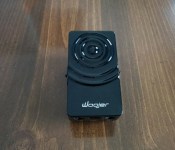
Woojer, the Matchbox-sized device that claims to bring immersive audio to you in an unorthdox way, by allowing you to “feel the sound”. What exactly is it?
It’s a device that acts as a mini “woofer”, connecting to your entertainment hub and attached to your body. Anytime there is bass in the audio you are listening to, whether that be movies, games or music, the Woojer will vibrate at the frequency of that bass. In other words, when firing a gun in a game or throwing a grenade, the bass from the explosion will be felt from the Woojer.
The small device has two auxiliary ports; one for your headphones (if you are wearing them), and the other one connects to whatever is projecting the media (smartphone, TV, stereo center). So, if you were to use the Woojer for gaming, you’re going to need a pretty long aux cable to connect your body to whatever is outputting sound. I found this to be very inconvenient, and very awkward when playing with friends. Most people do not have that long of an aux cable, and if they do, it better have plenty of slack in case you move around while playing, or you’ll either rip the cord out from the Woojer on your chest or rip your entertainment hub right off the wall.

The Woojer worked in the ways it was suppose to and does what it says it does, but that doesn’t mean I was pleased by it. While some people may enjoy the vibration it gives when playing bass-intensive music, I found it to be distracting and downright strange to have a device strapped to my body for music enjoyment.
But music might not be exactly what the Woojer was intended for. I played Halo: The Master Chief Collection on Xbox with a very long aux cable connected to the back of a TV all the way to my chest where the Woojer was situated. It was interesting to say the least, and playing with the Woojer on was a new experience of feeling explosions or gunfire. I also appreciated the dial on the side of the Woojer that adjusts the intensity of the vibration, depending on how much you want to “feel”. But this could not compensate how awkward and rather uncomfortable I felt playing a game with the Woojer on. This is NOT something you would want on to play with others, or even seen by other people having it on. But maybe the Woojer is intended for isolated media consumption. I can totally see this being pretty neat if you are gaming with Oculus Rift, adding to the immersion even more with a physical factor.
 Now that would be cool. (source: Woojer+Oculus Rift-YouTube)
Overall, I have more complaints than praises for the Woojer. If the device costed $10-20, then sure, I’d say give it a try. But this glorified vibrator costs $99.00. Anyone with a moderate level of engineering experience can easily go to their hardware store and pick up a vibration motor and a few other items and build one themselves for much cheaper. For what the Woojer offers, paired with the hundred dollar price-tag, I wouldn’t recommend this to many people. If you’re into solo gaming and want to pair the Woojer up with the Oculus Rift for the ultimate immersive gaming experience, you might consider it.

The post Woojer: revolutionary immersion, or an overpriced toy? [review] appeared first on AndroidGuys.
August Launches ‘Connect’ Wi-Fi Bridge to Add Internet Connectivity to Popular Smart Lock [iOS Blog]
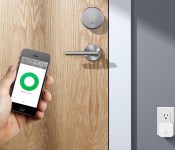
August, the company behind the popular August Smart Lock sold in Apple retail stores, today announced the upcoming launch of August Connect a new $50 bridge that will allow August Smart Lock to connect to the Internet via Wi-Fi.

August Connect plugs into a power outlet inside the home of an August Smart Lock user and connects to their home wireless network and the Internet. This connection enables several new features such as the ability for a user to check the status of their lock remotely and operate it from the August mobile app for iOS or Android on their smartphone or tablet. This allows users to ‘buzz-in’ guests, and such service providers as contractors, dog-walkers, and others remotely while also receiving notifications around all lock activity.
Until now, August Smart Lock has supported only Bluetooth connectivity, allowing users to operate the lock from their iOS and Android devices only while in relatively close proximity to the lock. With the addition of August Connect, however, users will now be able to interact with the lock from anywhere they have a connection to the Internet.
In addition to August Connect, the company is also releasing a private API that will allow select third-party partners such as Nest, SmartThings, and Logitech Harmony to integrate with August to seamlessly automate integrated home entry and exit procedures.
August Connect is priced at $49.99 and is available for pre-order today with shipping beginning in mid-February. August Smart Lock is priced at $249.95.

Nokia N1 tablet up for pre-order in China for $260

November was an interesting month for Nokia, as just days after its CEO went on record and stated his company was finished with phones but brand licensing was possible, it went ahead and announced a tablet. And not just any tablet, but one running Android. And not just any Android, but Lollipop complete with the company’s Nokia Z Launcher. And if that trifecta wasn’t shocking enough, it was going to be made by Foxconn of all companies (thus the aforementioned licensing at play).
Well, it’s now been a few months and the fruits of Nokia’s licensing labors are starting to show, in China at least. The aluminum-constructed tablet is now open for pre-orders and slated to ship on January 29th, somewhat earlier than the February time frame originally slated. It will retail for an attractive 1599 RMB (about $256) which no doubt comes as a direct result of Foxconn’s handiwork, as the manufacturing company is handling all aspects of the device save for the name and software.
The specs, as a reminder, are nothing short of sizzling, with a 7.9-inch, 2048 x 1536 laminated IPS display, a Quad Core 2.3 GHz Intel Atom Z3580 (64-Bit) CPU, 2GB of RAM, 32MB of on-board storage (non-expandable), an 8 megapixel/5 megapixel rear/front camera, dual channel 802.11a/b/g/n/ac Wi-Fi with MIMO, Bluetooth 4.0, stereo speakers, and a 5,300 mAh power cell. If that wasn’t enough, the device will also be the first consumer tablet to feature the reversible USB Type-C port which should alleviate difficulties associated charging a device in the dark and other danger zones.

The tablet is going to be not only distributed by Foxconn, but supported as well. While this will fly in China, it will be a different story entirely if/when the device hits other territories. It’s possible that Foxconn might partner with local domestic companies for distribution and after-service, but nothing is known yet. Given the licensing of the Nokia moniker however, it’s actually a potentially touch-and-go situation at hand, for if the device fails to deliver on any given note, be it build quality, durability, customer service, or anything else, it’s the Nokia brand image that will ultimately be sullied in the minds of the masses who adore the namesake.
The device is also slated to hit some European markets from February with the possibility of a wider international roll-out in the future. At the very least, it will be giving the Nexus 9 some competition in the 4:3 aspect ratio Android market.

KitKat loaded on nearly 40% of Android devices

The latest platform numbers for Android versions have been released, and show KitKat continues to spread. It’s up to 39.1% share of all Android devices from 33.9% last month. By comparison, the various Jelly Bean versions add up to 46%, down from 48.7% last month. Other versions, like Ice Cream Sandwich, Gingerbread, and Froyo, amount to under 15% combined.

BlackBerry announces BBM support for Android Wear

BlackBerry has just announced that it will “soon” be bringing its BBM messaging service to Android Wear. This should please some of the 50 million Android users who have installed the BBM app, but maybe a specific release date would have pleased them more.
Hit the break to see a full list of what the app has in store when it launches later this year.
- See who a new message is from and read it – while loading grocery bags into the back of your car
- Review and accept invites from would-be BBM contacts while on the go
- Flip through several messages to find that one with the address you’re looking for – while carrying a coffee
- Pick from a list of pre-defined messages to quickly send a response – while in a meeting
- Use your voice and Google Now to respond to messages hands-free.
We will be sure to let you know the exact release date as and when it is revealed.
Source: BlackBerry
Come comment on this article: BlackBerry announces BBM support for Android Wear
The World’s first Tor certified phone is a Boss

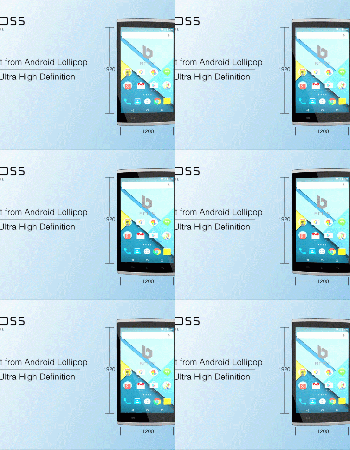
CES 2015 rolls on with some great news in the Android security space. The duo of Briggs & Spriggs announced The Boss phone alongside an Indegogo campaign. Why is this device so important? The Boss is the first phone of its kind in the US market, and it is a beast. The fully unlocked 7” UHD machine sports a 1900×1200 resolution, a Meditek octa-core processor, dual sim support, and is built at the root level to include Tor support.
What is Tor? Tor is free software that allows for true anonymity on the internet. It does this by routing encrypted packets through many different geographically disparate hops while removing parts of the packet’s header that contain sender information. Building this kind of technology into a mobile device at the ground level is a game changing move. Having it at the root level will insure that your traffic is safe from certain attacks that could compromise or leak personlly identifiable information. The makers of The Boss phone intended to have it fully certified by the Guardian Project, a group of anonymity experts.
With an MSRP of $399 this phone seems marketed to consumers wanting a high speed device with security at the forefront. A working prototype has been constructed and the group behind The Boss is looking to its Indegogo campaign to fund full scale production.
The post The World’s first Tor certified phone is a Boss appeared first on AndroidGuys.

Netflix’s early-2015 premieres include ‘Daredevil’ on April 10th

Netflix watchers, check this post and update your calendars accordingly — the streaming service just announced premiere dates for a bunch of the new shows it will have this year. That list includes its first collaboration with Marvel, (Daredevil, April 10th), the Tina Fey-produced show it snagged from NBC, (Unbreakable Kimmy Schmidt, March 6th), a drama from the producers of Damages, (Bloodline, March 20th), and a new show bringing Jane Fonda and Lily Tomlin together again (Grace & Frankie, May 8th). For the kids, Netflix has The Adventures of Puss in Boots on January 16th, Ever After High: Spring Unsprung on February 6th and Mako Mermaids season two on February 13th. Of course, we can’t forget House of Cards season three arrives February 27th, and Edward Norton produced documentary My Own Man is slated for March 6th. Whew.
A City Without Hope. A Man Without Fear. @Marvel‘s #Daredevil only on @Netflix April 10. https://t.co/2YXBlcmwfV
– Daredevil (@Daredevil) January 7, 2015
That’s not all Netflix will have in 2015 — the Wachowski’s Sense8 has yet to get a premiere date, while Orange is the New Black should return later in the year, not to mention Jessica Jones and Luke Cage or the F is for Family series from comedian Bill Burr or the Crouching Tiger movie or Adam Sandler’s stuff. As you can see, its spring schedule is already larger than the service’s entire output just a couple of years ago. It also revealed today that the big-budget production Marco Polo will get a second 10-episode season. Netflix’s most recent earnings showed growth dropping off compared to expectations, and quickly expanding its library of exclusives may help turn that around — we’ll see if it reveals more during its next earnings call on January 20th.
Filed under: Home Entertainment, HD
CES 2015: OWC’s Transwarp Software Combines Traditional Hard Drive With SSD Cache [Mac Blog]
Other World Computing (OWC) today announced a new software solution that allows users to combine the speed of a solid state drive with the increased storage space of a traditional hard drive. The new Transwarp technology was previewed for the first time this week at CES 2015.

While SSD caching is not new, OWC’s Transwarp solutions aims to make it easy for Mac owners to combine a removable SSD and HDD into a single data volume. Unlike Apple’s Fusion Drive which also pairs an HDD with an SSD, OWC’s Transwarp setup uses the HDD to hold all the data and the SSD as a cache, storing only the most frequently and recently accessed data on the faster access volume while the traditional hard drive retains a complete copy of all data.
With Transwarp, the SSD also can be removed as needed, allowing users to travel with only the HDD installed in their computer. When the SSD is reconnected to the OS X system, OWC’s Transwarp technology takes over and again combines both drives into one.
Transwarp persists even when the power is turned off. Once the SSD is reconnected, Transwarp seamlessly picks up where it left off, making it a great option for laptop users looking for the flexibility to be light on the road, but fast at home or in the office. Converting a drive from Transwarp happens as quickly as it is created, returning both drives to regular volumes within minutes.
OWC is only previewing Transwarp at CES 2015. The company has yet to announce a formal launch date beyond “later this year” or suggested retail pricing for the drive technology.
Future Samsung devices rumored to support theme customization

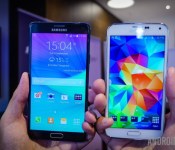
Those who bemoan the look of Samsung’s customized Touchwiz interface may have been pleased to hear that the Galaxy A3 and Galaxy A5 were Samsung’s first Android phones to feature theme support, as well as new metallic bodies. There’s even better news for those into cosmetic customization, as sources are suggesting that Samsung is planning to make themes support a priority for all of its future devices.
The stock themes will apparently be similar to those included with the current Galaxy A series, but may also extend to include the changing of system fonts, sounds, and something else called Events. Events seem to allow for sys tem customization based on specific dates, such as birthdays or national holidays.
To facilitate easy switching of themes, the source suggests that Samsung is also planning to launch a theme store (see logo on the right). What isn’t clear at the moment is whether Samsung will also support third party themes or if customization choices will be locked to a small selection modelled on Samsung’s own tastes.
The anticipated Galaxy S6 could be the first flagship to show off Samsung’s new theme features. Would you like to see Samsung adopt a deeper level of theme support in the future, or could the company better spend its software resources on something else?
Nokia’s first Android tablet is now available to pre-order in China

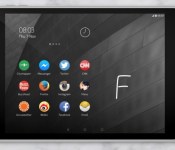
Nokia’s maiden Android-powered tablet, the N1, is now available to pre-order in China for 1,599 Yuan — which equates to approximately $256. Shipping will commence to the first batch of customers on Monday, January 29.
Packing a 7.9-inch IPS display with a resolution of 1536 x 2048 pixels, a 2.3GHz Intel Atom Z3580 quad-core processor, 2GB of RAM, 32GB of internal storage, an 8-megapixel rear-facing camera and a 5,300 mAh battery, the N1 looks to be somewhat impressive.
The slate will run the latest build of Android 5.0 Lollipop straight out of the box skinned with Nokia’s extremely functional Z Launcher, which according to the manufacturer “learns how you use your tablet and promotes your favorite apps so you can get to them faster”.
If you’re based in China, like the sound of the Nokia N1 and want to pick one up — hit the source link below.
Source: Zol
Come comment on this article: Nokia’s first Android tablet is now available to pre-order in China

