



When competition is bad for consumers

“Competition is not only the basis of protection to the consumer, but is the incentive to progress.”
So said American President Herbert Hoover and it’s still a popular idea today. In theory, the companies competing for our cash have to outperform their rivals to secure it. Competition is supposed to drive them on to brave new innovations and ensure that prices fall. In practice it’s debatable whether this is always the case.
There’s no doubt that some level of competition is healthy, in that it drives us on to achieve more. Many of the top OEMs divide internal divisions or project teams and play them off against each other to hit new heights. We’re also undeniably seeing a race to the bottom in terms of pricing in the smartphone market right now.
On the other hand, there’s a clear lack of innovation in smartphones. Designs have stagnated. Competing standards are holding back new developments like wireless charging, the smart home, and mobile payments. Competition is not always good for consumers.
Copying rivals

Few companies in any industry are genuinely focused on doing something new. Probably the most pernicious influence of that keenly felt competition is the need to keep an eye on what your rivals are doing. Any success they have must be emulated. That’s how we reach a situation where countless manufacturers are producing smartphones, but they all look extremely similar and have virtually identical features and functionality.
It’s a given that any successful product is going to dictate new directions and competitors will copy elements of it, or sometimes even rip it off wholesale. But at some point that copying habit goes beyond what has actually been successful with consumers. Companies can’t afford to be late to the party and so they start emulating everything their rivals are doing. They are being guided by their competition and spending huge amounts of money to try and gain an edge with incremental improvements to existing standards.
Instead of forging ahead with new innovations companies begin to focus on how they can protect what they produce. Time and resources plowed into patents and legal teams are diverted from the creative end of the business where you need huge investment to produce great products. But if you’re fundamentally risk-averse then it’s much cheaper to copy a successful idea and build on it than it is to come up with a new one.
A lack of agreed standards

The focus on ownership of the idea and the refusal to collaborate with others is holding back lots of technology. There’s no doubt that this is thoroughly negative for us as consumers. Why hasn’t wireless charging gone mainstream? There’s a demand for it, the technology is getting there, but the major players have been slow to come together and establish standards. It looks mercifully as though this may be starting to happen now, but the lack of agreement has stunted this industry so far and robbed us of a life with fewer wires.
Mobile payments is exactly the same story. There are so many different services out there that the entire industry is confusing for consumers and for retailers. The trouble is that mobile payments are going to offer up a small fee for every transaction for whoever provides the underlying system. It’s a potentially vast sum which is why everyone wants to stick their finger in from the OEMs, to the platform providers, to the carriers, to the new and old guard of payment providers.
Instead of evangelizing about these new technologies and teaching consumers what they can do and why they’re better than the plastic we currently use, companies are locked in a battle trying to secure networks of partners and exclusive deals to lock out the others.
The same lack of collaboration and determination to own the industry looks set to blight the smart home next. Will you be able to put together a system with the best components in home automation that actually works together without buying some expensive piece of software to act as the glue?
Closed ecosystems

Set the interests of the tech giants aside for a moment and think about this from the consumer perspective. Why can’t we just buy the best products as determined by us and have all of our digital content work across all of them? Why can’t rival systems be synced together? Why can’t we have universal standards for accessories?
The idea that your library of apps and purchased content can’t travel with you to a new device looks increasingly like blackmail. You’re never going to get the best possible experience if you have to buy all your devices from one company. How much energy are these companies putting into closing their ecosystems down and avoiding cross compatibility?
Competition is supposed to boost quality and choice. Closed ecosystems seem like the opposite of that.
Where’s the creativity?

Companies get used to planning in terms of their rivals all the time and closing things down. These attitudes become deeply ingrained over time. The agility and creativity you need to come up with new innovations is stifled by huge, overbearing corporate structures. There’s a reason that most of the giants of tech buy in their new ideas now. They lack the atmosphere internally to come up with them and it’s easier to acquire a startup and assimilate them.
Most of the genuine innovation in tech today is coming from small companies and the growing crowd-funded movement that can catapult someone with a good idea into business. If they gain any measure of success then the lucky ones get bought out, the unlucky ones have their idea copied by a company with a much bigger marketing machine that rolls in, undercuts them, and takes over the market.
Without startups and crowd-sourcing where would the new ideas in tech be coming from? The very competition that was supposed to drive progress is now stifling it. The sad thing is that collaboration between rivals can be mutally beneficial. Perhaps instead of focussing on what the competition is doing, it’s time that companies concentrated on what consumers want.

iRobot’s CTO wants bots that will map and interact with your home, not drones

The future for Roomba maker iRobot isn’t in the sky, it’s continuing to innovate on the ground. In a chat with iRobot CTO Paolo Pirjanian at the Engadget CES stage today, he dove into his vision for where the company is headed. And, surprisingly enough, drones aren’t part of the picture — even though they’re all the rage now. Instead, Pirjanian says he’s looking forward to building smarter and taller robots that will be able understand and interact with their environment. The keys to that dream are indoor GPS and 3D mapping, both of which he says iRobot is “keenly working on.” Those futuristic home bots will be able to do things like collect and bring a tray of food to the elderly, or create an accurate map of everything in your home, so it’ll know if you left your keys on the kitchen table.
We’ll see some of mapping and interaction innovations in the Roomba and Mint (the company’s square floor cleaner, developed by Pirjanian’s former outfit) over the next few years. And while iRobot’s future machines will have to get taller to effectively interact with humans, don’t count on them taking humanoid forms. Pirjanian stressed there are plenty of other forms they could take in our chat, and iRobot CEO Colin Angle doesn’t think much of human-like robots. They’ll be more R2-D2 than C-3PO.
iRobot’s Ava 500 and RP-VITA video collaboration robots gives us some idea of what the company’s more advanced bots could look like. They’re tall, have large screens and cameras at eye-level, and they have advanced navigation capabilities. Give it some articulating arms and it could just end up being your new roommate.
Check out the full interview with Pirjanian below.
#fivemin-widget-blogsmith-image-317329display:none; .cke_show_borders #fivemin-widget-blogsmith-image-317329, #postcontentcontainer #fivemin-widget-blogsmith-image-317329width:570px;display:block;
 trydocument.getElementById(“fivemin-widget-blogsmith-image-317329″).style.display=”none”;catch(e)
Filed under: Robots
Apple seeds new Yosemite 10.10.2 beta build to developers

Apple has started seeding a new build of the 10.10.2 Yosemite beta today. As is usual, it isn’t entirely clear what fixes the update brings, but the build number is bumped up to 14C94b and Apple is asking developers to focus on areas concerning Wi-Fi, Mail, and VoiceOver.
Developers and those in Apple’s public beta track can check for build 14C94b through the updates section of the Mac App Store now.

T-Mobile gains 2.1 million customers in last quarter, 8.3 million in 2014

We are in a new year and that means companies are disclosing 2014 performances. For T-Mobile, it was an excellent year with substantial growth. The carrier gained 2.1 million customers in the final quarter of 2014 and that means 8.3 million were added throughout the entire year. So many people could be switching to T-Mobile because its 4G LTE network now covers 265 million people.
John Legere, T-Mobile CEO, had this to say about the carrier’s 2014 performance:
“We continued to take share from our competitors and attracted 8.3 million net customers in 2014 who were looking for value, simplicity, and transparency. While my competitors are hiding behind less valuable connected device subscriber additions and managing profit expectations to the downside, T-Mobile delivered over 2.1 million customers in Q4, while managing the balance between growth and profitability. Needless to say, 2014 was a record breaking year.”
Hit the break for T-Mobile’s highlights.
Preliminary Full Year 2014 Customer Highlights:
- 8.3 million total net customer additions
- 4.9 million branded postpaid net customer additions
- 4.0 million branded postpaid phone net customer additions
- 265 million people now covered by the nation’s fastest 4G LTE network
Preliminary Fourth Quarter 2014 Customer Highlights:
- 2.1 million total net customer additions
- 1.3 million branded postpaid net customer additions
- 1.0 million branded postpaid phone net customer additions
- 266,000 branded prepaid net customer additions
Source: T-Mobile
Come comment on this article: T-Mobile gains 2.1 million customers in last quarter, 8.3 million in 2014

Android Auto available in aftermarket Pioneer stereos Q1

Pioneer has announced and is showing off at CES a slew of new products, and three of those are new NEX in-dash stereos that will have Android Auto built-in.
The AVIC-8100NEX, AVIC-7100NEX and AVH-4100NEX will all be able to be placed in older cars, but still have the smartphone-connected/safety oriented software Google announced at I/O 2014, Android Auto. Starting at $700, each will have high-resolution 7-inch touchscreen displays, a microphone for hands free voice control, and the ability to integrate the stereos with pre-existing steering wheel controls.
These will be available in Q1 of 2015, with the AVIC-8100NEX costing $1,400 SRP, the AVIC-7100NEX $1,200 SRP, and AVH-4100NEX $700 SRP, with Android Auto compatibility available soon after that.
Pioneer also announced Apple CarPlay compatibility, and many other features for these stereos and more.
For more info on availability by region, go here.

The post Android Auto available in aftermarket Pioneer stereos Q1 appeared first on AndroidGuys.
iOS 8 Now Installed on 68 Percent of Active iOS Devices
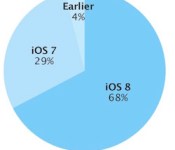
 Since launching in September alongside the iPhone 6 and 6 Plus, iOS 8 has seen its adoption rate grow to 68 percent of compatible iOS devices, according to new numbers posted on the Apple Developer Support page.
With Apple updating data publicly every few weeks, this latest data point represents a four percentage point bump in adoption since the last update on December 23. The significant increase highlights Apple’s strong performance in device activation numbers over the holidays to add to the company’s iOS 8 user base.
Over the longer term, installation numbers are up 5 percentage points over the past month and up 12 percentage points in the past two months. iOS 7 usage has seen an understandable decline as its successor has gained ground, with the older operating system dropping from 33 percent in December to 29 percent in January. Earlier iOS versions represent just 4 percent of the current App Store user base.
Apple initially faced multiple issues following iOS 8’s launch, including what has progressed to a lawsuit over storage space needed to install the OS on smaller GB devices, but the adoption rate has steadily increased as users have decided to upgrade and purchases of devices with iOS 8 preinstalled have increased.
Apple has brought a number of bug fixes and addressed some more significant flaws with recent updates such as iOS 8.1, iOS 8.1.1, and iOS 8.1.2. The company is also continuing to work on iOS 8.2, seeding a third beta to developers in mid-December. In addition to bug fixes and other improvements, iOS 8.2 will include support for integrating with the upcoming Apple Watch.

MediaTek introduces its MT2601 SoC, designed for Android Wear

MediaTek released some very competitive smartphone chips last year and now has its sights set on the growing wearables market. In Las Vegas, MediaTek has announced its MT2601 SoC designed for wearable devices based on Google’s Android Wear platform.
The MT2601 packs in a 1.2GHz dual-core ARM Cortex-A7 CPU accompanied by an ARM Mali-400 MP GPU. The chip can be connected to up to the usual array of external sensors and wireless modems, such as MediaTek’s own MT6630 five-in-one wireless SoC, and supports a qHD display resolution. The package fits in a PCBA footprint of less than 480 square millimeters and is built with 41.5 percent fewer components than some competing chips, helping to keep PCB sizes and costs small.
MediaTek’s latest chip doesn’t quite pack as much power as the quad-core Cortex-A7 powered Qualcomm Snapdragon 400, which has featured in the Samsung Gear Live, LG G Watch R and Asus ZenWatch smartwatches. However, MediaTek’s solution may be preferable in fitness and location tracking oriented devices.
The MT2601 has an incredibly small die size and is highly optimized for cost and power performance. The platform solution, comprised of MT2601 integrated with Android Wear software, will fuel the maker revolution and empower the application developer community – J.C. Hsu, MediaTek.
The SoC’s low power processor, small die size and limited feature set is well suited for the low cost, low power requirements of wearable technologies, where prolonged battery life is essential. MediaTek states that it will continue to evolve MT2601 to align with the Android Wear road map, so we may see an extended wearable SoC line-up from MediaTek in the future.
The MT2601 has already hit mass production and is ready for deployment in upcoming Android Wear products.
Las Vegas – Jan. 6, 2015 – MediaTek, a leading fabless semiconductor company for wireless communications and digital multimedia solutions, today announced its MT2601 System on Chip (SoC) for wearable devices based on Google’s Android Wear software. By enabling Android Wear on MT2601, MediaTek is offering a comprehensive platform solution for device makers to implement their own hardware and software, and introduces a multitude of possibilities in Android Wear devices for the fast-growing consumer class globally.
The MT2601 packs a robust set of features in its small size with 41.5 percent fewer components and lower current consumption when compared with other chipsets in the market. Its design advantages translate into lower bill of materials (BoM) costs, smaller printed circuit board (PCB) size and longer battery life, which in turn yield fashionable wearable devices with long usage times and affordable prices.
The MT2601 includes 1.2 GHz dual-core ARM Cortex-A7, ARM Mali-400 MP GPU, and supports qHD display resolution. The MT2601 interfaces with a whole host of external sensors and the wireless connectivity SoC MT6630 for Bluetooth – all in a PCBA footprint of less than 480 mm2. This small PCB size meets the design requirements of the widest variety of wearable devices in sports and fitness, location tracking, and various other categories. MediaTek is a strong supporter of Android Wear and will continue to evolve MT2601 to align with the Android Wear road map.
“The MT2601 has an incredibly small die size and is highly optimized for cost and power performance. The platform solution, comprised of MT2601 integrated with Android Wear software, will fuel the maker revolution and empower the application developer community worldwide to create a broad range of innovative applications and services,” said J.C. Hsu, General Manager of New Business Development at MediaTek.
The MT2601 is in mass production now and ready for inclusion in Android Wear devices.
###
About MediaTek Inc.
MediaTek is a pioneering fabless semiconductor company, and a market leader in cutting-edge Systems on Chip for wireless communications and connectivity, HDTV, DVD and Blu-ray. MediaTek created the world’s first True Octa-core™ smartphone platform with LTE and our CorePilot™ technology releasing the full power of multi-core mobile processors. Through MediaTek Labs™, the company is creating a worldwide ecosystem in support of device creation, application development and services based around MediaTek offerings. With an emphasis on enabling technology for the masses and not the chosen, everyone can be an Everyday Genius. MediaTek [TSE:2454] is headquartered in Taiwan and has offices worldwide. Please visit http://www.mediatek.com for more information.

Introducing the Best of CES 2015 finalists!

CES 2015 is finally here and boy, have we been busy the past few days. Engadget’s editors have been hard at work pounding the show floor here in Las Vegas to bring you what we think should win the coveted Best of CES awards. Now, we’re ready to announce our finalists for all 17 categories, which range from best home theater product to the most innovative tech we’ve seen at the show. Tomorrow, we’ll announce our winners of each category, along with who will win the Best of the Best award. The recipient for that will be chosen amongst the category winners.
But we want to know what you think too. So there’s an additional category called People’s Choice, where you can vote for your favorite product in our pool of finalists. To vote, simply head on over to this poll to make your voice heard. The product with the most votes will win a special People’s Choice award, which will also be given out tomorrow at a ceremony on-stage.
BEST STARTUP
|
Imagine a world where you don’t have to plug in your electric vehicle to charge it. That’s the vision behind Gogoro, a new startup by former HTC execs that envisions city-wide networks of battery stations so that getting new batteries for your EV can be done in seconds. It also introduced a brand new electric scooter that’s as futuristic as the company’s vision. |
Zolt replaces your bulky laptop power brick with something significantly smaller. And as a bonus, it can also charge two other devices while your laptop is powering up. |
|
AmpStrip
AmpStrip packs in a heart rate sensor, step tracker and sleep tracker in a single BandAid-shaped sticker. Yes, a sticker. |


BEST DIGITAL HEALTH & FITNESS PRODUCT
|
Cambridge Consultants is a British R&D firm that produces wacky products from mad ideas. This year, the company has built a fitness shirt that, rather than just monitoring your heart rate, can do super-cheap motion capture with fibre-optic cables. |
Bragi’s “The Dash” smart headphones were a big hit when they launched on Kickstarter this year raising over $3-million. Here at CES the waterproof, touch-controlled, media playing, fitness tracking, do-it-all earbuds have been shown to the public for the first time. |
|
The Garmin Vivoactive is the company’s first-ever dedicated smartwatch that has a color touchscreen and the ability to get emails, texts, notifications and more. Staying true to Garmin’s roots, it also has a built-in GPS radio, is waterproof and apparently has tremendously long battery life. |
Quell wearable pain reliever
Quell’s new wearable pain reliever sends small electrical pulses to your pained calves. It can be worn 24/7 and promises 40 hours of pain relief in a single charge. |


BEST WEARABLE
|
Parrot’s new Zik Sport headphones are noise-cancelling Bluetooth headphones that offers a heart rate sensor, pedometers and a five-hour battery as well. |
Lenovo’s beautiful Vibe Band VP10 gives a new spin on the standard wearable by offering Bluetooth notifications on an E Ink screen. It also tracks your steps, calories, distance travelled and sleep quality. Plus, it’s waterproof and comes in an array of stylish metallic colors. |
|
Alcatel’s OneTouch smartwatch bucks the dominant wearables trend by skipping Android Wear in favor of its own proprietary software. What that means is that it can’t run some of the more out-there apps we’ve seen, but do you really need a watch to be able to start your car? With stylish looks, solid features and a cheap price, it’s certainly an interesting device. |
Bragi’s Dash smart headphones are so impressive, that they deserved to be in the wearables category too. They’re waterproof and touch-controlled and can do things like play media and track your fitness. |


BEST AUTOMOTIVE TECHNOLOGY
|
Mercedes F 015 Luxury in Motion
Mercedes has taken the idea of the self-driving car to luxurious extremes with the F 015 Luxury in Motion. Since there’s no need for a driver, passengers can sit face to face to chat and anyone can control the car through remote units and gestures. There are even color-coded LED lights and, yes, hardwood floors. |
QNX continues to wow with its ADAS (Advanced Driver Assist Systems) improvements. New on this year’s demo car are all digital rear and side-view mirrors. These new displays eliminate blind spots and as an added perk, light up green if the coast is clear for a lane change. |
|
BMW 360-degree collision detection
If all vehicles came equipped with BMW’s new 360-degree collision detection technology, there might not ever be accidents on the road. It uses an array of scanners to figure out its surroundings and the equipped car will do the best it can to avoid any and all obstacles. |
Audi finally offered us a glimpse at its “retail” Audi Tablet. Scheduled to ship as an option on the 2016 Q7, this unibody aluminum tablet is quite likely the finest handheld we’ve ever used. Not only is the matte display beautiful to behold, it’s been crash tested, too. |


BEST HOME THEATER PRODUCT
|
Dish’s Sling TV is a cord-cutters dream. Expected to launch next month, it’s pulled together channels like ESPN, CNN, TBS, TNT, Cartoon Network, Adult Swim, Travel Channel, Food Network, ABC Family, HGTV, Disney Channel basic – and that’s just for $20-per-month package. |
With a compact design drawn straight out of science fiction, Samsung’s pair of new speakers have a ring radiator that pumps music in every direction. |
|
Maybe you remember TiVo Season pass. Well, now it pulls in episodes not just from what has or will be broadcast, but also puts any episodes available already on internet sources on the same screen. Old binge viewing habits meet new. |


BEST (CONNECTED) HOME PRODUCT
|
A wireless router that can charge your devices too? It sounds crazy, but that’s exactly what Energous’ new WattUp system does. Using a blend of RF, Bluetooth and patent-pending tech, WattUp could finally make true wireless charging a reality. |
The Parrot Pot is a smart ceramic pot that’ll dispense the exact amount of water that your plant needs. That, combined with its 8,000 plant database, means you don’t need a green thumb to have a beautiful, thriving house plant in your home. |
|
The Misfit Bolt is a smart light bulb that can change to multiple different colors at your whim. You can pair it to Misfit’s own Shine wearable or the Beddit sleep tracker to wake you up with a simulated sunrise. Best of all is you can get started with just a single $50 WiFi-connected bulb. |


BEST SOFTWARE / APP
|
Sling TV is a new service from Dish designed especially for cord cutters — at last, you don’t need a cable subscription to watch cable content. To go along with that, there’ll also be Sling TV apps for set-top boxes like the Roku as well as Android and iOS. |
Handwriting recognition on tablets has always been a tough nut to crack, but Lenovo might have finally done it. WriteIt is a new Windows app developed by the company that could actually understand and translate complex written scrawls into text. |


BEST INNOVATION (DISRUPTIVE TECH)
|
Mercedes F 015 Luxury in Motion
Mercedes’ luscious Luxury in Motion concept is a self-driving car that lets passengers face each other. Since there’s no need for a driver, anyone can control the car with remote units and gestures. It’s so fancy that it even has color-coded LEDs and hardwood floors. |
We’ve nominated this as a Best Connected Home product, but Energous’ WattUp wireless charging system deserves to be on this list too. Not only does it broadcast WiFi through the home, but it’ll charge devices too — no wires necessary. |
|
Intel first showed off its RealSense 3D camera last year, but it’s only now becoming ubiquitous; the technology can be found in many flagships announced this week at CES, from tablets to laptops to all-in-one desktops. The use cases run the gamut too: So far, we’ve seen RealSense used for gaming, green-screening conference calls, building 3D models, and adjusting the focus in pictures. |
Gogoro’s introduction of its SmartScooter and battery swapping infrastructure is so innovative that it needed to be in this category too. The ability to easily swap out old batteries for new ones could make electric vehicles much more mainstream and in turn transform urban transport as we know it. |


BEST MOBILE DEVICE
|
Dell Venue 8 7000 series tablet
Dell’s Venue 8 7000 is an 8.4-inch Android tablet with a super high-res 2,560 x 1,600 screen and a depth-sensing camera. It has an 8-megapixel rear camera plus two 720p ancillarry ones that can capture different variations of each shot. |
LG’s curved phone gets upgraded in all the best ways. A higher resolution screen that’s consciously smaller, higher-quality design, and internals that includes a top-of-the-range mobile processor from Qualcomm. Oh and there’s also a beautiful red color option. |
|
Your next smartphone could come loaded with the newly announced NVIDIA Tegra X1 chip, a next-gen mobile chipset that’s the first to offer a teraflop of processing power. |


BEST TV PRODUCT
|
LG usually introduces beautiful televisions at CES, and this year is no different. The new “Floating Art Slim” OLED TVs are gorgeous and are available in both flat and curved shapes. |
Sharp’s new 4K TVs showcase an interesting pixel splitting trick that apparently results in a near-8K picture. It also promises better upscalingand an improved LED backlight. |
|
It’s not CES without a Samsung television, and this year the company has come out with a gorgeous curved model that uses nanocrystal semiconductors for a crisper, more colorful image. |
Sony’s latest Bravia televisions are some of the thinnest we’ve seen yet, measuring out to only 4.9mm thick. They also have a new X1 4K processor that apparently upgrades the picture quality of any 4K source. |


BEST GAMING PRODUCT
|
Razer’s Forge TV is an Android TV box. But unlike the rest, it can stream PC games. With Android onboard it also folds in access to Spotify, Netflix and all the rest. A dedicated gamer TV box. |
It’s the Simon memory game, but this time it’s on the side of a sneaker — wearable gaming, of a sort. Unfortunately, they only come in kids’ sizes. |
|
NVIDIA’s X1 chip is its most powerful mobile processor yet. Expect to see it in NVIDIA hardware (say, the next Shield) as well as a whole range of devices beyond just gaming. |


BEST OFFBEAT PRODUCT
|
The ReST bed is pretty smart. It auto adjusts by deflating and inflating as you turn around at night, with 18 air sensors monitoring the pressure of the mattress. The future of beds still isn’t cheap, but perhaps a perfect night’s rest is priceless |
Belty is an activity and fitness tracker in a slightly different form factor, with the added ability to monitor changes in waist size. Cooler yet, it features a motorized buckle that loosens and tightens, maintaining a consistent level of comfort, based on your seating position and how much you’ve managed to put away at lunch.” |
|
Smart everything. This time, smart flashlights. The Fogo does the fundamental flashlight things, but also adds in GPS, walkie-talkie, auto-adjusting brightness — because it can. All this, and the creators told us that this is just the start. |


BEST MAKER-FRIENDLY TECHNOLOGY
|
MakerBot composite filaments
Combining the elements plastic printing with other materials has been done before, but with the gravitas of MakerBot, it’s more exciting. With iron composite filaments, you can even magnetize your products. Use maplewood filaments, and there’s a faint scent of the wood still there. Your homemade prototypes got an upgrade. |
The 3Doodler sequel improves on the original substantially. More control, substantially smaller and less power hungry, it looks less like a prototype and more like a viable present for the artist you know. |
|
Chocolate printing, combining the 3D printing knowledge 3D Systems with, love it or hate it, Hershey chocolate. The machine can use white, milk and dark chocolate, heating a special mix and printing shapes in an environmentally controlled 3D printer. |


BEST PC
|
At 1.7 pounds, Lenovo’s LaVie HZ550 is now the lightest 13-inch laptop in the world. But what does that mean, exactly? Put it this way: When we first got hands-on, we thought we were handling a dummy unit with no components inside. In fact, though, this thing is very real, with a full-fledged fifth-gen Intel Core processor thrumming inside. So far as we can tell, the only tradeoff is the lack of a touchscreen, but even then Lenovo has a solution: Its just-announced LaVie HZ750 is the lightest convertible 13-inch laptop. |
Dell’s redesigned XPS 13 Ultrabook might not be the lightest 13-inch laptop in the world (that honor goes to Lenovo), but it might well be the smallest. Thanks to some nearly invisible bezels that measure just 5mm wide, Dell was able to cram a 13-inch display into an 11-inch laptop. The result is a 2.6-pound machine that’s more than a third of a pound lighter than the MacBook Air, with a smaller footprint, to boot. |
|
We’ve seen detachable laptops, but ASUS’ 12.5-inch Chi hybrid still manages to impress. At 0.3 inch thick for just the tablet (or 0.65 inch with the keyboard dock), it’s even thinner than the similarly sized Surface Pro 3. Making all this possible is Intel’s low-power Core M chip, which allows not just for skinny designs, but fanless ones too. Best of all, perhaps, is the price: Even with a 2,560 x 1,440 screen option, it’ll ring in at just $799 — not bad at all for what’s essentially a flagship Ultrabook with a detachable keyboard. |


BEST ROBOT OR DRONE
|
We’ve seen plenty of camera-friendly drones at CES this year, but AirDog’s is unique. Like others, it’s designed to follow you, but with a waterproof, wrist-worn controller, and sonar to prevent ground collisions, this one’s a true action-sport hero. |
Zano is tiny drone that can launch from your wrist. Kickstarter made the prototype happen, and now its a very real proposition. |


Cogito smartwatches to get activity monitoring feature


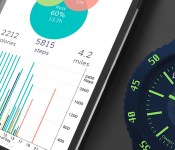
Hot on the heels of its announcement of the new Cogito Fit connected watch yesterday, Hong Kong-based CONNECTEDEVICE has announced a new activity monitoring feature coming to its CONNECTED WATCH app and current line of COGITO CLASSIC and POP watch models.
Google app getting a version 4.1 update with the addition of ‘Now Cards’ [APK Download]

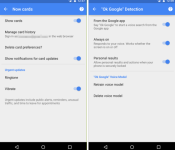
The Google app on Android is getting an update to version 4.1 which brings with it the usual suite of bug fixes and the addition of something known as ‘Now Cards‘. This essentially lets you control what cards appear on your Google Now page with the ability to check card history on the web, delete custom preferences or even turn them off.
The update also brings some security related fixes to the Google app. From the “Ok Google” Detection settings page, users can now toggle ‘Personal Results’ to be shown even when using a secure lock screen. This essentially means that personal data like calendar events can be displayed when using the “Ok Google” command from the lock screen.
For users concerned with the amount of space the Google app can take, Google has also added a manage space button in the Settings which allows you to clear app data. The update should be rolling out to devices as we speak. But if you’re impatient to wait for it to pop up on your device, you can side-load it onto your device using the apk file below.
Come comment on this article: Google app getting a version 4.1 update with the addition of ‘Now Cards’ [APK Download]

