


Samsung may extend its current partnership with BlackBerry, but won’t buy it

The head of Samsung’s mobile phone division stated today that the company could extend its current partnership with BlackBerry. However, he repeated what the company said last week that Samsung has no plans to acquire BlackBerry itself.
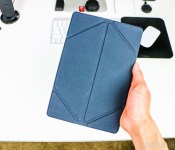
Nexus 9 Magic Cover and Keyboard Folio Case Review
Google’s latest Nexus tablet, the Nexus 9, has been around for a while now, and Google has always been great about supporting their devices with official accessories. Today, we’ll be taking a closer look at two of the official protective cases and covers available for the Nexus 9, the Magic Cover and the Keyboard Folio Case!
Magic Cover

Starting with the Magic Cover, it is flat rectangular magnetic attachment cover that can be attached to the front or the back of the tablet. When attached to cover and protect the display, the cover also supports automatic wake and sleep functionality, with all you needing to do is to open or close the cover.

The magnets do a great job of holding the cover in place, but an important point to mention is the fact that the cover features two different materials on both sides that adhere differently to the screen. One side has a hard rubber-like material that offers more grip, and holds itself to the screen a lot better. On the other side is a softer, more suede-like material, that makes the cover more prone to sliding around, which does create issues with the cover shifting out of place.

What makes the Magic Cover unique is its origami-inspired design, that lets you fold the cover into a stand, with one option allowing for a steep angle, which is perfect for media consumption, while another allows for a much shallower angle, which is useful for pretty much anything else you might be using the tablet for. If you have the case on the back, it will cover up the camera, but a nice touch is the fact that just raising the corner flap will directly start the camera, allowing you to take a quick shot.


The Magic Cover is available directly from the Google Play Store for $39.99, or at a slightly discounted price from Amazon, with the available color options including black, limestone, coral amethyst, and mint indigo.
Keyboard Folio Case

The Keyboard Folio Case not only offers a lot more protection for your Nexus 9 when compared to the Magic Cover, but also comes with an attached bluetooth keyboard to enhance your productivity. Like the Magic Cover, it uses magnets to latch on to the tablet, and the material on the outside is soft and offers a lot of grip, which feels great and in the hand, and makes it easy to hold.

As mentioned, the keyboard pairs with the Nexus 9 via Bluetooth, and establishing the connection is simple, and doesn’t take too much time. The typing experience is quite good, with their being no latency whatsoever while I used to type in Google Docs or to reply to email or instant messages. It is a bit cramped, because after all, it is a keyboard made for a device with a 9-inch display, but the overall experience has been pleasant so far.

Despite its compact nature, the keyboard also includes some extremely useful shortcuts, like a dedicated emoticon key, and a search button that lets you conduct searches no matter where you are in the OS. Other shortcuts including tapping Alt and Tab at the same time to open the Overview screen, along with pressing the search button and enter simultaneously to quickly take you back to the main home screen. The keyboard can also be used to navigate around the OS, but the process is rather slow, and using the touchscreen is still the better option.

The keyboard can be charged via microUSB, but you may not have to charge it often, with Google claiming that with up to 2 hours of usage a day, the keyboard can last for as long as 5 months on a single charge. Testing this out hasn’t been possible since I’ve only had the case for a few weeks, but I haven’t had to charge the keyboard yet following the first time after receiving it.
The Keyboard Folio Case for the Nexus 9 is priced at $129.99, available directly from the Google Play Store, or at slightly discounted price from Amazon, with the only color option being black.
SEE ALSO: Nexus 9 Review

As is the case with most official accessories, the Magic Cover and the Keyboard Folio Case are at the higher end of the price spectrum. That said, the Magic Cover is certainly a very unique take on the traditional smart covers we’ve seen so far, and offers some nice functionality, and the Keyboard Folio Case provides a great typing experience with an impressive battery life, along with good protection for the tablet. While expensive, both these cases are definitely reliable, high quality products.
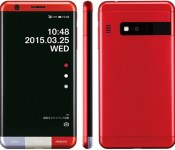
The design-focused Infobar A03 smartphone is headed for Japan

We haven’t seen a new Infobar device come from Japanese carrier KDDI since early 2013, but that’s for good reason. The carrier has just introduced their followup to their most recent Infobar handset, the A03. This Kyocera-made Android device is made of anodized aluminum and totes a 4.5-inch 1080p display, 13MP rear-facing camera, 2GB of RAM, a 2020mAh battery, 16GB of internal storage with microSD expansion up to 128GB and a 2.3GHz Snapdragon 801 processor. It’s also comes with IPX5/8 waterproof and IP5X dustproof resistance, and it’s available in four different colors: Nishikigoi (Red), Pool (Blue), Mocha Brown (Brown), and Sakura Iro (Pink).
The device is running Android 4.4 KitKat, but you likely won’t be able to tell. One of the aspects Infobar devices are known for is their software overlay, and the A03 is no exception. It’s running “iida UI”, which was debuted back on the first Infobar smartphone, the A01. The skin is designed by Yugo Nakamura, an award-winning artist and designer, and looks like a hybrid of Android and Windows Phone software.
The A03 is absolutely a handset made with design in mind. The company didn’t stop there, though. Maria Dahlgren, a stationary and graphic designer, and Akira Minagawa have made a line of stylish cases for the device. The company even had furniture-maker Maruni make a wooden dock for the phone, which looks like it would be perfect for a bedside table. If you’re looking for a design-focused handset with a ton of premium accessories, this may be worth looking in to.
The Infobar A03 will be available sometime in mid-February, though we’re unsure of the exact date. The price and compatible regions haven’t been made public either, but we’ll let you know if we hear anything else on the handset. Anyone out there interested in the Inforbar A03?
Magzter introduces all-you-can-read magazine subscription for $9.99 per month
The digital world is a big one that requires movie studios, music labels and print publications to eventually embrace or face their end. Bringing content directly consumer devices is the trick. While I personally still like physical magazines for many situations, it certainly isn’t something you find sitting around on coffee tables like they did […]
The post Magzter introduces all-you-can-read magazine subscription for $9.99 per month appeared first on AndroidSPIN.
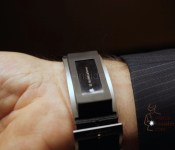
Photos of Montblanc’s Watch ‘e-Strap’ Show Low-Resolution Display, Bulky Fit
Luxury watch maker Montblanc earlier this month announced the “e-Strap”, an accessory band that will add notifications, music control, and other smartphone-connected functions to a traditional analog wristwatch, marking one of the first efforts by traditional watchmakers to offer smartphone integration as the Apple Watch’s launch nears.
Alexander Linz of the Watch-Insider blog had the opportunity to examine the e-Strap first hand during a demonstration by Montblanc CEO Jerome Lambert that was held over the weekend in Geneva.

Detailed photos of the watch accessory reveal how it sits on a traditional watch band to rest firmly on the underside of the wrist. The display portion appears rather bulky, making discomfort a possible issue during daily use.

Other photos showcase the 0.9-inch monochrome touchscreen display which shares information such as incoming phone calls, upcoming appointments, and more. The display quality is not nearly as good as depicted in Montblanc’s renderings of the strap, with text and icons appearing rather jagged due to the low 128 x 36 resolution.
Not a standalone device, the e-Strap will connect to an iOS or Android smartphone via an app that will allow users to customize the information being displayed on their wrists.

The e-Strap is expected to cost 250 euros and will be available as an optional accessory to select Timewalker Urban Speed watches. The e-Strap also may be compatible with other Timewalker watches that ship with a 42-mm or 43-mm wide band.

Lava launches its latest budget-friendly smartphone in India

Indian smartphone manufacturer Lava has just launched its latest budget-friendly smartphone, the ‘Iris Alfa’, and rather surprisingly it packs quite a lot with regards to specifications for the money.
The Iris Alfa features a 5-inch IPS display with a resolution of 854 x 480 pixels, a 1.2Ghz Qualcomm Snapdragon processor, 1GB of RAM, 8GB of on-board storage (expandable up to 32GB), a 5-megapixel rear-facing camera and a 2,200mAh battery.
Out of the box, the Alfa will run the latest build of “vanilla” Android 4.4 KitKat, but is expected to receive the much-anticipated Lollipop update later this year.
The handset is available to purchase from the company’s online store starting today for just INR 6,550 ($105).
Source: Lava
Come comment on this article: Lava launches its latest budget-friendly smartphone in India
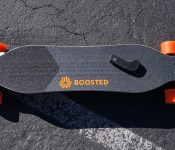
IRL: A closer look at Boosted Boards’ Dual+ electric skateboard

My younger, street-skating self would’ve scoffed at the idea of an electric skateboard, at least one that wasn’t built for tricks while in transit. But having spent less time doing slappies and ollies in recent years, taking to the streets on an electric version finally seemed a viable alternative. For those who aren’t planning stunts along the way, or perhaps have less experience skating, there’s something to be said for an electric that focuses on cruising and getting you from A to B at a controllable pace. So when I was offered the chance to test one of Boosted Boards’ Dual+ 38-inch setups, I decided it was time to take one for a spin. Starting at $999, they’re clearly a luxury item, and it’s not every day you get to take one for an extended test-drive. Sure, winter and its bone-chilling cold were rapidly descending on New York City when it arrived, but that never used to stop me back in the day. I did get to ride it in the warm Las Vegas sun during CES, but I never managed to use it as a commuting alternative with the weather in decline. The time I managed to spend on the board, though, was definitely worth it.
I’ve tried a couple different electric boards recently, including Boosted’s Dual+, the ZBoard 2.0 and the LEIF. While they’re all fundamentally the same, each is a slightly different creature. The Boosted series (which was successfully Kickstarted in 2012) uses a longboard-style setup and a Bluetooth controller that handles movement and monitors battery life for itself and the board. The LEIF is a freeboard with two additional rotating wheels underneath to help you drift like a snowboard; as for accelerating, you’ve got a hand-held radio controller (although it’s still under development). The ZBoard 2.0, meanwhile, is an oversized street/ramp style deck with pads you step on to control forward and backward motion. The hand-held controls aren’t ideal in the cold — wintry weather can quickly freeze your digits and gloves make them awkward to use — but Boosted has the most comfortable user interface out of the bunch, at least for me.

Boosted Boards has three models in its lineup: the $999 Single, the $1,299 Dual and the $1,499 Dual+. All of them come kitted out with a bamboo deck that provides plenty of bounce and a comfy ride, and a set of soft, grippy 80A durometer wheels to give you traction while carving. Both the Dual models are out now and the Single (the lightest of the three) is expected to arrive at the end of January powered by a single 1,000W motor. It offers the most range out of the bunch and is built to be more portable, but you sacrifice some power. The top-of-the-line Dual+ offers two brushless motors totaling 2,000 watts and can tackle a 25 percent incline with gusto.
After decades of riding skateboards, I’m comfortable barreling down the road on one at high speeds, so the Dual+ model is the one I’d recommend. Cruising at 20MPH is fast for a skateboard — I even managed 25MPH at one point — but once you get used to it, top speed will feel pretty casual. Don’t worry, though, it’ll still satisfy your inner Ricky Bobby and this thing has a lot of torque right out of the gate, enough that you’ll have to lean into it or get chucked off. The Dual+ also includes adjustable speed settings, letting you slow it down for newbies or save power when you want to max out the range. If you’re not worried about tearing down the road at top speed, the other models may be worth the savings.

Cruising around the neighborhood, I managed to cover about 5.2 to 5.8 miles until the power was depleted (usually with the pedal to the metal) and since the regenerative “brakes” actually feed energy back into the battery, my hilliest ride also gave me the most distance. Being able to dial back your speed when shooting down a hill is a wonderful thing, especially when it gives you a chance to charge the battery (at least a little bit).
Range-wise, Boosted’s ride falls short of ZBoard’s proposed 24 miles (with its Pearl edition), but the motors and the style of ride you get differ a good deal between the two. With five to seven miles on a charge, you could easily commute to work if it’s in range. The company’s CEO and co-founder Sanjay Dastoor was also quick to point out that while these boards aren’t cheap, if used daily, the money you save on trains and buses could end up balancing out the initial expenditure (and then there’s the fun to be had). Also, once you reach your destination, you won’t even have to worry about locking up or parking.
That portability depends on how much you’re comfortable carrying around, though, which is why the company is releasing the Single. The Dual models both weigh about 15 pounds and while that may not sound like much, they seem to get heavier the longer you carry them. With the battery’s inherent limits, you’ll likely want to sling it over your shoulder or carry it at your side at some point, since pushing this thing when the battery has died is a bit of a pain. You can do it, but you’re going to have to work at it.

On the plus side, if you purchase the additional 120W fast charger to take on the road, you can get the lithium iron phosphate 99Wh battery up to around 80 percent after only 30 minutes charging (the bundled charger takes an hour for 90 percent). It would mean carrying the laptop-style brick in your bag, but plugging in while you grab a coffee is easy enough to accomplish, and you could cruise around for a good part of the day with some planning. It’s important to mention, though, that taking this thing on a bar crawl is probably not a good idea.
So, the elephant in the room here is: Are these electric skateboards worth $1,000 or more? That’s a tough question, but if money isn’t an object, I’d say yes. An electric skateboard certainly won’t have you flashing back to those day-long curb sessions, but for straight-up cruising and tasting a bit of today’s technology, it’s a treat. That’s especially true of the Boosted line, which I’ve found to be well-built and fun to ride. If you live in a sunny and warm climate, this could be a great way to commute — and you’ll barely break a sweat. The flip side is that it barely registers as exercise (you’re mostly standing in one place) and won’t help you reach your daily fitness goals.
Boosted Boards has been known to call its product “Hoverboard 1.0″ and while that honor may already be claimed, it’s certainly close enough. Being able to skate around with some horsepower under your feet is definitely a trip and the onboard motors offer sci-fi sound effects as you’re thumbing the accelerator or slowing to a stop at your next destination.
#fivemin-widget-blogsmith-image-294657display:none; .cke_show_borders #fivemin-widget-blogsmith-image-294657, #postcontentcontainer #fivemin-widget-blogsmith-image-294657width:570px;display:block;
 trydocument.getElementById(“fivemin-widget-blogsmith-image-294657″).style.display=”none”;catch(e)
Filed under: Misc, Transportation

Looking back at CES: Brands to watch out for in 2015

The heavy hitters in the American and European Android smartphone market didn’t have a great deal to say at CES 2015. Only LG released a big smartphone in the shape of the G Flex 2. We’ll see many more new smartphones in and around MWC, but there were some interesting moves from some lesser known names at CES this year. Alcatel, Asus, Lenovo, BLU, ZTE, the list goes on.
Let’s take a look at the different strategies they’re employing to try and get noticed in an increasingly crowded Android market.
Alcatel sets sights on States
We’ve seen steady progress from TCL, the Chinese manufacturer behind the Alcatel brand, and it has been a whole year since we wrote about Alcatel’s assault on mobile. It has continued to build the Alcatel Onetouch brand since then with a string of affordable budget and mid-range Android devices. Just before CES it unveiled a new smartwatch and the Pixi 3 line of smartphones. There was also news of a new e-commerce website to sell direct to the US public.

But that’s the not the extent of TCL’s play to enter the market Stateside, because it also has plans to rebuild the Palm brand it acquired as some kind of crowdsourced project. It looks like TCL believes a two-pronged attack might be the way forward and the brands will stay separate.
The crowdsourced idea for the Palm brand sounds an awful lot like Xiaomi’s philosophy and it has the potential to be very successful. Can TCL combine its existing budget credentials with a recognized brand, in the shape of Palm, and persuade people to buy in to the idea of designing a new smartphone?
BLU is all about budget
This lesser known brand is headquartered in Miami. It only popped up in 2009, but it has been doing quite well selling budget, unlocked phones in the Americas. BLU unleashed seven handsets at CES, all under $300. The specs aren’t going to wow you, but the prices might. The standout is the Vivo Air, a premium-looking phone that’s impressively slim at 5.1mm.

The strategy here is to reduce overheads as far as possible and undercut the competition. Some of BLU’s phones are re-badged versions from other manufacturers like Gionee. All their smartphones are sold unlocked through Amazon. The question is whether BLU can keep up the momentum when more budget OEMs, especially from China, move in next door.
Asus and Android
The Taiwanese manufacturer Asus has been a major PC vendor for years now. It joined the Open Handset Alliance in 2008, but its biggest success on the Android platform so far has been the Nexus 7. Asus built both models for Google. It has dabbled with its own tablets and smartphones and it started to look serious with last year’s Zenfone.

This year’s CES saw Asus announce the Zenfone 2 which is an impressive-looking, Lollipop smartphone with a really solid set of specs for just $200. There was also the Zenfone Zoom for anyone hankering for 3X optical zoom on their smartphone camera. The Asus strategy for Android looks much the same as its PC strategy – offer a solid experience at a budget price.
Lenovo is third
Already a major player in the PC and tablet market, after acquiring Motorola, Lenovo claimed the third spot in smartphones behind Samsung and Apple. The company showed off a couple of sexy mid-rangers, the P90 and the Vibe X2 Pro, at CES, but neither are aimed at the States.

A number of Chinese manufacturers have been climbing the charts on the back of sales in China and other emerging markets, where the growth rate is still high, but cracking the US and Europe is a whole different prospect. The difference with Lenovo is Motorola. Google seemed to be guiding the Motorola brand back to success with a budget approach that should suit Lenovo.
Motorola may offer a route to success that the Lenovo brand couldn’t manage, and the company has deep enough pockets to make things very difficult for everyone else. It will be interesting to see what develops.
ZTE is a player
The ZTE Nubia Z7 is the new top of ZTE’s range, but it doesn’t look likely to get a release outside Asia. However, ZTE has plenty of bargain wares available across the globe and it seems to have found a home on Cricket in the States. The latest $200 release there is the Grand X Max+ which looks like a solid mid-range phablet. ZTE also showed off the Star 2 at CES.

We also named the ZTE SPro 2, Android projector, in our best of CES 2015.
Saygus says hello
A fresh new start-up that caught the eye at CES this year, Saygus is an American smartphone maker that’s throwing everything, but the kitchen sink into its debut super smartphone, the Saygus V2. It starts out gently with a 5-inch 1080p display with tiny bezels, a 2.5GHz Snapdragon 801, Adreno 330 GPU, and 3GB of RAM.

Then there’s a 21MP main camera with a 13MP selfie cam. 64GB of storage which can be boosted up to 320GB with two 128GB microSD cards. The removable battery is rated at 3100mAh. It has front-facing Harmon Kardon speakers. It’s also waterproof and has a premium aluminum and Kevlar body. There’s even a fingerprint scanner. It has all the makings of a cult classic. The Saygus strategy seems to be to listen to what hardcore Android fans want, which could definitely carve it out a profitable niche.
And the rest
We can’t cover everyone, but it’s worth mentioning that Huawei is still huge. There were no major announcements, but Huawei had more than a hundred different products on show at CES. It’s done well with the Honor and Ascend Mate lines, dropping the Huawei brand in Europe, but it still hasn’t cracked the US.
The Android scene, especially at the budget end of the market, has never been more competitive than it is right now.
Archos and Acer continued their budget lines at CES too. Acer’s Liquid Jade S looks like a decent mid-ranger. Xiaomi waited until a few days after CES to launch the Mi Note and Mi Note Pro, but they may never be released outside of China. There were also a number of hot players that didn’t really have an official presence at CES, such as OnePlus, which is expected to unveil two handsets sometime later this year.
The Android scene, especially at the budget end of the market, has never been more competitive than it is right now. It remains to be seen which strategy will reap the greatest rewards in 2015. Place your bets now.
// <![CDATA[
(function () document.getElementsByTagName('body')[0]).appendChild(opst); ());
// ]]>

C Spire expands its rolling data offer to its 10, 15 and 30 GB sharable plans

Wireless provider C Spire, which serves about 1 million customers in the southeastern US, is now offering rolling data for its 10 GB, 15 GB and 30 GB shared data plans for free. Customers on the company’s other plans can switch over to one of the three rolling share data plans at no additional cost.
The company stated the new plans are available for customers with two-year contracts on their smartphones, such as the iPhone 6 and iPhone 6 Plus, along with users that are under C Spire’s device payment option. Prices for the shared rolling data plans range from $110 a month for two lines with 10GB of data up to $190 a month with four lines and 30GB of data. C Spire says:
Any unused data from the previous month is rolled over to the next month for sharing among all users up to the plan’s monthly limit. Unlike other providers, C Spire does not force consumers to use plan data first or eliminate any unused roll over data at the end of each month. Instead, rollover data can be accumulated, shared and used among all individuals up to the plan’s monthly limit.
The plans also include device tethering for smartphones. T-Mobile and AT&T have both recently launched their own rolling data plans.
Source: C Spire
HTC finally entering the smartwatch space with supposed announcement on March 1st along side One M9
While most major manufacturers have put out at least one smartwatch in the last year, there is still one player that many of us are waiting on; HTC. There were a number of rumors about a watch in the works, but they never amounted to much. The lat major press event from HTC was the […]
The post HTC finally entering the smartwatch space with supposed announcement on March 1st along side One M9 appeared first on AndroidSPIN.
 AIVAnet