


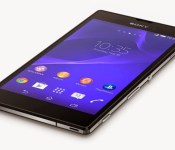
Sony Xperia T3 gets updated to Android 4.4.4

While many people are tapping the “Check for updates” button on their phones in the hope of seeing Android 5.0 Lollipop, Sony Xperia T3 owners can at least enjoy a minor update to their smartphones.
Sony has recently released Android 4.4.4 KitKat for the Xperia T3. There are a couple of different builds being deployed. Build 18.1.A.2.25 has been released in various regions for the T3 LTE models D5103 and D5106. For the 3G model, D5102, Sony has released build 18.1.A.2.32. Both builds upgrade the T3 from Android 4.4.2 KitKat to Android 4.4.4 KitKat.
As a reminder the Xperia T3 is a mid-range device from Sony. At its release it was dubbed the “world’s thinnest 5.3-inch smartphone.” The handset is just 7mm thick and features a 5.3-inch HD display with Triluminos technology for vibrant colors, and the Bravia Engine 2, for enhanced video and image quality. It is powered by a quad-core Qualcomm Snapdragon processor and comes with 1GB of RAM. There is 8GB of internal storage, which is expandable to 32GB via microSD, and a 8MP Exmor RS camera. The device also includes NFC which is a nice addition for a mid-range device.
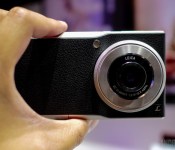
It’s a phone. No, it’s a camera: hands-on with the Panasonic Lumix CM1
Panasonic announced the Lumix DMC-CM1 last year, but the Japanese company hit CES this week to announce that the attractive hybrid camera-phone would be coming stateside by way of AT&T and T-Mobile.
As a huge Panasonic fan, I couldn’t pass up the opportunity to take the Lumix CM1 for a quick spin. The device isn’t the first attempt to marry an Android smartphone to a point-and-shoot, but is the CM1 any better? We find out in this quick look!

The simplest way to describe the Lumix CM1 is it’s an Android smartphone on the front and a point-and-shoot on the back. Panasonic refers to it as a camera primarily, but you’d be forgiven to think it’s just another Android smartphone by looking at its front, which is all-screen.

Integrating a camera into a smartphone means size and weight are way above average. The CM1 is 21.1 millimeters thick (about three times the size of an Xperia Z3, for instance) and weighs 204 grams, but that’s actually not bad for what the device offers.

The square corners, metallic sides, and textured plastic cover are all fairly typical for point-and-shoot cameras. The large lens module is surrounded by a ridged ring, and protrudes out, but not enough to make the device hard to hold or difficult to slip into a jeans pocket.

Specifications of the phone include an excellent 4.7-inch Full HD panel (465-ppi), a Snapdragon 801 processor, 2GB of RAM, 16GB of internal storage, microSD slot, and a 2,600-mAh battery. The device runs a stock version of Android 4.4.4, that will give you the typical KitKat smartphone user experience.

The camera on the front is an average 1.1MP, but, of course, the rear shooter is anything but average. The Lumix CM1 features a large 1-inch sensor with 20 MP resolution, Leica optics with a f/2.8 lens, and an LED flash. This isn’t a DSLR-replacement by any means, but the specs should be enough in many situations – after all, the best camera is the one you have with you, and with its phone alter-ego, the CM1 will be carried around extensively.

The camera app on the Lumix CM1 emulates the controls of a Panasonic point-and-shoot, and anyone who is familiar with Lumix products will feel right at home. There’s the usual bevy of controls, for things like exposure and aperture, plus many automatic modes for those times you just want to snap a quick shot.


The CES floor is no place to test a camera, but with the Lumix CM1 heading to the states, we hope we’ll get the chance to take Panasonic’s camera-phone for a shootout soon.
Stay tuned to Android Authority for more coverage of the CM1 and the other weird and wonderful things coming out of CES 2015.
CES 2015 Martian Watches Hands-on: Martian releases four new smartwatches with style in mind
Smartwatch wearables featured heavily again at this year’s CES, but while the attention has been squarely centred on Android Wear devices, and to a lesser extent to impending presence of the Apple Watch, we can’t help but revisit one of our favourites while CES 2015 is still alive and well. Martian Watches make some of […]
The post CES 2015 Martian Watches Hands-on: Martian releases four new smartwatches with style in mind appeared first on AndroidSPIN.

Charlie Hebdo will print a million copies of its next edition with government and Google help

Charlie Hebdo will not stop skewering politics and religion alike despite the horrific January 7th attack that killed 12 people, including many of its staff and two policemen. Instead, the Paris-based journal will publish a million copies of its next edition on January 14th, compared to a normal printing run of around 50,000. It’ll likely sell out easily, given an inspiring show of unity and support for freedom of speech displayed by the French populace. To make the run possible, the government kicked in almost €1 million ($1.2 million), while French newspapers pledged €250,000 ($296,000). Google’s Press Innovation Fund added another €250,000 and the Guardian Media Group contributed £100,000 ($150,000). The paper is also asking the public to subscribe at a reduced rate or make a donation.

The support will not only aid the large print run, but help keep the journal operating in the near-term. Charlie Hebdo never backed down from its uber-irreverent brand of satire that targeted politicians, celebrities and extremists of all stripes, despite numerous death threats and a 2011 fire-bombing. In an emotional interview on France 2 last night, Charlie journalist Patrick Pelloux — who was late to the meeting where the slaughter took place — said that “they killed pacifists and tolerant people. It’s not just one journal that was attacked, but all publications everywhere.”
[Image credits: Charlie Hebdo, Dan Kitwood via Getty Images]
Via: Mashable
Source: The Guardian
CES Day 3 round up


The later you get into CES, the weirder it gets, and CES 2015 has been no exception to that rule. After the surprise revelation that Audi had an LG webOS smartwatch we had to wonder what else there could possibly be. Turns out there was still plenty of weird to be found at CES.
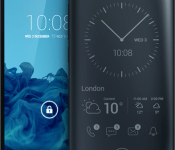
One carrier in the United States plans to sell the YotaPhone 2

The YotaPhone 2 will see have much better availability in the United States compared to its predecessor. Today, YotaPhone’s Matthew Kelly announced that the device would be available through one of the four major carriers in the United States. This means that AT&T, Verizon, Sprint, or T-Mobile will step forward to sell the YotaPhone 2. Also, in North America, the YotaPhone 2 will be sold through a Canadian carrier; however, that carrier was left unspecified as well.
Stay tuned for more information on the YotaPhone 2 and its availability.
Via: Android Central
Come comment on this article: One carrier in the United States plans to sell the YotaPhone 2
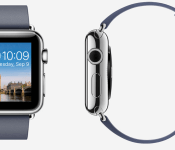
Samsung Supposedly Wins Orders to Produce Apple Watch Components
Samsung has won the orders to produce Apple’s S1 system-in-a-package for the Apple Watch, reports DigiTimes. The S1 produced by Samsung will combine multiple components including the processor, mobile DRAM, NAND flash, and other chips into one package.

A report in November shared similar information, noting that Apple would be relying heavily on Samsung for iPhone 6 and Apple Watch components. Namely, Apple was said to be concerned about NAND flash, with its cheaper and slower TLC (triple-level cell) flash memory for larger-capacity iPhone 6 and 6 Plus models said to be the source of crashing issues. Those issues, along with Samsung’s competitive prices, were said to be the primary reasons in bringing Apple back to negotiations with the South Korean company.
Apple is said to be targeting a March launch for the Apple Watch, as the company is said to be refining the device’s “Watch OS” software and working on hardware components like the inductive charging mechanism. Apple Retail Store workers are also set to begin training during the week of February 9 ahead of the device’s launch the following month.
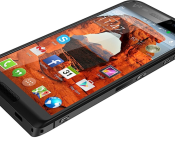
Hands-on with the feature-filled Saygus V2
Saygus isn’t a brand we normally think of when talking smartphones, but that might change soon. The company is here at CES with a new smartphone they call a “super smartphone,” so naturally, we have to take a look at it. The Saygus V2 smartphone was just announced a few days ago, and we scored some hands-on time with the device. Is it the multimedia powerhouse everyone is expecting it to be? Let’s find out!

At first glance, the Saygus V2 (V Squared) looks like a lot of other Android smartphones out there, but in the case of this device, the devil is in the details. To begin, the device is rather diminutive, especially considering the trend most modern smartphones are following today. The device has a 5-inch display and ultra thin bezels on its sides, making the screen really pop. The screen is also covered by the new Corning Gorilla Glass 4 which makes the handset quite durable. The use of kevlar on the front and back panels and an aluminum rim around the edges make for a premium-feeling, light device.

On the top and bottom of the front panel sit dual-Harman Kardon speakers which have produced a really clear sound so far. What’s more, Saygus has also included a 13MP front-facing camera, allowing you to take as many high quality selfies as you’d like. The bottom of the device houses the microUSB port and 3.5mm headphone jack. The right side features the volume rocker, power/standby key, hardware shutter button, as well as a swipeable fingerprint scanner.

The fingerprint scanner is positioned extremely well, as we were able to scan our fingerprint while holding the device with one hand. There’s no doubt that simply placing your fingerprint on a fingerprint scanner would be much easier, but the fact that this one is so well-placed allows us to use it way easier than on some devices. Turning it around, the bottom of the device houses an interesting design that’s actually an exclusively-designed antenna, which (should) boost mobile signals by one bar.
The display on this device is somewhat standard compared to what we see on the market. The V2 has a 5-inch 1080p display with a pixel density of 445ppi. We know what you’re thinking: Shouldn’t this device have a 2K screen if it’s considered a “multimedia powerhouse?” While that may be true for some, we’ve enjoyed this screen so far. The colors are bright and viewing angles are great, which will give users a great multimedia experience.

Under the hood, the V2 has a 2.5GHz Qualcomm Snapdragon 801 processor with an Adreno 330 GPU, all backed by 3GB of RAM. The Snapdragon 801 may not be the latest and greatest anymore, but it’s still an extremely capable processor which will likely be able to handle any graphic-intensive task you throw at it. We’ve already touched on the Harman Kardon front-facing speakers and the fingerprint scanner, but those are just the tip of the iceberg when it comes to the real draw of this device.
What’s likely the biggest selling point of the V2 is the fact that it can house up to 320GB of external storage. The device has room for two microSD card slots (up to 128GB each) on top of the included 64GB of on-board storage. The high storage capacity of this device will make movie and music lovers extremely happy if they decide to pick one of these up.
The V2 sports a removable 3100mAh battery that should keep the device running for quite some time. To top it all off, this device is IPx7 certified for protection against water submersion. In fact, the V2 can be submerged in up to a meter of water for 30 minutes without warranting a negative impact.
The V2 packs an impressive 21MP rear-facing camera with a dual-LED flash, OIS and auto-focus. As mentioned above, the 13MP front camera should be more than enough to satisfy your selfie-taking needs.

Since the V2 runs a near-stock version of Android 4.4.4 KitKat, we get a very bare-bones, simplistic experience. Saygus has let us know that the device will be upgradable to Android 5.0 Lollipop in the future. On top of a near stock build of Android, the V2 is also “root capable,” meaning it comes with an unlocked bootloader and is relatively easy to gain root access. One more added benefit to the dual microSD card slots is that not only do they boost the device for storage purposes, the device also allows you to boot from the microSD card slot. This allows users more freedom to use multiple operating systems and ROMs.
In many ways, it seems as though Saygus is just trying to tick as many boxes off of the spec sheet as they can. The display size, battery, storage options, speakers, build quality, wireless streaming capabilities and camera experience are all very great so far. The V2 is definitely a media device through and through, and if Saygus can hit the right price point (rumored to be $100 less than current flagships) the company might go from relatively unknown to a fan favorite this year.
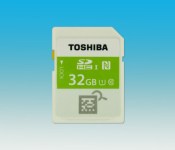
Toshiba’s NFC SD card lets you preview pictures with just a tap

Toshiba has just launched two new products that will help photographers out greatly during photoshoots. The Japanese technology company has just announced two new SD cards, including the world’s first NFC-enabled SD memory card, as well as a new Wifi-capable SD card.
The NFC-capable card comes in 8/16/32GB variants and can be used alongside any NFC-compatible Android device. If you’d like to use the NFC capabilities with this card, simply download the Memory Card Preview App on your device, tap it to your camera, and up to 16 image previews will appear on your phone, along with available storage space on the card. If you’d like to download or really do anything with the photos beyond looking at the previews, unfortunately the SD card doesn’t support those features quite yet.
Toshiba has also announced a new Flash Air III, the seemingly more useful device out of the two. This one is Wifi-enabled, meaning you can access all of your stored pictures and quickly share them with your computer as long as it’s connected to a WiFi network. This newer version of the SD card provides enhanced photo sharing and management features from the previous model, and should be able to transfer photos and videos faster than previous iterations. You can pick up the Wifi-enabled SD card beginning in March. The 16GB model will run you $79.99, while the 32GB model will cost $99.99. If you’d like to pick up an NFC-enabled SD card, they’ll be available sometime in February, though no pricing information has been mentioned yet.

Uber’s newest service helps users move house, but only in Hong Kong

Uber already offers several options in the US, including quirky seasonal ones like ice cream-on-demand. But the company’s Hong Kong division has something not available anywhere else: an experimental service (like UberFresh in California) that transports big items, bulk goods, or even huge pets. That option, called UberCargo, has been in beta for a while, but it’s now open to anyone in Hong Kong. It provides customers with big vans they can fill with their clothes, produce, merchandise, furniture or whatever they want — they can even ride with their goods or track the van via the app.
Since loading cargo usually takes time, customers are charged HK$1.60 (20 cents) per minute while the van isn’t moving on top of the HK$20 ($2.60) base fare. It then shifts to HK$4.50 (60 cents) per kilometer once the vehicle’s on its way. It’s not entirely surprising that the company has launched its cargo service in Hong Kong, seeing as it announced in December that the $1.2 billion it raised from the latest funding round will be used for its Asian expasion. The company didn’t mention whether it will make UberCargo available outside Hong Kong, so for now, you’ll have to call up Two Men and a Truck for your moving needs.

Filed under: Misc
Source: Uber
 AIVAnet