



Jay Z is set to purchase Aspiro music streaming company for $56 million

If you follow rapper Jay Z at all, you’d know that he’s arguably more of an entrepreneur than a music artist. Soon, the rapper will expand his business to the music streaming industry. From a report earlier today, Jay Z has plans to purchase Swedish tech company Aspiro for $56 million through his company Project Panther Bidco. Aspiro is a tech company that runs two high-quality streaming services, WiMP and Tidal. Schibsted, a media company who owns a majority of Aspiro’s shares, accepted Jay Z’s bid for the company earlier today.
Trond Berger, CFO of Schibsted ASA, explains the acquisition further:
Schibsted and Streaming Media have been active owners of Aspiro for 3 years, and there has been significant progress made by Aspiro during this period. Schibsted believes there is a lot of potential for further growth of the Company. However, Aspiro needs substantial expansion capital and a strong and dedicated owner to be able to grow and compete on the global music streaming market… Panther, which is controlled by S. Carter Enterprises, LLC, has adequate financial resources and a high level of competence in the music industry. Hence, I think they will be a better owner to lift Aspiro and its advanced music streaming service to a new level.
It’s easy to see that Jay Z was heavily influenced in his decision by Dr. Dre’s success after Apple bought Beats by Dre for $3 billion last May. And now, with two streaming services under his belt, this acquisition could possibly propel the rapper to compete with the likes of Beats, Google Play Music, or even Spotify. Assuming the acquisition goes through without a hitch, we’ll have to wait and see what Jay Z has planned for these services.

Wells Fargo confirms it will continue supporting its Windows Phone app

It would be putting things lightly to say that this week has been a rough one for users of banking apps on Windows Phone. However, at least one bank has confirmed it is sticking around: Wells Fargo. After both Chase bank and Bank of America said they would be ending support for their Windows Phone apps, Wells Fargo says it has no plans to abandon the platform.

Daily Roundup: Tesla Model X, DARPA YouTube robots and more!

Tesla’s Model X has been spotted in the wild; a new DARPA technology lets robots learn from YouTube videos; and Verizon is changing its policy on “supercookies.” Get the details on these stories and more in the Daily Roundup.
Tesla’s long-delayed Model X SUV is testing in California

Tesla’s long-delayed Model X SUV was recently spotted in the wild. A skateboarder riding at a nearby park captured this video of the mysterious car being tested at an abandoned airfield.
DARPA’s new tech lets robots learn from YouTube videos

What may be the best way to teach a robot new tricks? Have them learn by watching YouTube videos. Hopefully, these future robots will be more inclined to help us out with mundane tasks, as opposed to the alternative.
Verizon Wireless will let you dodge those sketchy ‘supercookies’

Verizon Wireless appears to be backing off its scummy policy of tracking users with a “supercookie.” However, there’s no word yet on when this change will happen.
Jay Z is buying Spotify rival Tidal for $56 million

Jay-Z is getting into the streaming-music business. A company indirectly owned by Jay-Z has made a bid for Aspiro, a Norwegian company behind the streaming service Tidal.
Google Now finally pulls in data from your favorite apps

Google Now is rolling out support for third-party apps. The predictive-search app will now push relevant data from 40 apps and services.
‘Lego Jurassic World’ game packs four movies’ worth of brick dinosaurs

In case you haven’t had your fill of dinosaurs yet, (and let’s be honest, who has?) the Lego Jurassic World game is set to be released alongside the blockbuster movie. Get ready to explore Isla Nublar and run from brick-built velociraptors this summer.
Of course ‘Law & Order: SVU’ is doing a GamerGate episode

NBC’s Law & Order: SVU plans to tackle the seedier side of the “GamerGate” movement and its harassment tactics in an upcoming episode to air in February.
Filed under: Misc
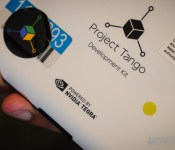
Google’s Project Tango is shifting away from ATAP to a new home in the company

Some of the most technologically advanced and futuristic projects that have come from Google usually get their start with the Advanced Technology and Projects (ATAP) team. Google ATAP is known for housing ventures like Project Ara, the company’s modular smartphone, and Project Tango, an Android-powered device that can map its movement through space using 3D technology. Earlier today, Google ATAP announced that Project Tango will be moving to a new home within the company.
The ATAP team explains:
So, after two fast-paced years in ATAP, and many technical successes, the Tango team is transitioning from ATAP to a new home within Google. We’re excited about the continued commitment to developing the technology for our users — we wish our fellow pirates fair winds and following seas.
The announcement was quite short, and there is currently no information telling us where exactly Tango is headed. However, we do know that Tango will be staying within the company, and that Google is still actively working on the project. This follows on the heels of the recent announcement that Google Glass has graduated from Google X, and is now under supervision of Nest’s Tony Fadell.
If you’re looking for more information on ATAP and Project Tango, head here to watch ATAP’s keynote at Google I/O 2014.

Apple Watch, WatchKit, and false expectations

There’s a blog post making the rounds, likely because it allows Tesla and Apple Watch to both be crammed into a lede, about how useless the watch is without an iPhone, how pessimistic its future is for developers, and how Apple hasn’t delivered on what they “promised” at the event last September. In other words, it represents rage against a fantasy world very unlike the real one in which Apple very carefully set expectations at the event, on the product preview pages, and in the developer resources that followed. From the rant:
Although the opportunities seem pretty huge with Apple Watch, unfortunately, the current capabilities of the emulator-only development don’t match the expectations set after the keynote. We can now confidently say that creating anything really necessary and fully functional for Apple Watch with the current SDK version is very, very difficult, and many of the things promised at launch that were perfect for some business ideas are not at all available yet. The only thing left for the developers is to wait for spring 2015 when a new version of WatchKit will be released and Apple Watch will finally start selling.
The Apple Watch has no cellular radio and no GPS. It relies completely on its connection to an iPhone to exchange and update data. Apple made that crystal clear from the start. First generation Apple Watch extensions require an iPhone the way first generation iPod touch web apps required a Wi-Fi router.
And extensions are all Apple “promised” for the first version of the Software Developers Kit (SDK) — interactive notifications (short and long looks), widgets (glances), and remote views (WatchKit “apps”).
So, yeah, sorry you can’t yet build a native Tesla app with full, unfettered access to the hardware. Or, you know, a native game or native video player or… native anything. Because Apple only “promised” native apps for later this year.
It’s okay to want more faster. It’s human nature. But misrepresenting reality to spread FUD about a product and its development potential isn’t okay. It’s negative attention-seeking and, frankly, it’s bullshit.
You can Google for the article if you absolutely have to give it your page view. I’d recommend against it, though. David Smith‘s excellent, in-depth WatchKit series is far, far more deserving.
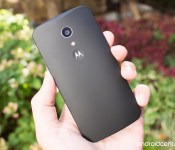
Moto G (2014) with LTE goes up for sale in Brazil

After first rearing its head roughly a month ago, the new LTE version of Motorola‘s second generation Moto G is now available for sale in Brazil.

Nest is losing its tech VP and the CEO of Dropcam

Google’s plan for a connected home including Nest and Dropcam lost a few family members today. Nest’s Vice President of Technology Yoky Matsuoka and Dropcam cofounder Greg Duffy have left for other ventures, according to The Verge‘s sources. Matsuoka’s joining Twitter while Duffy’s next move isn’t known at this point. Nest and Twitter, for their part, offered us an official “no comment” when we asked for confirmation of the departures. Matsuoka’s Twitter profile looks relatively new, with her sole two follows being Alex Roettler and Dock Costolo — Twitter’s VP of engineering and its CEO, respectively.

These departures will likely affect Mountain View’s long-in-development household automation platform Android @ Home as well, but how isn’t exactly clear just yet. From the looks of it, this adds to the story of a reorganization within that area — like Nest cofounder Tony Faddel recently moving to lead the Google Glass team, for instance. The seemingly disparate services will likely continue to come together, just without Dropcam’s leader.
Filed under: Household, Google
Source: The Verge
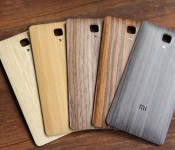
New wood back covers for the Xiaomi Mi4 will bring a more natural feel to your device

We’re big fans of Xiaomi’s Mi4 handset. In our full review, we told you that the Mi4 is a premium device that offers up an excellent software experience at an affordable price. However, if we had one aspect of the device we could change, it would undoubtedly be the glossy-plastic build quality. Glossy plastic has a history of making devices feel cheaper than they actually are. Now it seems as though Xiaomi would like to help with that problem a bit.
Quite awhile ago, Lei Jun, founder and CEO of Xiaomi, teased that some new back covers would eventually be available for the Mi4. Well, that day has finally come. The company has released six new wood back covers for the Mi4 handset that won’t feel so plasticky. The different color options include Rosewood, Black Apricot Wood, Wood Latte, Bamboo Bangkok, Walnut and White Oak.

At only 69 Yuan (~$11), these covers will bring a more natural, less plasticky feel to your device. Considering that a similar Bamboo back cover for the OnePlus One costs $50 (and they’re invite only), these covers seem to be quite a steal. If you’re looking to grab one for your own Mi4, visit the Mi Store link below to check them out for yourself.
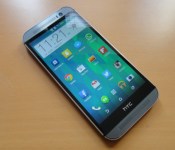
HTC One (M8)’s in Canada now receiving Lollipop upgrade

HTC has now started rolling out the much-anticipated and eagerly-awaited Lollipop update to all Bell, SaskTel and WIND Mobile carrier-branded variants of its flagship smartphone, the One (M8), located in Canada. This upgrade transports the latest build of the Android operating system, together with a multitude of bug fixes and stability improvements.
Hit the break for the full changelog.
System Improvements:
- Radio stability improvement
- Transition improvements
Eye Experience Implementation:
- Split Capture
- Crop-Me-In
- Photo Booth
- Auto Selfie
- Voice Selfie
- Swipe-To-Switch
- Video Face Tracking
- Live Makeup
- Video Screen Sharing
- Application Improvements:
Material Design: You will quickly notice a whole new colorful look and feel to your device – from fluid animations to new application and system themes, colors and widgets.
Notifications UI & Priorities: In order to alert you to the most timely and relevant information, the format and behavior of notifications have evolved:
- notifications will appear on the lock screen and are intelligently ranked by type and who sent them.
- you double-tap to open one, swipe left or right to clear one, or clear all notifications from the bottom of the list.
- you can set the priority and privacy of notifications for each application.
- very high priority notifications will pop up briefly over other applications so that you can take action.
- when you dismiss a notification on one device it will be dismissed on your other Android devices, if they are connected to the Internet.
- you can further tailor how notifications behave with the new Downtime and Ambient Display settings (see below).
New Interruptions & Downtime Settings: You can tailor how interruptions behave, choosing to allow all, none, or only priority interruptions. You can personalize what counts as a priority interruption (reminders, events, calls, messages) and even tailor them to be from only contacts you specify. The Downtime setting will allow only priority interruptions during the times and days that you specify. e.g. allow only priority interruptions on the weekend.
Recent Apps (Multi-tasking): The redesigned Overview space (formerly called Recents) will include both applications and separate activities within those applications. For instance, each open tab in Chrome will also appear here along with recent applications; both your Gmail Inbox and a draft email message will appear as separate cards. This provides a consistent way to switch amongst tasks.
Flashlight: Lollipop includes a new flashlight option as part of Quick settings (swipe down with two fingers from the status bar to see it).
Pin a view/app: Screen pinning allows you to keep a specific app or screen in view. For example, you can ‘pin’ a game and your child will not be able to navigate anywhere else on your phone.
Battery: The Battery settings panel now shows an estimated projection for how much time you have left while discharging or charging. You can also enable a new battery saver mode that will save power by reducing performance and most background data operations to extend your battery life.
Smarter Internet Connections: With Android Lollipop, your phone will not connect to a Wi-Fi access point unless there is a verified Internet connection. This feature improves hand-offs between Wi-Fi and cellular connections, helping to maintain your video chat or voice-over-IP (VoIP) call as you switch.
Performance: Your phone now uses the new Android Runtime to help optimize application performance. After upgrading to Lollipop, your applications will undergo a one-time optimization process. Note that the optimization for ART requires more space.
Security: Encryption can now use a stronger 256-bit key to help protect your data. Note that the stronger key willonly be used after you perform a factory reset on Android Lollipop. Otherwise encryption will continue to use 128-bit key. You can turn on encryption in the Security settings menu.
To see if the update is ready for your device, head into ‘Settings’, ‘About Device’, then tap ‘Check for Updates’.
Come comment on this article: HTC One (M8)’s in Canada now receiving Lollipop upgrade
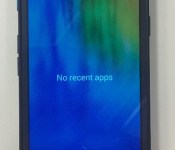
Samsung Galaxy Xcover 3 front, rear, and specs leak

The Galaxy Xcover series will be making a return after an absence of more than two years. In January 2013, Samsung launched the Galaxy Xcover 2 and now images and specifications of its successor have leaked. The Galaxy Xcover 3 (SM-G388F) featured a durable design targeted at the most rugged users. Like the Active variants of other Samsung devices, the Galaxy Xcover 3 has three physical buttons for Recents, Home, and Back.
Hit the break for an image of the rear and specifications.

The rear of the handset (and the design as a whole) is uninspiring but remember that this is not a flagship device. This is solely for rugged users. The Galaxy Xcover 3 is setup with the flash, camera, and speaker packed close together.

Consumers looking for a durable handset with premium or decent specifications will have to look at the Active variants because the Galaxy Xcover 3 is on the low-end. The 4.8-inch display has 800×840 resolution and the quad-core processor inside comes from Marvell. The rear camera is 4.8MP and the front one is 1.8MP. The software running here is Android 4.4.4 KitKat.
Source: GSMArena
Via: GFXBench
Come comment on this article: Samsung Galaxy Xcover 3 front, rear, and specs leak
 AIVAnet
