


Apple Reports Record Earnings and iPhone Sales: $18B Profit on $74.6B in Revenue for Q1 2015
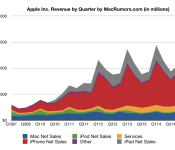
Apple today announced financial results for the first fiscal quarter of 2015, which corresponds to the fourth calendar quarter of 2014. For the quarter, Apple posted revenue of $74.6 billion and net quarterly profit of $18 billion, or $3.06 per diluted share, compared to revenue of $57.6 billion and net quarterly profit of $13.1 billion, or $1.98 per diluted share, in the year-ago quarter.
Gross margin for the quarter was 39.9 percent compared to 37.9 percent in the year-ago quarter, with international sales accounting for 65 percent of revenue. Apple also declared an upcoming dividend payment of $0.47 per share, payable on February 9 to shareholders of record as of February 12. The company currently holds $178 billion in cash and marketable securities.

Apple sold a record 74.5 million iPhones during the quarter, up from 51 million a year earlier, while Mac sales were also strong with 5.5 million units sold, up from 4.8 million units in the year-ago quarter. iPad sales were down, however, falling to 21.4 million from 26 million.
“We’d like to thank our customers for an incredible quarter, which saw demand for Apple products soar to an all-time high,” said Tim Cook, Apple’s CEO. “Our revenue grew 30 percent over last year to $74.6 billion, and the execution by our teams to achieve these results was simply phenomenal.”
Apple’s guidance for the second quarter of fiscal 2015 includes expected revenue of $52-55 billion and gross margin between 38.5 and 39.5 percent.

Apple will provide live streaming of its fiscal Q1 2015 financial results conference call at 2:00 PM Pacific, and MacRumors will update this story with coverage of the conference call highlights.
Conference Call and Q&A Highlights are available in reverse chronological order after the jump. Read more 

News leaks that Google Fiber is speeding to four new cities

The Wall Street Journal has intercepted some news that Google is planning on announcing four new cities to receive its gigabit internet service, Fiber, this week. The lucky four? Well, if you’re a resident of Nashville, TN, Atlanta, GA, Charlotte, NC, or Raleigh, NC, the spotlight is on you!
When asked for a comment about Google Fiber spreading to these cities, Google declined to comment ahead of the official announcements. It has been confirmed through a variety of sources that the first of these announcements is expected to happen today.
It’s a sad fact that for all of the talk of the supremacy of capitalism in the United States, many areas are stuck in government supported monopolies. In fact, the United States is one of the slowest developed countries in internet speeds.
Google wants to end that with Fiber by providing one gigabyte per second of internet speed to consumers for a refreshing $80 per month. To put that in perspective, in my area, Comcast will let you suffer with 150 megabytes per second for $115/month and Cox offers 150 megabytes per second for $80/month.
It’s not entirely altruistic of Google, though. The Mountain View search giant needs you to have internet and it increasingly needs you to have it at breakneck speeds. Google’s products like the Chromebook lose a significant portion of their functionality without the internet. And no one would want a Chromecast if streaming high quality YouTube videos to their high-definition TVs landed users in perma-buffering.
Google hopes to inspire force these sluggish ISPs to up their game by offering consumers a far better alternative to the services these companies provide — services that would make Marie Antoinette proud — hitting the ISPs right in the pocketbook.
Google launched Fiber in Kansas City first. The service is now being provided to Austin and Provo as well. Other cities on the short-list include San Antonio, San Jose, Salt Lake City, Phoenix, and Portland.
Personally, I’d love to see Fiber come to Oklahoma City, but I don’t blame them for not wanting to visit the Quakenado state.
Source: Wall Street Journal
Come comment on this article: News leaks that Google Fiber is speeding to four new cities

Samsung files trademarks for four new Galaxy devices
 Samsung has recently filed for four new trademarks on Galaxy devices with the USPTO, mentioning the Galaxy E3, as well as three new additions to the unannounced Galaxy J lineup. Not only will Samsung release the budget Galaxy J1 that we’ve seen hints of, but there will also be a J3, J5, and J7, which may be similar to the Galaxy A3, A5, and A7. Confused with Samsung’s new naming conventions yet?
Despite recent struggles for the company, it looks like Samsung is going to stick to pumping out as many phones with different screen sizes and price points as possible, per usual. Of course, it’s always possible that these devices were already in the pipeline before Samsung had a rough year and they were too far into development to be scrapped, but either way, expect to see a ton of new Samsung phones this year.
source: USPTO
via: Phone Arena
Come comment on this article: Samsung files trademarks for four new Galaxy devices
YouTube now defaulting to HTML5 video

YouTube is now defaulting to HTML5 video, which if you’ve been following the evolution of the technology for a while is pretty much the angel opening the seventh seal on Flash. Richard Leider, Engineering Manager, writing for the YouTube blog:
Given the progress we’ve made with HTML5 <video>, we’re now defaulting to the HTML5 player on the web. We’re also deprecating the “old style” of Flash <object> embeds and our Flash API. We encourage all embedders to use the <iframe> API, which can intelligently use whichever technology the client supports.
These advancements have benefitted not just YouTube’s community, but the entire industry. Other content providers like Netflix and Vimeo, as well as companies like Microsoft and Apple have embraced HTML5 and been key contributors to its success. By providing an open standard platform, HTML5 has also enabled new classes of devices like Chromebooks and Chromecast. You can support HTML5 by using the <iframe> API everywhere you embed YouTube videos on the web.
The late Steve Jobs, writing for Apple.com in 2010:
The avalanche of media outlets offering their content for Apple’s mobile devices demonstrates that Flash is no longer necessary to watch video or consume any kind of web content. And the 200,000 apps on Apple’s App Store proves that Flash isn’t necessary for tens of thousands of developers to create graphically rich applications, including games.
New open standards created in the mobile era, such as HTML5, will win on mobile devices (and PCs too). Perhaps Adobe should focus more on creating great HTML5 tools for the future, and less on criticizing Apple for leaving the past behind.
Thanks Dev!
Grab a Nexus 6 $48 Cheaper Using a T-Mobile Coupon Code
Thinking about getting a Nexus 6 on your T-Mobile plan? Now is the time to do it. T-Mobile wants to save you $48 on a new Nexus 6 by using their special coupon code. This coupon code works for both the 32 and 64 gb variants, so it is a nice little save for phones […]
The post Grab a Nexus 6 $48 Cheaper Using a T-Mobile Coupon Code appeared first on AndroidSPIN.

128GB PNY micro SD cards on special for $79.99, 64GB for $29.99
SanDisk was the first, that I know of, that offered a 128GB micro SD card and that was just about a year ago in February of 2014. They came out swinging with a $199.99 price tag, but it wasn’t long before the price tags started to drop. Eventually they started hovering around the $100 mark […]
The post 128GB PNY micro SD cards on special for $79.99, 64GB for $29.99 appeared first on AndroidSPIN.

Former Opera CEO launches a feature-packed browser called Vivaldi

John S. Von Tetzchner, founder and former CEO of the popular Opera browser, has just announced a new way to browse the web. It’s called Vivaldi, and it’s aimed at power users. When von Tetzchner created Opera back in 1994, the startup browser began gaining some traction and soon became one of the fastest web browsers on the web. Unfortunatlely, after Opera grew to the next level and ultimately changed directions, the founder decided to part ways with the project. He made it his point to develop a browser that’s rich in functionality and easy to use. Thus, Vivaldi came to be.
Vivaldi is built using the Chromium source code, similar to what we see in Opera’s current iteration. Being such a small team of developers, they couldn’t build their own engine from scratch, which might be a good thing. This way, the basis of the browser is set up for them, allowing the developers to focus on layout and features.
This browser is filled with awesome features. Quick Commands allow you to assign your own keyboard shortcuts to scroll through settings menus, open tabs, view history and much more. You can even jot down blurbs or add screenshots to the built-in Notes tab. Notes in the browser can be tagged and organized for keeping your thoughts in order. You can add “Speed Dials” (shortcuts) to Vivaldi, so your most-visited sites are easily accessible. Last but not least, Vivaldi has a feature called “Tab Stacks” which lets you group tabs together under a single tab. This can really come in handy if you constantly have an abundance of different web pages open at once.

Vivaldi Technologies is also working on a huge list of features, likely set to debut before the official public launch of the browser. Here is what we have to look forward to:
- Mail – Yep, we are working on mail. That’s all we can say for now.
- Sync – Your Notes, bookmarks, History and session synced across your different devices.
- Spatial Navigation – Spatial navigation allows you to navigate the Web easily, using only your keyboard.
- Performance – Our aim is to be the fastest browser in the universe but we are not talking about theoretical speed here. It’s all about efficiency. We focus on making it quicker and faster for you to find things and getting things done!
- Extensions – We want to build a powerful, feature packed browser to minimize your need for extentions. They can impact browser performance and increase security risks. Still, we understand you might want more, so extension support is coming. Stay tuned.
Vivaldi is currently only available as a tech preview, though it’s widely accessible through their homepage. So far, this browser is fast, intuitive and packed with some great features. If you’ve tried Vivaldi, be on the lookout for new enhancements and updates added to the browser weekly.
Apple Pay Responsible for Two of Every Three Contactless Payments on Visa, MasterCard, and American Express [iOS Blog]
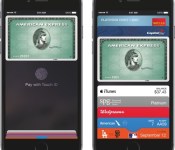
Since its introduction in October, Apple Pay has accounted for two of every three dollars spent through contactless payments on Visa, Mastercard, and American Express, according to Apple CEO Tim Cook who shared the information during the company’s earnings call for the first fiscal quarter of 2015.
“Apple Pay is off to a very strong start,” said Cook, adding that he expects 2015 to be “the year of Apple Pay.” About 750 banks and credit unions have signed on to accept Apple Pay, and according to numbers shared by Cook, Apple Pay was responsible for 80 percent of mobile payments at Panera Bread, and at Whole Foods, mobile payments increased by 400 percent.

Earlier information has also pointed to Apple Pay’s success. Apple Pay had more than 1 million card activations during the first 72 hours Apple Pay was available, and in November, Apple Pay captured a total of 1 percent of all digital payment dollars.
Thus far, Apple Pay has proven to be most popular at Whole Foods, with the speciality grocery store responsible for 20 percent of all Apple Pay transactions and 28 percent of all Apple Pay spending. Walgreens and McDonald’s were also popular with Apple Pay users.
Apple Pay is still in its infancy, limited to the United States. In the coming months, Apple plans to expand to several other locations across Europe, Canada, and Asia. In the United States, Apple Pay now supports cards representing 90 percent of U.S. credit card purchase volume.
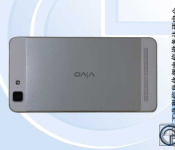
Vivo X5 Max L passes through TENAA

Chinese phone manufacturer Vivo is notoriously renowned for its exceptionally thin high-end smartphones, but now it looks like the company is ready to bring the revolutionary technology it used to produce the world’s thinnest Android-powered handset to the budget-friendly market.
Earlier today, an unannounced Vivo smartphone, named the X5 Max L, passed through China’s official certification database. In terms of design, the handset looks to be extremely similar to the X5 Max, but measures in a little thicker at 5.1mm.
Vivo has also altered the specifications of the X5 Max L. Instead of featuring the same Snapdragon 615 SoC its older sibling sports; the new handset will pack a more powerful, yet more cost-effective 64-bit MediaTek processor.
Hit the source link below to view the full certification certificate over on TENAA’s website.
Source: TENAA
Come comment on this article: Vivo X5 Max L passes through TENAA
 AIVAnet