


Accessory of the Day: Bluetooth-equipped selfie stick, $19.99
While they might not be the hippest looking things on the market, you can’t deny the effectiveness of a selfie stick. This one, from Mpow, features a Bluetooth controlled shutter button so you can easily snap that wide-angle shot of you and your friends for Instagram. At only $19.99 (Prime), this makes a perfect gift!
Join Prime and get this deal with FREE two-day shipping!
Also worth checking out:
The post Accessory of the Day: Bluetooth-equipped selfie stick, $19.99 appeared first on AndroidGuys.

Samsung kicks off its Note 3 Android Lollipop update in Russia

Reports are coming in that Samsung has begun rolling out Android 5.0 Lollipop for the Galaxy Note 3 (SM-N900) in Russia this morning. Probably leaving a few Note 4 owners a little miffed that they weren’t first on Samsung’s update list.
As you have probably seen from some of the screenshots and videos leaked over the past few months, Samsung’s Lollipop build comes with a revamped Touchwiz user interface and replaces many of the dark themes with a white Material Design inspired finish. Based on the leaked preview build from late last year, the Note 4’s Multi-Window feature also makes is way to the Note 3 with Lollipop.
While the Lollipop update will take some time to roll out to other regions, Russian owners can double check for the N900XXUEBOA6 build update notification by heading over to Settings > About phone > Software. Alternatively, eager SM-N900 model owners can download and flash the official firmware with Odin, which has been uploaded by SamMobile. As always, be sure to read the instructions and make the appropriate back-ups.
If you’re the patient type who’s going to sit tight and wait for the download to arrive in your region, you can check out the video below to see what Samsung has in store for your Note 3.
Hopefully an update for Samsung’s Galaxy Note 4 won’t be too far away either.
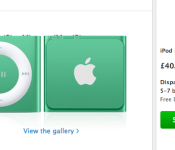
iPod Shuffle Shipping Times Improve to 5-7 Days in Europe Following Reports of Supplier Change [iOS Blog]
Earlier this month, the iPod shuffle’s shipping estimates slipped to 7-10 days in the United States, Europe and other regions, leading to speculation as to whether the portable media player would soon be discontinued or was going through reported supplier changes. Today, we are beginning to see a clearer picture.

For now, it appears that the iPod shuffle will continue to live on. iGen.fr was first to notice today that shipping times for the iPod shuffle have improved to 5-7 days on the Apple Online Store in the United Kingdom, France, Germany and some other European countries. The improved shipping times are not reflected in the United States or Canada storefronts yet, which still display shipping estimates of 7-10 days.
While demand for the iPod shuffle has been overshadowed by devices such as the iPhone and iPod touch, the portable media player remains a convenient and affordable option for incorporating into a daily workout routine or similar. The current fourth-generation iPod shuffle with front-facing media controls was introduced in 2010 and has not been updated since outside of a few color changes.

Create your own polygon wallpapers with PolyGen [App of the Day]
App of the Day is back, and this time to feature PolyGen, an app that allows you to create your own beautiful geometric wallpapers. I’ve been using PolyGen myself a lot, and use it to covert almost all of my favorite wallpaper photos I find into a triangulated version of it.
Using the app is fairly simple, with the main menu allowing you to either take a photo, chose a photo from your gallery, or pick colors yourself and take time to create your very own. After choosing your picture, you choose how “polygonized” you want the picture to be, from small, medium and large shapes. Most of the time, I chose large sizes to keep the finished wallpaper minimal and clean, but for more detailed pictures I choose small polygons to preserve the image integrity.
 “Polygonized”

 Doctor, I’d like to look like this please.
I would’t recommend trying this on your face unless your in for a good laugh, but regardless I found myself going through almost every photo I had to see if I would prefer it going through the filter, and had a lot of fun doing so. Occasionally, however, the app would crash after creating multiple wallpapers with it. Check out the Play Store link below and start making some wallpapers for yourself!
The post Create your own polygon wallpapers with PolyGen [App of the Day] appeared first on AndroidGuys.

Uber works out how to insure its drivers between fares

Uber has inked a deal with insurer Metromile that addresses a huge question mark: whether its drivers are sufficiently insured between fares. Until now, the ridesharing firm has been giving US drivers $1 million in commercial liability coverage when they actually had a passenger in the car. But when they were heading to pick up the next ride or driving for personal use, the situation was dicier. Uber only requires that drivers use private insurance between fares, but many companies, including Allstate, Geico and State Farm, often flat-out refuse to cover ridesharing vehicles. Uber does insure drivers between fares if private companies won’t pay, but limits injury liability to a paltry $50,000 for victims outside the car.
The new deal with Metromile fills that gap by offering pay-per-mile coverage for drivers when they don’t have customers. To use it, drivers plug a Metromile-assigned dongle into their car’s ODB-II port, letting the insurer track personal versus commercial miles and charge accordingly. Metromile offers full coverage during those periods and says many drivers may even save money, assuming they don’t use their vehicles excessively off the clock. All that said, Uber drivers won’t be forced to take the coverage, and have other options including Farmer’s Insurance.
Uber and Metromile needed to convince state regulars to accept the deal, and so far, three are on board: Illinois, Washington and California. The latter state recently declared that it would force Uber drivers to purchase commercial insurance, but has now backed off. The new deal addresses a lot of Uber concerns around insurance, but there’s no word yet on whether Metromile will sign other car services to the same termsl.
[Image credit: Getty Images]
Filed under: Cellphones, Transportation

Lollipop is rolling out to the HTC One (M8) in Europe

Last summer, HTC promised the One (M8) would be updated to Android L within 90 days of the release of the L source code to HTC. That term expires on February 3, and it looks that HTC will hold its promise, at least for users of One (M8) in Europe.
HTC communications executive Jeff Gordon teased the release of Lollipop to European variants of the M8 on Twitter:
HTC One (M8) owners in Europe, have a sweet tooth this morning? Check your software updates!
— Jeff Gordon (@urbanstrata) January 28, 2015
Several users on Twitter and Reddit are confirming the arrival of the OTA update in Europe, as well as the Middle East. According to noted HTC ROM developer and leaker LlabTooFeR, the updated software version is 4.16.401.10 and the update weighs in at 780MB.

HTC rolled out Lollipop to the developer and unlocked versions of the One (M8) earlier this month, but now the rollout is going out to carrier versions. As always, these rollouts go out in waves, and depending on your carrier (and luck), it may take a while before the OTA hits your phone. But it doesn’t hurt checking manually from the About Phone section.
There aren’t many visual changes, but core features like lockscreen notifications, floating notifications, the redesigned notification dropdown, and the new recent activities interface are all present.
Have you received the OTA on your One M8?

Your PS Vita is about to get slightly less useful

If you regularly use the Maps and YouTube apps on your PlayStation Vita, please raise a hand. If you’d be mightily disappointed if those were to disappear from the portable console, keep your hand up and someone will bring you a tissue. That’s because, unfortunately, Sony has announced that both features will be going the way of all things very shortly. Maps is getting erased from history with the March software update, which will, naturally, also kill the geographic elements of the Near social gaming app. YouTube, meanwhile, will stop working on April 20th, although the app itself is being pulled from the PlayStation Store from today. The company does, however, point out that you can still access YouTube via your browser, but let’s be honest – it’s at that point you probably just pull out your smartphone.
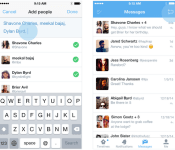
Twitter Updating iOS App With Group Messaging and New Video Features [iOS Blog]
Following a soft update that added a recap feature for top tweets last week, Twitter today announced a substantial feature update to its iOS and Android mobile apps that includes two new additions to the service: group messaging and “a new mobile video experience.”
Similar to the Direct Message feature, Group Messages will allow multiple users to converse privately amongst one another in a group chat room. Most notably, however, users won’t need to already follow one another to be able to begin and engage in a Group Message conversation.

Private conversations on Twitter are a great complement to the largely public experience on the platform. You might prefer to read (or watch) Tweets but converse about them privately. You might want to continue a public conversation privately with a smaller group, or start one based on a Tweet you saw. Many of you use Direct Messages to reach the people and brands you’re only connected to on Twitter. Whatever the case may be, the ability to converse privately with groups gives you more options for how and with whom you communicate on Twitter.
The new video camera allows Twitter users to capture up to thirty seconds of footage and edit it in-app, with the ability to post videos as both tweets and into Group or Direct Messages. iOS owners will be able to upload a video from their camera roll, a feature which will roll out soon to Android users.

Twitter noted the features will be rolling out to all users in the coming days, but until available to a wide audience, users will be able to interact in Group Messages started by someone else and watch videos posted by others, as well.
Twitter can be downloaded from the App Store for free. [Direct Link]
‘Super Smash Bros.’ and exchange rates help keep Nintendo in profit

Nintendo’s slow and arduous journey back to financial prosperity continued today with the release of its latest financial results. The company posted a second consecutive quarterly profit in its financial Q3, which counts sales from September through to December. Revenue was 271 billion yen (roughly $2.3 billion), generating a profit of 31.8 billion yen (around $270 million). A large part of the company’s profits can be attributed to a weak yen, which dramatically increases the value of North American and European sales when converted to Japanese currency. Though the figures are generally pretty healthy, it’s worth noting revenue for the holiday quarter dropped by around 13 percent year-over-year, something that will have a serious knock-on effect on the company’s finances for the financial year.
Why the slide? Well, Wii U sales were down slightly yearly — 1.91 million consoles versus 1.95 million the year earlier — but this drop was easily offset by software gains. Nintendo moved 11.2 million Wii U games in Q3, its best results since the console launched in 2012. Key to this success was Super Smash Bros. for Wii U, which sold around 3.4 million copies since late November. So for once, it’s not the Wii U’s fault. No, instead, the under-performer this quarter was the 3DS family of handheld consoles.
Despite the release of refreshed 3DS and 3DS XL consoles, hardware sales fell by 35 percent year-over-year, from around 7.8 million in 2013 to just 5 million. The hardware launch was restricted to Japan, Australia and New Zealand. With Europe and North America set to get their hands on the new console on February 13th, you can expect a slightly improved showing next quarter from the 3DS.
And what of Amiibo? Nintendo didn’t give us any updates on sales of its adorable NFC figurines, but earlier this month said it had sold around 2.5 million in North America alone. At roughly $13 a pop, that means the company generated over $30 million in just one region — it’s safe to say it’s making a lot of money there.
 Nintendo’s Amiibo NFC figurines are selling well.
Reflecting the overall drop in revenues over the past few months, Nintendo has adjusted its expectations for whole financial year. Until today, Nintendo was predicting it would make 40 billion yen profit from 590 billion yen in revenue from April 2013 to March 2014. That would’ve represented a swing back to profit, and the first time it had increased annual revenue in many, many years: it generated 570 billion yen last year, 635 billion the year before, 647 billion the year before that, 1,014 billion the year before that, 1,434 billion the year before — you get the idea, it’s been a rough few years for the company.
Unfortunately, that positivity has been drained by the miss this quarter, as it now expects to generate just 550 billion yen (around $4.67 billion) over the whole year, representing yet another annual drop in revenues for the company. It’s also predicting a return to quarterly losses — around $100 million over the next three months, in fact. It’s not all doom and gloom, though! A smaller Nintendo isn’t necessarily a bad thing, as long as it’s profitable, and the company is still saying that it’ll still swing to its first annual profit in quite some time, although it’s now hoping for just 20 billion yen ($170 million) for the year.
Source: Nintendo, (Financial forecast)
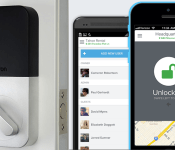
Lockitron Introduces New $99 App-Enabled Smart Deadbolt Lock ‘Bolt’ [iOS Blog]
Lockitron today announced a new product in its lineup of smart keyless home locking system devices, the $99 Bolt. Lockitron previously entered the market a few years back with the somewhat rocky launch of an earlier smartphone-enabled deadbolt lock, and the company is now shifting gears to focus on Bolt.
The basics of the device allow users with the free-to-download app to unlock and lock their home deadbolts via Bluetooth Low Energy, meaning a user must be near the lock to interact with it, but the lock will keep working in event of a power outage.
As reported by TechCrunch, Lockitron co-founder Cameron Robertson assures customers the company has learned a lot from the problems faced with its last product. The team simplified component costs by sourcing high quality parts elsewhere, and subsequently got both the lock’s price and size reduced.

Bolt is smaller, more elegant and more robust than the crowdfunded Lockitron. It has a better battery life, more fault tolerant embedded architecture and includes Lockitron’s most popular features like sharing access, activity logging and Sense. Most importantly, however, Lockitron Bolt has been designed with mass manufacturing in mind from day one.
The Bolt also features sharing access to other smartphone users, activity logging to track when someone interacted with the lock, and “Sense,” which either automatically unlocks the Bolt when you walk up to the door, or prompts the user with an easy-to-confirm notification. Lockitron will also sell the Bolt Bridge, which connects the Bolt to the internet and acts as a middle man to send a Bluetooth signal via a user’s phone to the Bolt itself, meaning customers could unlock the deadbolt for someone else while away from home.
The new device replaces a deadbolt on a user’s door altogether, versus the original’s attempt at universality in fitting over an existing deadbolt. While the company’s aims were admirable, many users found difficulty in setting up and properly using the slotted-on device. Lockitron decided to look to learning thermostat Nest as an example of a product that requires a signifcant amount of setup but leaves its users with a far more agreeable experience upon completion.
“Basically, as long as we could break the setup down into 20 tiny, doable steps, it didn’t really matter that it required removing the old deadbolt,” Robertson told TechCrunch last week.
The Lockitron Bolt can be pre-ordered from the company’s official website. A Preview Edition, with a limit of 1,000 units, will begin shipping in March. A final consumer-ready edition is slated for “late Spring” and will arrive in a variety of finishes to match a user’s door.
 AIVAnet