


Google X Labs made synthetic skin to test a cancer-detecting bracelet

If someone asks you to name a Google X Labs moonshot, you’d probably say Glass, self-driving car or maybe even Project Loon. But as you might remember from the WSJD Live conference last year, it also has a flourishing Life Sciences division that employs 100 doctors and scientists, and one of their main projects is a Fitbit-like bracelet that can detect cancer cells. Now, The Atlantic has taken a peek into the division’s headquarters in Mountain View. The publication’s video (below the fold) also explains why the team has to create synthetic human skin mixed with the real thing to cover disembodied arms.
See, those arms serve as testers for the Labs’ cancer-detecting bracelet project. For that to make sense, though, you need to understand how the system works: first you’ll need to take pills packed with nanoparticles that circulate throughout the body looking for cancer cells. If they find any, they’ll bind to those cells, which then literally light up. After that, the cell-particle combos make their way underneath the bracelet, since it has a magnet that attracts the nanoparticles.
Since the team wants to make sure that an illuminated clump of cancer cells is visible through human skin, they created those practice arms. They’re covered in skin exhibiting different properties (thickness, etc.), as well as skin mimicking those of different ethnicities and skin tones. The bracelet probably won’t be sniffing out cancer in the real world anytime soon, though, so watch the interview for now to see what it’s like inside Google X Labs’ Life Sciences department.
Source: The Atlantic
Android shipments reached 1 billion for 2014

Global research and analysis firm, Strategy Analytics, just posted a press release detailing the abundance of Android-powered smartphones that were shipped in 2014. According to the firm, just over 1 billion smartphones running Google’s operating system were shipped.
The exact figure was roughly 1.043 billion, a definite increase to 2013′s 780 million. In comparison, Apple only shipped 193 million smartphones. Trailing a distant third, Microsoft shipped 39 million units.
Strategy Analytics claims this brings the global market share of Android devices to 81%.
To read the full press release from Strategy Analytics, click the “Read more” link below.
BOSTON, Jan. 29, 2015 /PRNewswire/ – According to the latest research from Strategy Analytics, global smartphone shipments grew 30 percent annually to reach a record 1.3 billion units in 2014. Android accounted for 81 percent of all smartphones last year and shipped over 1 billion units worldwide for the first time ever.
Linda Sui, Director at Strategy Analytics, said, “Global smartphone shipments grew 30 percent annually from 1.0 billion units in 2013 to a record 1.3 billion in 2014. Emerging markets, such as China and Indonesia, drove the industry’s growth last year and they will continue to do so through 2015.”
Neil Mawston, Executive Director at Strategy Analytics, added, “Android shipped 1.0 billion smartphones worldwide in 2014, rising from 0.8 billion units in 2013. Android has become the first ever smartphone operating system to ship more than 1 billion units in a single year. Android accounted for a huge 81 percent share of all smartphones shipped globally in 2014, and Apple iOS remains its only serious threat for now. Apple iOS shipped 192.7 million smartphones worldwide in 2014, capturing 15 percent share. The new iPhone 6 and 6 Plus models have recently re-energized Apple’s growth and their bigger-screen designs have swiftly gained traction among wealthy consumers.”
Woody Oh, Director at Strategy Analytics, added, “Microsoft shipped 38.8 million smartphones for a relatively niche 3 percent marketshare worldwide in 2014. Microsoft’s Windows platform dominates PCs, but it continues to struggle in smartphones. Microsoft still lacks multiple major hardware partners to build its phones, while Microsoft’s retail presence in important countries like Chinaremains tiny.”
Exhibit 1: Global Smartphone Operating System Shipments and Marketshare in Q4 2014 [1]
|
Global Smartphone OS Shipments (Millions of Units) |
Q4 ’13 |
2013 |
Q4 ’14 |
2014 |
|
Android |
227.3 |
780.8 |
291.7 |
1042.7 |
|
Apple iOS |
51.0 |
153.4 |
74.5 |
192.7 |
|
Microsoft |
9.6 |
35.8 |
11.3 |
38.8 |
|
Others |
2.3 |
20.0 |
2.6 |
9.3 |
|
Total |
290.2 |
990.0 |
380.1 |
1283.5 |
|
Global Smartphone OS Marketshare (%) |
Q4 ’13 |
2013 |
Q4 ’14 |
2014 |
|
Android |
78.3% |
78.9% |
76.7% |
81.2% |
|
Apple iOS |
17.6% |
15.5% |
19.6% |
15.0% |
|
Microsoft |
3.3% |
3.6% |
3.0% |
3.0% |
|
Others |
0.8% |
2.0% |
0.7% |
0.7% |
|
Total |
100.0% |
100.0% |
100.0% |
100.0% |
|
Total Growth: Year-over-Year (%) |
33.7% |
41.4% |
31.0% |
29.6% |
|
Source: Strategy Analytics |
[1] Numbers are rounded.
The full report, Android Shipped 1 Billion Smartphones Worldwide in 2014, is published by the Strategy Analytics Wireless Smartphone Strategies (WSS) service, details of which can be found here: http://tinyurl.com/9djv7u8.
About Strategy Analytics:
Strategy Analytics is a global, independent research and consulting firm. The company is headquartered in Boston, USA, with offices in the UK, France, Germany, Japan, South Korea, Taiwan, India and China. Visit www.strategyanalytics.com for more information.
Source: Strategy Analytics
Come comment on this article: Android shipments reached 1 billion for 2014
Samsung’s Milk Music service now accessible through the Galaxy Tab 4 and Note tablets

Samsung announced the Milk Music streaming service last year to take on the likes of Beats Music, Pandora and Spotify. Its compatibility however was limited to a handful of Samsung devices, mostly limited to smartphones. Today, the Korean manufacturer has introduced support for Milk Music on Galaxy Note tablets as well as the lineup of Galaxy Tab 4 devices.
Samsung is yet to specify which Note tablets will be compatible, but the list shouldn’t be large considering that there are only a handful of Note tablets that have launched over a one year period. Milk Music is available only on Samsung devices and offers users an ad-free music listening experience. Customers will have to shell out $3.99 per month for this privilege, although it was initially made available for free.
So if you own a Galaxy Tab 4 or any of the recently launched Galaxy Note devices, make sure you check the Play Store for compatibility.
Via: Sam Mobile
Come comment on this article: Samsung’s Milk Music service now accessible through the Galaxy Tab 4 and Note tablets
Apple Releases iTunes 12.1 With New Yosemite Notification Center Widget
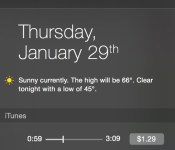
Apple today released iTunes 12.1 for OS X Yosemite, introducing a new iTunes widget for the Notification Center. With the widget, it’s possible to see what song is playing, skip ahead, and favorite. When listening to iTunes Radio, there’s an option to purchase the song that’s being played, right within the widget. Today’s update also includes performance improvements when syncing an iPhone, iPad, or iPod touch to iTunes.
iTunes 12.1 can be downloaded via the Software Update Mechanism in the Mac App Store.

This update introduces a new iTunes widget for Notification Center in OS X Yosemite. See what’s playing, skip ahead, and even buy songs while listening to iTunes Radio — right from Notification Center. This update also improves performance when syncing when your iPhone, iPad, or iPod touch.
iTunes 12.1 is the first major update to iTunes 12, which was introduced alongside OS X Yosemite. iTunes 12 brought a new design with Yosemite-style translucency elements to improve depth, a streamlined toolbar, and the melding of the iTunes Store and the personal Library to make it easier to navigate between owned content and what’s available in the store.
New Samsung Galaxy S6 Prototype Image Supposedly Leak to the Net
The Galaxy S6 should be upon us in the next few months, and bits of information have been surfacing giving us an idea of what to expect under the hood of the new flagship. The only piece of the puzzle that hasn’t come about is an actual image of the new phone. That may have […]
The post New Samsung Galaxy S6 Prototype Image Supposedly Leak to the Net appeared first on AndroidSPIN.
New Samsung Galaxy S6 Spigen Cases Appear on Amazon
Just when an image of supposed Samsung Galaxy S6 prototypes surface on the net, new Spigen Strong-Flex cases for the Galaxy S6 have made their way to Amazon. This isn’t the first time a Galaxy S6 case has popped onto the net. Apparently some cases were found on a Chinese website that gave us a […]
The post New Samsung Galaxy S6 Spigen Cases Appear on Amazon appeared first on AndroidSPIN.
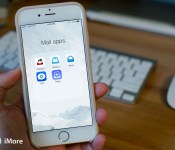
Nine magnificent mail apps for iPhone

Apple has built Mail right into the iPhone, with universal inbox, multiple draft support, gesture actions, and more. Yet the App Store is home to many other mail apps as well, some focused on a particular service, others on workflows like “inbox zero”. Which one you use depends as much on personality as feature set.
If you’re still looking for a Mail app, check out the list we’ve compiled. And when you choose — or if you’ve already chosen — let us know which one you went with in the poll!
Outlook

Microsoft’s new Outlook app, based on Acompli, lets you not only manage your Office 365 mail, but Gmail, iCloud, and standard mail accounts as well. If you’re all-in on Office, you’ll want Outlook.
- Free – Download now
Gmail

Google’s Gmail apps is everything you love about the web service wrapped up in app form. You can label, you can star, you can archive, and more. If Google owns your mail, you should own Gmail.
- Free – Download now
Mailbox

Mailbox, now owned by Dropbox, focuses on the “inbox zero” philosophy by letting you archive, delete, snooze, or file mail with just a gesture. Attachments can use your Dropbox storage to save on local space as well.
- Free – Download now
Dispatch

Dispatch lets you send your mail to TextExpander, Pocket, Evernote, Things, Omnifocus, and many more. If you want your mail to be part of your larger workflow, you’ll want to check out Dispatch.
- $4.99 – Download now
Boxer

Boxer has a dashboard for quick looks, to-do lists, and Exchange support. If you want all that along with gestures that let you quickly sort your mail, you’ll want to take a look at Boxer.
- $4.99 – Download now
CloudMagic

CloudMagic is based on smart cards that let you easily push mail out into Evernote, Pocket, Trello, OneNote, Salesforce, Asiana, Mail Chimp, and more. If super productivity and services integration are you think, CloudMagic might just be your thing.
- Free + IAP – Download now
Hop

Hop turns mail into something closer to messages. Instead of threads, you get conversations. You can even make groups and place calls with other Hop users. That makes Hop good for workgroups and the social set alike.
- Free – Download now
Triage

Triage does just what the name suggests — it presents your mail like a deck of cards and lets you rapidly swipe an email up to archive it and down to keep it. If all you want is to rapidly sort while on the go, Triage makes it super fast and easy.
- Free – Download now
Inky Mail

Inky Mail wants to help you sort your way into an more organized mail system. It does that with smart filters and categories that include personal, social, packages, and more.
- $9.99 – Download now
Your favorite?
If you’re new to mail apps on the iPhone, one of the above apps should absolutely suit you well. Read them through, pick the ones that interest you, and tell us which one you end up liking the best. If you’ve already picked your preferred podcast app, let me know which one it is!
<!–*/
.imageleft
float: left;
margin: 0 25px 0 0;
.imageright
float: right
margin: 0 0 0 25px;
.screenshot-16×9
height: auto;
width: 88.97%;
.screenshot-16×9.imageleft,
.screenshot-16×9.imageright
width: 50%;
.screenshot-4×3
height: auto;
width: 66.66%;
.screenshot-4×3.imageleft,
.screenshot-4×3.imageright
width: 50%;
/*–>*/

Heroes of Might & Magic III HD now available for Android tablets from Google Play

Heroes of Might & Magic III, the popular turn-based strategy game from the late 90’s, is now available in the Google Play Store. What’s arguably the most popular Heroes of Might & Magic game released as a Windows exclusive in 1999, followed by being ported to numerous other consoles in the early 2000’s.
Since this is a port of the original, you’ll still play as Queen Catherine Ironfist on a quest to re-conquer the kingdom of Erathia while trying to unite her ravaged homeland. Here is the full list of features the HD version brings to Android:
A COMPLETELY NEW HD EXPERIENCE ON TABLETS
- Re-live the Heroes III in HD, a true craftsmanship which offers players fully remastered graphics, and hosting intuitive controls designed for touchscreens
- Heroes III now features a full wide screen compatibility.
THE CRITICALLY ACCLAIMED HEROES III GAMEPLAY IS BACK
- Blaze your way through 7 exciting campaign scenarios, fighting along 8 iconic factions.
- Explore exclusive scenarios in around 50 skirmish maps.
- Pass the tablet around and play with your friends in a thrilling local multiplayer mode
One thing to note is that this game is only compatible with Android tablets. While it seems unfortunate, this game in particular takes up a massive 1.1GB on your device. Make sure to keep that in mind before you download the game.
Heroes of Might & Magic III can be found in the Google Play Store for $9.99. While the price seems a bit steep, Google Play isn’t listing any available in-app purchases. After the $10 price tag, you’ll likely be able to play the game at its fullest.
Download Heroes of Might & Magic III from Google Play
Google admits to not keeping up with Nexus 6 stock

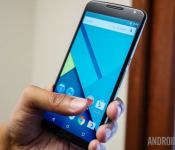
If you’re an owner of Google’s Nexus 6, consider yourself lucky. The handset has been extremely hard to purchase from the Play Store, Motorola.com, and even from Sprint, T-Mobile and AT&T. Not to mention, Verizon hasn’t even launched the handset yet. But during Google’s Q4 earnings call that took place this afternoon, CFO Patrick Pichette elaborated on the Nexus 6’s supply constraints.
Pichette explains:
While the Nexus 7 was very well received as a new phone, we had real issues and were unable to secure sufficient inventory to meet the demand that we had forecasted.
Note: Pichette said ‘Nexus 7′ on the call, but clarified that he meant to say ‘Nexus 6′ later in the talk.
So, there you have it. Google has admitted they should have been keeping up with Nexus 6 demands. It’s tough to tell whether this problem is caused by a certain portion of the hardware or whether it stemmed from multiple components. Either way, we’re sure Google offering carriers the ability to sell the handset doesn’t help the situation at all. Hopefully Google has learned their lesson and won’t run into this problem the next time around.
Saygus V2 will cost $549, pre-order registration extended to February 2nd

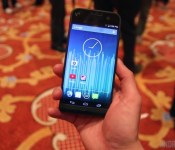
The Saygus V2 was a hot-button item at this year’s CES 2015 trade show, and for good reason. It comes with some of the most sought-after multimedia features on any current smartphone to date, and was slated to be sold at a sub-$600 price point. Up until now, Saygus has only offered folks the ability to pre-register for the device, which was simply was a way to hold a place in line and receive an alert when pre-orders opened up. While pre-orders were supposed to start today, the company has since announced that the pre-registration deadline will be extended to Monday, February 2nd at 11:59 PM MST, after that the device will be available for pre-order at price of $549.
For those curious, the Saygus V2 has a 5-inch display with 1920 x 1080 resolution, Gorilla Glass 4, a 21MP rear-facing camera, a 13MP front-facing camera (with OIS), a hardware camera button, 3GB of RAM and a 2.5GHz quad-core Snapdragon processor. It also comes with Qi wireless charging, front-facing speakers and built-in Harman Kardon sound technology. The phone also has 64GB of on-board storage, two MicroSD card slots totaling an extra 256GB, and a removable 3100mAh battery.
In addition to the handset, Saygus is throwing in a few extras for those who pre-register between now and February 2nd: namely an additional battery and a customized, replaceable glass screen protector. Those who pre-register will receive a coupon code for the introductory package that they can apply once pre-orders open on February 2nd. Unfortunately, at the time of this writing, Saygus’ site appears to be “down for maintenance”, so if you’re interested in pre-registering you may have to try again later.
As for how long Saygus will be taking pre-orders? For now Saygus has yet to announce an exact time frame, though they have revealed that the phone will jump up to $599 after the pre-order window ends. Whether that is a few weeks or months from now is anyone’s guess.
If you’d like some more information on the Saygus V2, head to our initial hands-on and first impressions from CES 2015. Is anyone out there interested in picking one up? Let us know in the comments!
 AIVAnet