



Viper unveils new app which can lock, unlock and even start your car using your smartwatch

Renowned car security experts, Viper, have just unveiled their very own Android Wear application which will bring the ability to start, unlock/lock and even track your car directly from your wearable, provided you have Viper SmartStart 4.0 installed.
Viper’s system unit can be purchased from a dealer in the U.S. for $149.99. If you already own one of these and have an Android Wear smartwatch, it’s as simple as downloading the app and letting it do the rest for you.
The app will also be available for the Apple Watch when it will be officially launched later this year. Viper has issued an update to the SmartStart 4.0 app on Android bringing some intuitive controls to the fore. More details will follow about the launch timeframe of this application.
“Wearable technology will give Viper SmartStart users the ability to feel connected with their vehicle in an even more accessible and convenient way,” said Frank DeMartin, Senior Vice President of Development and Engineering for Viper. “Whether people choose to use Viper SmartStart through their smartphone, smart watch or both, the updated Viper SmartStart 4.0 app will enhance their ability to seamlessly communicate with their car.”
Click here for our full CES 2015 coverage.
Source: Multivu
Come comment on this article: Viper unveils new app which can lock, unlock and even start your car using your smartwatch
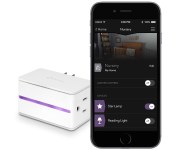
CES 2015: iDevices Announces HomeKit-Enabled ‘Switch’ Smart Plug
iDevices today announced its upcoming Switch smart plug, a HomeKit-enabled device that allows users to remotely control a variety of devices around the home. The system takes advantage of the existing iDevices Connected app to give users control over the plug, which plugs into a standard electrical outlet and connects to the home’s Wi-Fi network to provide control over a device plugged into Switch.

With HomeKit integration for Switch, users will be able to take advantage of a number of iOS features in the system, including the ability to use Siri to control their devices. Switch requires no dedicated hub device or subscription services, making it simple to set up.
– Siri – Switch’s HomeKit integration provides an easy, secure way to control Switch using Siri on your iPhone, iPad or iPod touch. You can even create your own commands to control multiple home settings. For example, you can automatically turn off lamps connected to your iDevices Switch, lock your doors, close the garage door and set the thermostat to the desired temperature, all with one command.
– Remote Access – iDevices designed a custom IoT cloud for Switch so that users can access their home from wherever they are with no additional hub required.
– Create Custom Events and Schedules – Through the iDevices Connected app, users are able to design custom events (or schedules) that fit their lifestyle. The iDevices Switch has the unique ability to remember events and make sure they happen even when the user is away.
Switch also includes several personalization options including the ability to upload photos from around the home to personalize the control app and make it easier to identify devices, as well as a built-in highlight on the Switch itself with customizable color choices.
Switch launches later in the first half of 2015, and The Verge says the device will cost $49.99.
iHome is also announcing a similar iSP5 SmartPlug smart plug that will launch later this year, but details remain scant at this time. Like iDevices’ Switch, iHome’s SmartPlug supports HomeKit and is a Wi-Fi enabled plug that allows users to control individual devices without the need for a hub. iHome does tout that multiple SmartPlugs can be grouped together into “scenes” to control various devices together. Pricing and an exact launch timeframe for SmartPlug have yet to be announced.

SanDisk unveils the Ultra Dual USB Drive 3.0 for Android devices

SanDisk, one of the most well-known external memory manufacturers, has just announced their newest product at CES 2015 to coincide with Android phones and tablets. The device is called the SanDisk Ultra Dual USB Drive 3.0, and we’d say it’s appropriately named thanks to its great internals. The flash drive features both a microUSB and high-speed USB 3.0 connectors, allowing you to transfer files to and from your Android device quicker than ever. We’ve seen this type of external storage for mobile devices in the past (specifically from SanDisk), but none that comes with USB 3.0 support, a feature that’s growing in popularity with Android handsets.
SanDisk’s Ultra Dual USB Drive 3.0 is available now and comes with 16, 32 or 64GB of storage space, and range in price from $22.99 to $64.99, respectively. If you’re interested in picking one of these super fast USB drives up for yourself, head to SanDisk’s website today. Looking for more coverage from CES? Stay tuned with Android Authority this week to get all the information you need!
Adding to its portfolio of innovative memory solutions, including SanDisk’s current, extremely popular SanDisk Ultra Dual USB Drive 2.0, the new SanDisk Ultra Dual USB Drive 3.0 enables mobile users to transfer files even faster, as well as free up space on their smartphones and tablets. The drive simply connects via micro-USB to a compatible Android device and gives users up to 64GB2 of extra storage instantly.
“Android devices offer users amazing features including high-resolution photography and 4K Ultra HD video recording, which quickly fill large amounts of mobile memory, and we know our customers are looking for quick ways to access and transfer these types of files,” said Philippe Willams, director of retail storage, SanDisk. “In an effort to continue to improve our customer experience, we incorporated feedback from our existing SanDisk Ultra Dual USB Drive to build an even sleeker, faster and more convenient solution for users on the go.”
The new SanDisk Ultra Dual USB Drive 3.0 sports a slick retractable design for easy usability, as well as a longer micro-USB connector to accommodate device cases or port covers. The USB drive offers a convenient way to transfer and share content via an Android-powered smartphone or tablet’s micro-USB port without the need of cables, email or wireless set-up. The drive also offers USB 3.0 performance at up to 130MB/s3 from the drive to the computer for users to quickly transfer and back up photos, videos and other files originally taken with their smartphone.
SanDisk Memory Zone Reaches Two Million Downloads
The SanDisk Memory Zone app, which has been downloaded more than two million times via Google Play™ store, gives users even greater control over their mobile device’s memory storage4. SanDisk’s Memory Zone app is compatible with most Android-powered devices and allows users to easily locate, organize, transfer and back up data. When the new SanDisk Ultra Dual USB Drive 3.0 is connected, the Memory Zone app auto-launches, and allows users to easily manage and transfer content between their mobile device and the drive. SanDisk Memory Zone app is currently available for free from the Google Play store.
Pricing and Availability
The SanDisk Ultra Dual USB Drive 3.0 is available worldwide in 16GB to 64GB capacities with MSRPs of $22.99 to $64.99, respectively, at www.sandisk.com.
About SanDisk
SanDisk Corporation (NASDAQ: SNDK), a Fortune 500 and S&P 500 company, is a global leader in flash storage solutions. For more than 25 years, SanDisk has expanded the possibilities of storage, providing trusted and innovative products that have transformed the electronics industry. Today, SanDisk’s quality, state-of-the-art solutions are at the heart of many of the world’s largest data centers, and embedded in advanced smartphones, tablets and PCs. SanDisk’s consumer products are available at hundreds of thousands of retail stores worldwide. For more information, visit www.sandisk.com.
1 Requires device with On The Go (OTG) support. See www.sandisk.com/dualdrive for a list of compatible devices.
2 21GB=1,000,000,000 bytes. Actual user storage is less.
3 2Read speeds from drive to computer up to 130MB/s; write speeds lower and vary by capacity. USB 3.0 port required. Based on internal testing; performance may be lower depending upon host device. 1MB=1,000,000 bytes.
4 Download and installation required.
© 2015 SanDisk Corporation. All rights reserved. SanDisk and SanDisk Ultra are trademarks of SanDisk Corporation, registered in the United States and other countries. Android and Google Play are trademarks of Google Inc. Mac is a trademark of Apple Inc.
This news release contains certain forward-looking statements, including expectations for markets, customers and product performance that are based on our current expectations and involve numerous risks and uncertainties that may cause these forward-looking statements to be inaccurate. Risks that may cause these forward-looking statements to be inaccurate include among others: the market demand for our products may grow more slowly than our expectations or our products may not perform as expected, be available in the capacities or at the price that we expect, or the other risks detailed from time-to-time in our Securities and Exchange Commission filings and reports, including, but not limited to, our most recent quarterly report on Form 10-Q and our annual report on Form 10-K. We do not intend to update the information contained in this news release.
CES 2015: Lenovo announces two new high performance Android phones, a smartband, and a selfie flash
Lenovo is a name that has been coming up more and more these days, particularly after acquiring Motorola from Google. So it’s no surprise to see that the Chinese-based manufacturer is announcing quite a few devices at CES 2015, tablets, PCs, phones and even a smartband. So let’s run through a few of the new […]
The post CES 2015: Lenovo announces two new high performance Android phones, a smartband, and a selfie flash appeared first on AndroidSPIN.
CES 2015 Lenovo Hands-on: P90, VIBE X2 Pro, VIBE Band VB10 and VIBE Xtension Selfie Flash
Thanks to our man on the ground, Stormy Beach, we’ve managed to get some great hands-on photos with the new Lenovo products that were just announced at CES 2015. These include the two new handsets, the P90 and VIBE X2 Pro, the VIBE Band VB10 smartband and the VIBE Xtension Selfie Flash accessory – check out all […]
The post CES 2015 Lenovo Hands-on: P90, VIBE X2 Pro, VIBE Band VB10 and VIBE Xtension Selfie Flash appeared first on AndroidSPIN.
CES 2015 ASUS press event kicks things off with announcement of ZenFone 2 and ZenFone Zoom
And we’re off! Press day at CES 2015 has officially begun today, where most of the big announcements are made, and one of the first to happen is the CES 2015 ASUS press event. The big announcements from ASUS today include two new flagship devices, most notably the Zenfone 2 and the Zenfone Zoom. Kicking things […]
The post CES 2015 ASUS press event kicks things off with announcement of ZenFone 2 and ZenFone Zoom appeared first on AndroidSPIN.
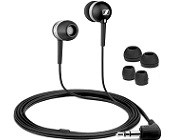
Samsung Galaxy S6 rumored to ship with Sennheiser earbuds

According to an exclusive report by Sammobile, the Samsung Galaxy S6 is expected to ship with Sennheiser earbuds. In a time when many phone manufacturers are cutting out accessories that ship with phones, especially earbuds, it’s a pleasure to know Samsung is going to offer a premium set of earbuds with the next flagship release.
How each of us listen to music is completely up to each individual, but it is pretty much universally accepted that Sennheiser knows how to reproduce sound quality through their headphones and earbuds. Samsung is one of the few Android device manufacturers that still gives a free headset with a purchase of its device, although my Note 4 notably did not have an included set up earbuds which was rather disappointing. A marriage between Sennheiser and Samsung seems like a great fit especially when you consider what Apple might do with the Beats line of headphones.
It’s not known whether or not the Sennheiser earbuds will ship with all Galaxy S6 devices, or if it will be a limited edition. I am hoping they offer the earbuds to everyone who purchases the S6 and lead the pack on bringing back earbuds for all phone manufacturers.
Source – Sammobile

The post Samsung Galaxy S6 rumored to ship with Sennheiser earbuds appeared first on AndroidGuys.
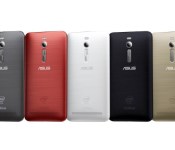
Jonney Shih unveils ASUS’ newest flagship, the Zenfone 2

For the past month, ASUS has been heavily teasing its newest line of flagship devices, promising their debut at CES 2015. Just a few minutes ago, they did just that, and introduced the world to the ASUS Zenfone 2.
Of all the newest specs this smartphone has to offer, the biggest attention-grabber is that this is the first mobile device to feature 4GB of RAM. That’s right, we’ve finally crossed that threshold and will be putting those 64-bit CPUs to good use. The RAM will be dual-channel, giving the smartphone a 2x increase in performance.
Shih meticulously dived into all of the newest features and specifications of the Zenfone 2. As mentioned above, this smartphone will come with 4GB of RAM, which will be managed by a 64-bit, 2.3 GHz Super Quad Core Intel Atom Z3580. This processor, Shih claims, delivers 2x-3x better performance than the Cortex 853. As far as the display, it is a standard 1080p Full HD IPS at 5.5 inches.
In terms of battery power, the Zenfone will be packing a 3000mAh battery. The best news related to this is that ASUS claims it will charge from 0% to 60% in a mere 39 minutes.

Another main focus of Shih’s was the camera technology of the Zenfone 2. This makes sense as the new camera technology had been the main focus of many of the device teases leading up to CES 2015. The Zenfone 2 will be sporting a 13MP shooter on the back with a dual-tone LED flash and a 5MP camera for the front side. These two cameras will also be featuring ASUS’ PixelMaster tech.
The PixelMaster technology is showcasing some very decent abilities. One of its best attributes is its low light mode, which will allow for a 400% increase in brightness while in low light settings. Additionally, Shih claimed that PixelMaster will be delivering the world’s best backlight photos with its HDR mode.
On the software side, photos will go through a real-time Beautification enhancement. Accompanying that is ASUS’ Creative Studio, which will allow you to alter your photos before you send them off to your social media of choice.
Another important topic covered on the software side was ASUS’ ZenUI. Perhaps taking a note from CyanogenMod’s playbook, the newest ZenUI will bring a lot of personalization, including the ability to customize your phone with themes and icons. This interface will be, of course, sitting atop Android 5.0 Lollipop.
On the matter of aesthetics, ASUS is really offering a brilliant selection of colors, as well as some color themes it calls Transfusion series and Illusion Series. Variety is the spice of life and these definitely look great.
Finally, what is all of this going to cost you? How about a low price of $199 USD! Though, this may not be for the model that has 4GB of RAM, so the devil will be in the details on this one.
To continue following Talk Android’s coverage of CES 2015, click here. To read ASUS’ press release following its CES 2015 presentation, go here.
Come comment on this article: Jonney Shih unveils ASUS’ newest flagship, the Zenfone 2

Lenovo’s skinny new ultraportable claims to be the lightest 13-inch laptop

It’s impossible to convey in a photo how light Lenovo’s new ultraportable, the LaVie HZ550, is. So instead I’ll say this: When I first picked it up, I was sure I was handling a prototype; some sort of dummy unit without any actual components inside. In fact, though, the HZ550 is very real, and at 1.72 pounds, it’s stupidly, record-breakingly compact; in fact, Lenovo claims this is the world’s lightest 13-inch laptop. What’s more, the company just announced what it says is the lightest 13-inch convertible notebook: a machine called the HZ750, which has a 360-degree hinge that allows it to fold back into tablet mode. At 2.04 pounds, it’s lighter than any laptop with a touchscreen and rotating hinge has the right to be. Either way, even in a field of increasingly skinny notebooks, both of these stand out.
But let’s back up for a minute. If the name “LaVie” rings a bell, it’s because it was originally the brainchild of Japanese computer maker NEC, which is already known in its home country for making some pin-thin noteoboks. For four years, the two companies have been building laptops together as part of a joint venture, a deal that has allowed Lenovo to take a bite out of the Japanese PC market, the fourth largest in the world. What we’re seeing now, though, are the first machines NEC and Lenovo are planning to sell outside the land of the rising sun. So while laptops this thin might already be commonplace in Japan, they’re likely to be received in the United States as something of an oddity.
And odd they are. Not just because they’re thin and light, mind you, but because they’re actually quite powerful. Under the hood, you’ll find surprisingly muscular parts — none of this low-powered Core M business, but full-fledged fifth-generation Intel Core processors. Battery life, meanwhile, is rated for somewhere between seven and eight hours of video playback, which, if true, would put it on par with some significantly thicker and heavier laptops. An impressive thing, that — especially since both machines will be offered with 2,560 x 1,440 screens. It isn’t easy achieving long battery life when you have to light up quite that many pixels.
The two LaVies also surprisingly sturdy, considering how insubstantial they feel in the hand. That’s largely thanks to a magnesium-lithium alloy, which makes the machine light, but nigh on impossible to bend in your hand. In addition, Lenovo had to get creative with the display. According to the company, the HZ750’s touchscreen is directly bonded, and uses film instead of cover glass. Additionally, Lenovo used one of Sharp’s IGZO displays, which at least partially explains those big battery life claims — after all, Sharp panels are known for being energy-efficient.
On paper, then, at least, the LaVies seem like the ultimate no-compromise machines: super thin, super light and still very powerful, with long battery life, to boot. If there are any tradeoffs we can glean just by looking at the spec sheet, it’s that the HZ550 — the 1.72-pound machine — doesn’t have a touchscreen. Meanwhile, the HZ750, the one with the 360-degree hinge, can’t pull off quite as many poses as the Yoga line. In this case, you can use it as a notebook (natch), or fold it back into tablet mode, but you’d be putting it into Stand or Tablet mode at your own risk. The reason: The HZ750 is missing the sort of rubber bumpers you’d typically find on a Yoga. Because rubber bumpers make a machine thicker than it needs to be, don’tcha know. Interested? These arrive in May, and yes, they’re priced like the no-compromise machines they are: $1,299 for the HZ550, and $1,499 for the HZ750.

Supply Chain Sources Claim Rumors of New 4-Inch iPhone Are False
Just over a month after sparking discussion of a possible new 4-inch iPhone in 2015 based on supply chain sources speaking to Taiwanese media, Chinese site Feng.com now claims [Google Translate, via G for Games] its own sources are seeing no indication of such a device.

Feng.com‘s sources claim the Cupertino company has not placed any orders with its supply chain related to a new 4-inch version of the iPhone for release in 2015. While the iPhone 6 and iPhone 6 Plus have sold well in the few months they’ve been released to the public, some users continue to prefer the smaller 4-inch display seen on models of the past few years.
Wei Feng network today through Apple’s supply chain has learned about the 4-inch screen iPhone 6s argument is just a hype.
Supply chain sources said that Apple has not made any new production tasks iPhone 4 inches to parts of the supply chain, and therefore will be launched on 4-inch screen Apple iPhone 6s argument is not true – at least so far.
Since the original report by Taiwanese media last month, rumors of a new 4-inch iPhone have been picked up by a few other sources including analysts in the region, but it is unclear how independent those follow-up reports truly are. As such, there is so far very little to support the existence of such a device.
Apple of course continues to sell 4-inch iPhones in the form of the iPhone 5s and 5c, and if the company holds true to form the iPhone 5s will continue to be sold as an entry-level option even following the expected late 2015 iPhone update. Without direct support for technologies such as NFC for direct Apple Pay usage, however, the device is missing some key features and if Apple does want to continue offering a smaller device beyond the 2015 lineup, it will need to develop an updated model.
 AIVAnet