


HTC One (M9) in China could feature a processor from MediaTek

Take a look at the processor in any Android device in the United States and there is a very good chance that a Qualcomm Snapdragon is found. The same cannot be said for devices in other parts of the world though. Qualcomm, NVIDIA, Intel, and MediaTek will all be fighting to power devices in different regions. With the next HTC flagship in China, MediaTek is reportedly supplying the processor. The exact reason behind HTC’s decision to go with MediaTek is unknown, but there have been rumors that Snapdragon 810 production is rocky. By splitting the work among two suppliers, HTC can deliver a global launch.
Source: China Times
Via: G 4 Games
Come comment on this article: HTC One (M9) in China could feature a processor from MediaTek
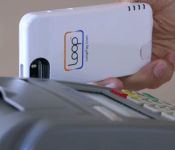
LoopPay to partner with OEMs to bring mobile payment-enabled cases to Samsung devices

Not too long ago, we heard rumors that Samsung was in talks with mobile payment startup LoopPay to bring mobile payments to more smartphones. The big draw with LoopPay is that it works with legacy point of sale terminals, transferring payments via a small electromagnetic field that imitates a card swipe without actually having to swipe anything. This already sounds better than using NFC payments, right? Mobile payments are about to get even better, because for their big CES announcement LoopPay has just unveiled their partnership with XPAL Power, a subsidiary of TennRich International (a Mophie and Belkin supplier), and Trident Case, a phone case manufacturer. The mobile payment startup and its new OEM partners plan to create LoopPay-enabled phone cases for the Samsung Galaxy S5 and Note 4, due out sometime in 2015.
XPAL Power plans to create a back cover for the Galaxy S5, which should be available sometime in early 2015. Trident Case, on the other hand, is creating a fully-fledged case for the Galaxy Note 4, which is expected to be out around late 2015. LoopPay’s new OEM partnership is leading us somewhat astray, though. If the mobile payment company is planning to partner with Samsung for, say, the S6 or Note 5, it seems a tad unnecessary to create phone cases for these devices. But who knows, there’s still a chance LoopPay and Samsung will partner up, even after LoopPay’s new partnerships.
Be sure to stay tuned to Android Authority for the best CES 2015 coverage!
CES 2015
LoopPay adds two smartphone accessory manufacturers that will embed its revolutionary mobile
payment technology into their accessories for various handset models
Las Vegas, NV, 2015 Consumer Electronics Show – January 6, 2015 – LoopPay, Inc., the world’s
most accepted mobile wallet solution, announced today two new OEM partners that will embed
LoopPay’s technology into their products to let consumers turn their smartphones into mobile
wallets. In addition to the new LoopPay products on display at the International Consumer
Electronics Show (CES), which include the LoopPay Card and CardCase for iOS and Android, the
company is now working with OEM partners to embed its patented technology into a broad array of
devices, from cases and accessories to wearables and smartphones. The two new OEM partners
announced at CES include XPAL Power (subsidiary of TennRich International – who manufactures
products for companies like Mophie and Belkin), and Trident Case®, a leading ruggedized phone
case manufacturer, with many other partners in the pipeline. LoopPay is also working with
chipmakers to embed LoopPay’s technology and security into silicon, making it easier for future
OEM partners to incorporate LoopPay into their devices.
LoopPay’s patented Magnetic Secure Transmission™ (MST) technology can send standard mag
stripe card data or send one-time-use Tokenized card data to existing merchant POS systems. Nearfield-communication
(NFC) technology, which mobile payment solutions like Apple Pay rely on, is
currently only accepted at about three percent of U.S. merchant locations. LoopPay’s MST is
accepted at nearly 90 percent of merchant locations today, making it the world’s most accepted
mobile wallet.
XPAL Power is expected to embed MST technology into its products, including a new back cover for
the Samsung Galaxy S® 5 coming in early 2015. “I am excited to work with this great new mobile
payment system and bring MST technology to the Galaxy S 5, one of the world’s best-selling
smartphones. This technology will allow consumers to make payments with their phones almost
anywhere they swipe a credit card today with existing merchant hardware – that means no new
POS equipment is required,” said Christian Scheder, CEO of XPAL Power.
Trident Case has also entered into a strategic alliance with LoopPay to bring to market a new series
of rugged Trident smartphone cases that include MST technology. Trident is developing a LoopPay-eady case for the Samsung Note 4 with availability later in 2015. “We’re very excited to introduce
this line of cases using LoopPay’s advanced contactless payment technology,” said Vickie Achee,
Trident Vice President of Marketing.
“Consumer interest in mobile payments has skyrocketed recently. However, to reach widespread
adoption and usage, consumers need a technology that’s secure and convenient. Convenient means
letting consumers use the cards they want at the places they shop (what a wallet should do),” said
Will Graylin, CEO of LoopPay. “We invented a solution that lets users digitize all of their cards and
works virtually everywhere. We want to deliver the kind of convenience that can start shifting
people to rely on their mobile wallets and leave their physical wallets at home.” Graylin will speak
at CES on Jan. 6 at the Las Vegas Convention Center, on “The Future of Mobile Payments.”
The LoopPay CardCase is now available for the iPhone 6 at $59.95, with the iPhone 6 Plus CardCase
expected Feb. 1, 2015. The CardCase comes with a hidden compartment to conveniently hold a
driver’s license and backup payment card without adding bulk to the case, allowing consumers to
leave their physical wallets at home. Android users can purchase a standalone LoopPay Card
accessory for $49.95.
The LoopPay Card and CardCase are available online at LoopPay.com, Amazon.com, and are
featured in the SkyMall print catalog available on thousands of daily airline flights. LoopPay was
recently ranked highest by the leading consumer review magazine when compared to Apple Pay,
Google Wallet and Softcard, and is the most accepted mobile wallet in the world today.
CES attendees are encouraged to visit LoopPay in the South Hall of the Las Vegas Convention Center
(LVCC), booth #21928 for live demonstrations. Click here for more information on “The Future of
Mobile Payments” discussion featuring LoopPay CEO Will Graylin, Tuesday, Jan. 6, 9:00–10:00 a.m.
at the LVCC North Hall room N261.
Follow @LoopPay on Twitter, Facebook and LinkedIn.
About LoopPay™ ounded in 2012 in Boston, MA, LoopPay is the most widely-accepted mobile payment provider,
empowering consumers to finally leave their physical wallets at home. LoopPay’s patented
Magnetic Secure Transmission™ (MST) technology turns existing mag stripe readers into mobile
contactless readers without any change or cost to merchants or their payment processors,
providing tokenized security and two-factor authentication for secure mobile payments at more
than 10-million locations today. MST can be embedded into any device, including smartphones and
wearables for less than $1. Consumers can today select from an array of devices that match their
phones and lifestyles, including the LoopPay Fob, ChargeCase, CardCase and Card. All cards
including payment, gift, loyalty, reward and IDs can be stored in the LoopPay app for convenience
and security, as all data is password and PIN-protected. LoopPay also encrypts and stores all card
track data in secure memory within any device and is a Level One PCI Certified Payment Provider.
To learn more and order LoopPay products, visit http://www.LoopPay.com.
CES 2015: The Audi smartwatch made by LG is a thing of beauty
Don’t you love it when things are unintentionally spotted and turn out to be absolute gems? During Audi‘s presentation at CES 2015, at some point, an Audi executive demonstrates the ability to control a car with a smartwatch. That device, a Audi smartwatch shall we say, is something we’ve never seen before, nor does it resemble […]
The post CES 2015: The Audi smartwatch made by LG is a thing of beauty appeared first on AndroidSPIN.
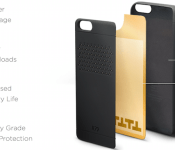
CES 2015: Reach79’s iPhone 6 Case Claims to Double Signal Strength and Improve Battery Life
At CES 2015, Antenna79 announced a new brand of cases called Reach79 , which claims to boosts signal strength and performance up to two times for iPhone 6 and 6 Plus.

“We all want to get the most from our smartphones, and that’s exactly what Reach79 cases were designed to do,” said David Vigil, CEO, Antenna79. “Powered by patented antenna technology, Reach79 cases are the first performance-enhancing smartphone cases designed for speed. Each case is embedded with a micro-thin, gold-plated antenna that works to increase your smartphone’s signal strength so your phone can do more for you.”
Reach79 says that the stronger signal strength provided by its cases can improve battery life as the phone woudln’t have to work as hard to pick up a signal. Additionally, the company says it improves user experience with less dropped calls and faster download speeds and greater signal coverage. The cases also come with military grade drop protection.
The cases contain antenna technology that pairs with the antenna in the smartphone, granting increased signal strength for the device. Reach79 says the cases have been tested at CETECOM, a CTIA accredited facility that verified the cases can improve signal strength at an average of 1.6 times normal strength, with a peak performance of 2 times normal strength.
However, the company does warn that user experience also depends on device, carrier and location.
The Reach79 cases can be purchased starting today at the company’s website. The iPhone 6 case is priced at $59.99 while the iPhone 6 Plus version is priced at $69.99. The cases currently come in black only, but Reach79 says additional colors are on the way in the first quarter of 2015.
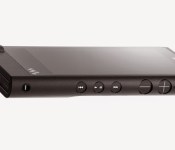
Sony announces the Walkman-ZX2 for audiophiles

Sony announced the Walkman-ZX2, and yes it will be expensive. The price is expected to be $1200 dollars when it is released this Spring. Most of you who read this will automatically think that price is crazy, but that is because you’re probably not an audiophile. This Walkman is clearly not for the general consumer, it is for the person who loves music in it’s truest form, the audiophile.
2014 was a great year for vinyl sales, as vinyl saw a 52% jump in sales from 2013. Vinyl records are known to have excellent sound reproduction, which is something we lose and don’t appreciate when we compress music for streaming over WiFi or cellular.
It’s not out of the question for many people to drop $300 dollars on a set of Beats headphones or Bose Quiet Comforts, but audiophiles have little issue spending $500-1500 on headphones alone, and that’s just for one set of headphones. Many audiophiles have droves of headphones all for different listening experiences. What good are expensive headphones if your source is mediocre? And that’s why Sony released the Walkman-ZX2. Cell phones and streaming devices aren’t good enough for audiophiles and there are only a small handful of ‘premium’ audio devices which are also expensive but lack a good user interface.
The Walkman-ZX2 will run Android 4.2 Jelly Bean, which we already know is a couple years old, but we also to know it to be stable with a pleasant interface. Android is a huge bonus over the software developed for those other high-end audio devices. It will also have a digital amplifier, as premium headphones usually require more power to drive the drivers, 128GB of built-in memory for those large uncompressed files, as well as a micro-sd card slot. The ZX2 will also have WiFi and a large battery that provides up to 60-hours of playback.
The NW- ZX2 supports digital music files up to 192 kHz/24 bit and compatible file formats are MP3, WMA, AAC, FLAC, AIFF, WAV and ALAC including DSD.
Technical Specifications
| NW-ZX2 | |
| Memory capacity | 128 GB |
| External memory | microSD (card not included) |
| Key features | High-Resolution Audio playback, S-Master HX Digital Amplifier, DSEE HX (Digital Sound Enhancement Engine), ClearAudio+, Clear Bass, Equaliser, VPT, one-touch listening via NFC and Bluetooth® connectivity |
| Compatible audio formats | MP3, WMA1, FLAC (192KHz/24bit), Linear PCM (192KHz/24bit), WAV (192KHz/24bit), AAC-LC2, HE-AAC, Apple Lossless (192KHz/24bit), AIFF (192KHz/24bit), DSD (2.8MHz, 5.6MHz)*1: Copyright protected WMA files cannot be played back.*2: Copyright protected AAC-LC files cannot be played back |
| Battery life | MP3 up to 60 hours**(MP3 128kbps) |
| Hi-Res Audio 33 hrs**(FLAC 192kHz/24bit) | |
| Charging time | Approximately 4.5 hours |
| Operating platform | Android™ 4.2 |
| Display | 4.0 inch FWVGA (854×480) TRILUMINOS™ Display for mobile |
| Communication mode | Wi-Fi® (IEEE 802.11b/g/n/a) |
| Bluetooth® | Bluetooth® (A2DP/AVRCP/OPP/HID/SPP)Supported Codec: SBC/LDAC |
| NFC | Yes |
| Included applications | Media Go (for Windows), Content Transfer for Mac (for Mac OS) |
| Dimensions | 65.1×131.2×18.5 mm (WxHxD, excluding max. protruding section) |
| Mass | Weight: Approx. 235 g |
| Accessories | USB cable, leather carrying case, spacer (headphones not included) |

The post Sony announces the Walkman-ZX2 for audiophiles appeared first on AndroidGuys.

Watch the magical future of E Ink color displays in action

We just got a chance to see exactly what E Ink’s new Prism tech looks like in person. And? It’s pretty neat! As you might be able to tell from the admittedly sped-up GIF above, it’s a bit mesmerizing but still manages to be subtle. The outfit’s Joseph Fillion describes it as “more than static, but not quite digital.” What he means by that is it isn’t the type of thing you’d likely see used on billboards or other advertisements, but more along the lines of navigational opportunities and branding. For example, you could carry an RFID chip in your pocket at a hotel and it’d change the color of the walls letting you know you were actually headed in your room’s direction, possibly with the place’s logo appearing once you’ve reached your destination. Or your living room’s walls changing color in accordance to your thermostat’s temperature reading. It seems futuristic as hell, but it’s much more Her than Blade Runner.
Filed under: Household
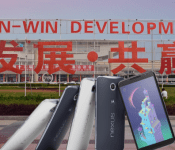
Nexus 6 Rebranded as the Moto X Pro in Motorola’s Return to China

Under Google ownership, Motorola Mobility saw its presence in China diminish exponentially. At the time, Google was pushing to refocus Motorola on the US market and on US manufacturing, and the result was a nearly 80% reduction in Motorola’s Chinese workforce and a borderline indifference to the Chinese market.
Now, with Motorola under Chinese firm Lenovo’s control, Motorola is back in China in a big way, announcing the arrival of its Moto X, Moto X Pro, and Moto G phones for the Chinese market.
The Moto X and G are exactly as you have known them. One is a customizable flagship. The other is one of the best budget smartphones available. So what is this Moto X Pro, then? It’s pretty clearly a rebranded Nexus 6. Per Motorola:
Designed by Motorola and providing the latest Android, Moto X Pro gives you bigger images and better sound with a 6-inch Quad HD display and front-facing stereo speakers for immersive sound. A 13-megapixel camera with optical image stabilization takes high-quality photos in all lighting. Top it off with the latest 2.7GHz Qualcomm® Snapdragon™ 805 processor and a 3220 mAh battery that delivers more than 24 hours of power.
Yep. Those seem like Nexus 6 specs to us. Interestingly, though, the Moto X Pro doesn’t appear to have the customization options available to the regular X. This makes sense from a production line standpoint, of course, as it’s economically dubious to offer X-style customizations on what really is just an assembly line Nexus 6.
But Nexus users don’t expect customization. Rather, they expect a good phone that can be purchased unlocked and at a fair price. By rebranding the Nexus as Moto X Pro, however, Motorola is setting up the Pro not as a Nexus alternative to the X, but as a superior device in the same family, yet without some of the aesthetic bells and whistles of the “lesser” X.
There’s no word yet on price, and it will be interesting to see if the price difference between the X and X Pro is similar to the X and Nexus 6, or if the X Pro will be promoted as a more premium device with a sticker to match.
Source: Motorola
Come comment on this article: Nexus 6 Rebranded as the Moto X Pro in Motorola’s Return to China
Select Volkswagen models to bring Android Auto and Apple CarPlay in 2015

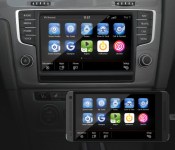
So far at CES 2015, we’ve seen our fair share of automotive announcements. First from Hyundai and Viper, announcing remote start capabilities through Android Wear. Now it’s Volkswagen’s turn, as they have just announced that certain 2015 Volkswagen models will be both Android Auto and Apple CarPlay compatible. This is all thanks to VW’s 2nd generation of their modular infotainment system, or MIB II, coming soon to the United States. VW plans to bring Android Auto and CarPlay to the European market, as well. Additionally, the car company is adding MirrorLink to their vehicles for the first time, integrating Samsung, HTC, LG and Sony devices directly into the car’s infotainment system. Volkswagen hasn’t issued exactly which cars will be compatible with Android Auto, and the only model mentioned in the press release is the VW Golf.
Though Google’s Android Auto and Apple’s CarPlay are considered rivals in this field, it’s nice to see a car company open up compatibility to both sides, rather than playing favorites. This is also a way for VW to reach the most users as possible, so this is definitely a smart move on their part. 2015 will seemingly be a big year for VW, at least according to their press release. The company also talks about plans to bring remote unlock to your smartphone, and your car’s battery information to a smartphone app.
With more and more manufacturers outlining their plans to include the software, do you think Android Auto compatibility will influence your decision on whether or not to buy your next car? Let us know what you think in the comments!
WOLFSBURG, GERMANY and LAS VEGAS, NV–(Marketwired – January 05, 2015) –
- Golf R Touch: cockpit concept solves future challenges and offers intuitive operation of high-tech infotainment
- Connected Golf: perfect compatibility with MirrorLink™, Apple® and Google®
- Intelligent Charge: e-Golf automatically docks above inductive charging plate
- Trained Parking: future Park Assist drives into garage semi-automatically
- Digital Key turns the smartphone into a car key.
- Media Control integrates tablets and smart watches into the Volkswagen infotainment system.
Volkswagen, Europe’s most successful car brand, has been instrumental in driving the development of more connected, more intelligent vehicles. That is because the car — which operates intuitively, is networked systematically, reacts intelligently and offers significantly greater convenience. This gives new innovative impetus to mobile life, making it more communicative, safer and interesting. This is why Volkswagen is demonstrating an entire fleet of vehicles at the 2015 Consumer Electronics Show (CES) in Las Vegas to show just how much the car and computer are already intertwined today and will continue to grow together in the future. The main focus at the show is on four aspects: computer-controlled drive systems; app and smartphone integration; intuitive vehicle operation; and autonomous and semi-autonomous driving.
“The two inventions of the century, the car and the computer, are gradually coming closer together. We need to design future mobility to be even more intelligent and even more networked,” said Prof. Dr. Martin Winterkorn, CEO of Volkswagen AG.
Computer-controlled drive systems
Electric mobility is coming into its own. Full electric and hybrid versions of high-volume models have now arrived, and Volkswagen is setting the pace with best-sellers like the Golf. The e-Golf and Golf GTE are the protagonists of a new mobility. These cars would be inconceivable without on-board electronics with computers that control such functions as battery charging and, in the case of the hybrid models, switching between the different drive sources. At CES, Volkswagen is showing, among other things, how electric cars will be able to automatically dock to inductive charging stations and output signals that indicate the battery state-of-charge using the vehicle’s exterior lights.
App and smartphone integration
It has now been eight years, to the month, since Apple® introduced its first generation iPhone in San Francisco. Smartphones have irreversibly changed our everyday lives, from the ways we communicate to how we access information. It has long been normal practice to have phones automatically connected to a car’s hands-free telephone system via Bluetooth and to have smartphones stream media libraries into car infotainment and sound systems. But now, Volkswagen is taking a significant step forward.
Later this year, VW will introduce the second generation “modular infotainment platform” (MIB II) in the United States. Along with the new infotainment system, MirrorLink™ will also be made available for the first time, integrating the apps and operating layout of numerous smartphones (including Samsung, HTC, LG and Sony) into cars. When MirrorLink™ is introduced, two other interfaces will also be launched under the App-Connect label: CarPlay™ (Apple®) and Android Auto™ (Google®). Simultaneously, VW will also launch CarPlay™ and Android Auto™ in the European market.
Intuitive operation
In the future, the car will not only merge with the mobile world, it will also be more intuitive for people to operate. Today, and in the future, the car will adapt by recognizing their occupants’ movements — via controls based on proximity sensors and gesture recognition. Today, the latest infotainment systems by Volkswagen already detect the approach of a hand with proximity sensors. In the next revolutionary step — which Volkswagen is showing with the Golf R Touch concept vehicle at CES — the infotainment unit will use cameras to not only detect hand gestures, but understand but assign meaning to them. Gesture control will make it possible to control displays and functionality without having to use a touchscreen. This technology adds comfort and convenience to human-vehicle interaction by reducing driver distractions while operating controls, and further underscores the synchronized relationship between the car and the computer.
Autonomous and semi-autonomous driving
Clearly, cars of the future will need to be able to drive autonomously if necessary, a change that will be introduced step by step. Even today, Park Assist by Volkswagen enables semi-automated entry and exit from parking spaces. The car executes the entire steering process for the parking maneuver independently. At CES, Volkswagen is now showing another evolutionary stage of Park Assist: Trained Parking. Here, the car scans a frequently driven path to a parking space via camera, and from that point on it executes the path semi-automatically by computer control. In another evolutionary stage, it will be possible to have the car parked by the driver remotely, using a smartphone to control the car.
Volkswagen highlights at CES
Golf R Touch
The Volkswagen Golf R Touch concept vehicle, displayed for the first time, features an infotainment system that incorporates gesture control as the next step in the area of intuitive control. All it takes is a hand movement in the space in front of the Golf’s infotainment display to make human and machine interact as one. Volkswagen is thereby extending touchscreen operation into a third dimension.
The development team for the Golf R Touch pursued the goal of producing an interior and infotainment concept that would fulfill seemingly contradictory requirements. Despite the continually growing complexity and number of functions, this concept was intended to reduce driver distractions while attaining maximum personalization and intuitive operation in the car. The vehicle was created in which nearly all controls are implemented via touchscreens and sensor switches. Therefore, the Golf R Touch is equipped with three displays: the 12.8-inch high-resolution infotainment system touchscreen; a Control Center (8.0-inch with touch feedback) arranged beneath it to control vehicle, climate control and media functions; and an Active Information Display (digitalized instruments, 12.3-inch). The layouts of the central touchscreen and the Active Info Display can be customized rapidly, just as on a smartphone or tablet today. The same is true of the entire color staging in the interior.
Connected Golf
At CES, Volkswagen is also showing the maximum networking potential of the car in the form of the Connected Golf. This e-Golf, which will be equipped with the latest generation (MIB II) infotainment system, will incorporate an enormous range of apps, smartphones and tablets via its progressive interface management system. With online-based functionality, its various features and applications will be organized into several clusters. All of these clusters are implemented in the Connected Golf.
A look at today’s App-Connect is particularly exciting. As noted above, Volkswagen is one of the first carmakers to integrate the vast majority of smartphone operating systems in models like the Golf, based on App-Connect. The three underlying software interfaces of App-Connect are Mirror Link™, Android Auto™ (Google®) and CarPlay™ (Apple®). Via these interfaces, the driver and passengers in the car are able to use the many different smartphone apps over the infotainment system.
Beyond the applications of Volkswagen Car-Net, the Connected Golf is equipped with many other innovations. For example, Media Control enables the integration of tablets and smart watches into the infotainment system and uses a special app that creates a new-age rear seat entertainment system. Regular Routes is the name of a function by which the navigation system automatically detects traffic disruptions on the daily commute to work, for instance, and autonomously suggests an available alternative route. Parking Guide is another ingenious navigation feature. It embodies a technology that finds parking sites that have a high probability of available parking spaces.
e-Golf Intelligent Charge
Intelligent Charge in the e-Golf illustrates how electric cars will be made more convenient in the future. Over the mid-term it will be possible to offer inductive charging as an alternative to cable-based charging. In the future, it will be possible to see in just seconds whether the battery is still being charged or whether it is already fully charged by looking at the vehicle’s exterior lights. The e-Station Guide will not only assist electric car drivers in finding a desired charging station, but they will also be informed about their location and charging equipment as well as payment options. As an additional function, the Digital Key lets third parties use a smartphone or smart watch to temporarily and safely gain access to the vehicle and to start or stop the engine.
e-Golf Perfect Parking
Park Assist from Volkswagen automatically guides the car into parallel and perpendicular parking spaces (in reverse) and can also automatically exit parallel parking spaces. When parking into or exiting a space, the system assists the driver by autonomously making optimal movements of the steering wheel to stay on the ideal line. At CES, Volkswagen is introducing an advanced evolutionary stage of Park Assist known as Trained Parking. Here the car (an e-Golf) uses a camera, mounted in the base of the rear-view mirror, to scan a frequently used path into a parking space, and from then on the parking process is executed semi-automatically and precisely by sensors and computer. In the future, it will also be possible to semi-automatically park above an inductive charging station. In another evolutionary stage, the driver would no longer need to stay in the car during parking — he or she would just monitor the operation with a smartphone as a “remote control” device.
About Volkswagen of America, Inc.
Founded in 1955, Volkswagen of America, Inc., an operating unit of Volkswagen Group of America, Inc. (VWoA) is headquartered in Herndon, Virginia. It is a subsidiary of Volkswagen AG, headquartered in Wolfsburg, Germany. VWoA’s operations in the United States include research and development, parts and vehicle processing, parts distribution centers, sales, marketing and service offices, financial service centers, and its state-of-the-art manufacturing facility in Chattanooga, Tennessee. The Volkswagen Group is one of the world’s largest producers of passenger cars and Europe’s largest automaker. VWoA sells the Beetle, Beetle Convertible, CC, Eos, e-Golf, Golf, Golf GTI, Jetta, Jetta SportWagen, Passat, Tiguan, and Touareg vehicles through approximately 649 independent U.S. dealers.
Notes:
This press release and images of the 2015 Volkswagen CES exhibits are available at media.vw.com. Follow us @VWNews
CES 2015: Incipio and Insteon Debut New Home Automation Solutions With HomeKit Support [iOS Blog]
Apple’s HomeKit technology is being featured heavily at CES this year, with the introduction of home automation products from Schlage, iDevices and Elgato previously making news. Joining that group with their own new HomeKit products are mobile accessory maker Incipio and home automation company Insteon.

Moving beyond cases and chargers, Incipio has introduced its first home automation solutions that support Apple’s HomeKit technology. The company’s new DIRECT Wireless product line includes the Smart Outlet ($25), Light Bulb Adapter ($25), and Power Strip ($60) with one integrated Smart Outlet and three additional outlets.
Incipio DIRECT Wireless Smart solutions and Incipio DIRECT App integrate with a variety of home appliances and existing lamp fixtures, such as recessed lighting, giving users the ability to wirelessly control outlet powered devices at home or when away. […]
Additional features of the Incipio DIRECT Wireless Smart Outlet, Light Bulb Adapter and Power Strip include:
– Integration with Siri voice commands, allowing hands-free control of home appliances and devices
– Wireless creation and configuration of home, rooms, and zones, to control power to devices at home or on-the-go
– Complimentary Incipio DIRECT Wireless Smart App allows users to create customized action sets and scenes such as “Lights Out” for a unique home automation experience
– Proximity awareness enables users to power specific devices and rooms, on or off
All three DIRECT Wireless Smart home automation solutions will debut in Q2 2015 at select retailers throughout the United States.
Instead of an array of individual hardware products, Insteon instead used CES to unveil two products designed to connect HomeKit devices. The company’s new Insteon Hub Pro allows users to connect outlets, switches, thermostats and light bulbs into Insteon’s HomeKit system. Hub users then can create and schedule “scenes” for rooms, zones and even houses. The Insteon Hub is available now for pre-order with a suggested retail price of $149.
Insteon also announced a new app that supports HomeKit-enabled devices from a variety of manufacturers. Through this single app, users can control multiple connected HomeKit devices regardless of their origin. Details on the availability and pricing of the Insteon App are not yet available.
Motorola returning to China in a big way

Well, we’re starting to see the fruits of Lenovo’s purchase of Motorola. Now that the acquisition is complete, Motorola will be bringing their newest Android handsets to China. The Moto X, Moto X Pro and the Moto G will all be available in China soon.
First up is the Moto X, which will be available in early February. Motorola is actually asking people in China to vote on the initial designs that will be available to the public (Visit this Motorola page on January 7th, 2015 to vote). If you are in China and want to design your own Moto X, you will have to wait for the Moto Maker Design tool to become available after the Spring Festival (The Spring Festival runs from February 19th to February 25th this year).
Next up are the Moto X Pro and the Moto G. The phablet sized Moto X Pro and the affordable Moto G, will hit the market following the Spring Festival in China. The Moto G will include some colorful shells that give the smartphone a personality all it’s own. It will be interesting to see how Motorola’s offerings fare compared to Lenovo’s in the long run.
Source The Official Motorola Blog
The post Motorola returning to China in a big way appeared first on AndroidGuys.

