


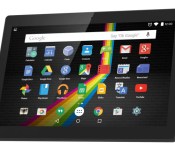
Polaroid L Series tablets announced at CES 2015

Polaroid’s new Socialmatic Camera was not the only device the company announced at CES 2015. Polaroid also announced the availability of a new L Series line of tablet devices. The L Series consists of two tablets, the L7 which is a 7-inch tablet and the L10, a 10.1-inch tablet, both of which will come with Android Lollipop. Polaroid is clearly going after entertainment consumers with the tablet line as indicated by CEO Scott Hardy’s statement, “Our L Series provides consumers with super-fast quad core processing speeds allowing for faster performance and less wait times when watching movies, playing games or surfing the web. In addition the L Series’ sleek design and affordable price point make it a great choice.”
The Polaroid L Series tablets will come equipped with quad-core processors, support for Bluetooth and WiFi, an “extended battery life” and front-mounted speakers. Polaroid says the tablets will have suggested retail prices between $99 and $149, so they are targeting budget buyers as well. Detailed specs were not provided by Polaroid, but at that price point they should probably be minimal. The new L Series tablets are scheduled to be available in the U.S. market sometime during the Spring of 2015.

source: Polaroid
Come comment on this article: Polaroid L Series tablets announced at CES 2015
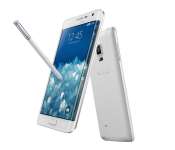
Verizon finally gets the Samsung Galaxy Note Edge – available now

Being an AT&T customer usually means I will have access to all of the latest and greatest phones, like the Samsung Galaxy Note Edge which I reviewed last month. Verizon customers can now order their own curved display phone today at http://www.verizonwireless.com. Pricing is similar to other carriers; pricing will start at $399.99 on a new 2-year contract, $799.00 full unlocked price, or $33.33 per month(24 months) for the most intriguing and innovative phone of 2014.
As a refresher, the Note Edge has all of the same features as the Note 4, but has a curved screen on the right side of the phone.
Source – Verizon

The post Verizon finally gets the Samsung Galaxy Note Edge – available now appeared first on AndroidGuys.

Gyro-skating, drone flying, bed jumping, and sharp shooting at CES 2015!

Showstoppers is a media event at CES 2015 where a concentration of vendors from the show get to show off the wares in what’s hopefully a less crowded, congested setting. Sometimes it’s jam-packed with the amazing. Other times it’s a real snooze. This year fell decidedly in the middle, with some cool and interesting new things interspersed among the same-olds. So, Georgia, Anthony, Serenity and I tore through it and brought you back the very best.

SNK Playmore offering discounts on Metal Slug games in the Play Store

If there are any fans of classic run-and-gun games out there, this may be your lucky day. SNK Playmore, the developer behind the Metal Slug series, has discounted four of their most popular titles in Google Play today. The Metal Slug series has been around for quite some time, originally being offered as a Neo Geo title dating all the way back to 1996. Metal Slug games for Android are well-worth the original price tag of $2.99/piece, so now that a few are being offered for 67% off, you might want to take advantage of the sale. The games being offered at a discount are:
- METAL SLUG – $0.99
- METAL SLUG 2 – $0.99
- METAL SLUG 3 – $0.99
- METAL SLUG X – $0.99
Before you get to downloading, you should know that SNK Playmore has put a small disclaimer on all of these games, warning users that they may not work well on devices running Android 5.0 Lollipop. As for the Neo Geo ports to Android, the games run very well. But just like any game being ported from a console with a joystick, be prepared to use the dreaded virtual joystick on a touchscreen to navigate around. Luckily, these titles support Bluetooth gaming controllers, so we recommend playing with a physical controller if you have one available.
These titles are only being offered at a discounted price for a limited time, so head to the Play Store and start playing!

Honda’s new cruise control can predict when drivers will cut into your lane

Most cars with adaptive cruise control monitor what’s up ahead to automatically manage distance and breaking. Now, Honda is taking the idea one step further by actively tracking and analyzing vehicles in neighboring lanes. Its new system is called Intelligent Adaptive Cruise Control and should, in theory, make assisted driving a little safer and smoother. In the past, the car might break sharply if another driver drifted into your lane because its narrow field of view couldn’t detect the incoming vehicle early enough. Honda’s new proposition uses a camera and radar setup to monitor the position of other cars on the road, before applying an algorithm to predict cut-ins before they occur. It’ll make its debut in the firm’s 2015 European CR-V and should result in earlier, softer breaking on highways. Honda says it’s been designed specifically for Europe (sorry US readers) and will adjust automatically if you cross into a country where you have to drive on the opposite side of the road.
Filed under: Transportation
Source: Honda
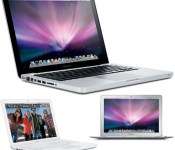
California Judge Dismisses Notebook Logic Board Lawsuit Against Apple [Mac Blog]
U.S. District Judge William Alsup this week dismissed a lawsuit filed against Apple over allegedly defective Apple notebooks, reports Reuters. Filed on behalf of Uriel Marcus and Benedict Verceles with class action status, the suit accused Apple of deliberately selling notebooks with logic boards the company knew were faulty.

The plaintiffs claim Apple in May 2010 stated selling defective MacBook, MacBook Pro, and MacBook Air notebooks with logic boards that failed within two years. Apple was accused of misrepresenting the faulty notebooks by advertising them as “state of the art” and the “most advanced” notebooks on the market. According to the suit, Tim Cook allegedly was made aware of the logic board issue in 2011 but did nothing to remedy the issue.
In his dismissal of the suit, Alsup said the plaintiffs failed to show that Apple’s notebooks were of a substandard quality, noting that both plaintiffs were able to use their computers for a reasonable amount of time.
“Plaintiffs have failed to allege that Apple’s logic boards were unfit for their ordinary purposes or lacked a minimal level of quality,” Alsup wrote. “Both plaintiffs were able to adequately use their computers for approximately 18 months and two years, respectively.”
Alsup also refuted the plaintiffs’ claim that Apple misrepresented its products. Following this dismissal, the plaintiffs have until January 22 to amend their lawsuit.
Apple is facing another MacBook-related lawsuit that accuses the company of selling MacBook Pro models with defective graphics cards. This second suit is the result of a growing number of consumer complaints citing screen glitches, GPU failures, and system crashes in Apple’s 2011 line of MacBook Pro notebooks.
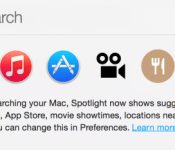
OS X Spotlight Glitch Exposes IP Addresses and Other System Details to Spammers
A privacy glitch in Spotlight search for OS X may leak private details, including IP addresses, to email spammers. The flaw was first reported by German tech news site Heise and replicated in tests performed by IDG News Service.

The issue affects OS X mail users who have followed conventional security recommendations to turn off the “load remote content in messages” option in the Mail app. This setting prevents the loading of remote content such as images, including “tracking pixels” that are used by spammers to harvest information when people open an email.
A glitch arises when OS X Mail users utilize Spotlight search in OS X, which includes emails in the search results. Spotlight ignores the remote content block preference from Mail and loads the remote email files as part of the search process. Once Spotlight loads one of these tracking pixels, spammers can glean details such as the IP address, OS X version, browser details, and the version of Quick Look being used.
The Spotlight preview loads those files even when users have switched off the “load remote content in messages” option in the Mail app, a feature often disabled to prevent email senders from knowing if an email has arrived and if it has been opened. What’s more, Spotlight also loads those files when it shows previews of unopened emails that landed directly in the junk folder.
Currently, the only way to block this information leak is to block Spotlight from including emails in search results entirely by opening System Preferences and unchecking the “Mail & Messages” option for Spotlight. Apple has yet to comment on this Spotlight privacy glitch.

Here are the best Android smartphones you can buy right now [January 2015]
 Now that the holidays are over, many of you might be in the market for a new smartphone. A lot of new phones will be announced in the coming months, so it might make sense to sit tight, but this is a great time of the year for deals. There are so many choices based on features and price points, so if you’re planning on buying a new phone now, this guide will make it a lot less daunting.
The best way to divide up your options is to categorize potential devices by the person receiving it. A first smartphone for a tween or preteen may not be the best option for a techie, and the best option for the techie will definitely not be the best choice for family members of an older generation. That’s why this guide will be divided up by type of individual. So read on to find out the best Android phones that are available right now.
Youngster‘s first phone
A preteen could need a phone for many reasons, like calling and texting friends, playing games, or keeping track of their busy schedule. What a first-time smartphone user does not need is a top-of-the-line device with a Snapdragon 800 processor, 2K screen, and a price tag exceeding that of a used car. The key here is to keep it affordable and simple. Last year and in years prior, the value phone options were awful. Your best hope for saving a buck was to get a low-end samsung phone with a 500 MB RAM and a 1 GHz single core processor. However, in 2014, Motorola changed the game of budget smartphones with the Moto G and Moto E.  The Moto E is the perfect phone for a first-time smartphone user, like your tween. The device is sold for $130 off-contract, and includes a Snapdragon 200 processor, a qHD screen, and 1 GB of RAM, which is perfect for getting into the world of technology. 4 GB of storage will be plenty to store the basics on the device, and a 32 GB SD card will handle the rest. The rear camera is 5 MP, but unfortunately there is no front-facing camera, which is typical of budget devices.
  If you’re feeling a bit more generous, the Moto G is a step up at $180, and offers better specs for more fun for your burgeoning future technophile. Expect to see a 720p 5-inch screen, a Snapdragon 400 quad-core processor, and 1 GB of RAM. The storage is doubled, bringing it to 8 GB, but expandable storage is still an option. The rear camera is a modest improvement at 8 MP, and the front camera is a huge improvement because it exists, unlike on the E.
Both devices have powerful batteries for their respective sizes, and both offer customizable shells to add your specific color to the normally black or white device. Another great aspect to a Motorola phone is the OS. Android is a great operating system, and although many Android manufacturers adulterate the OS with skins and extra apps, Motorola tends to be mostly true to Google’s vision for Android, with very little bloat added.
The Technophile
One thing that really sets the Android OS apart from its competition is the ability to tinker with it. Many a techie came to the operating system years back in order to be able to play around with their phone a little more, and Android has changed little since then as far as openness goes.  Since the open-source OS was founded, the Nexus has been the prime example of what Android should be, and this year’s model was hardly a disappointment. The Nexus 6 is a monster in all senses of the word, with a 5.96″ 2K screen at 493 ppi, a Snapdragon 805 processor, 32 or 64 GB of storage, and 3 GB of RAM. The camera is finally a marked improvement over previous models, which has long been a problem with the Nexus line. The rear camera is 13 MP and the front is 2 MP. It’s still not the best on the market, but this is a phone for techies, not artists.
If tinkering is your thing, the Nexus 6 is your phone. There is hardly a device line on the market with more developer support amongst the community than the Nexus line. Even after three years, my Galaxy Nexus still has a plethora of ROMs to choose from, so the Nexus 6 threads on the XDA developer forums are positively inundated with potential ROMs for this beautiful device.
Some may find the nearly 6″ screen too large, but when compared to the previous model, the Nexus 5, the major problem is not the size—it’s the price. The device will cost $650 off-contract for the 32 GB device and $700 for the 64 GB model, which is a solid $300 more than what the Nexus 5 costs, so if you’re a dedicated Nexus user, or have thought about getting a Nexus phone for a while, don’t expect the sweet deals of years past.
The Artist
As an artist, your phone should be an extension of your creative spirit and act as a home-away-from-home for your creative endeavors. Although most people believe that “artists use Apple products,” for those that still have their sense about them, Android has a lot to offer to those looking to create on their devices.  For the musicians out there, one Android Phone line has been the best device for giving the loudest, clearest sound for years: the HTC One. Although HTC is no longer partnering with Beats Audio, its BoomSound front-facing speakers are more than capable for all of your music listening needs. Whether you’re making something new with any of the many music composition apps on the Google Play store, or you’re listening to some of your favorite tunes for inspiration, the HTC One’s massive speakers can handle it all.
The device itself is no slouch either: standard specs for 2014 on the device include a Snapdragon 801 processor, a 1080p 5″ screen, 2 GB of RAM, and Kitkat. Sound isn’t the only feature the HTC One excels in. The One’s dual rear ultrapixel cameras allow you to take excellent low-light pictures, and refocus the photo after it is taken. There is some debate over whether or not the HTC One’s ultrapixel/dual-lens camera is genius design or gimmick, but either way, it’s worth looking into.
Buy HTC One  Drawing, doodling, sketching, whatever you want to call it, the Samsung Galaxy Note 4 is the premium device for the job. Although any device can be used with a simple stylus, no other smartphone line has the S-Pen. As anyone who has played Draw Something knows, creating a picture with a stylus increases your natural smartphone doodling talents exponentially. To get a taste of how much you can do with a stylus, check out Shaun McBride in Samsung’s #NoteMyDay campaign or take a peek at some of the best Android apps for drawing and sketching. To add to the drawing fun, the phablet’s 5.7″ QHD (2560 x 1440) display will help you clearly see your work and show it off to your friends.
The device itself is one of the most powerful of the year, with a Snapdragon 805 processor, 3 GB of RAM, 32 GB of storage, micro SD for expanded storage, a stellar fast charging 3220 mAh battery, and 16 MP rear camera with optical image stabilization. The Note is also packed with features that tend to be extremely useful, like One-Handed Mode, Smart Select, and some of the best multitasking on the market.
The Businessman
Arguably, most top-of-the-line Android devices would work great for someone in the business world, but one of them stands out to me. A good business device needs a clever design, capable multitasking, and an enjoyable user experience.

The LG G3 is one of the high-end Android devices left unmentioned thus far that fulfills all of the requirements to be a perfect business phone. The large 5.5-inch QHD (2560 x 1440) display couples with QSlide to offer a fantastic multitasking experience, even with larger, office-based apps like spreadsheet or powerpoint applications.
The G3, despite having a 5.5″-inch screen, is compact with small bezels, has a comfortable shape, and sports convenient buttons on the back , making it very comfortable in the hand. The user experience is simple and not overly bulky, with extra apps and features that tend to help instead of hurt the user’s time using the G3. Features like Knock Code and Smart Notice are clever additions to Google’s already fantastic operating system.
As far as specs go, 3 GB RAM and an 801 processor run the device, and a 13 MP camera with OIS captured the world around you. You will also get 32 GB storage and expandable storage through the microSD to hold all your data, and a 3,000 mAh battery to power all of the productivity.
The Parents/Grandparents
For those not as well-acquainted with the technological revolution, getting accustomed to using a smartphone can be a daunting task. Most first-time smartphone users in the older generations aren’t power users, nor are they adept at taking advantage of all of the features of a device. They key with this demographic is giving them phones that ease the user into the smartphone experience.

As far as Android manufacturers go, the best company for helping a new user learn how to use a smartphone is Samsung. I’ve seen many a loved one learn to use a phone using a Samsung phone. The Samsung Galaxy S5 is the flagship device for Samsung in 2014, but with a feature called Starter Mode (or Easy Mode) any beginner can start off simpler for a few weeks as they get used to the new features and capabilities on their device.
The GS5 is a fantastic phone, with all the necessary specs to rub shoulders with the best of 2014, like a 1080p (1920 x 1080) 5.1-inch screen, Snapdragon 801 processor, and 2 GB RAM. Smart Features fill the device, some of them more useful than others. Samsung offers some lower-end devices as well, but in my experience, the cheaper you go with Samsung, the worse of an experience you have.
These are my favorite phones based on type of individual. Do you have any that I missed? Let me know in the comments.
Come comment on this article: Here are the best Android smartphones you can buy right now [January 2015]
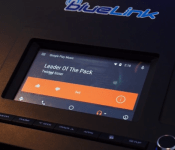
Hyundai Android Auto demo at CES 2015
Carmakers are a big presence here at CES 2015, with names like Audi, Volkswagen, Hyundai, Ford, and Mercedes demonstrating their latest technologies, from advanced navigation systems to full blown self-driving vehicles.
We’ve already seen Hyundai’s BlueLink app for Android Wear, which lets you interact with your car from anywhere in the world, but now we’ve caught up with the Korean company to check out its Android Auto system.
Hyundai says it will put Android Auto on a majority of its upcoming models, with a focus on the mid-range. Google’s automotive OS is viewed as a cheaper alternative to Hyundai’s proprietary infotainment systems, and that means you won’t need to pay a big premium in order to get it in your car.

Rob from Huawei walked us through the basic functions of Android Auto, starting with the biggest function of all (for drivers, at least), navigation. Thanks to the integration of Google’s voice recognition, you can start navigation with a simple query like “where’s MGM Grand?” You’ll get a very Google Now-like experience, complete with the familiar cards that show you info based on your past behavior, and full support for Google’s voice search. There are steering wheel controls as well, but for many tasks, voice commands will allow you to keep your eyes on the road.
Android Auto works in conjunction with an Android device, and supports apps like Play Music and more.
The system works on top of Hyundai’s infotainment suite, and the carmaker expects to offer it on a number of models starting this year.

BlackBerry Classic now available at Carphone Warehouse

Starting today, Brits can pick up the BlackBerry Classic from Carphone warehouse for £26.50 a month and £329.99 SIM free. Vodafone Business, O2, and Clove are also expected to be carrying the Classic soon. The Classic has already gone on sale across the world in Canada, Singapore, UAE, and soon in the U.S. on AT&T and India.

