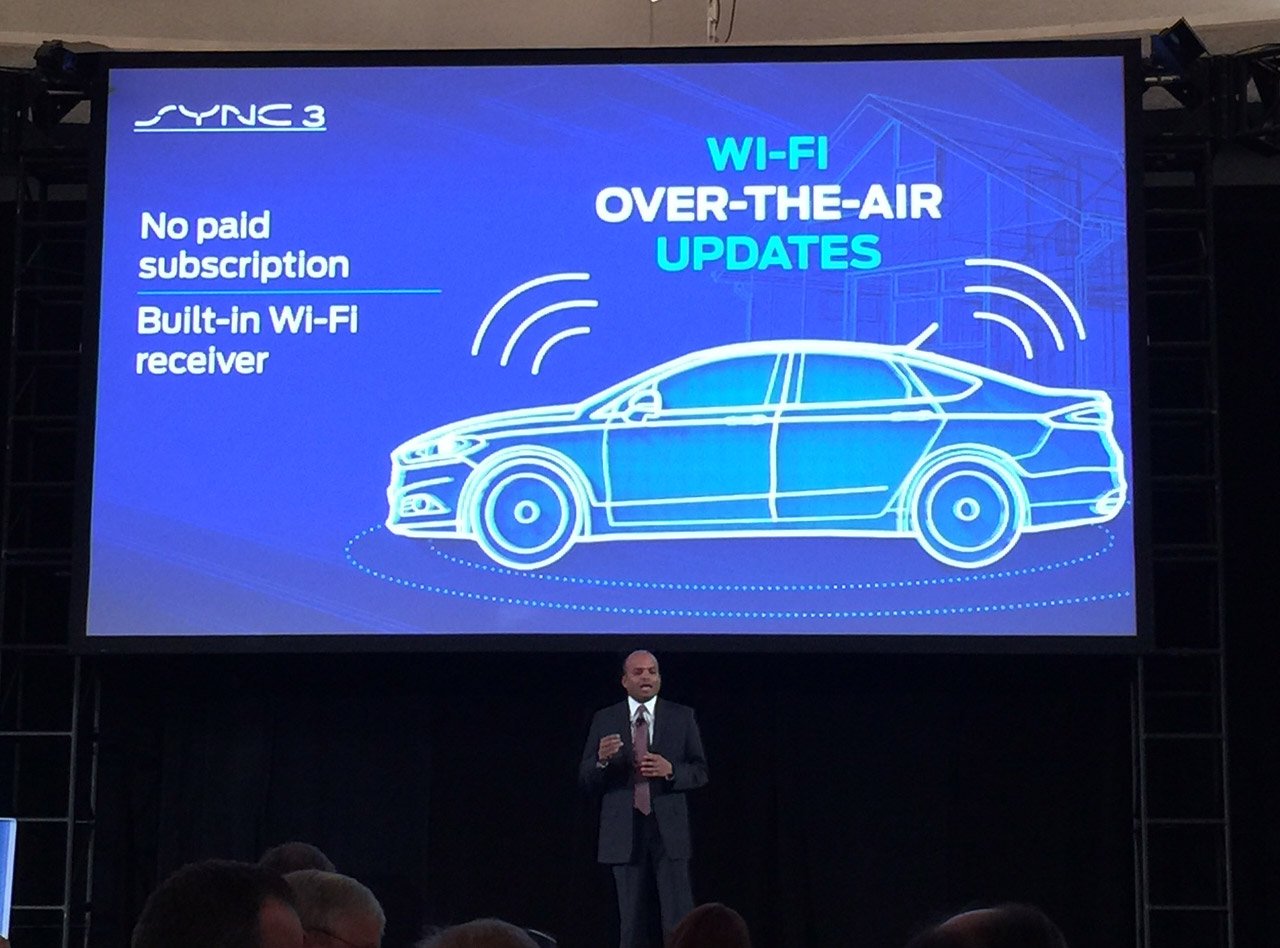
CES takeaway: smartphones and tablets

If you missed our coverage of CES 2015, that’s okay! As the event is coming to a close, we thought we’d take this time to go through the week’s top stories and roundup the biggest smartphone and tablet announcements we saw at the trade show. There’s a lot to recap here, so let’s jump right in.
Smartphones
LG’s G Flex 2
LG’s early announcement of the G Flex 2 was arguably the biggest announcement of CES 2015. LG’s first G Flex brought a ton of new features to the smartphone world, but it fell short in many critical areas. With the G Flex 2, it seems as though LG stepped up and really made this a device worth buying. It’s 5.5-inch 1080p curved screen, rear-facing 13MP camera and even the super attractive Flamenco Red color make it an overall killer device. What’s more, the G Flex 2 is the first smartphone on the market to tote the Snapdragon 810 processor.
Last year’s G Flex was really difficult to recommend to almost anyone, but this year’s iteration will definitely be one of the most interesting phones of the year, especially for those looking for something a bit more unique when it comes to form factor.
Read more:
- LG G Flex 2 hands-on and first impressions
- LG G Flex 2 vs. Samsung Galaxy Note Edge quick look
- LG G Flex 2 vs. LG G Flex quick look
The superphone/supercamera hybrid: Panasonic’s Lumix CM1
Panasonic was showing off their Lumix DMC-CM1 smartphone at CES, but it was announced at the tail end of last year. That didn’t seem to bother anyone though, because this camera smartphone can really pull its own weight. The phone itself has a 4.7-inch 1080p display, a Snapdragon 800 processor backed by 2GB of RAM, and it’s running Android 4.4 KitKat. But the phone isn’t the star of the show here, it’s the camera. Panasonic managed to throw on a huge 1-inch sensor, an f2.8 Leica lens and a 20MP sensor that truly makes for an amazing camera experience. To top it all off, there’s a smartphone attached to it? Sign us up.
When the device was originally announced, Panasonic made it very clear that this device was meant solely for the European market. Turns out it’s coming to the US on AT&T and T-Mobile to the tune of roughly $1,000 unlocked. It’s expensive, but we think it’ll be worth it for any photography lovers out there.
Read more:
- Hands-on with the Panasonic Lumix CM1
- Panasonic’s Lumix CM1 phone/camera hybrid is coming to the United States
The multimedia powerhouse: Saygus V2
The Saygus V2 (V squared) is probably one of the most talked about handsets to hit CES this year. It’s marketed as a true multimedia powerhouse that is perfect for anyone who values tons of storage and great speaker quality. The most notable feature of the phone is definitely that it can house up to 320GB of storage. No, the phone doesn’t have a massive hard drive. There’s 64GB of on-board storage, and two microSD card slots (maximum of 128GB each), equalling 320GB of storage. What’s more, the device features a removable 3100mAh battery, front-facing Harman Kardon speakers, a 5-inch 1080p screen and a Snapdragon 801 processor backed by 3GB of RAM.
This really is the phone for you if you’re into one of the best multimedia experiences you can get on a smartphone. We’ll have more to say about this device in our full review, but for now, we’re really excited about this device. Of course the fact that it is from an unknown handset maker might be a turn off for many folks, and it’s worth mentioning that no exact pricing has been announced just yet, though supposedly it will hit the hands of consumers in the next few months.
Read more:
- Hands-on with the feature-filled Saygus V2
- The powerful Saygus V2 supports up to 256GB of external storage
Asus Zenfone 2: The first smartphone with 4GB of RAM
Moving along, Asus also had a pretty big keynote at CES with their announcement of two high-end devices, one of which being the Zenfone 2. This device is such a hit thanks to its premium build quality, customizable software and unbeatable price point. There are three different variations of the Zenfone 2, all of which are at different price points. The “middle” device (the one featured in the above video) features a 5.5-inch 1080p screen and 2GB of RAM. The lesser of the three versions has the same screen size, but with a resolution of 720p and with 2GB of RAM. This device will cost less than the other two. The most powerful of the bunch, while no pricing information is announced yet, features a 1080p display and a whopping 4GB of RAM.
The three devices will be available beginning in March starting at $199 unlocked. There are a lot more specifications to cover with these three iterations, so follow the links below for more information.
Read more:
- Asus Zenfone 2 hands-on and first impressions
- Asus launches 5.5-inch Zenfone 2 and Zenfone Zoom, featuring 3X optical zoom
Asus Zenfone Zoom
Asus also unveiled the Zenfone Zoom alongside the Zenfone 2. As the name suggests, the Zoom is a camera-centric smartphone with a 13MP camera and 3X optical zoom, optical image stabilization and a laser auto focus system. While the device is quite bulky, it’s not as bad as other camera-focused smartphones out there. Overall, the 5.5-inch 1080p display and the sturdy build quality should suffice for anyone looking for a great camera experience on their mobile phone.
The Zenfone Zoom will be available in Q2 of this year starting at $399.
Read more:
HTC’s budget-friendly Desire 826
The Desire 826 is HTC’s next iteration in the Desire 820 line. Sure, the HTC One M8 and M7 were terrific smartphones, but HTC has really put a ton of effort into their mid-rangers lately. Many Desire phones are even considered to be towards the high end of the mid-tier, and the 826 is no exception. Much like the rest of the Desire series, the 826 is either glossy or matte plastic (depending on the color combination), and two SIM slots, a vibrant 5.5-inch 1080p display, and a 64-bit Snapdragon 615 processor. The big story here is HTC’s decision to move the cameras around a bit. On the 826, there’s a 13MP rear-facing camera and a 4MP UltraPixel shooter, instead of the other way around like we see on a few other Desire devices. This seems to be a really nice phone so far, and we’re looking forward to putting it through its paces in our full review.
The Desire 826 will be available later this year for China and other Asian markets, with the potential to roll out to other markets.
Read more:
- HTC Desire 826 hands-on and first impressions
- HTC Desire 826 vs. HTC Desire EYE quick look
- HTC launches Desire 826 with UltraPixel selfie camera
ZTE Nubia Z7
Last but not least, we have the ZTE Nubia Z7. Shown off alongside the Grand X Max+ and the Star 2 at CES, this is the most high-end device out of the three. It has a 5.5-inch QHD screen, a Snapdragon 801 processor, 3GB of RAM, a 3000mAh battery and 32GB of on-board storage. To be honest, there are very few compromises when it comes to this device. Unfortunately, it’s set right now as a China-only release, and there’s no word yet of the Z7 making its way out of Asia.
Read more:
The devices listed above aren’t the only smartphones unveiled at CES this year. If you’d like our full coverage on other recently-announced phones, check out the list below.
- Lenovo announces 64-bit P90 and VIBE X2 Pro at CES
- ZTE Grand Max+ hands-on and first impressions
- Interview with Yota Devices at CES 2015
- Samsung’s Galaxy E5 and E7 debut in India today
- ZTE Star 2 hands-on and first impressions
- BLU has just announced seven low-cost Android handsets
- Kodak IM5 officially announced
- HTC desire 320 headed to the UK and Germany
- Acer announces 4G-capable Liquid Z410 smartphone
- Archos unveils budget-friendly 50 Diamond smartphone
- Alcatel Onetouch announces Pixi 3 series smartphones
Tablets
Fuhu’s television-sized kids “tablets”

Fuhu has released big tablets in the past, but none even close to this size. But at CES 2015, Fuhu announced some products to really expand their tablet lineup – 32, 43, 55 and 65-inch variants of their Big Tabs.
Fuhu is really pushing the “Internet of Things” movement, and would like their new Big Tab XL models to be the centerpiece of your home entertainment. There’s no mention of which version of Android these tablets are running, but the press release does say that they run “the latest Android software” and Fuhu’s groundbreaking Blue Morpho OS. All four of the new “tablets” will also double as televisions, which justifies the purchase a bit more. The two smallest models sport 1080p screens, 2GB of RAM and run on a NVIDIA Tegra K1 processor. The two biggest models both have 4K resolutions, 4GB of RAM and use NVIDIA’s new Tegra X1 chip. The tablets will go on sale sometime this year and will range in price from $699.99-$3,999.99.
Read more:
Arbor’s rugged Gladius 10 tablet

Arbor isn’t usually the name we think of when talking about Android devices, but the company has just announced the Gladius 10 rugged tablet. It’s meant specifically for warehousing, transportation, medical, and mobile point of sale applications.
The Gladius 10 features a 10.1-inch TFT LCD display with 1280×800 resolution with a Corning Gorilla Glass 2 coating. It also brings a MediaTek MTK8392 Octa-core Cortex A7 CPU, a Quad-core ARM Mali 3D GPU, 2GB of RAM, optional barcode scanner, a 13MP rear-facing camera, 2MP front-facing camera and a dual-SIM card slot. On top of these already decent specifications, the tablet is also rated with IP65 protection, and meets the U.S. Military’s 810G standard for drops and other hazards. There’s no mention of the battery capacity in the release, but Arbor is quoting the tablet to have up to 10 hours of battery life.
The Gladius 10 seems like a decent tablet so far, until we get to the price. The tablet will go on sale in May of 2015 for $1,030, and can be customized to the user’s preferences.
Read more:
Archos 80b Helium tablet

Archos recently announced their new 80b Helium tablet, a 4G LTE-capable budget tablet for less than $150. Details are pretty scarce when it comes to this one, but we’ll definitely keep an eye out for more details. So far, though, a 4G-capable tablet for under $150 is bound to be a big seller.
Read more:
As much as people might want to disagree, I thought this year’s CES offered up a decent amount when it came to smartphones. We haven’t seen anything truly groundbreaking with smartphones in the past few days, but that surely doesn’t mean it was a bad CES. There are a few devices that are getting me excited, though.
First of all, I really like what LG is doing with the G Flex 2. It’s smaller, prettier and has specs that might give some other flagships a run for its money. LG hasn’t really had the reputation to skimp on their devices’ internals, and this year is no exception. It’s great to see them focusing hard on a smartphone that isn’t their “flagship,” and I really think more companies need to adopt that trend.

Other than the G Flex 2, of course I’m going to love the Lumix CM1… and I think you’d be crazy not to. It’s a relatively high-end device on it’s own, only with a super powerful camera on its back. Speaking of devices with cameras strapped to the back, the Zenfone Zoom isn’t half bad either. Remember when the Galaxy S4 Zoom launched? It seems like Samsung didn’t even try to make the phone compact in the slightest. We’ve absolutely come a long way since then… the Lumix CM1 and Zenfone Zoom are actually viable options for folks who want to take photography a little bit more seriously.
One device that stuck out in particular was the 65-inch Fuhu Big Tab. It’s an interesting concept, and makes me feel a little bit more like I’m living in the future.
CES 2015 wasn’t a year that pushed any boundaries with smartphones or tablets, but it was a trade show that needed to happen.
A tablet that doubles as a television… with a 4K display… and NVIDIA’s new Tegra X1 processor? Awesome. What’s not as awesome is the price, though. When the devices launch, prices will likely hover around the $700-$4,000 range. Prices aside though, while there likely isn’t a huge market for devices like this, the concept is still very intriguing.
CES 2015 wasn’t a year that pushed any boundaries with smartphones or tablets, but it was a trade show that needed to happen. A few companies bumped up the specs of their devices, sure, but we all knew these progressions would come in time. While 4GB of RAM, 320GB of storage, or even QHD displays on more affordable handsets are great, we all knew these were going to happen eventually. So, I’m not too upset or excited about this year’s CES, it has just made me more excited for what’s to come in 2015.
What were your most favorite/least favorite smartphones and tablets from the trade show this year? Did you think this was a particularly good or bad year for mobile devices? Let us know your thoughts in the comments!
Samsung has announced Penvatars to spice up the S-Pen software suite

When Samsung first released the Galaxy Note, it was at a time when even 4-inch screen sizes were still considered “large” and the idea of the S-Pen stylus brought back memories of the PDAs that characterized the late 90’s. Today, things have changed quite a bit with a variety of device form factors making use of digital pens, and the Galaxy Note 4/Edge being the one(s) that everyone wants. Still, as far the actual stylus style goes, things have been rather boring. Samsung is now seeking to change that, for the Korean conglomerate has just announced “Penvatars”.
As those with a Note probably know, when the S-Pen is in hand, users have the option of turning on a pointer that allows them to see the position of the stylus. This pointer has always been a simple circle, nothing more-nothing less. Penvatars, however, will allow that modest mark to become potentially anything, and the first thing they will become is nothing short of, well, super. Thanks to a partnership with Marvel Comics, the first wave of digital dots will take the rounded shape of some classic superheroes, including Iron Man, Captain America, Thor, The Hulk and so on.
Take a look at the movie clip below provided by Samsung to get a glimpse of what’s in store:
While no release date has been set for the new addition to stylish stylus support, one important fact is set in stone: according to Phone Arena, the Penvatars will only be supported by the Galaxy Note 4 and Galaxy Note Edge. Those with the three older models will simply have to do without, unfortunately. It is also unclear as to if the Penvatars will be free-of-charge or come at a cost. Given that the movie file above indicates there are two pages of icons to choose from, it might be safe to assume Samsung will provide a page of “generic” icons free of charge, with licensed dots arriving periodically at a premium.

Spotify shying away from Google Cast, will focus on Spotify Connect instead

After hearing reports of Spotify supporting Google Cast devices, the company has now clarified once and for all that it does not plan to offer its services to Google Cast compatible speakers. This comes after a multitude of manufacturers announced Spotify’s intentions to team up with Google Cast.
The company has mentioned that it would focus on its own service, Spotify Connect which already has multiple compatible devices and intends to work further with manufacturers to bring more devices this year. Speaking to Pocket-Lint, a spokesman for Spotify said the following – “We launched Spotify Connect because we believe that by owning the technology end-to-end, we can deliver the best connected home music experience. Connect’s advantages are already evident, with hundreds of devices from the world’s leading brands integrated.
He concluded by saying – “As we already have an experience that is optimised for ease-of-use and audio quality, we have no news to share on other integrations or partnerships at this time. We will continue to develop Connect, with new features, partners and devices arriving in 2015.”
Source: Pocket Lint
Come comment on this article: Spotify shying away from Google Cast, will focus on Spotify Connect instead

iGrann Pro updated once again to improve image quality and Hub integration

Although iGrann Pro was just updated a few days ago to correct a few issues, another small update has now appeared in BlackBerry World. The latest release covers a bit of the same in the fact it addresses some issues with Hub integration as well as the quality of images that get uploaded to Instagram through iGrann Pro.
CES 2015: Samsung showcases concept devices to be used in Avengers: Age of Ultron
A little known fact (or well-known depending on what circles you frequent) is that Samsung and Marvel made a deal last year that would see Samsung concept devices be featured in Marvel’s next blockbuster flick, Avengers: Age of Ultron and have those devices showcased for all to see. Some of this tech was shown off at CES […]
The post CES 2015: Samsung showcases concept devices to be used in Avengers: Age of Ultron appeared first on AndroidSPIN.
The original iPhone was announced eight years ago today, something everyone should be thankful for
History was made when the original iPhone was announced eight years ago. When Steve Jobs took the stage in his patented garb that fateful day in 2007 to announce the iPhone, he couldn’t have known the effect it would have on the smartphone market, spawning a battle between iOS and Android that has yet to see […]
The post The original iPhone was announced eight years ago today, something everyone should be thankful for appeared first on AndroidSPIN.
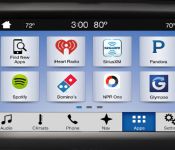
Ford realizes that the way forward involves technology

As we have previously discussed, for years automobile companies have put out sloppy and confusing car GUI’s (Graphical User Interface). Combine the terrible car GUI’s with even worse automobile data plans being offered by most wireless carriers and you are left with a section of the tech industry that has all but fallen flat with consumers.
Thankfully in the last year, car companies have publicly come out and admitted to needing significant changes to their car GUI’s. Ford is pushing out their latest in-car entertainment system called SYNC 3, which includes a “capacitive touch screen, better integration with smartphone apps and, eventually, support for Android Auto and Apple CarPlay.”
This was followed by Ford CEO Mark Fields speaking at CES 2015 where he highlighted just how important Ford was taking the future of technology in their automobiles. In his keynote, Field talked about data being their biggest asset and the need for Ford to develop applications that can work across multiple transportation systems.
As ZDNet put it, “Ford is a good example of how every company is becoming a tech company.”

At the moment, Ford is experimenting with automobiles in India and China where hundreds of volunteer employees are using data from in-vehicle sensors. One area of concern that Fields noted in his speech at CES was just how much data was being used by the tested volunteers in the car and the car system itself. In initial tests, Ford saw “upwards of 25GB of information per hour.”
I am sure that AT&T and other carriers saw this stat and began to dance in the streets. AT&T already has deals with several automobile companies and is pushing the idea that it “makes sense” for carriers to add any data used in the car to that consumers personal data plan. It makes sense to AT&T who would love to see this immense amount of data being added to customers plans thus resulting in many customers needing to purchase higher data plans.
That type of thought from AT&T is why I am skeptical as to whether in-vehicle connectivity will actually take off with customers. People already have a smartphone that they likely paid a high amount for in today’s market. Will they really want to pay an additional amount for this type of connection?
[Deal] Motorola Power Pack 3000 discounted to $8.99

Everyone should own at least one external battery pack. They allow charging from anywhere even when a wall outlet is not accessible. Sure, external battery packs can be expensive. However, the long-term value is tremendous. Today, a Motorola external battery pack with 3000mAh that normally costs $50 is available for $8.99. Furthermore, the two-pack is available for $14.99 with free shipping. The latter would cost $100 and now it is obtainable for much less.
[Motorola Power Pack 3000 – eBay] [Motorola Power Pack 3000 (two-pack) – eBay]
Come comment on this article: [Deal] Motorola Power Pack 3000 discounted to $8.99

Toshiba’s Encore 2 Write is sleek, fast, and fun

Using pen input on your computer has been something we’ve all been able to watch improve year after year, and recently it has become clear that the user who want to draw on their devices as a replacement for paper are finally getting options that serve their needs. Toshiba’s new Wacom Active ES-ready tablets are the next step in that direction, promising better control over the drawable space thanks to new hardware and software. It’s hard to argue with the results we’re seeing here at CES, and if you’ve been waiting for tech that legitimately feels like writing on the screen as though it were paper Wacom seems to have nailed it.
All you need now is to choose whether or not Toshiba’s offering is for you, and for that you should check out our more detailed hands on.
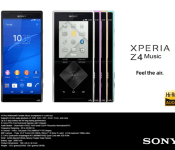
Sony could launch Walkman based phone called Xperia Z4 Music

According to a new rumor, Sony could launch a new music oriented smartphone known as the Xperia Z4 Music by March. The device will apparently bear the company’s Walkman branding as well, striking a chord with music enthusiasts.
So how exactly will this smartphone tell itself apart from the competition? Well the report says that this handset will support a wide range of audio codecs out of the box, including the likes of flac, aiff and wav. There’s also going to be front facing surround speakers made by S-Force Pro according to the report.
Hardware wise, we’re told to expect a 4 inch display with an odd resolution of 720 x 1440. The handset is also rumored to be sporting the Snapdragon 801 SoC, 3GB of RAM, 32 or 128GB storage variants, an 8-megapixel camera on the back and possibly Android 5.0 Lollipop. If this handset does in fact exist, then the MWC in Barcelona is the perfect stage for its launch.
We’ll keep our ear to the ground for more word on this new music oriented smartphone from Sony.
Come comment on this article: Sony could launch Walkman based phone called Xperia Z4 Music