


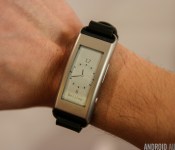
CES takeaway: wearables

As CES 2015 is coming to a close, we thought we’d take this time to go through the week’s top stories and roundup the biggest wearable announcements we saw at the trade show. Wearables have been absolutely growing in popularity over the past year, and they’ve arguably been one of the most important parts of CES. There’s a lot to recap here, so let’s jump right in.
Starting your car with Android Wear
Android Wear got a lot cooler throughout this year’s CES, largely thanks to car companies new integrations. Hyundai and Viper both announced Android Wear integration, allowing users to start, stop, unlock and lock their cars, all using an Android-Wear powered smartwatch. While Viper has only announced their compatibility with the platform so far, Hyundai showed off the technology to us at the trade show. Take a look at the video above to see how exactly it works.
Read more:
- Hyundai Blue Link for Android Wear hands-on at CES 2015
- Hyundai announces Android Wear app that can start your car remotely
- Viper SmartStart 4.0 allows you to lock or start your car with Android Wear
The future of wearable technology

Sometimes CES isn’t all about the products being shown off, but about new technology that’s used to power them. Intel recently announced their new “Curie” module, which will one day most likely run your smartwatch or smart ring. The draw to the Curie chip is its compatibility with Bluetooth Low Energy and its small-as-a-button design, allowing wearables to shrink in size.
MediaTek also announced a chip recently, specifically tailored to the Android Wear platform. The chip is called the MT2601 and its a small powerhouse of a processor. It packs in a 1.2GHz dual-core ARM Cortex-A7 CPU accompanied by an ARM Mali-400 MP GPU. The chip can be connected to up to the usual array of external sensors and wireless modems, such as MediaTek’s own MT6630 five-in-one wireless SoC, and supports a qHD display resolution. While it’s not as powerful as the Snapdragon 400 found in other Wear devices, MedaTek is confident that the combination of high power and low cost will be able to put this chip inside your next wearable.
Read more:
- Intel hopes to power your next wearable with the tiny Curie module
- MediaTek introduces its MT2601 SoC, designed for Android Wear
A prettier Sony Smartwatch 3
We’ve already reviewed Sony’s Smartwatch 3, but one of our main gripes with the device was the fact that it just didn’t really look premium. The company is finally trying to fix that with their new stainless steel watchband. Overall, this band is really nice. It’s a tad heavy, but it feels like a truly premium product. The way the Smartwatch 3 works with other bands is a little clunky, since you basically just pop out the watch module from the band, and attach it to a new one. It might be easier to switch bands on the fly, but it makes the watch clunkier than it has to be.
All in all, this is nothing groundbreaking, but we’re sure happy Sony is giving us more band options with their first Android Wear device.
Read more:
A hint of webOS wearables

Okay, so this isn’t a product that was announced, but it’s still definitely worth mentioning. For awhile now, we’ve heard many reports of LG resurrecting webOS in the form of a wearable, but we’ve all been wondering when it will actually surface. During Audi’s keynote at CES, The Verge spotted a unique LG-made watch, used to summon a self-driving car up to the stage. The folks over at Android Central tracked the watch down and confirmed it was, in fact, running Open webOS. The watch itself is beautifully crafted, offering a stainless steel chassis and a nice leather watch strap. Unfortunately, this watch was crafted specifically for Audi to show off their car prototype, so we don’t think a consumer-friendly model will arrive anytime soon. But we do know, however, that the rumors are true and that webOS is on it’s way to our wrists.
Read more:
- LG reportedly working on WebOS and SIM-enabled smartwatches
- Mystery LG smartwatch reportedly spotted at CES [updated]
Lenovo’s new fitness band
Lenovo was pretty busy this week, announcing two new phones (P90 and VIBE X2 Pro), and launching a selfie flash accessory along with arguably their most exciting product, the Vibe Band VB10. The VB10 is a fitness tracker/smartwatch hybrid that connects to any Bluetooth-enabled device running Android 4.4 KitKat and above. It’s lightweight, durable and is IPx7 approved, so you can get it wet without having to worry about it. It also notifies you of all phone notifications, as well as tracks your steps, sleep, distance traveled, and much more. The display is E Ink, similar to what we see on the Pebble. Thanks to this low-power technology, the battery will likely last up to 7 days on a single charge. The chassis is made of metal and the strap is rubber, offering a both premium and sporty feel to the device.
I think Pebble is a great example that E Ink just works on wearables. At least with the horrible battery life we see on Android Wear devices, E Ink is the way to go for the time being. Even though it’s not the most attractive watch out there, the VB10 is succeeding in all the right places.
Read more:
Garmin’s new sporty smartwatches

Garmin was one of the first companies to announce a product for CES this year with the unveiling of three new smartwatches. Well, these watches should be considered more fitness tracker than smartwatch. They tell the time and give you notifications on your Android device, but other than that, their main use is to track workouts, sleeping habits and much more. Garmin’s new Epix, Vivoactive and Fenix 3 smartwatches aren’t the cheapest wearables ever, but they boast some of the newest fitness tracking technology you can get on a smartwatch, and that has to be worth something.
The watches will be available sometime in Q1 2015 ranging from $250-$600.
Read more:
BBM coming to Android Wear

Last but not least, Blackberry Messenger is gaining Android Wear support. As much as you don’t want to admit it, BBM is one of the best, most fluid and feature-rich messaging platforms out there, and a ton of people use it. BBM on Android Wear works exactly how you think it would. You can reply and dismiss messages, and even send canned responses if you don’t want to respond via voice control.
This certainly isn’t groundbreaking technology, but it’s nice to see more services integrating with Android Wear.
Read more:
I think it’s safe to say that wearables played a huge role at CES this year. The advancements we’re seeing with car integration is particularly fascinating, and it just seems like something we would only see in the future. Five years ago, long before the smartwatch craze came about, if someone told me that I would be able to start, stop, lock, unlock and even track my car with my watch, I wouldn’t have believed a word of it. It’s finally happening, and I couldn’t be more excited. Now, this technology isn’t particularly innovative, especially since car companies have had the ability to do all of these actions from a smartphone, but I just can’t help but think I’m living in a future-esque world of technology.
As for smartwatches in general, we didn’t really see a whole lot. Garmin announced a few nice smartwatch/fitness tracker devices, but they’re very expensive and only directed toward a very niche market. The wearable I’m most excited for that was announced at CES was Lenovo’s VB10. I’m a firm believer that we need more wearables with E Ink displays, thanks to the awesome battery life they provide. The Pebble is a great example of how E Ink technology can succeed on a wearable. Especially with the 1-2 day battery life we’re seeing on Android Wear devices so far, this type of technology needs to be utilized more often in the wearable world.
Of course, we might end up seeing better battery life coming to wearables in the near future or at least by the end of 2015. Intel’s new Curie module has me very excited, providing support for Bluetooth Low Power while only being about the size of a small button. Smartwatches so far are pretty bulky, so anything to reduce the size of the devices is a great idea in my book.
Overall, I’m extremely excited for what’s to come in the wearable space. A ton of new technological advancements have come out of this year’s CES trade show, and I think wearable devices will progress at a very fast rate throughout this next year. What are your thoughts on wearable technology? Did you have a favorite or least favorite wearable announcement at CES 2015? Let us know your thoughts in the comment section!
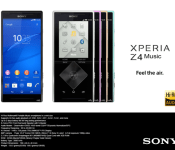
The next Sony Xperia Z4 could be a Walkman ‘with a phone’

We all saw the Sony Walkman unveiled at CES, and with it also the rather steep pricing, because at over $1000, this thing is more expensive than most laptops. But could the device simply be a refresher of the Walkman name and not intended at all to be a device consumers purchase, but simply a memory jogger of a brand that holds its own in the music industry, in prep for a more affordable consumer device that bears the name Walkman.
This is exactly what the Sony Xperia Z4 may be marketed as – that expensive Walkman device we saw at CES 2015, but more affordable, and with a phone attached.
According to sources, the Xperia Z4 Walkman could feature a 4 inch display with a resolution of 720 x 1440. The handset is also rumoured to have the Snapdragon 801 SoC, 3GB of RAM, 32 or 128GB storage, an 8-megapixel camera on the back and possibly Android 5.0 Lollipop.
Whilst this doesn’t sound like the specs that you’d associate with a flagship device such as the Xperia Z4, it could be very reminiscent of a Xperia Z4 music variant of the device aimed at music lovers.
Mobile World Congress in Barcelona is just around the corner, where Sony are expected to make some big announcements, so keep your ears peeled for MWC.

The post The next Sony Xperia Z4 could be a Walkman ‘with a phone’ appeared first on AndroidGuys.

4K, quantum dots and more: see the TV technology of CES 2015

Every year at CES, some of the most stunning visuals to be seen come from the TV manufacturers, and 2015 is no exception. 4K was the name of the game at this year’s show, but there were also displays with twice that resolution on offer, too. And while most of the TVs were of the LCD variety, there were stunning sets using OLED and quantum dot tech to deliver better, brighter pictures, too.
If you want to see more than just the TVs of CES, check out our 2015 Field Guide.
#fivemin-widget-blogsmith-image-876187display:none; .cke_show_borders #fivemin-widget-blogsmith-image-876187, #postcontentcontainer #fivemin-widget-blogsmith-image-876187width:570px;display:block;
 trydocument.getElementById(“fivemin-widget-blogsmith-image-876187″).style.display=”none”;catch(e)
Filed under: Home Entertainment, HD

Asphalt 8: Airborne for Windows 8.1 also has Xbox Live support in latest update

Just before Christmas, Asphalt 8: Airborne for Windows Phone got updated with Xbox Live achievements and more. Now the Windows 8.1 version of Gameloft’s arcade racing game has received the same update.
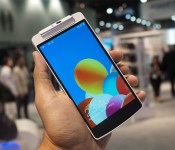
Polaroid Selfie is a rebranded Oppo N1 clone, and Oppo doesn’t like it
It’s hard to believe, but less than a decade ago, Chinese electronic products were often likened to KIRF status, an “affectionate” term coined by the staff at Engadget to describe products from the country that were literal copies of other devices. These days however, big name companies from China such as Xiaomi, Huawei, and Oppo are seeking to change things up and make original, highly competitive products. The products are so original, in fact, that now it seems Western OEMs may be the ones copying the creativity.
Oppo, maker of the Oppo N1 and N3, is none too happy with the new Polaroid Selfie smartphone shown off at CES 2015, which also makes use of a rotating camera module. Take a look at Polaroid’s Selfie…

Engadget Polaroid Selfie

PCMag Polaroid Selfie
And it’s inspiration…

Oppo N1

Oppo N1
The similarity between the two devices cannot be disputed, and it seems Oppo has caught wind about the situation and is none too pleased about it. Here’s what the company had to say about the situation in a statement (via GSMArena):
It was recently reported that the Polaroid Selfie smartphone released at the CES 2015 has a remarkably similar design to the patented rotating camera phone OPPO N1. However, OPPO has not licensed the design of the rotating camera to any third parties, nor has us done that in any OEM way. We will continue to keep track of the event and reserves the right to take further legal action.
OPPO is committed to delivering our customers with the most delightful electronic experience that is full of surprises through meticulous designs and smart technology. OPPO holds strong respect to intellectual properties and any innovation of technology and design. Sustainable innovation sits at the core of our business, and has made OPPO being a mostly talked new brand in the mobile industry.
OPPO does not stop here with the rotating camera on N1. An upgraded model, the N3, was launched in late 2014 featuring a motorised rotating ‘selfie’ camera, which could rotate for 206 degrees and makes new shooting modes like auto panaroma possible. Perfect for hands free selfies!
The situation is further complicated by the fact that Polaroid appears to have simply rebranded a device called iNew V8, available in the Chinese market, that has been described in several places as an Oppo N1 clone.

Very likely, Polaroid simply contracted iNew for a white label order, which means that Polaroid’s main contribution to the product is the logo on the back. That doesn’t get Polaroid off the hook, of course, it’s just a reminder that things aren’t always what they seem, especially when it comes to small companies eager to get products on the market.
It’s hard to tell if anything substantial will come out of this. Oppo’s threat of “further legal action” leaves room for interpretation and the fact that iNew v8 is selling freely in China elsewhere suggests that Oppo is already having a hard time enforcing their — potential — intellectual property. It remains to be seen whether or not Oppo will find it worthwhile to pursue Polaroid in the US.

Phil, Rene, Dan, and Mark talk mobile together at CES

It wouldn’t be CES without a gathering of mobile editors talking about the show, and we got it live for all to see. Watch as Phil of Android Central, Rene of iMore, Dan of Windows Central, and Mark of Laptopmag and Tom’s Guide get together for a few minutes and talk about everything that has been seen and done here in Las Vegas. The general theme this year seems to be interoperability and the increasingly vague “Internet of Things” but with all of that noise comes a strong signal for things to come. It’s becoming way less about which single device is best, and way more about which combination of platform and experience gets you what you need.
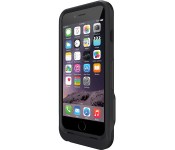
OtterBox Resurgence case for iPhone 6 includes backup battery

OtterBox kicked off a new series of iPhone 6 cases this week called Resurgence, which includes an embedded battery. In addition to providing respected protection, the 2,600 mAh battery should provide two full charges while still providing access to the Lightning connector and headphone jack. The Resurgence cases boast a smart charging system which shuts off the backup battery once it detects your iPhone 6 is at full capacity.
The Resurgence case for the iPhone 6 will be available soon for $99.95 in black, red, grey, and green. Here’s the press release with more information.
OTTERBOX REVEALS RESURGENCE POWER CASE FOR IPHONE 6 AT CES 2015
LAS VEGAS, Jan. 5, 2015 /PRNewswire/ — OtterBox, the No. 1 most-trusted brand for smartphone protection, gives a sneak peek of upcoming innovations at Pepcom! Digital Experience @ CES 2015.* At this show before the show, OtterBox will go beyond protection, highlighting the latest technology and accessories for smartphones and tablets.
OtterBox Resurgence Power Case for iPhone 6 is newly designed and allows users to unplug and go further with two-times the battery life of the device and military-grade drop protection.
“Resurgence is one of the most innovative product lines we’ve ever released,” said President and CEO Pete Lindgren. “At CES, we’ll preview the year ahead with fresh designs that incorporate new technology, all in line with our legacy of engineered confidence and trusted protection.”
Resurgence boasts 2,600 milliamp hours (mAh) of battery power, providing more than two-times the battery life of the iPhone 6. The two-piece snap design simplifies case assembly and removal. Resurgence is made up of a specially formulated polycarbonate to improve impact resistance and absorb energy from drops and bumps. The case is rigorously tested to meet MIL STD 810G-516.6, a third-party test that drops the case on all faces, edges and corners from four feet.2 The new design incorporates compact advanced circuitry, resulting in a smaller profile.
The iPhone 6 battery case utilizes auto-stop technology, which conveniently shuts off the case when the phone has reached full charge, saving extra battery for later. Resurgence supports both wired and wireless syncing without removing the case and includes a headphone jack extender.
Resurgence Power Case for iPhone 6 will be on display at Pepcom! Digital Experience @ CES on Jan. 5 and on the CES show floor in North Hall Booth No. 4727. For pricing, availability and more information on OtterBox or Resurgence Power Case, visit otterbox.com.
Source: OtterBox
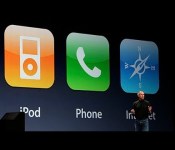
8 years ago today, Steve Jobs introduced Apple’s iPhone
8 years ago today Steve Jobs put sneaker to Macworld stage in what was arguably the greatest keynote in his and Apple’s history of great keynotes. Following the industry-changing Mac and the iPod, Jobs claimed Apple was going to introduce 3 more revolutionary products — a widescreen iPod with touch controls, and revolutionary phone, and a breakthrough internet communicator. He asked if we got it. We did. We got the hell out of it. Not 3 products but 1. The iPhone.
Instantly everything that came before was rendered obsolete. Google pivoted on a dime and went from targeting Android at BlackBerry and Windows Mobile to targeting Apple. Palm rebooted with webOS and the Pre. BlackBerry tried to make a go of the Storm. Microsoft started over with Windows Phone 7, and then again with Windows Phone 8. BlackBerry 10 launched. Dozens and dozens of imitations hit the market, yet the entire industry was also reborn.
8 years ago screens were mostly square, keyboards were mostly hardware, web browsers were mostly unusable, the most basic of apps were $30 and crashed — a lot. Simply getting email to work on mobile was considered magic. Now we have computers in our pockets far more powerful than the ones on our laps and desks were back then.
Steve Jobs is no longer with us, but his 2007 keynote will live on forever. Here it is again. Watch it, and let me know — what phone were you using back then, and what did you think of the iPhone when you got it?

Yes, your thermostat can now tell your washing machine to fluff your clothes…!
Apple’s HomeKit has been announced and while a few vendors are doing some amazing Siri-powered things with it, not everyone has been as quick to embrace it. Some are playing coy, others are marching to the beat of their own standards and agendas, and yet others claim to waiting to see more from Apple. Yet HomeKit or not, home automation is while hot and everything and anything that can have a chip is getting a chip. That might mean there’s not enough stuff that all works together yet, and too many apps needed to control it all, but that’s change with time. Just take a look at what Anthony and Georgia were able to find at CES 2015 and it’s not hard to imagine what’s coming next.

AT&T invokes Title II status to dismiss FTC data throttling suit

AT&T definitely doesn’t want to be regulated as a Title II “common carrier” internet provider, but it’s happy to use that status to dodge charges of throttling customer data. The carrier just filed a motion to dismiss a recent suit by the FTC over “deceptive” mobile data throttling. It claims its common carrier status for providing voice services exempts it from the FTC’s jurisdiction over data as well — and that it should instead fall under the FCC’s writ. The suit resulted after AT&T said that certain unlimited data plan customers would see throttled speeds, despite the fact that they paid for that to not happen. AT&T said that its common carrier designation, rather than specific services it provides (like data), means that “the FTC cannot rewrite the statute to expand its own jurisdiction.”
As noted by Ars Technica, however, it saw fit to settle with the FTC for $80 million over mobile cramming charges, which also involve data and not voice transmission. The carrier said it settled that suit due to genuinely fraudulent activity on customer’s accounts, rather than the fact that it was about data. Even if the FTC suit is dismissed, AT&T may have other troubles — according to its motion, the FCC is thinking about going after it for exactly the same thing. And of course, all of that may be moot anyway if the FCC declares the internet to be a Type II service in its February 26th net neutrality vote.
[Image credit: AP Photo/Mark Lennihan]
Filed under: Cellphones, Wireless, AT&T
Via: Ars Technica
Source: AT&T (Scribd)

