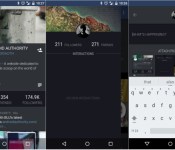
Falcon Pro 3 comes to the Play Store with a Material Design refresh
Thanks to Twitter’s frustrating API limits, many third party Twitter app developers have been forced to remove their apps from the Play Store. In the past, one of the most popular third party apps, Falcon Pro, reached its token limit pretty early on which forced the developer to find a token limit workaround that unfortunately didn’t resolve many issues. Developer Joaquim Verges has revamped his app with a Material Design refresh and released it to the Play Store as a version 1.0 release. There are some pretty handy features in this application, so let’s take a closer look at what’s being offered.
The first big enhancement you’ll notice with Falcon Pro 3 is the addition of Material Design. Navigating around the app is fluid, fast and offers some really nice animations. All of your notifications are tucked away on the left side of the screen in a slide-out menu that combines all of your account inboxes into one. You can even clear notifications to de-clutter your activity. The app features column-based navigation that allows you to add or remove as many different columns as you’d like. The developer even added a refresh time algorithm to only pull mentions and favorites based on your activity. So, if you’re constantly tweeting, the app will refresh more often than if you rarely use it. Just like most other Twitter apps out there, Falcon Pro 3 also features position holding on each column along with an unread indicator.

While all of these features are nice, this is still a version 1.0 release, so there are a few major features missing from this app so far. There are no settings menus, widgets or DM columns to be found throughout the app, but the developer is working hard to add all of these features in the next update. Even though it’s missing quite a few important properties, performance is pretty great so far. If you just use Twitter to tweet (and not navigate around too much), you’ll have no problem using this app with ease.
To bypass all of the tokens being used up, the developer has come up with a pricing scheme to keep the app in the Play Store as long as possible. Falcon Pro 3 is available in the Play Store for free, though functionality is very limited if you don’t want to pay. Adding one account will cost you $3.99, and each additional account runs $1.99 extra. After being burned by Twitter’s API limits in the past, this is a seemingly good way to keep the token usage down.
It may not seem like it now, but Falcon Pro 3 will likely be one of the best Twitter apps available in the coming weeks. It’s available now, so head to the Play Store link below to try it out!
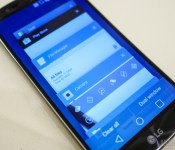
LG G Flex 2 priced at €599.99 on Amazon.de

The LG G Flex 2 was recently unveiled at CES 2015 and comes packing plenty of cutting edge hardware, including LG’s latest flexible display and Qualcomm’s new high-end processor. According to a listing on Amazon.de, the LG G Flex 2 will retail for around €599.99 off-contract. This will probably work out to around $600 in the US, give or take, based on the usual price differences.
This puts the G Flex 2 just on the cheaper side of your typical flagship smartphone and certainly isn’t an unreasonable price for a handset featuring a 5.5-inch 1080p flexible display, 13MP OIS+ camera, Snapdragon 810 processor, and a self-healing cover. However, what isn’t clear is whether this is the 2GB RAM/16GB storage or 3GB RAM/32GB storage variety of the handset, although the price probably suggests the former. Unfortunately, there’s no mention of a release date either, although pre-orders are available now via the link.
If you would like a closer look at what the G Flex 2 has to offer for €599.99, check out our coverage of the launch announcement and our time spent going hands-on with the handset at CES.
What do you think about the price tag?

Hackers claiming ties to ISIS take control of Pentagon social accounts

A group referring to itself as the CyberCaliphate and claiming ties to ISIS appears to have taken over social media accounts belonging to the United States Central Command. For the past hour or so, the group has been using CENTCOM’s YouTube and Twitter accounts to share pro-ISIS videos and supposedly leaked documents, though Twitter has already suspended CENTCOM’s account in a bid to keep things under control. While it’s still unclear whether ISIS proper had a hand in orchestrating the breach, a defense official confirmed to NBC that the accounts were compromised and that the Defense Department is “taking appropriate measures to address the matter.”
Meanwhile, as is de rigueur these days, the hackers have taken to Pastebin to issue and offer up a taste of information said to have been pulled from private military systems.
“We broke into your networks and personal devices and know everything about you,” the statement reads. “You’ll see no mercy infidels. ISIS is already here, we are in your PCs, in each military base. With Allah’s permission we are in CENTCOM now.” Fair warning: We haven’t yet been able to confirm what’s exactly in these dumps, so do your due diligence and protect yourself and your system if you decide to sift though things.
Still, the data posted on CENTCOM’s Twitter account prior to its suspension was not the sensational, game-changing stuff one might expect — among other things, there’s a list of retired Army generals (complete with phone numbers) and “Korean scenarios” outlining North Korea’s state of military readiness. ZDNET’s Zach Whittaker has preliminarily explored the files and determined that some — if not a significant percentage — are materials that have already been publicly released. A Pentagon official speaking to the Wall Street Journal clearly agrees: They said that the information shared via Twitter was not highly classified.
This is a developing story, please refresh for updates.
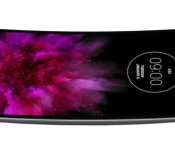
You can now pre-order the G Flex 2 from Amazon Germany

Following LG’s unveiling of its flagship phablet of 2015, the G Flex 2, at the Consumer Electronics Show in Las Vegas, Nevada, last week, the 2nd generation G Flex is now available to pre-order from Amazon Germany for €599 ($708).
The G Flex 2 is a beast of a device packing a 5.5-inch curved P-OLED display with a resolution of 1080 x 1920 pixels, a Qualcomm Snapdragon 810 chipset, 2GB of RAM, a 13-megapixel rear-facing camera and a 2.1-megapixel front-facing shooter.
Straight out of the box, the device will run the latest build of Android 4.4.4 KitKat with LG’s Optimus user interface plastered over the top. The handset is, however, expected to receive the much-anticipated and eagerly-awaited Lollipop update when it’s finally distributed by the South Korean company sometime later this month.
If you like the sound of the G Flex successor and want to pre-order one — click the source link below.
Source: Amazon
Come comment on this article: You can now pre-order the G Flex 2 from Amazon Germany
Apple Seeds Fourth iOS 8.2 Beta to Developers
 Apple today seeded the fourth beta of iOS 8.2 to developers, nearly a month after seeding the third beta and more than two months after releasing the first iOS 8.2 beta.
The beta, build 12D5461b, is available immediately to registered developers as an over-the-air update and it can also be downloaded from the iOS Developer Center. Today’s update also includes Xcode 6.2 beta 4 with WatchKit.
iOS 8.2 includes the WatchKit SDK, allowing developers to create apps, Glances, and notifications for Apple’s upcoming wearable device ahead of its 2015 launch. The first iOS 8.2 beta, with WatchKit SDK and developer documentation, revealed several new details about the Apple Watch, including its heavy reliance on the iPhone and the different types of content developers can create for the device.
Along with iOS 8.2, Apple is also working on a minor iOS 8.1.3 update which is in testing and could come later this week.

BerryFlow Upstream Podcast – CES

For those unfamiliar, Upstream is recurring BlackBerry focused podcast that aims to cover a week’s worth of news within one session held by the folks over at BerryFlow every Sunday. Last night, I hopped on to discuss some of the recent announcements coming from QNX and BlackBerry at CES and considering we haven’t done a CrackBerry podcast in a while, it only seemed fitting that I post Upstream here as well for those who might have missed it.
You can watch the video down below or grab the mp3 audio download as well. Drop some comments below with your thoughts on everything discussed. Also, let me know if we should do this regularly. You all would have a podcast to look forward to each Sunday / Monday.


Samsung makes the Galaxy A7 official, brings a all-metal 5.5-inch device to the mid-range tier
After a semi lackluster press conference at CES 2015, Samsung comes out of the mess with an announcement of a new mid-ranged Samsung Galaxy A7 phone. The device in question hasn’t been a tight-lipped device and has been leaked a number of times with fairly good accuracy. Today Samsung has made the all-metal 5.5-inch screen […]
The post Samsung makes the Galaxy A7 official, brings a all-metal 5.5-inch device to the mid-range tier appeared first on AndroidSPIN.

Making sense of the latest Android security updates scare

Some of the world’s biggest publications including the Wall Street Journal and Forbes are running a story about how Google is no longer fixing security bugs in older versions of Android. The prize for the most sensationalist headline probably goes to Forbes for “Google Under Fire For Quietly Killing Critical Android Security Updates For Nearly One Billion.”
A headline about critical security updates that aren’t going to be available for nearly one billion devices is enough to worry even the most non-technical of people. With publications like the WSJ and Forbes pushing out this story, I think we can officially call this a “scare.”
It all started with a post by Tod Beardsley on the Metasploit blog. Metasploit is a tool that security experts use to test different computers and devices to see if they are susceptible to security vulnerabilities. The Metasploit tool has a large following in the security world and it garners a huge amount of respect. Tod Beardsley himself is a respected engineer with years of experience working in the security industry. He has often been a speaker at security conferences and is a member of the IEEE.
The whole business of distributing patches downstream is a whole other problem that needs to be addressed.
Tod wrote a blog post about how Google is no longer accepting security related patches for the WebView component of Android prior to Android 4.4. The WebView component is a core part of Android. It allows any app to create a mini web browser within the app itself. This can be useful for displaying simple static HTML, like help or instructions, or it can be used to build an entire app using HTML5 and Javascript. If any of these apps actually connect to the web to download content or to visit a site then the potential exists for a hacker to trick a user into opening a web site that exploits bugs in the WebView. Once exploited the hackers can take control of the device and install malicious software.
For example, if you use a RSS reader that relies on using WebView as a way to read the full story from an item listed in an RSS feed, then it would be possible for an attacker to get a story published that takes users to a malicious site. The mini web browser in the RSS reader could then be exploited, if it is vulnerable.
Beardsley does some maths and demonstrates that some 930 million Android devices are no longer receiving any security patches from Google. Everything that Beardsley has written is factually correct and the threat is real. “Without openly warning any of the 939 million affected, Google has decided to stop pushing out security updates for the WebView tool within Android to those on Android 4.3 or below,” wrote Thomas Fox-Brewster for Forbes.

But the situation isn’t as black and white as Beardsley and Fox-Brewster are suggesting. Ask yourself this question, when was the last time that Samsung, or HTC, or LG posted an update for devices running Android 4.1, 4.2 or 4.3? Obvioulsy, I am unable to keep track of every update pushed out by every company in the world, so I am sure there will be some exceptions to this, but the answer is – rarely.
Even if Google does continue support, would the devices even get it?
So even if Google fixed the source code in Android 4.3, the chances of it arriving on a actual handset are quite small. One of the first comments on Beardsley’s post was by dr.dinosaur who wrote, “Even if Google does continue support, would the devices even get it? As you mentioned, getting updates on these old devices is not an easy process as it has to get approved by the manufacturer, approved by the carrier, pushed to the device itself, and downloaded and installed by the user.”
Tod acknowledges this with a follow-up reply, “The whole business of distributing patches downstream is a whole other problem that needs to be addressed. That said, if the handset manufacturers or the carriers weren’t picking up Google-sourced patches before, I somehow doubt they’ll be faster to pick up patches from Some Guy On The Internet…”
What is really broken with Android is not if and when Google supplies patches for Android, but the ‘whole business of distributing patches downstream.’
And his point is valid in that OEMs are unlikely to pick-up security fixes to AOSP that have been published by random people on the Internet. But he also points out that the handset manufacturers weren’t picking up Google-sourced patches anyway. What is really broken with Android is not if and when Google supplies patches for Android, but the “whole business of distributing patches downstream.”

Google has done a lot to address this problem over recent years. Firstly it started de-coupling various components and services from the main Android build and offering them as updates via the Play Store. For Android 5.0 Lollipop, Google has also unbundle the WebView component and is offering that as an automatic update from the Play Store. That should stop the current situation with Android 4.3 occurring in the future.
If you are using Android 4.x then you should consider installing a browser like Chrome or Firefox to do you main mobile browser
Second, Google has various programs like the Nexus range and Android One, which allow people to buy handsets which get updates directly from Google. The result is that the downstream update model is slowly changing. It isn’t perfect by a long way, and while the OEMs and carriers remain slow in updating devices then the potential for this kind of problem still exists.
It is also worth mentioning that alternative firmwares, like Cyanogenmod, probably pick up the fixes from Google quicker than the OEMs. So technically anyone running CyanogenMod 10.x will no longer get any security updates unless a non-Google engineer patches the the AOSP or Cyanogenmod code for known vulnerabilities.
If you are using Android 4.x then you should consider installing a browser like Chrome or Firefox to do your main mobile browsing, rather than using the built-in browser. This will at least ensure that you are protected from known vulnerabilities when surfing the web, regardless of what patches are available for your version of Android. If you use an app that opens up a WebView to connect to the Internet then you should consider finding an alternative, unless the app only accesses some limited hard-coded URLs.
Xiaomi may launch Chromecast competitor at January 15th event
 Xiaomi has an event slated for January 15th where we’re expecting a handful of new devices to be announced, but according to a recent Chinese certification, Xiaomi might be launching a Chromecast competitor device, too.
The listing suggests that Xiaomi might be announcing a few versions of a Mi Box, which is designed to be a small streaming device that connects to your television. There have been rumors about Xiaomi releasing an actual box, similar to a Roku, but this listing makes it seem like there will be a version of the Mi Box that connects to the HDMI port in a dongle like we’ve seen with the Chromecast, Roku Stick, and Fire TV Stick.
There aren’t many more details about the streaming stick, but like other similar devices, you’ll probably be able to stream internet content to your television with this one. We’ll know more on the 15th.
source: My Drivers
via: Android Headlines
Come comment on this article: Xiaomi may launch Chromecast competitor at January 15th event